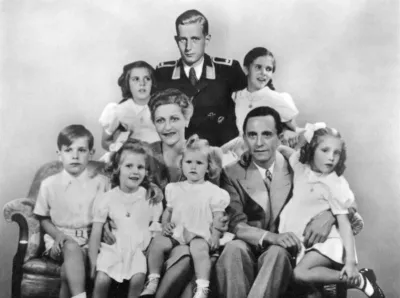
Harald Quandt
Human Design Chart
Biography
Quandt married Inge Bandekow (1928–1978), who was the daughter of the company's lawyer and worked as a secretary with his father, at the beginning of the 1950s. In the following 17 years, the couple had five daughters: Katarina Geller (1951), Gabriele Quandt-Langenscheidt (1952), Anette May-Thies (1954), Colleen-Bettina Rosenblat-Mo (1962) and Patricia Halterman (1967–2005).
Quandt had the reputation of being a “committed playboy".
He survived an aviation accident at Zürich International Airport but died on 22 September 1967 when another of his aircraft crashed in Cuneo, Italy.
Harald Quandt — Reflector with Profile 1/3
Reflector 1/3 — Design at a Glance
Harald Quandt's Human Design profile was characterized by the complete absence of defined centers. This meant that he did not possess constant personal energies but rather acted as a mirror reflecting his environment. He perceived the energy of other people and nature, including seasons and planetary constellations, with exceptional intensity. His strategy involved waiting at least one month before making important decisions, following the lunar cycle. Through this patience, he could find environments that suited him well and observe the world without attachment. This approach rewarded his system with a sense of joyful surprise. If he lived against this design, deep, lasting disappointment would ensue – both regarding himself and the state of the world. His essence was thus not defined by rigid internal structures but rather by the ability to reflect the external environment and adapt to its rhythms.
No Inner Authority
Harald Quandt's Human Design lacked an inner authority – a rare configuration that did not provide a personal decision-making entity. Instead of relying on internal signals like intuition or emotion, he found guidance through interaction with other people. As a mental projector, energetic exchanges in his open centers activated latent potentials. This allowed him to view issues from multiple perspectives and express information differently. His high resonance ability helped identify the right environment and conversation partners for this dialogue.
Evaluating these diverse impulses was a complex process requiring time and withdrawal. Only in silence could Harald Quandt discern the thread, separate meaningful from irrelevant information, and structure his specific knowledge. This ability to filter essential data from a mass of information formed his central capital of success. A key for him was choosing an environment where he felt comfortable and could exchange ideas confidently. Through these continuous interactions, over time, his sense of what truly belonged to him and which decisions were meaningful deepened.
The 1/3 Profile — Investigator / Martyr
Harald Quandt's Human Design profile showed a tendency towards pragmatic experimentation: He learned through doing and tested insights in practice. As a 1/3 Profile ("Researcher/Experimentor"), he combined the theoretical pursuit of knowledge (Line 1) with the need to qualify himself through mistakes and experience (Line 3). His judgment was considered trustworthy, as it was both analytically and empirically grounded.
The active Line 44 in his Ego Center emphasized the necessity of clear agreements and hierarchies for economic success and collective harmony. This promoted a stance of structural superiority through established rules. Simultaneously, passive Line 33 encouraged withdrawal and adaptation. In conflict between the desire for social integration (Line 44) and the need for reflective distance (Line 33), abrupt relationship breakdowns could occur if responsibility was lacking in retreat. Harald Quandt's path involved mastering these tensions through self-developed, tested strategies – always ready to learn from failures and renegotiate his position.
No Definition — Defined & Open Centers
Harald Quandt's Human Design showed the absence of any defined centers, which characterized an extreme openness and receptivity to external influences. Without fixed energetic core structures, he relied on identity, direction, and energy from his environment. His open G Center meant that he did not have a constant inner identity or life direction; instead, he reflected the qualities of people and places with whom he interacted. This led to his self-image being strongly influenced by the expectations and definitions of his surroundings.
His open Head and Ajna Centers made him vulnerable to mental confusion and pressure to find answers to questions that were not his own. He tended to get entangled in intellectual problems of others rather than relying on his own, constant inspiration. His open Heart Center lacked consistent willpower; he was not designed to keep promises or be competitive but often sought external success for validation of his worth.
The undefined Sacral and Solar Plexus Centers intensified his sensitivity towards the energy and emotions of others. He absorbed the vitality and moods of his environment, which could easily exhaust him or overwhelm him emotionally as he often interpreted these states as his own. His open Root and Throat Centers made him vulnerable to external stress pressure and a need to force attention through speaking rather than waiting for the right invitation. Overall, his design acted like a mirror that amplified the reality of his environment without possessing an unchangeable energetic foundation.
Channels & Gates
Harald Quandt's Human Design showed a tendency towards strategic withdrawal and deep reflection. He was someone who sought inner stillness to process mental mutations – new thoughts not yet formulated (Gate 24). This process required calm, as experiences without conscious reflection would merely lead to repetitions (Gate 33). His interactions were marked by vigilance and responsiveness; success for him depended on approaching others without rigid preconditions. Through the right relationship and interaction, he could initiate transformations stored in cellular memory (Gate 44). However, this change also required willpower to execute. Simultaneously, Harald Quandt sought a secure environment with clear resources and territory (Gate 19). This need encompassed not only material security but also spiritual connection within the community as well as seeking supportive partners. The close bond between people who supported each other was essential for him. His design combined inner work of knowledge application and remembering with an external need for territorial anchoring and relational transformation. The challenge lay in making acquired knowledge personally meaningful while acting in relationships without prejudice. Through this mix of withdrawal for reflection and active engagement in partnership, he created a space where old patterns dissolved and new, sustainable structures emerged. His search for inner peace served as the foundation to handle continuous development of his thinking without being overwhelmed by past 'bad movies'.
Circuit Signature
Harald Quandt's Human Design lacked any defined channels. This meant that there were no internal, automatically functioning energetic connections between his centers. Instead, he was constantly exposed to a stream of external energies influencing and shaping his system. Without fixed internal pathways, he did not react to immutable impulses but mirrored the environmental energies with which he came into contact. This configuration created high adaptability to changing situations as no rigid inner patterns predetermined action. Each experience was situational and depended on current external influences. Harald Quandt thus lived in a state of open receptivity for the energies of his fellow humans and environment. His system functioned as a resonance body that absorbed and transmitted frequencies from others without altering or blocking them through defined filters. This structure allowed fluid interaction with the world where he did not bind himself to fixed inner roles but could behave differently according to context. The absence of defined channels did not create a lack, but rather a space for spontaneous reactions to events around him.
Right Angle Cross of the Four Ways 3
Harald Quandt's Human Design indicated a tendency towards internal conflict and the pursuit of holistic understanding. This configuration, the right cross of the four paths three, described someone who often felt torn between different areas of life or identities. It was not about simple indecision but rather a deep structural dynamic: The design demanded the integration of seemingly contradictory forces – such as material success versus spiritual values or public role versus private intimacy.
For Harald Quandt, this meant that his path did not follow a linear course but was marked by phases of searching for orientation. The mechanics of this cross show that true satisfaction only came when it was possible to understand these different aspects of life as complementary parts of a greater whole rather than in competition with each other. He lived under the pressure of having to hold all threads together at once, which often led to feelings of being overwhelmed until he fully understood their connections. Only through accepting this complexity could he find inner stability based on reconciling his different natures. This process was less about fighting against himself and more about a long learning journey in accepting and utilizing the multifaceted nature of his own essence.
Saturn Return · Uranus Opposition — Life Cycles
Harald Quandt's Human Design indicated a tendency towards structured building and long-term anchoring. He showed himself as someone who not only collected knowledge but transformed it into sustainable systems. This attitude crystallized in 1947, at age 26, during his mechanical engineering studies at the Technical Universities of Hannover and Stuttgart. For his design, this was a typical moment of the first Saturn Return: A cycle where years of groundwork often solidifies into a stable foundation. Here, the mechanics became effective – not as a sudden break but as crystallization of competencies. Harald Quandt used this phase to pour technical foundations into a personal structure. The Saturn Return marks in Human Design the transition from experimenting to taking responsibility for one's own creation. At this age, energy begins to focus; what was previously diffuse gains contour and weight. Harald Quandt's studies were thus not just an academic step but an expression of an inner necessity to establish a foothold. The chosen fields reflected his search for stability. Through diving into mechanical connections, he found a framework that supported his natural love for order. This process shaped his further actions: He learned that true strength arises from consistent alignment with a clear goal. The years at the universities thus formed the core of his later ability to act.
Reflector · No Inner Authority — Synthesis
Harald Quandt lived as a Reflector, deeply influenced by the energies around him. Without defined centers, he perceived the world as a mirror, always open to external influences and cyclical changes – especially those of nature – which made him a researcher and experimenter (Profile 1/3). This openness led to a constant search for knowledge through trial and error, where even self-acquired knowledge was of particular value. The ability to take in and process information from various perspectives (undefined Head Center) allowed him to adapt flexibly to new situations and recognize potential paths for transformation (Gate 44).
A central paradox in his design lay in the interplay between adaptability and the need for inner peace. While he as a Reflector absorbed and reflected others' energy, the undefined Head Center required conscious separation from mental pressure and confusion (Gate 24). This suggests that he moved between the desire to connect with the world and learn from it and the need for withdrawal and inner orientation – an ongoing interplay between openness and finding a personal rhythm.
Incarnation Cross - Right Angle Cross of the Four Ways 3
Solar Return
The Solar Return shows the moment when the sun returns to its exact birth position - your personal solar year.
Life Cycles
Discover the life cycles with a detailed triple view (birth chart, cycle chart, composite).
Human Design Profile
- Type
- Reflector
- Strategy
- Wait a lunar cycle (approx. 28 days)
- Authority
- No inner authority - learn more
- Profile
- 1/3 - Investigator / Martyr
- Definition
- No Definition
- Incarnation Cross
- Right Angle Cross of the Four Ways 3
- Date of Birth
- 01.11.1921 02:00
- Place of Birth
- Berlin, GER
Frequently Asked Questions
What was Harald Quandt's Human Design type?
What Profiles did Harald Quandt have?
What Authority did Harald Quandt have?
What incarnation cross did Harald Quandt have?
When was Harald Quandt born?
Discover your own Human Design
Are you also a Reflector? Find out in a personal reading how to find the right environment and understand your unique mirror effect.
More Personalities
Back to overviewBaekhyun

Christian-Jaque
Jihyo

Marilyn

Pelé
Squeezie