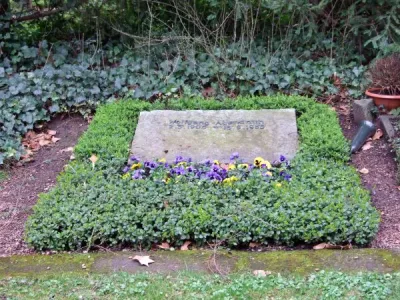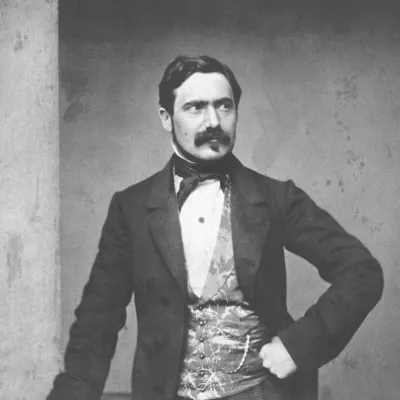
Max Joseph von Pettenkofer
Human Design Chart
Biography
In 1894 he retired from active work, and on 10 February 1901 he shot himself in a fit of depression. He died at his home in the Residenz in Munich, aged 82.
The Human Design of Max Joseph von Pettenkofer: Reflector 6/2
Reflector 6/2 — Design at a Glance
Max Joseph von Pettenkofer was revealed as a person without constant, inherent inner energies. His design lacked defined centers, meaning he did not possess a fixed, unchanging internal core that supported or guided him. Instead, he acted like a mirror of his surroundings. He absorbed the energy of other people and nature—such as seasons or astronomical constellations—particularly intensely and reflected it.
This openness made him sensitive to external influences. For his design, it was crucial to live in harmony with natural cycles. In important decisions, his strategy was to wait for at least one lunar cycle, about a month. This period allowed him to more clearly grasp the changing energies and not react impulsively to transient states.
If he followed this path, he naturally found people and environments that suited him well. He could observe the world without attachment. As a reward for this attitude, he experienced feelings of joyful surprise. If he lived against his design, however, it led to deep, lasting disappointment—both in relation to himself as well as the state of the world. His experience was thus strongly dependent on whether he accepted his receptivity and had the patience required for cyclical processes.
No Inner Authority
Max Joseph von Pettenkofer did not have an inner physical authority. This configuration is rare and means that he did not carry a fixed decision-making machine within himself. Instead, he sought orientation through exchanges with other people. As a mental projector, he lacked center activations below the throat center. His open centers allowed him to absorb information from many perspectives and activate dormant potentials through energetic interactions. This gave him high resonance capabilities to identify the right environment as well as trustworthy conversation partners for this exchange.
The evaluation of these diverse impulses was a complex process that required time and solitude. Max Joseph von Pettenkofer needed calm to recognize the thread in the mass of information. Over time, he learned to distinguish what made sense and belonged to him. Through this filtering, he developed his specific intelligence: extracting the essential elements, organizing them meaningfully, and structuring them. This formed his capital for success. A key factor for him was always choosing an environment where he felt comfortable. There he met people with whom he could exchange confidently. This dialogue deepened his sense of what was right for him and replaced his missing inner authority with a decision-making process based on relationships and reflection.
The 6/2 Profile — Role Model / Hermit
Max Joseph von Pettenkofers design indicated a tendency towards a two-phase development: early experimentation followed by later, detached wisdom. As a 6/2 profile, he acted in his youth through trial and error, where retreats after failures were the driving principle. This phase served to gather personal life experiences before approximately age thirty.
Later, the sixth line was activated. Max Joseph von Pettenkofer metaphorically retreated into a 'cave' to look back at his earlier experiments with great distance. This period of intense reflection was also one of healing and deep self-awareness. The sixth line emphasized trust in details and the process itself; the significance of each step became visible only in the completed overall context.
The second line contributed to him sometimes being perceived from outside as confused, although this was often just an external projection. Internally, it stood for observation and inspiration, while mental burdens could arise through thought loops. Yet these objective memories of other people helped him later convey wisdom.
When the time was ripe, Max Joseph von Pettenkofer emerged from his isolation as a wise person. Others sought him out to partake in his life wisdoms and learn the ability for deep introspection. His path showed itself as a process of gratitude for small successes and persistence until reaching the goal.
No Definition — Defined & Open Centers
Max Joseph von Pettenkofers Design is characterized by the complete openness of all nine centers, which did not provide him with a constant internal energy source for mental processing, emotional stability, or physical endurance. Structurally, he was designed to act as a mirror: his Head and Ajna Centers were open, allowing him to temporarily absorb inspirations and concepts rather than having a solid intellectual foundation. This often led him to easily get lost in mental monologues or feel the pressure to provide answers to others' questions instead of generating his own certainties.
His open G Center meant the absence of a stable identity and life direction; he tended to adapt to his environment, seeking the right place to feel comfortable rather than pursuing a fixed goal. The openness of his Heart Center made him vulnerable to trying to prove his worth through performance or promises, often ending in cycles of overextension and self-doubt.
The openness of his Sacral, Solar Plexus, and Spleen Centers manifested as an inability to consistently use his own vital energy, emotions, or intuition. Instead, he absorbed the life force, moods, and fears of his surroundings, making him susceptible to exhaustion and emotional overload. He learned not to identify these absorbed energies as his own. Similarly, his open Root Center caused him to take on external stress that he did not generate himself but merely amplified. This configuration marked him as a sensitive observer who could develop wisdom in distinguishing between his impulses and conditioned reactions to the environment rather than exhausting himself in an endless struggle against foreign pressure.
Channels & Gates
Max Joseph von Pettenkofer revealed himself as someone whose energy was characterized by precise detail work and a deep connection to experimental processes. His design suggested a tendency towards perfection driven by repeated testing, stemming from Gate 9 in the Sacral Center, which provided the power of "small taming": it enabled a focused attention on details and their correction without necessarily requiring logical justification. Without this energy-charged engagement with details, he was prone to depression as his available life force could not be effectively utilized.
Parallel to this, Gate 16 represented the mutative process in the collective, driving him towards constant experimentation, thereby acquiring skills and mastery in his abilities. However, this energy was more verbal than motoric, shaping his learning style through continuous trial and error.
In the mental realm, doubt served as a driving force. Gate 63 pushed him to understand things and answer security-seeking questions. This doubt was not an obstacle but rather a motor for improving uncertain patterns; only by resolving these questions did he find satisfaction. This was complemented by Gate 64, which functioned as a pictorial mental process. It helped him interpret past experiences and form clear concepts from them. Although confusion could arise before the completion of this process, in the end it promoted temporal clarity essential for correct decisions. Together, these gates formed a system where detailed execution, experimental mastery, and critical questioning for security worked in concert.
Circuit Signature
Max Joseph von Pettenkofers Design was characterized by absolute openness. He had no defined centers, meaning he did not have firmly established energetic patterns in areas like identity, intuition, or emotional balance. Instead, his inner self was a pure resonance field for the environment.
This configuration, known as "No Definition" or open design, resulted in an extraordinary sensitivity to external influences. Max Joseph von Pettenkofer could empathize with other people and situations like few others, as he absorbed and reflected their energies unfiltered. He was not limited by his own rigid beliefs or emotional waves but responded authentically to what was before him.
Without internal channels or circuits, he lacked the automatic response patterns that many people consider "natural." Therefore, every decision and action required a conscious engagement with the current situation. He was a living example of adaptability: His essence formed itself according to the context in which he found himself. This gave him the ability to build bridges between vastly different individuals, as he could directly incorporate their perspectives into himself.
The challenge of this design lay in the constant threat of overstimulation. Since no internal filters existed, any negative energy or chaotic environment could quickly exhaust him. He had to learn to set boundaries and consciously distance himself from toxic influences to preserve his own substance. His strength, however, was his pure, unbiased perception of the world, free from inner noise or fixed patterns.
Left Angle Cross of Identification 2
Max Joseph von Pettenkofer's Human Design profile indicated a tendency towards a deep, often unconscious search for his own identity. He was someone who did not simply act or react but whose inner compass was strongly influenced by the question: 'Who am I really?' This attitude stemmed from what is known as the left cross of Identification 2.
This configuration described a life task that had less to do with external success and more with intense internal work. Max Joseph von Pettenkofer lived in a tension field between the desire to clearly recognize himself and the necessity of anchoring this realization in everyday life. It was not a process of quick discovery but an ongoing exploration. His energy focused on stripping away layers that did not align with him, to get closer to the core of his personality.
This pattern shaped his experience of stability. He found security not through external validation or fixed structures alone, but through the certainty that his actions aligned with his inner self-image. When this alignment was disturbed, internal unrest arose. His path involved clarifying and solidifying this identity step by step without falling into rigid roles. It was a quiet yet persistent work on his own substance, permeating his entire existence.
Saturn Return · Uranus Opposition · Chiron Return · 2nd Saturn Return — Life Cycles
Max Joseph von Pettenkofer's Human Design profile indicated a tendency towards structured institutional anchoring. His life path was marked by clear milestones pointing to internal maturation processes. In 1847, at the age of 29, he was appointed as an extraordinary professor for pathological-chemical investigations at the Ludwig-Maximilians University in Munich. This marked his first Saturn Return: a time when years of groundwork often condensed into a solid result and initial stable structures in professional life emerged.
The search for new paths and innovation became active in 1857. At age 39, he described the production of illuminating gas from wood for Basel and Munich. This Uranus Opposition signaled a drive to question or redesign established systems, visible in his pioneering technical work.
Around his 47th year, during the Chiron Return, is an achievement cycle where one's destiny unfolds. In 1865, Max Joseph von Pettenkofer became the first German professor of hygiene and the world's first chairholder for this field. This was not a moment of healing old wounds but a flourishing period in which his specific life purpose – establishing a new discipline – gained full recognition and meaning.
Finally, in 1872 at age 54, with his appointment as an honorary citizen of Munich, the second Saturn Return appeared. This cycle deepened the already established structures and confirmed his firm place within the community. His design thus promoted development from professional foundation through innovative expansion to institutional anchoring and public recognition.
Reflector · No Inner Authority — Synthesis
Max Joseph von Pettenkofer lived a life deeply influenced by his environment. As a Reflector, he absorbed the energy of his time and surroundings in an extraordinary way – a mirror for what was happening around him (Design Perspective). This openness, combined with an undefined center system, led to him not drawing information from an inner source but through exchange with others and perception of the external world. Professional success markers appeared in cycles (Saturn Return, Uranus Opposition, Chiron Return), indicating that he continuously reoriented himself and adapted to changing circumstances. His life was thus a continuous process of reflection and adaptation, keeping him constantly in motion and offering the opportunity to learn from other people's experiences.
A central tension lay in his lack of constant inner energy (Design Perspective) while still repeatedly receiving recognition for his work (documented events in cycles). These accolades showed a form of 'solidification' – a paradox for someone designed to flow freely. The ability to grasp details (Gate 9) points towards an internal drive toward concretization, while the lack of inner authority freed him from rigid beliefs and enabled adaptation to circumstances. This interplay of openness and striving for precision shaped his work.
Incarnation Cross - Left Angle Cross of Identification 2
Solar Return
The Solar Return shows the moment when the sun returns to its exact birth position - your personal solar year.
Life Cycles
Discover the life cycles with a detailed triple view (birth chart, cycle chart, composite).
Human Design Profile
- Type
- Reflector
- Strategy
- Wait a lunar cycle (approx. 28 days)
- Authority
- No inner authority - learn more
- Profile
- 6/2 - Role Model / Hermit
- Definition
- No Definition
- Incarnation Cross
- Left Angle Cross of Identification 2
- Date of Birth
- 03.12.1818 12:00
- Place of Birth
- Lichtenau (Weichering), GER
Frequently Asked Questions
What was Max Joseph von Pettenkofer's Human Design type?
What profile did Max Joseph von Pettenkofer have?
What authority did Max Joseph von Pettenkofer have?
What incarnation cross did Max Joseph von Pettenkofer have?
When was Max Joseph von Pettenkofer born?
Discover your own Human Design
Are you also a Reflector? Find out in a personal reading how to find the right environment and understand your unique mirror effect.
More Personalities
Back to overviewBaekhyun

Jihyo

Nadar
Rune Aanderaa

George Abell

Wolfgang Abendroth