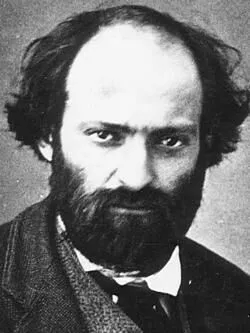
Paul Cézanne
Human Design Chart
Biography
While his early works were influenced by Romanticism—such as the murals in the Jas de Bouffan country house—and Realism, Cézanne arrived at a new pictorial language through intense examination of Impressionist forms of expression. He altered conventional approaches to perspective and broke established rules of academic art by emphasizing the underlying structure of objects in a composition and the formal qualities of art. Cézanne strived for a renewal of traditional design methods on the basis of the impressionistic colour space and colour modulation principles.
Cézanne's often repetitive, exploratory brushstrokes are highly characteristic and clearly recognizable. He used planes of colour and small brushstrokes that build up to form complex fields. The paintings convey Cézanne's intense study of his subjects.
His painting initially provoked incomprehension and ridicule in contemporary art criticism.
The Human Design of Paul Cézanne: Generator 3/5
Generator 3/5 — Design at a Glance
Paul Cézanne revealed himself as someone with immense inner endurance whose strength was not unleashed through spontaneous initiative but rather by responding to external impulses. His Generator design dictated this dynamic: He possessed abundant sacral energy, which made him extremely strong and resilient – provided he acted in harmony with his internal signal.
The mechanics of his design stipulated that this energy would only be released when he responded to life signals. The central principle was not 'initiate', but rather 'react'. When Paul Cézanne waited for an impulse and his sacral center gave a clear 'yes', he could experience profound fulfillment through subsequent action. In these moments, his creative power was inexhaustible.
Conversely, ignoring this principle led to significant stumbling blocks. If he engaged in activities that he did not actually want to do, wasted energy or worked against his inner 'no', he tended towards burnout and frustration. Equally burdensome was being prevented from pursuing his heart project even though his energy remained intact. His path to satisfaction lay in listening to the internal signal and responding accordingly rather than taking initiative actively, which often led to energy loss.
Sacral Authority
Paul Cézanne based his decisions on an inner resonance that responded as a gut feeling or palpable surge of power to external stimuli. For him, vitality and enthusiasm were decisive signals indicating he was on the right path. This mechanism stemmed from his sacral authority, unique to Generator types. With his open Emotional Center, this authority could clearly manifest. He learned to listen to physical cues like grunting or humming to activate his sacral motor correctly. When this motor engaged, he had seemingly inexhaustible energy and performed his work with great joy. This allowed him to immerse himself in his tasks without the need for a sense of purpose. His design simplified decision-making as strategy and inner authority were one. By delineating from emotional fluctuation that could arise due to the open center, his reaction remained authentic. Paul Cézanne lived by these physical signals showing when he was vital and alive.
The 3/5 Profile — Martyr / Heretic
Paul Cézanne's design inclined towards individual experimentation coupled with the role of a collective exemplar. As Profile 3/5, the experimenter and hero, he showed skepticism toward prescribed truths. Line 3 propelled a process of 'trial and error': He learned through personal experience and mistakes, breaking bonds without achieving transcendence. This could lead to melancholic depression or feelings of insurmountable pressure in moments of stagnation if no mutation occurred.
Simultaneously, Line 5 assumed the role of savior. It presented practical knowledge gained from Line 3 as a universal solution during crises. This configuration generated strong appeal; others wished to learn from his experiences. The tension lay between private failure and public expectation for heroic solutions. Failing in front of an audience was painful but necessary for the authority of Line 5.
The Sun in Line 3 made the experimental, skeptical aspect the dominant life force. Paul Cézanne embodied the image of a humorous rebel and storyteller with a rich trove of practical life experiences to share with others. The discipline of the fifth line allowed him to either uphold or rebel against values while maintaining continuity as long as it was successful. His design described a dynamic where individual learning became the foundation for heroic exemplar function.
Split Definition — Defined & Open Centers
Paul Cézanne's design was characterized by a massive inner density: seven of his nine centers were defined, giving him a firm mental structure, clear identity, and immense generative power. His defined Head-Ajna channel created constant mental pressure – an ongoing questioning and understanding that lacked direct energy for implementation. This internal stimulus had to be endured; attempts to act on it immediately led only to frustration. Instead, he served as an inspiration source for others.
His defined Heart, Sacral, and Root centers provided the substance: willpower, vital energy, and pressure to cope with existence. The defined G center gave him a reliable identity and direction, while the Spleen center allowed intuitive, momentary judgments. This combination created a person with deep self-worth and the ability to keep promises until they waited for sacral confirmation – a mechanical yes or no signaling available energy. Initiated actions without this validation failed against resistance.
The contrast lay in his open centers: Throat and Solar Plexus were undefined. This meant that his communication was uncontrollable; it happened spontaneously and situationally, often surprising him himself. He tended to wonder if he was heard or felt the pressure to force attention, which was energy-wasting. His open throat attracted attention when he waited rather than actively sought it.
Simultaneously, his open Solar Plexus absorbed emotions from his environment and amplified them. He was prone to personalizing foreign moods as his own, leading to uncertainty about whether his feelings truly belonged to him. The challenge lay in not identifying with this emotional permeability but observing the field without possessing it. Paul Cézanne lived in the tension between his strong inner architecture and the necessary acceptance of what he could not control: his expression and the emotional waves passing through him.
Channel 3-60: Mutation — Channels & Gates
Paul Cézanne's design set a tendency towards evolutionary change, marked by waiting for an internal pulse. The Mutation channel 60-3 connected Root to Sacral center; here it was about accepting limitation (Gate 60) and moving beyond the confusion of new beginnings (Gate 3). This melancholic energy required patience until reaction from sacrality.
Parallel, the Logic channel 63-4 between Head and Ajna centers worked. This doubting mind filtered patterns to test their constancy (Gate 63) before a formulation (Gate 4) was recognized as logical. Skepticism here served not self-doubt but ensuring practical evidence for the collective.
The intuitive foundation formed by the channel of Perfect Form 57-10 between Spleen and G center allowed spontaneous creativity (Gate 57) through self-referential behavior in the present moment (Gate 10), driven by intuitive insight rather than external recognition. This created a survival art generating beauty through authentic presence.
Correction and perfection came via the channel of Judgment 58-18. The drive for 'better' (Gate 58) was guided by the Gate of Correction (Gate 18), which checked patterns for errors – but only effectively on invitation to avoid inner dissatisfaction.
Finally, the Initiation channel 51-25 between Heart and G center promoted individuation. Competitiveness (Gate 51) combined with the spirit of self (Gate 25); shock experiences served as initiation towards deeper consciousness, making Paul Cézanne a role model for others.
Additionally, Gate 56 contributed to abstract storytelling while Gate 50 protected traditional values. Gate 41 propelled evolutionary development supported by the detail work of Gate 9. Continuity sought in Gate 32, and Gate 14 handled power skillfully. Complete dedication was shown in Gate 46, and Gate 19 linked resources with spiritual community.
Individual Circuitry — Circuit Signature
Paul Cézanne's design set a tendency towards inner firmness and individual mutation driven by conflict between emotional identity and rational structure. His Split Definition separated physical instincts (Sacral, Root, Spleen, G-, Heart center) from mental strategy (Ajna, Head).
The Knowledge Circuit connected Sacral with Root center via the Mutation channel in him. This promoted a drive to go new ways and initiate change through individuality. Parallel, the Centering Circuit strengthened Identity and Heart center via Initiation channel. This gave inner courage and firm convictions but lacked direct connection to Throat center for external expression of these values.
The Understanding Circuit showed two separate segments: Head with Ajna (Logic) as well as Spleen with Root (Judgment). This allowed rational analysis and strategic improvement free from emotional influence by Solar Plexus. Finally, the Integration Circuit linked Identity with Spleen center via Perfect Form channel. This channeled power from life reactions through intuitive knowledge in the present to secure individual survival.
The synthesis of these mechanisms shaped Paul Cézanne as someone living parallel inner transformation and logical structuring – driven by individual mutation, supported by inner firmness but without direct expression channel for his deepest convictions.
Right Angle Cross of Laws 4
Paul Cézanne's design carried the archetypal imprint of the Right Law of Four. This configuration acted as a structural backdrop to his personality and fundamentally shaped his inner orientation. The Right Law of Four describes a specific energetic signature that comes with a deep connection to cyclical patterns and a particular way of perceiving time and change. It is not about arbitrary decisions but rather an inbuilt disposition that filters and shapes the experience of the world.
This imprint meant for Paul Cézanne that his identity was strongly intertwined with the principles of this law. It created a stable, though often unconscious framework within which he moved and acted. The energy of the Right Law of Four brings a certain weight and constancy that does not make life easy but gives it depth and substance. Paul Cézanne lived in a context determined by these archetypal forces. It was a background hum of meaning and structure that influenced his reactions and self-understanding. Without consciously controlling this, he followed an inner logic prescribed by this law. This identification with the Right Law of Four was no coincidence but a central component of his Human Design, permeating his entire existence and giving him a unique yet challenging perspective on his own being.
Saturn Return · Uranus Opposition · Chiron Return · 2nd Saturn Return — Life Cycles
Paul Cézanne’s life was structured by clear astrological cycles that divided his development into phases. The first Saturn return often marked the transition from searching to a more settled foundation. In 1865, at age 26, he returned to Aix – an action that underscored this phase of professional and personal consolidation.
The Uranus opposition frequently brings unexpected breaks or crises that shatter old structures. For Cézanne, this occurred in 1878: His father learned about his relationship with Hortense and their son Paul. This event highlighted the disruptive nature of this cycle, challenging established order-keepers.
The Chiron return is a fulfillment cycle where one’s incarnation cross unfolds and meaning becomes tangible – provided that the person lives according to their strategy. In 1888, at age 49, Cézanne allowed himself to commit professionally to modelling for the portrait “Boy in the Red Waistcoat”. This was not just a work assignment but a moment of bloom when his artistic identity became concrete.
The sequence concluded with the second Saturn return in 1896. At age 57, he visited Lake Annecy. This point signalled a new stage of maturity and integration, far from earlier turbulence, marked by a deeper, calmer engagement with his surroundings and work.
Generator · Sacral Authority — Synthesis
Paul Cézanne lived primarily from his sacral energy (Generator Type), always driven by the reaction to external stimuli and the resulting feeling of vitality. This energetic foundation formed the core of his creative process – a constant experimentation (Line 3 in Profile) with new approaches, gaining knowledge through practical experience and expressing it again in innovative works (Knowledge Circuit). The defined Head Center pushed him into continuous engagement with questions and understanding of the world, manifesting as an unceasing search for new perspectives. Recurring cycles, especially Saturn Returns, confirmed his need to return repeatedly to his roots and find new impulses for his work there.
At the same time, a central paradox revealed itself: Cézanne seemed caught between the urge for constant change (Channel of Mutation) and the desire for order and structure (Gate 3). The melancholy associated with this channel points to an inner conflict – breaking old patterns always entailed the loss of what was familiar. This tension field between a love of experimentation and the need for clarity shaped his artistic process, leading to a unique expression that was both innovative and profound.
5 Defined Channels
Incarnation Cross - Right Angle Cross of Laws 4
Solar Return
The Solar Return shows the moment when the sun returns to its exact birth position - your personal solar year.
Life Cycles
Discover the life cycles with a detailed triple view (birth chart, cycle chart, composite).
Human Design Profile
- Type
- Generator
- Strategy
- To respond - wait for something to respond to
- Authority
- Sacral Authority
- Profile
- 3/5 - Martyr / Heretic
- Definition
- Split Definition
- Incarnation Cross
- Right Angle Cross of Laws 4
- Date of Birth
- 19.01.1839 01:00
- Place of Birth
- Aix-en-Provence, France
Frequently Asked Questions
What was Paul Cézanne's Human Design type?
What Profile did Paul Cézanne have?
What Authority guided Paul Cézanne?
What incarnation cross did Paul Cézanne have?
When was Paul Cézanne born?
Discover your own Human Design
Are you also a Generator? Find out in a personal reading how to use your sacral energy correctly and discover deep satisfaction.
More Personalities
Back to overviewAaliyah

Alexia

Angèle

Anne-Marie

Arcángel

Arno