Al Aber
Human Design Chart
Biography
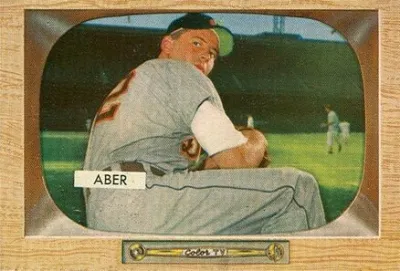
Aber graduated from West Technical High School and was signed as by the Indians at age 19 in 1946. He made his major league debut on September 15, 1950, pitching a complete-game victory, allowing two runs. He did not play another game in the big leagues until 1953, spending the 1951 and 1952 seasons performing military service during the Korean War. He appeared in six games for the Indians in 1953, winning one and losing one, before being traded on June 15 to the Tigers with Steve Gromek, Ray Boone and Dick Weik for Art Houtteman, Owen Friend, Bill Wight, and Joe Ginsberg. Aber spent the next five years with the Tigers, where he compiled a 22–24 record. His best statistical season was 1955, in which Aber appeared in 39 games and won six, lost three, and had an earned run average of 3.38. He was then waived by the Tigers, and was picked up by the Kansas City Athletics, for whom he pitched in three games, his final appearance coming on September 11, 1957.
Al Aber — Manifesting Generator with Profile 1/3
Manifesting Generator 1/3 — Design at a Glance
Al Aber proved to be someone who could act swiftly and push multiple things forward simultaneously. His Manifesting Generator design combined the constant energy of a Generator with the ability to skip steps. This hybrid nature allowed him to quickly bring things into his life but also carried the risk of missing important phases or becoming frustrated by multitasking without inner confirmation.
The mechanics of his chart called for a clear strategy: Instead of initiating himself, Al Aber responded to external impulses. Only when his sacral center – his inner authority – gave a clear "yes," did he begin implementation. This validation was crucial to avoid frustration and ensure that his speed remained beneficial. Without this confirmation from the Sacral Center, his creative enthusiasm could quickly turn negative, especially if he tried to pursue too many projects at once.
With proper application of this strategy – responding to impulses and continuously checking for inner agreement – Al Aber found deep satisfaction in his actions. He benefited from variety and could enter a "play mode" where parallel work was not a burden but a source of his strength. His design suggested that he used his energy most effectively when he did not work against the natural flow of his sacral rhythm but instead let himself be guided by it.
Emotional Authority
Al Aber exhibited a decision-making stance that required time as an essential factor; spontaneous impulses were misleading in his design. His inner authority lay in the defined Emotional Center. This meant he was subject to constant waves of emotional ups and downs. The world appeared colored by his current mood: A moment of enthusiasm could quickly turn into negative perspectives. However, this immediate feeling was only a snapshot, not necessarily his truth. Therefore, quick, emotional decisions often had negative consequences.
The mechanics of his Emotional Authority required patience. The more time he took, the deeper and more comprehensive he could perceive situations. He needed to let decisions mature overnight until intense feelings subsided and an emotional distance emerged. Only then would clarity and calm set in – the state where he was through with the process. This was especially true for long-term choices that had a significant impact on his life course. Al Aber should take pride in himself, ask multiple times, and wait until the emotional flood recedes. Only then did he gain access to his true inner direction, beyond transient mood-driven impulses.
The 1/3 Profile — Investigator / Martyr
Al Abers Design established a foundational stance that moved within the tension between theoretical withdrawal and practical experimental enthusiasm. As a 1/3 Profile, the Researcher and Experimenter, he was someone who did not just accept knowledge but had to validate it through personal experience. Line 1 promoted a tendency towards reflection and retreat to maintain wisdom in weak positions; unreflected courage was seen as risky here. At the same time, Line 3 urged him to proceed by trial and error. This created a dynamic where pure theory without practice remained incomplete and blind action without forethought should be avoided.
His authority only emerged when he had intellectually examined and physically tested insights. When Al Aber believed something to be correct, it was the result of this double filter: Line 3 exposed false knowledge through direct experience, while Line 1 ensured that these experiences were meaningfully contextualized. This process of learning from mistakes and then finding meaning shaped his approach to handling information. He did not seek abstract truth but rather what held up in reality. This combination of scientific distance and adventurous experimentation defined his unique way of engaging with the world, where trust could only arise through self-earned proof.
Triple Split Definition — Defined & Open Centers
Al Abers design established a massive, constant internal structure: All centers except the Spleen were defined. This created immense energy availability and independence. His Head and Ajna centers (defined) exerted a persistent mental pressure to question and form concepts without providing direct energy for their implementation. His voice (Throat, defined) knew its source – whether from identity (G Center, defined), willpower (Heart, defined), or vitality (Sacral, defined). The Sacral center provided vital energy exclusively through reaction to life, not through initiation. The Solar Plexus (defined) demanded waiting for the emotional wave for clarity before making decisions, while the Root center (defined) supplied a constant drive for living and stress management.
The only weakness was the open Spleen center. Here, spontaneous intuition for health and well-being was missing. Instead, Al Aber tended to develop fundamental survival fears or absorb health frequencies from the environment. The non-self pattern of this open center often manifested in thoughts like “I am afraid that I will feel inadequate” or “Maybe everyone will leave me,” which brought a tendency towards conditioning by others. The challenge lay in not directing the immense inner definition against oneself – for example, by transforming mental pressure into worry – and instead adhering to the strategy of reaction and waiting for emotional clarity to compensate for the vulnerability of the open Spleen center.
Channels for abstract thinking, focus, self-expression, inspiration and change.
Al Abers design established a tendency towards strong logical concentration paired with a need for authentic self-expression. The Concentration Channel 52-9 connected the Root Center with the Sacral Center through Gate 52 (Non-action) and Gate 9 (Focus). This mechanism generated a calm pressure to hold still and keep distractions at bay, allowing precise evaluation of details. Al Aber had to keep his body still, like in a yoga pose, for this energy to focus; he hated when this power was scattered by multitasking. This format-energy carried the qualities of the Understanding Circuit and demanded step-by-step logical analysis to perfect patterns.
Simultaneously, the Research Channel 34-10 acted as juxtaposed energy between Sacral and G Centers. It connected Gate 34 (Power) with Gate 10 (Self Behavior). This promoted behavior from deepest inner conviction and self-love, independent of external resistance. Al Aber showed himself to be someone who followed his own truth, even if it seemed unusual. The tension between the necessary still concentration (52-9) and the pressing need for authentic individuality (34-10) shaped how he perceived the world: through calm observation on one hand and bold, self-determined action on the other.
Additionally, the Initiation Channel 51-25 influenced his Heart Center by connecting Gate 51 (Shock) with Gate 25 (Self Spirit). This gave him natural competitiveness and the ability to inspire others through individual successes. The Transience Channel 36-35 in the Solar Plexus-Throat area drove him to seek new emotional experiences, while the Abstraction Channel 64-47 made his mind translate life events into complex mental images and stories. Individual Gates like Gate 33 (Reflection) or Gate 19 (Resources/Territory) rounded out this picture by emphasizing moments of retreat for inner clarity and protection of personal space.
Collective Circuitry — Circuit Signature
Al Abers design was characterized by three separate energetic systems that existed in parallel without directly flowing into each other. The first system, the Centering Circuit, connected the Sacral, Heart, and Identity Centers. This constellation created a pulsating energy in the present moment, marked by strong individuality and firm self-worth. Al Aber showed himself as a bold personality with deeply rooted convictions that did not require verbal justification. Since the Throat center was missing here, he expressed his inner strength less through words but rather through a presence that strengthened others in their own uniqueness.
The second system was the Understanding Circuit, which in Al Aber only activated the channel between Sacral and Root Centers. This generated focused energy aimed at creating improvements through logic and strategy. It involved sharing rational insights free from emotional coloring with an eye on future solutions.
The third system, the Meaning-Finding Circuit, consisted of two completely separate strands. On one hand, it connected Head to Ajna Center, providing the impulse for conceptual abstraction. On the other hand, Throat was linked to Solar Plexus Center, allowing articulation of emotional waves and experiences from the past. Al Aber used this connection to share felt insights and learn collectively with others from past events. The separation between these three systems meant that these forces – inner strength, rational strategy, and emotional reflection – worked as independent, side-by-side potentials, not as a continuous flow.
Right Angle Cross of the Four Ways 2
Al Abers design carried the signature of the right cross of the four pathways. This configuration was characterized by a specific way of living that aimed at integration and balance. In Human Design, this pattern describes a dynamic where various energetic influences do not act in isolation but come together to form a harmonious whole movement. Al Aber showed himself as someone whose inner compass was directed towards transforming seemingly contradictory forces into a flowing process.
The mechanics of this cross emphasized the importance of rhythmic adaptation and the ability to seamlessly weave different perspectives or requirements together. It was not about static rest, but rather an active balance that required constant fine-tuning. For Al Aber, this meant that his path was less defined by confrontational assertion than by finding syntheses. The energy flowed in four directions, yet always aligned towards a common center. This created inner stability, allowing him to maintain a clear, though flexible course even in unpredictable situations. His design suggested that true effectiveness for him arose where he managed to harmonize these four aspects of his being rather than pitting them against each other.
Saturn Return · Uranus Opposition · Chiron Return · 2nd Saturn Return — Life Cycles
Al Abers design indicated a tendency towards structured performance, which became particularly evident as he transitioned into full adult responsibility. He showed himself to be someone who not only possessed skills but turned them into measurable results once the framework of youthful irresponsibility ended and clear expectations were set.
This character trait was activated by his first Saturn return. This cycle marks in Human Design the turning point from youth to adulthood, forcing confrontation with one's reality and taking on responsibility. It is a moment when years of groundwork often condenses into a solid result and one's capacity is tested under real conditions.
Al Aber experienced exactly this dynamic in 1955 at age 28. He recorded his best season with six wins, three losses, and an ERA of 3.38 in 39 games. This success was no coincidence but concrete evidence of how his design responded to the pressure of the first Saturn return: through focused performance and tackling new demands. The mechanics of the cycle acted here as a catalyst for his athletic maturity.
Manifesting Generator · Emotional Authority — Synthesis
Al Aber lived a life marked by profound inner dynamics: the interplay between the ability to quickly respond to impulses and the need for emotional clarity. As a manifesting generator with defined authority in the solar plexus and a profile as researcher/experimenter, he was constantly in motion, testing boundaries, and gathering experiences. This combination led to an unrelenting search for authenticity and the drive to find his inner truth – a process amplified by his defined head and ajna centers, enabling him to grasp complex issues and make his insights accessible to others. The connection between sacral center and G center gave him strong inner direction and the ability to inspire others through his authentic self.
A central tension in Al Abers design lay between his quick responsiveness and the need for emotional maturity. The manifesting aspect pushed him forward, while the emotional centers signaled waiting and considering consequences. This discrepancy led to a constant interplay between impulsiveness and reflection, forcing him to learn from mistakes and adapt strategies. His defined root center provided the necessary drive to take on challenges and reinvent himself repeatedly – a process strengthened by his connection to the sacral center, allowing him to invest energy in sustainable projects.
5 Defined Channels
Incarnation Cross - Right Angle Cross of the Four Ways 2
Solar Return
The Solar Return shows the moment when the sun returns to its exact birth position - your personal solar year.
Life Cycles
Discover the life cycles with a detailed triple view (birth chart, cycle chart, composite).
Human Design Profile
- Strategy
- To respond - wait for something to respond to
- Authority
- Emotional Authority
- Profile
- 1/3 - Investigator / Martyr
- Definition
- Triple Split
- Incarnation Cross
- Right Angle Cross of the Four Ways 2
- Date of Birth
- 31.07.1927 21:00
- Place of Birth
- Cleveland, Ohio, United States
Frequently Asked Questions
What was Al Aber's Human Design type?
What Profile did Al Aber have in Human Design?
Which Authority guided Al Aber?
What incarnation cross did Al Aber have?
When was Al Aber born?
Discover your own Human Design
Are you also a Manifesting Generator? Find out in a personal reading how to unfold your multi-talents and direct your energy wisely.
More Personalities
Back to overviewAldair

Alizée

Angeli

Arletty

Artus

Balthus