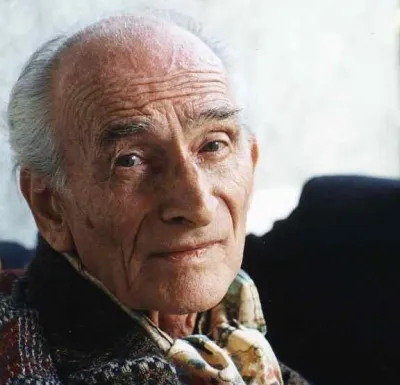
Balthus
Human Design Chart
Biography
Throughout his career, Balthus rejected the usual conventions of the art world. He insisted that his paintings should be seen and not read about, and he resisted attempts to build a biographical profile. Nevertheless, towards the end of his life he took part in a series of dialogues with the neurobiologist Semir Zeki, conducted at his chalet at Rossinière, Switzerland and at the Palazzo Farnese (French Embassy) in Rome. They were published in 1995 under the title La Quête de l'essentiel, and in them he gives some of his views on art, painting and some other painters.
Balthus — Manifesting Generator with Profile 5/1
Manifesting Generator 5/1 — Design at a Glance
Balthus revealed himself as someone who carried a hybrid dynamic of Manifestor speed and Generator energy. His design conveyed constant sacral power, yet allowed him to skip steps while acting and draw quick results into his life. This configuration held two specific risks: He tended to overlook important intermediate steps due to excessive speed, which could force him to backtrack and fill in gaps – a potential source of frustration. Additionally, he often reacted to multiple impulses simultaneously and started several projects at once. Without inner consent, this creative drive quickly turned into overburdening.
The effective strategy for him was not to initiate but to react to external impulses. Only when his sacral center gave a clear “yes” – also through regular reviews of ongoing projects – should he proceed. With this resonance given, Balthus drew deep satisfaction from his work. For him, the advice to finish one thing before starting another was counterproductive. Instead, he needed variety and a “play mode” to maintain his energy. Parallel work was not a burden for his system when applied correctly; it was the source of his deepest fulfillment and creative flow.
Emotional Authority
Balthus showed an inner structure that identified spontaneous judgments as misleading and potentially harmful. His design established that decisions required temporal distance to run through emotional wave movements. This was no character flaw, but rather the mechanism of his Emotional Authority anchored in the defined Solar Plexus Center.
This center underwent a constant up-and-down movement of feelings. Balthus saw the world colored by his current mood; a moment of enthusiasm could quickly turn into negative perspectives. His feeling at the moment was only a snapshot, not necessarily his truth. Quick, mood-driven decisions often had negative effects.
The mechanics required patience and the process of “ripening.” Balthus needed to take time for decision-making, which required multiple overnights. Over time, intense feelings subsided, emotional distance gained strength, clarity set in, and calmness followed. This process was particularly crucial for long-term, life-defining steps. Only by going through these emotional cycles could he reach a grounded understanding beyond transient mood fluctuations.
The 5/1 Profile — Heretic / Investigator
Balthus appeared as someone marked by almost magnetic charisma. Others unconsciously sought answers and solutions to their problems from him. This dynamic resulted from his Human Design Profile 5/1: Line 5 grants the role of the Hero, while line 1 defines a deep need for isolated research.
This constellation created an ongoing tension between serving others and the necessity of personal recovery. Balthus lived with the danger of becoming exhausted through uncontrolled projections of his environment, similar to how an expert may feel drained after intense consultations. His design required clear boundaries to protect this energy.
Especially relevant was Gate 37 in line five, describing natural devotion and emotional waves. Without conscious distance, this exchange could quickly turn into dependency or even hatred when his own resources were depleted. Simultaneously, Gate 5 in line one stood for persistence in maintaining rhythms and rituals. This aspect was crucial: Only through the courage to maintain his personal rhythm and also say “no” could Balthus find balance. Thus, he avoided exhaustion and used his gifts optimally – by selectively and protectedly passing on knowledge from his deep research phase rather than being consumed by others' expectations.
Single Definition — Defined & Open Centers
Balthus possessed a rich foundation of defined identity, willpower, and vital energy. His defined G Center gave him reliable inner direction and self-love, while the Heart Center provided necessary ego strength to keep promises and use resources autonomously. The immense life energy came from the Sacral Center, supported by the constant forward push of the Root Center. His expression was clear and limited by the defined Throat Center, yet decisions required patience: As authority served the Solar Plexus. He had to wait for emotional clarity before acting impulsively.
In contrast, open centers shaped his mental and intuitive landscape. Head and Ajna were open, meaning he did not have constant mental clarity. Instead of getting lost in endless questions or searching for answers, he used his mind as a flexible mirror for inspirations from the environment without identifying them as his own truth. Particularly noticeable was the open Spleen Center. Here, intuitive safety of survival instinct was missing. This led Balthus to feel insecure or develop fear of losing wellbeing. He was prone to clinging to people or situations that gave false feelings of security or making spontaneous, fear-based decisions to fill this void. The challenge lay in not accepting conditioned fears as his own truth and avoiding impulsive steps but trusting his emotional clarity and sacral confirmation.
Channels for community, leadership, self-discovery, openness, change and emotion.
Balthus showed himself as someone who exercised leadership not through authority, but through logical embedding into existing patterns. His design required him to be chosen or invited before taking on a role. The Alpha Animal Channel 7-31 connected the G Center with the Throat Center and described collective leadership based on tested patterns. Gate 7 provided the logical role of guidance, while Gate 31 acted as the voice of the leader. Balthus had to demonstrate his competence to gain trust; without this invitation, his influence remained unused.
His inner world was marked by a search for self-love. The Research Channel 34-10 connected Sacral and G Centers. Gate 34 offered strength in holding onto personal convictions, while Gate 10 initiated behavior from deepest acceptance. Balthus lived this self-love authentically, helping others honor their unique qualities, provided he responded correctly to his inner authority.
Emotionally, Balthus was driven by waves of mood and openness. The Openness Channel 22-12 connected Solar Plexus and Throat Centers. Gate 22 brought passion and melancholy, regulated by the caution of Gate 12. He only expressed himself if his mood allowed it; otherwise, he withdrew to avoid misunderstandings. This emotional depth also drove him to restless search for new experiences. The Transience Channel 35-36 connected Solar Plexus and Throat Centers through Gates of Change (35) and Crisis (36). He sought adventures to gain wisdom, accepting the fleeting nature of all feelings.
In relationships, Balthus built communities based on fair contracts. The Community Channel 37-40 linked Solar Plexus and Heart Center. Gate 37 sought recognition, Gate 40 demanded reward for work. He waited for the right invitation to bridge individuals. Finally, he provoked others' spirits to release emotional truth. The Emotional Release Channel 39-55 connected Root and Solar Plexus Centers. Through Gate 39 (Provocation) and Gate 55 (Spirit), he triggered emotional waves in others to promote authenticity, depending on his own mood.
Individual Circuitry — Circuit Signature
Balthus showed a personality that shaped its identity through emotional wave movements and inner centering. His design connected Throat, Solar Plexus, and Root Centers in the Knowledge Circuit (Channels 12-22, 39-55), enabling the expression of unique individuality through emotional transformation. Parallel to this, the Centering Circuit (Channel 10-34) strengthened the connection between Identity and Sacral Centers, resulting in bold convictions that often remained difficult to verbalize.
In the Understanding Circuit, he linked Throat and Identity Centers (Channel 7-31), promoting the sharing of logical, rational insights. This contrasted with the Meaning Circuit (Channel 35-36) connecting Throat and Solar Plexus Centers, emphasizing reflection on emotional past cycles. Both aspects – cool ratio and felt experience – shaped his communication.
The Ego Circuit (Channel 37-40) linked Heart and Solar Plexus Centers, pointing towards cooperation and balance of giving and taking in the collective. Without a Sacral connection here, this social energy required regular pauses for regeneration. As Simply Defined, all these centers – Throat, Solar Plexus, Root, Identity, Heart, and Sacral – flowed in one continuous energetic system marked by pulsating, cyclical search for meaning and structure.
Left Angle Cross of Migration 1
Balthus’ design carried the imprint of the left cross of Moving On. This did not mean he passively waited or remained inactive; rather, this configuration described a specific kind of endurance and perseverance. His inner compass was set to accompany processes until their natural conclusion, even if that path appeared long.
The left cross of Moving On stands for the ability to rest within oneself while simultaneously keeping sight on what is essential. It involves deep, often silent constancy not disturbed by external noise. Balthus showed himself as someone who practiced patience with himself and his surroundings. He understood how to condense impulses internally before releasing them outwardly. This stance allowed him to gain clarity before acting or reacting.
It was not a strategy for quick success but one of sustained effectiveness. The energy of this cross fostered inner stability, helping him endure uncertainties and not be distracted by transient events. Balthus lived this trait as a form of inner loyalty to his own rhythm. He moved forward, not necessarily with great speed, but with an unwavering direction. This endurance was his characteristic feature that allowed him to maintain a firm point in a constantly changing world. His strength lay in not seeking quick solutions but accepting and shaping the process of becoming.
Saturn Return · Uranus Opposition · Chiron Return · 2nd Saturn Return — Life Cycles
Balthus’ design laid out a tendency towards fundamental life turns stabilized by marriages. This structure manifests concretely in two Saturn return phases. The first Saturn Return often marks the transition from youth to adult responsibility, where internal maturity is anchored outwardly. Balthus married Antoinette de Watteville in 1937 at age 29. For his design, this was a typical moment: Years of groundwork and development condensed into solid relationship foundations.
The second Saturn Return occurs roughly three decades later and signals another consolidation of life structure, often after phases of change or reorientation. Balthus married Setsuko Ideta in 1967 at age 59. This underscores the mechanism: Even in this late phase, he sought and found stability through a new partnership. Both events confirm that fundamental turning points were closely linked to the formation or confirmation of bonds for him. The Saturn cycles did not act as isolated astrological phenomena but directly shaped his biographical milestones in partnership and responsibility.
Manifesting Generator · Emotional Authority — Synthesis
Balthus’ life was marked by a deep, inner dynamic between the need for authentic expression and the ability to immerse himself in the emotional landscape of others. His defined G Center and Heart Center pointed towards strong internal identity and willpower, yet these were channeled through his defined Throat Center – an expression of what he had to say based on Solar Plexus emotions. This combination led to intense, often polarizing communication that both fascinated and disturbed. He lived his truth out, reacted to impulses (Sacral) and processed them through the emotional wave, making him a creative catalyst whose influence extended far beyond the individual.
Central for Balthus was a paradox between the need for deep emotional connection (Solar Plexus-Heart Axis) and the ability to distance himself from these connections or shape them consciously (open Spleen Center). He seemed both to merge in relationships while also maintaining some independence. This tension manifested in the interplay between the desire for recognition (Gate 37) and the ability to go his own way (Channel 34-10), making him a complex character marked by inner depth as well as certain unpredictability.
6 Defined Channels
Incarnation Cross - Left Angle Cross of Migration 1
Solar Return
The Solar Return shows the moment when the sun returns to its exact birth position - your personal solar year.
Life Cycles
Discover the life cycles with a detailed triple view (birth chart, cycle chart, composite).
Human Design Profile
- Strategy
- To respond - wait for something to respond to
- Authority
- Emotional Authority
- Profile
- 5/1 - Heretic / Investigator
- Definition
- Single Definition
- Incarnation Cross
- Left Angle Cross of Migration 1
- Date of Birth
- 29.02.1908 13:00
- Place of Birth
- Paris, France
Frequently Asked Questions
What Human Design Type was Balthus?
What Profile did Balthus have?
What Authority did Balthus have?
What Incarnation Cross did Balthus have?
When was Balthus born?
Discover your own Human Design
Are you also a Manifesting Generator? Find out in a personal reading how to unfold your multi-talents and direct your energy wisely.
More Personalities
Back to overviewAldair

Alizée

Angeli
Arletty
Artus

Baekhyun