
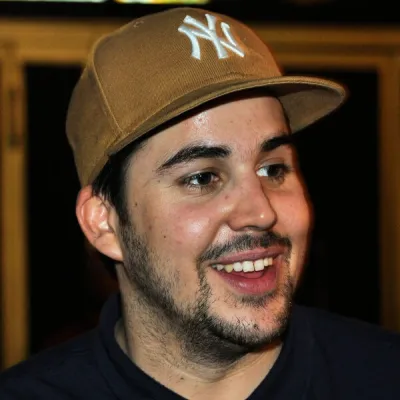
Artus
Human Design Chart
Biography
Artus — Manifesting Generator with Profile 6/2
Manifesting Generator 6/2 — Design at a Glance
Artus revealed himself as someone who possessed a rare combination of constant life energy and lightning-fast implementation power. His design inclined him to not only plan things but also pull them into his life with such speed that it often skipped steps. This ability for parallel action, however, could hide two major pitfalls: First, he tended to skip important intermediate steps, forcing him later to backtrack and fill in the gaps – a source of his specific frustration. Second, he frequently threw himself into multiple projects simultaneously, driven by various impulses.
This dynamic results from his configuration as an Manifesting Generator. He had a defined Sacral Center, which provided constant energy and made the strategy of reacting rather than initiating necessary. At the same time, he possessed an active connection to the Motor Centers, giving him Manifestor traits. The challenge lay in channeling this speed through inner validation. Only when his Sacral Center gave a clear “yes” and his authority agreed could Artus direct his creative power into a fulfilling play mode. Without this confirmation, the joy of multitasking quickly turned into frustration over unfinished tasks or lack of resonance. His path to satisfaction did not lie in linearly ticking off To-Do lists but rather in regularly checking whether his current activities still had inner approval and brought him joy.
Sacral Authority
Artus responded to external stimuli not through intellectual analysis but via direct physical signals. His design established the sacral authority as a central decision-making instance. This is exclusive to the Generator type, simplifying the process since strategy and inner guidance are identical here. A prerequisite for this was an open Emotional Center, allowing reflection time before the physical response came.
The decision manifested in Artus as a “gut feeling” or palpable surge of energy. He learned to pay attention to specific bodily sounds: grunts, hums, groans, or a clear “mm-hm”. As long as this resonance was positive, he felt vital and alive. His energy source seemed inexhaustible, enabling him to approach tasks with great enthusiasm. Artus was born to dissolve himself completely into activities, free from purposefulness, driven by joy and satisfaction rather than external goals.
Additionally, his active Spleen Center acted as a supportive instance. Through the connection to the Sacral Center, he could react especially quickly and spontaneously. This gave him direct access to his physical well-being and reliable instinctive perception, which he trusted in quick decisions.
The 6/2 Profile — Role Model / Hermit
Artus was marked by a clear development line: In the first decades of life, experimentation dominated while later reflective wisdom prevailed. Before age 30, his sixth line acted like a third. This meant that Artus learned primarily through trial and error in his youth. He gathered numerous personal experiences, retreated after mistakes, and actively sought out life rather than accepting ready-made answers. This process required patience and led to self-control through conscious boundary crossings.
Around age 30, this dynamic fundamentally changed. The sixth line became effective, prompting Artus to take a step back metaphorically into a “cave”. He looked at his earlier experiments with much distance, serving an intensive period of introspection for healing and deeper self-knowledge. Only when this inner clarity was achieved did Artus re-emerge – now as a wise person.
His second line in Gate 8 acted as a natural talent here. It allowed him to selflessly contribute to the collective and serve as a role model. Others recognized his gained wisdom and sought his advice to learn from his deep self-reflection ability. His individual contribution, often unusual, served the preservation of integrity in service to the whole, even if it was not always immediately acknowledged.
Single Definition — Defined & Open Centers
Artus revealed himself as someone with high energetic density and a strong, autonomous will. His design indicated a tendency towards reliable, direct communication that spoke from his inner core. This stability resulted from five defined centers: Throat, G Center, Heart/Ego, Sacral center, and Spleen.
The defined Sacral center provided him with a constant source of vitality. As a Generator, his strategy was not to initiate but to react to life. Only through this reaction could he correctly use his energy and avoid frustration. Simultaneously, the defined Heart/Ego center gave him the willpower to see things through and control resources himself. He had an urge to fulfill promises and prove his worth but needed to learn not to act impulsively but rather listen to his inner guidance.
His defined G Center granted him a firm identity and a clear sense of direction. Artus knew who he was and where he was going, yet could not force others to follow this path. The combination of Sacral energy and Heart will made him a powerful personality capable of manifesting things – as long as they waited for the right answers.
Furthermore, Artus had a defined Spleen center. This emphasized a strong, spontaneous intuition in the here and now and a robust immune system. He trusted his body awareness and instinctive warning signals without having to rationalize them.
In contrast, Head, Ajna, and Solar Plexus centers were open. These areas were not constant personality traits but mirrors of his interaction with the world. Artus tended to absorb mental inspiration or emotional waves from his environment and amplify them. He needed to learn not to personalize these thoughts and feelings as his own but rather view them as transient information. Similarly, the open Root center made him vulnerable to external stress; he absorbed the pressure from his surroundings but could not carry it indefinitely without retreating or consciously using an adrenaline boost.
Channels for determination, intuitive mastery, love and devotion.
Artus exhibited a fundamental approach that combined intuitive depth with technical perfection. His design suggested that he developed talents through repeated experimentation and mastery, where recognition and resources were essential for this process. This mechanism was active in the Channel of Wavelength 48-16: Gate 48 sought vital information while Gate 16 refined abilities through practice.
At the same time, Artus was designed to experience initiations through competitive shock and encourage others to do so as well. The Initiation Channel 51-25 connected the competing energy of Gate 51 with the universal love of Gate 25. Here it showed that true initiation came through invitation, not search, and strengthened the individual within the collective.
Furthermore, Artus had an instinctive ability to identify and promote products or ideologies. The Dedication Channel 44-26 linked the watchful tribal intelligence of Gate 44 with the ego strength of Gate 26. This allowed him to act as an entrepreneur or seller where he needed recognition as a platform for his messages.
This was complemented by additional influences: Gate 4 formulated logical processes for future security; Gate 49 reacted sensitively to tribal principles; Gate 8 promoted individual contributions and leadership; Gate 14 handled power with grace. On the personality side, Gates 5 (Rhythm), 28 (risks in the here and now) as well as design-related Gates 21 (control of material things), 12 (restraint/creativity) and 3 (mutation/order) were at work. These configurations shaped Artus’ path by emphasizing his ability for mastery, initiation, and instinctive promotion.
Collective Circuitry — Circuit Signature
Artus displayed inner strength that expressed itself as a clear, individual conviction. This attitude stemmed from the Centering Circuit, which in him connected the Identity and Heart Centers. Since this central energy did not flow to the Throat Center, his strong substance often remained unspoken; he lived his “I am so” without necessarily having to articulate it.
Parallel to this, three additional circuits worked as separate parallel forces since Artus had a Simple Definition where all centers lay in one single group. The Understanding Circuit connected his Throat Center with the Spleen via Channel 16-48. This gave him the ability to strategically share logical, rational insights – free from emotional coloring, focused on future-oriented structures.
Simultaneously, the Meaning-Finding Circuit ran through his design and linked the Identity Center directly to the Sacral Center via Channel 46-29. Here lay energy in processing past experiences. Emotional waves from earlier events were reflected to draw personal meaning; this insight was more internalized than shared outwardly.
Finally, the Ego Circuit connected his Heart with the Spleen center through Channel 26-44. This promoted a cooperative attitude in handling resources and relationships based on reciprocity ("give and take"). Since this circuit did not have a direct Sacral connection, this social interaction required regular pauses for regeneration. Together these four circuits formed a design of inner conviction, rational strategy, emotional reflection, and cooperative resource utilization.
Left Angle Cross of Revolution 2
Artus carried the transformative, revolutionary energy of the left cross of Revolution 2 within him. This shaped his deeper life dynamics through a principled orientation towards change and breaking old structures. His design laid a tendency to not only make individual adjustments but to trigger fundamental shifts that question existing orders and reshape them.
This configuration does not describe superficial unrest, but rather a structural impulse for renewal. The energy of this cross acts as a catalyst for processes where outdated patterns must be resolved to create space for new realities. Artus was thus involved in a dynamic that rejects stagnation and instead understands change as the necessary engine of progress. It is a force that does not seek validation, but rather the creation of new foundations.
The orientation towards revolution means here less chaos in the sense of upheaval, but rather the ability to initiate or carry essential changes. Artus' design thus promoted an attitude that transcends old boundaries and paves innovative paths, even if this provokes resistance. This energy served to break through the old so that new could emerge – a process central to his inner development.
Saturn Return — Life Cycles
At the age of 29, Artus was ready to take on a new level of adult responsibility. This became concrete in 2016 when he participated in the seventh season of the TV show 'Danse avec les stars' – a significant step in his career development.
This period coincided with his first Saturn return. In Human-Design mechanics, this cycle marks the transition from youth to established identity and adult responsibility. It is a phase where previously laid structures condense and a clearer life direction emerges. For Artus, this participation was not an accidental event but an expression of this inner maturation process: The stage provided the framework to live his identity publicly and test new competencies under pressure.
The first Saturn return often acts like a test or confirmation of what one already carries within. It forces confrontation with one's substance. Artus used this energetic turning point to reposition himself professionally. Instead of only maturing privately, he translated this inner consolidation into public performance. This underscores the dynamics of the cycle: Theoretical maturity becomes visible and anchored through concrete actions in the outside world.
Manifesting Generator · Sacral Authority — Synthesis
Artus' life seems marked by a deep internal dynamic that arises from the interplay of his manifesting generator energy, sacral authority, and the profile of role model. He is designed to react to life – a constant offer of energy through the defined Sacral Center – but at the same time possesses the ability to skip steps and push things forward quickly (manifesting aspect). This combination points to someone who stays in motion by spontaneously responding to impulses while simultaneously developing deep inner wisdom that he can later pass on as an example. The focus is thus on experiencing and processing experiences, transforming them, and making them accessible to others.
A central paradox in Artus' design lies in the tension field between his quick responsiveness and the need to connect with his internal rhythm. Sacral authority challenges him to pay attention to physical reactions without initiating them, while the manifesting component brings a certain impulsivity along. This generates a dynamic balance between letting go and quickly implementing potentials – a constant navigation between trusting one's inner compass and utilizing the speed given.
4 Defined Channels
Incarnation Cross - Left Angle Cross of Revolution 2
Solar Return
The Solar Return shows the moment when the sun returns to its exact birth position - your personal solar year.
Life Cycles
Discover the life cycles with a detailed triple view (birth chart, cycle chart, composite).
Human Design Profile
- Strategy
- To respond - wait for something to respond to
- Authority
- Sacral Authority
- Profile
- 6/2 - Role Model / Hermit
- Definition
- Single Definition
- Incarnation Cross
- Left Angle Cross of Revolution 2
- Date of Birth
- 17.08.1987 11:20
- Place of Birth
- Le Chesnay, France
Frequently Asked Questions
What is Artus's Human Design type?
What Profile does Artus have in Human Design?
Which authority guides Artus?
What incarnation cross determines Artus' life theme?
When was Artus born?
Discover your own Human Design
Are you also a Manifesting Generator? Find out in a personal reading how to unfold your multi-talents and direct your energy wisely.
More Personalities
Back to overviewSissy Spacek

Aldair

Alizée

Anémone

Angeli

Ann-Margret
