
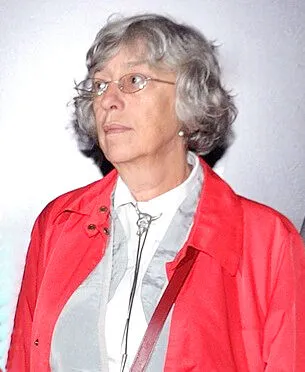
Anémone
Human Design Chart
Biography
She took her stage name in 1968 from the title of her film debut in Philippe Garrel's "Anémone."
She is associated with "Le Splendid", a group of influential French actors and filmmakers who have been a force in French film and theatre since their beginnings in the 1970s, and she appeared in the cult "Le Père Noël est une ordure." This film marked the end of her work with the group however.
In 1988 she was awarded a César as Best Actress for her role in "Le Grand Chemin," directed by Jean-Loup Hubert.
Anémone as a Projector 4/6 in Human Design
Projector 4/6 — Design at a Glance
Anémones design pointed towards focused perception. As a projector, her aura acted like a bright flashlight that immediately recognized system errors around her. This ability to bring 'light into the dark' for others was her core characteristic. However, direct confrontation with these flaws often felt unpleasant or even malicious to those around her, similar to a light beam directly in someone's face.
Instead, Anémone was most effective through radiant role modeling and living a harmonious life herself. This elegance naturally attracted others who then sought her insights. Her key strategy involved waiting for a respectful invitation before taking on a leadership role.
Since projectors lack a defined sacral center, Anémone lacked a constant source of intrinsic life energy. She experienced phases of high productivity followed by the need for rhythmic rest periods to avoid burnout. Living according to this design rewarded her with success; deviations led to experiencing her non-self theme: bitterness. Thus, her path did not lie in constant action but rather targeted, invited leadership and respecting her energetic rhythms.
Self-Projected Authority
Anémones design pointed towards extreme openness coupled with the continuous danger of losing herself in external stimuli and chasing energy. As a projector, she possessed the rare 'authority within.' This mechanism required her to find her inner truth through spontaneous self-expression or physical directional feeling rather than logical pondering.
The critical challenge was distinguishing spontaneous speech from reflective thought. What Anémone spoke without prior thinking revealed her uniqueness. Alternatively, she could feel drawn into a specific geographical or thematic direction by a bodily impulse. By following this internal pull, she became a guide for others and realized her specific success potential. The trap lay in drowning out this clear inner voice through distractions. Anémones path to decision-making was either dialoguing with herself or others – under strict listening to the spontaneous – or following physical impulses. Only so could she maintain her identity without succumbing to the open absorption of foreign energies.
The 4/6 Profile — Opportunist / Role Model
Anémones design led from an early experimental social life towards a later distanced wisdom. In her first three decades, she acted like a pure networker: actively seeking belonging and testing various relationship patterns driven by Line 4's heart need. This phase served learning through direct experience before deeper reflection set in.
With the activation of Line 6, an inner conflict emerged: the desire for close connection clashed with growing needs for overview and moral distance. Anémone faced integrating these tensions between emotional community desires and intellectual meaning-seeking. Her authority was based on acceptance; if her leadership wasn't recognized, she strategically withdrew rather than fighting against the current.
In later years, Anémone developed into a role model. She used cooperation as a primary mechanism while maintaining caution in opening her heart to prevent injuries. The mechanics of Line 6 prompted her to see the big picture and make conscious decisions for or against change. Rationalization often served as protection, while the pursuit of safety preserved her individuality. Her path was marked by balancing close group contact with necessary distance to judge wisely.
Single Definition — Defined & Open Centers
Anémones design featured a clear inner compass: defined head, ajna, and g centers formed a stable identity with firm direction sense, while open heart and sacral centers made her sensitive to her environment's energies. She lived under constant mental pressure to question and form concepts – a process that didn't provide direct energy for implementation but relied on the right timing through strategy. Her defined throat enabled reliable expression of these thoughts without impulsive action.
Simultaneously, Anémone absorbed environmental energies: The open heart center tended to seek proof of her worth and make promises for recognition despite lacking consistent willpower in her design. Her open sacral center amplified others' vital energy, leading easily to overload as she lacked a constant generative force herself. She had to learn distinguishing between her stable inner compass and fluctuating external influences – especially regarding emotions (open solar plexus) and stress (open root), which she absorbed but couldn't identify as her own. The challenge was enduring mental pressure without pushing it outward while not valuing absorbed energies as part of self.
Channels for inspiration, logical acceptance and mental abstraction.
Anémone showed a defining ability to inspire others through her authentic presence rather than words. This effect stemmed from the Inspiration Channel 1-8, connecting g center with throat center. Gate 1 allowed bold expression of her unique perspective, while Gate 8 made this contribution publicly effective. She lived her uniqueness and attracted attention, enabling others to discover their creativity.
Alongside this public presence, Anémone organized complex information logically. The Acceptance Channel 17-62 linked ajna center with throat center. Gate 17 visualized patterns that Gate 62 translated into detailed language. This gave her the gift of conveying thoughts structured and understandable if she waited for openness.
Simultaneously, Anémone sought meaning through experience. The Abstraction Channel 64-47 connected head center with ajna center. Gate 64 generated mental confusion through many possibilities while Gate 47 tried to grasp these into a coherent narrative. This process was an ongoing search for clarity, not a firm inner authority.
Additionally, other gates worked: Gate 13 promoted reflection and continuity in collective memory. Gate 2 stood for receptivity and evolutionary directions. Gate 7 projected future patterns and leadership hierarchies. Gate 46 emphasized dedication to the process and physical presence. Gate 12 brought poetic restraint and emotional mood into communication. Gate 15 organized collective behavior according to natural rhythms. Gate 25 contributed a mystical, innocent attitude. These configurations shaped Anémones way of perceiving and shaping the world.
Collective Circuitry — Circuit Signature
Anémones design pointed towards integrating inspiration with logical sharing. She appeared as someone who conveyed new individual expression through rational insights alongside emotional past reflection. Her chart featured a Simple Definition, meaning all defined centers – identity, throat, ajna, and head center – were energetically directly connected. This unity allowed coherent flow between inspiration, mind, and sense-making.
In the Knowledge Circuit, Channel 1-8 linked identity with throat center, fostering creative inspiration and unique path through mutation. The pulsating format energy supported transformation through new expression. In the Understanding Circuit, Channel 17-62 worked between ajna and throat centers. This was about freely sharing logical strategies and rational insights focused on the future. Finally, the Meaning-Finding Circuit connected head with ajna center via Channel 64-47. This enabled abstracting emotional experiences from past to find their meaning and cyclically share this knowledge with others. Through this interconnected structure, Anémone could unite innovative flashes of insight with strategic thinking and reflective emotion, thus initiating change in her environment.
Right Angle Cross of the Sphinx 3
Anémones design bore the signature of the right Sphinx Cross 3. This configuration set a specific inner dynamic that shaped her actions and perception of the world. In Human Design, this cross marks a deep connection between survival instinct and ability to assert oneself in complex social or existential structures. It's not mere adaptation but strategic intelligence designed to master challenges through patience and precise timing.
For Anémone, this meant often approaching situations with calm observation from a distance. She didn't act impulsively but waited for the full picture to emerge. This stance allowed her to maintain clarity in moments of uncertainty and make decisions securing long-term stability. The right Sphinx Cross 3 grants an inner compass distinguishing essentials from superfluous. Anémone used this gift to position herself effectively without losing her identity, staying action-ready even in tough phases.
Saturn Return · Uranus Opposition · Chiron Return · 2nd Saturn Return — Life Cycles
Anémones design featured a phase of sudden disruptive changes and liberating blows. It showed moments of radical reorientation where old structures broke down for new paths. This Uranus opposition in the life cycle didn't act as gentle change but an energetic break with the familiar, often surprising and forcing deep shifts.
In 1988 at age 38, Anémone received a César award for best actress in Jean-Loup Huberts 'Le Grand Chemin.' This success occurred precisely during this cycle, serving as concrete proof of described mechanics: Recognition didn't come through gradual adaptation but marked the peak of a phase dissolving old boundaries. The César was visible evidence of disruptive power allowing her to break free from previous constraints and enter a new artistic level. Uranus energy here catalyzed this breakthrough by building necessary pressure to shatter established role models or career paths, positioning Anémone visibly affirmed.
Projector · Self-Projected Authority — Synthesis
Anémone lived a life marked by deep inner clarity and the desire to express it authentically (Channel 1-8). Her defined mental centers (ajna & head) enabled recognizing patterns and generating knowledge (Knowledge Circuit), always striving to understand the world through her unique perspective (Channel 64-47). The connection of identity and expression shaped a personality both inspiring and precise in communication – an example encouraging others to live their truth. Her g center anchored this direction while remaining open to other energies.
However, Anémones design harbored a central tension: the ability for deep analysis and abstraction (Channel 64-47) contrasted with avoiding getting lost in mental constructs. Her open heart center made her receptive to others' emotions, while undefined root center required constant adaptation to external influences. This dynamic led Anémone developing extraordinary understanding of complex connections but needing vigilance not losing own inner direction and being overwhelmed by others' energy.
3 Defined Channels
Incarnation Cross - Right Angle Cross of the Sphinx 3
Solar Return
The Solar Return shows the moment when the sun returns to its exact birth position - your personal solar year.
Life Cycles
Discover the life cycles with a detailed triple view (birth chart, cycle chart, composite).
Human Design Profile
- Type
- Projector
- Strategy
- Wait for the respectful invitation
- Authority
- Self-Projected Authority
- Profile
- 4/6 - Opportunist / Role Model
- Definition
- Single Definition
- Incarnation Cross
- Right Angle Cross of the Sphinx 3
- Date of Birth
- 09.08.1950 07:00
- Place of Birth
- Paris, France
Frequently Asked Questions
What Human Design Type was Anémone?
What Profile did Anémone have?
What Authority did Anémone possess?
What Incarnation Cross did Anémone have?
When was Anémone born?
Discover your own Human Design
Are you also a Projector? Find out in a personal reading how to unfold your leadership qualities and recognize the right invitations.
More Personalities
Back to overviewSissy Spacek
Alain-Fournier

Ann-Margret

Arletty

Arno

Artus
