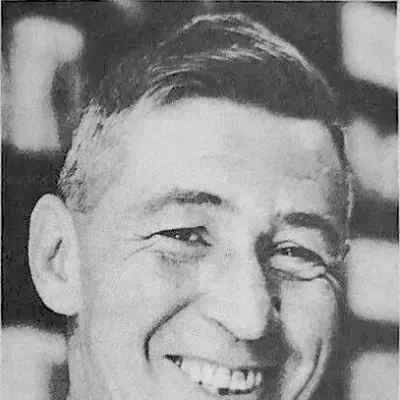
Alain-Fournier
Human Design Chart
Biography
What does Projector 1/3 mean for Alain-Fournier?
Projector 1/3 — Design at a Glance
Alain-Fournier appeared with a focusing aura that made system errors visible to others immediately. His Projector design lacked intrinsic, constant life energy due to the undefined Sacral Center, leading to phases of high activity followed by mandatory rest periods to avoid exhaustion.
His dense aura functioned like a bright flashlight, directing light directly onto problematic areas in his environment and bringing 'light into darkness'. Although he could recognize weaknesses in relationships or structures instantly, direct confrontation was counterproductive. Such inappropriate corrections often triggered resistance as they felt like glaring lights in the face. The most effective strategy involved waiting for an honest invitation. By living his own path and exemplifying harmony, Alain-Fournier attracted others who actively sought his leadership. This passive authority was crucial to his success. If he did not follow this strategy, the theme of bitterness due to non-self emerged. His design promised reward through success if he waited for recognition and invitations from others rather than imposing insights uninvited. The necessity of regeneration was as central as the art of subtle guidance without coercion.
Emotional Authority
Alain-Fournier showed an internal structure that revealed spontaneous judgments as misleading. His defined Solar Plexus Center functioned as emotional authority – a mechanism that always took precedence regardless of other definitions in the chart. This did not mean he was capricious, but rather that his perception was colored by a permanent emotional wave: A project could appear brilliant at one moment and worthless the next.
These fluctuations were not errors but the natural ebb and flow of his inner landscape. The immediate feeling was merely a snapshot, no final judgment. Quick decisions based on initial excitement or rejection often proved misleading and led to misjudgments. The solution lay in time. Alain-Fournier needed distance to find clarity. He had to let decisions mature ideally through multiple iterations. This process served to even out the intense initial feelings. Only when the emotional wave subsided and calm set in could he recognize his true truth. Patience was not an optional characteristic but a mandatory necessity of his mechanics. Through this hesitation and waiting, he gained the necessary emotional distance to take long-term steps with certainty rather than being guided by passing moods.
The 1/3 Profile — Investigator / Martyr
Alain-Fournier emerged as someone who merged theoretical knowledge with practical application. His design indicated a tendency to learn through trial and error, both intellectually and empirically. This configuration describes the dynamics of Profile 1/3: the need for deep understanding first (Line 1) stood in tension with the impulsive urge to immediately try out (Line 3).
The Line 1 brought the desire for foundations and depth. It was necessary to allow time for significance to emerge and instinctively recognize practical matters. Simultaneously, the Line 3 emphasized responsibility through trial and error. Mistakes were not failures but integral parts of the learning process. Alain-Fournier had to accept that self-earned insights only emerged through this testing on heart and soul. Whoever received a judgment from him could trust it absolutely. Behind every recommendation stood double validation: theoretical penetration by Line 1 and practical trial by Line 3. This process was often arduous, as the fear of insufficient knowledge (Line 1) opposed the urge to act (Line 3). Yet precisely this friction created the high credibility of his insights. The depth of knowledge became accessible only through the courage for practical application and willingness to learn from mistakes. Thus emerged a wisdom that was not just abstract but proven in life.
Single Definition — Defined & Open Centers
Alain-Fournier showed himself as someone who combined constant willpower with deep, time-dependent emotional intuition. His design indicated a tendency to keep promises and self-determinedly use resources while learning to make emotional decisions not impulsively but after experiencing the inner wave.
This interplay resulted from his defined Heart Center, which gave him access to constant willpower, ego strength, and the ability to actively shape his life as well as material resources. He possessed the energy to work and be successful, it was healthy for him to do exactly what he had promised. Simultaneously, his defined Solar Plexus Center acted as inner authority. It did not convey immediate truth in the moment but an emotional clarity that only revealed itself over time. Alain-Fournier tended to wait out the highs and lows of his emotional wave before acting to prevent impulsive reactions and gain deeper insights.
In contrast, his open centers made him vulnerable to external conditioning. His open Head Center left him without constant mental inspiration; he tended to get entangled in questions or doubts of others rather than having lasting answers himself. The open Ajna Center meant that his conceptual thinking was flexible but did not serve as a source of personal truth – he could adopt and reflect ideas without needing to hold onto them. His open G Center lacked a firm identity or direction; he did not actively seek life goals but let places and relationships initiate him when they were correct for him. Additionally, his open Sacral Center was sensitive to the energy of others, which could lead to overextension if he did not listen to his own authority. His open Spleen Center made him vulnerable to survival fears and clinging to unhealthy situations out of a desire for safety. Finally, his open Root Center absorbed stress from the environment that he did not generate himself but only amplified.
Channels for authentic connection and shared growth.
Alain-Fournier sought his place in a larger whole, guided by the need to build bridges between individuals. His design showed a clear tendency towards community building through direct, personal invitations rather than impersonal addresses. This attitude stemmed from Channel Community 37-40, which connects Solar Plexus with Heart. Gate 37 strove for affection and recognition within the collective, while Gate 40 was ready to work to serve loved ones but needed breaks and rewards. This combination ensured 'good deals' in a social sense: agreements based on mutual support without hierarchy. Alain-Fournier understood that such a bond could not be closed spontaneously but had to be carefully considered and formulated over time for the benefit of both sides. The willpower behind this agreement guaranteed the connection. Additional energies were at work: Gate 48 allowed recognition of deeper patterns in the collective, even if this led to frustration. Gate 21 directed material things and sought respect in service to the community. Gate 39 provided fuel for reassessment through analysis and provocation while Gate 38 set boundaries and defended individual integrity. In personality aspect, Gate 26 supported the conviction of the tribe towards innovation but needed rest periods. Gate 6 regulated emotional waves as a biological boundary for growth. Together these configurations shaped a person who valued authentic connection and fair, long-term collaboration beyond mere material transactions.
Tribal Circuitry — Circuit Signature
Alain-Fournier's design indicated a tendency toward cooperative action and joint resource building. He appeared as someone seeking mutual support and maintaining an even balance between giving and taking – the dynamics of 'I give you today, tomorrow you give me'.
This attitude resulted from his simple definition within the tribe group. His Heart Center was directly connected to Solar Plexus through Channel 37-40 ('Community'). This channel established a clear structure for social interaction and collective well-being. Since Alain-Fournier had no connection to Sacral, he lacked the constant automatic life force of this center. Instead, his energy production for the tribe depended on sufficient rest periods. Without these regenerative phases, the ability to create resources would have been exhausted.
The Ego Circuit to which this connection belonged did not focus on individual self in an egoistic sense but rather on the group. The mechanics emphasized tradition and conservatism as well as use of touch and smell for orientation. Emotional waves worked like a ratchet, processing experiences step by step. Alain-Fournier thus lived within a structure that required cooperation but also set strict boundaries to preserve his own strength. His design demanded a rhythmic alternation between active interaction and necessary withdrawal to secure the basis for further joint achievements.
Right Angle Cross of Tension 3
Alain-Fournier's design established an underlying stance where inner tension did not function as disturbance but rather as essential motor of life. This configuration, the right cross of tension 3, described a dynamic in which pressure and resistance formed driving forces propelling him forward. Instead of striving for a tension-free existence, his system was designed to generate energy from friction and challenges. The tension here was no state to be resolved but raw material for actions and decisions.
This mechanism acted as a constant source of impulses. Where others might seek calm, Alain-Fournier found orientation in the intensity of the moment. His design knew no passive endurance; it required an active engagement with resistances that stood against him. This inner dynamic shaped his approach to the world: He responded to stimuli through movement and adaptation, driven by the need to utilize existing energy. It was a process of constant balance where tension itself pointed the way. Without this driving force, his internal architecture would have come to a standstill; it was the pulse that kept his system running and enabled him to exist and act in his specific manner.
Projector · Emotional Authority — Synthesis
Alain-Fournier lived a life marked by deep inner search and the need for authentic connection. His open G Center pointed to constant adaptation to environment while his defined Heart Center endowed him with strong will and ability to pursue personal values. This combination led him always to seek an authentic expression of identity – one not restricted by external expectations or conditioning. The openness towards Sacral and Root Centers amplified sensitivity to others' energies, making him a perceptive observer but also vulnerable to overstimulation. Through the profile as Researcher/Experimentor, he sought deeper understanding through experience, with emotional authority helping find clarity in complex emotional worlds.
A central paradox in Alain-Fournier's design lies in the interplay of adaptability and inner strength. His open G Center points towards a certain formlessness – the ability to adapt to environment – while his defined Heart Center represents a strong internal compass. This led to tension between desire for belonging and need to remain authentic. He was an energy receiver but also someone who had to find his own direction, forcing him constantly to weigh which influences he would allow and which he would reject.
1 Defined Channel
Incarnation Cross - Right Angle Cross of Tension 3
Solar Return
The Solar Return shows the moment when the sun returns to its exact birth position - your personal solar year.
Life Cycles
Discover the life cycles with a detailed triple view (birth chart, cycle chart, composite).
Human Design Profile
- Type
- Projector
- Strategy
- Wait for the respectful invitation
- Authority
- Emotional Authority
- Profile
- 1/3 - Investigator / Martyr
- Definition
- Single Definition
- Incarnation Cross
- Right Angle Cross of Tension 3
- Date of Birth
- 03.10.1886 05:00
- Place of Birth
- La Chapelle d'Angillon, France
Frequently Asked Questions
What Human Design Type was Alain-Fournier?
What Profile did Alain-Fournier have in Human Design?
What Authority guided Alain-Fournier?
What Incarnation Cross did Alain-Fournier have?
When was Alain-Fournier born?
Discover your own Human Design
Are you also a Projector? Find out in a personal reading how to unfold your leadership qualities and recognize the right invitations.
More Personalities
Back to overviewSissy Spacek

Anémone

Angeli

Ann-Margret

Bourvil
Hergé