Anton Ghon
Human Design Chart
Biography
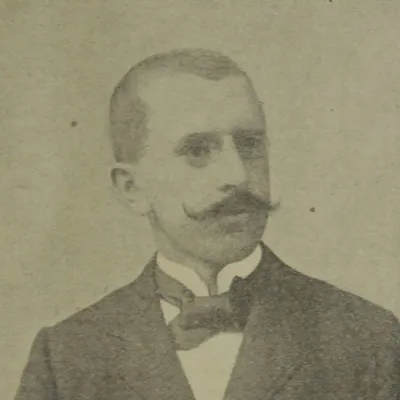
From 1884 to 1890, Ghon studied medicine at the university in Graz. In 1890 he volunteered at the dermatologic clinic in Vienna. In 1892, he became an aspirant to the pathologic-anatomic division at Krankenanstalt Rudolfstiftung (Rudolf Foundation). In 1893, he worked as demonstrator to the chair of pathological histology and bacteriology and as of 1894 as assistant of Anton Weichselbaum (1845–1920) at the pathological-anatomical institute at the University of Vienna.
Anton Ghon travelled to Bombay in 1897 as a member of the Austrian delegation researching the bubonic plague. For their findings on aetiology, anatomical pathology and epidemiology, he and his colleagues were nominated for the Nobel Prize in 1901. Ghon completed his habilitation in 1899 in Vienna and was appointed associate professor in 1902. In 1910 he became full professor of pathological anatomy at the German University in Prague succeeding Richard Kretz.
In 1910, Anton Ghon married Karoline Illatz in Vienna. He retired in 1935 and died in Prague on 23 April 1936, aged 70, shortly after retiring from his university position. His body was transferred to his hometown Villach and laid to rest in the family tomb.
Anton Ghon as a Reflector 2/4 in Human Design
Reflector 2/4 — Design at a Glance
Anton Ghons design showed a tendency towards extreme receptivity. As a reflector, he lacked defined centers, meaning that he lacked constant, inherent energies of his own. Instead, he acted as a mirror to his environment. He perceived the energy of other people and nature – influenced by seasons and astronomical constellations – particularly strongly. This configuration required living in harmony with natural cycles. For important decisions, it was essential for him to wait at least one month, using an entire moon cycle. This formed his ideal strategy.
If Anton Ghon followed this approach and his inner authority, he automatically found people and environments that suited him well. In such moments, he could observe freely without attachment or identification. His design promised him a reward in the form of joyful surprise for doing so. Living against his design likely led to deep, lasting disappointment – both regarding himself and the state of the world. Thus, his nature was not defined by fixed structures but by the ability to reflect and react to his surroundings. This mechanism shaped his entire life approach and way of perception.
No Inner Authority
Anton Ghon lacked inner authority – a rare configuration that fundamentally influenced his decision-making process. Since he was neither classified as a mental projector nor a reflector, he lacked direct physical access to answers used by other types. Instead, his process was defined by a complex exchange with his environment. He sought interaction with various people to activate dormant potentials in his open centers through energetic exchanges. This dialogue allowed him to view issues from multiple perspectives and express information in different ways. His high resonance ability helped him identify the right environment and conversation partners for this exchange.
Evaluating these collected impulses was a time-consuming process that required withdrawal. In solitude, Anton Ghon could see the thread of events, distinguish relevant from irrelevant information, and structure the essential elements. This ability to filter meaningful patterns out of a mass of data formed his specific success capital. Central to this was always choosing an environment where he felt comfortable and could exchange freely. Only there did his sense for what truly belonged to him and which decisions were right deepen over time.
The 2/4 Profile — Hermit / Opportunist
Anton Ghon lived in a constant interplay between the need for withdrawal and the desire for community. His design created tension: On one hand, he needed the solitude of the 'hermit' to gain inner clarity; on the other hand, it drew him towards connection with his closest group, the 'community'. This dynamic required clear communication outward – when he sought company and when he wanted to be left alone. Only then could he reflect upon the knowledge of his network during solitary times and process it into brilliant ideas.
This structure was influenced by specific energetic influences. Line 2 of Gate 38 gave him an intuitive sharpness for self-defense, paired with discretion. He could resist without becoming aggressive, which sometimes made him seem unpredictable. At the same time, the fourth line of Gate 48 affected his drive towards depth and restructuring. Here a tendency to frustration in long-term goals was shown; instead of continuous progress, he preferred short, intensive phases followed by necessary interruptions. These pauses served not for inertia but for deep reorganization of perspectives. The combination of an internally braked fighter and the need for periodic restructuring shaped his path: He withdrew to digest and emerged to connect – a rhythm essential for his inner balance.
No Definition — Defined & Open Centers
Anton Ghons Human Design profile lacked any defined centers, resulting in extreme openness to the energetic fields of his environment. Without internal, constant energy sources, he was dependent on external initiation to find direction and identity. His open Head and Ajna Centers allowed him to absorb mental inspirations and concepts without having to hold them as personal truth; this enabled a flexible intelligence but made him vulnerable to pressure to provide answers for others' questions.
His open G Center meant that he did not have a fixed identity, instead reflecting in relationships and places. He tended to align with what his environment showed him rather than imposing a rigid direction of his own. His undefined Heart Center freed him from the compulsion to prove his worth through willpower or promises; he was not geared towards competitive action or commitments out of ego.
His open Sacral Center also indicated that he did not generate consistent vital energy. Instead, he absorbed the life force of others and amplified it, which could quickly exhaust him if misaligned. His undefined Solar Plexus made him a sensitive barometer for emotional moods; he absorbed feelings from his environment without identifying them as his own, helping him distinguish between personal emotions and conditioned reactions.
His open Spleen Center warned against spontaneous decisions, often driven by fear or false security. Finally, his undefined Root Center took on external stress that he did not generate himself. Anton Ghon lived in a state of total permeability, which allowed him to reflect and understand the wisdom of other centers without adhering to their conditioning. His mechanics lay in being a mirror for human potential by trusting his inner authority rather than succumbing to external pressures.
Channels & Gates
Anton Ghon was someone who defended his individual integrity through clear boundaries, stemming from Gate 38, which builds resistance against harmful forces and accepts only reinforcement to maintain identity. This was a struggle for life meaning that only became active when he employed it according to his strategy. Parallel to this, he had a deep ability in pattern recognition through Gate 48. This gate enabled understanding complex connections and correction for the greater good but often led to frustration as it offered pure expert knowledge without practical application. It was connected with so-called 'black magic', meaning recognizing manipulative structures.
His energy was fueled by Gate 39, serving as fuel for mutations. Here selective processes through analysis and re-evaluation were key. Provocation was a means to recognize spirit and release adrenaline, necessary to trigger change. In the material realm, Gate 21 exerted control over physical things. It helped him overcome obstacles through power but required respect and recognition in service of the community. This configuration shaped a person who internally balanced between the pressure for self-assertion (Gate 38) and analytical drive for change (Gate 39), while externally acting with deep understanding (Gate 48) and material guidance (Gate 21). The combination created tension between the necessity to set boundaries and the impulse to correct or provoke the collective through expert knowledge.
Circuit Signature
Anton Ghons design was marked by the absence of any defined channels. This meant that there were no internal, automatic energy flows between his centers. His system did not function as a closed, self-regulating whole but rather remained open and permeable to external influences. Without the structure of defined connections, he lacked typical recurring patterns or inner constraints often characterizing people with defined channels. Instead, his design showed high adaptability to each environment and situation. He was less guided by a fixed internal program than by direct exchange with his surroundings. Each interaction could reshape him or influence him as no internal barriers or rigid routines channeled this process. This configuration set a tendency towards great flexibility and openness but also potential uncertainty regarding his unchanging core structure. Anton Ghon lived in a state of potential indeterminacy, which allowed him to flexibly adapt to new circumstances without being bound by past energetic patterns. His design offered no fixed internal compass from connected centers but reacted sensitively to the energies of others and the demands of the moment. This created an existence that was strongly context-dependent and distinguished more by external resonance than inner consistency. The absence of defined channels did not mean emptiness, but a specific form of freedom from inner constraints paired with the necessity to seek orientation always from outside.
Right Angle Cross of Tension 4
Anton Ghons Human-Design profile featured the right cross of tension four. This configuration shaped a fundamental disposition characterized by profound, often unspoken internal tension. It was not superficial stress or nervous agitation but rather a structural trait of his character: an ongoing, almost physical sense of pressure or expectation that worked from within.
In Human Design mechanics, this cross describes a specific kind of energy distribution. The 'tension four' refers to the necessity of working with resistance and pushing through challenges without losing inner integrity. The 'right cross' directed this tension outward in a particular direction: Anton Ghon lived with the constant perception of boundaries that needed to be respected or overcome. This energy was not a flaw but an integral part of his way of moving through the world, creating a persistent internal dynamic that led him to experience situations not passively but filtered and responded to through this specific tension lens. It was a lifestyle where the feeling of pressure and demand never entirely disappeared but served as a driving force shaping his actions and reactions.
Saturn Return · Uranus Opposition · Chiron Return · 2nd Saturn Return — Life Cycles
Anton Ghons design inclined towards structured, fact-based knowledge acquisition. His mechanics promoted the ability to systematically organize complex relationships and derive practical insights from them. This tendency became particularly evident during his first Saturn return. In Human Design, this cycle marks the transition into a phase of maturity and responsibility where internal structures become outwardly effective and initial sustainable results emerge.
In 1897, at age 31, Ghon gained significant knowledge about the plague in Bombay. This event was not isolated but an expression of what his design facilitated during this life stage: condensing years of groundwork into a robust, applicable result. The Saturn return often acts as a filter separating the essential from the non-essential and bringing personal competence to the forefront. For Ghon, it meant that his analytical strengths now concretely translated into professional success. He used this time to solidify his expertise and transform it into practical insights. His chart mechanics supported a clear, goal-oriented approach to problems, enabling him to find reliable solutions even under pressure. Thus, his design not only encouraged the accumulation of information but also its meaningful integration into a larger whole.
Reflector · No Inner Authority — Synthesis
Anton Ghon lived as a Reflector, profoundly influenced by the energies around him. Without defined centers, he perceived the world as a mirror and responded to external influences with heightened sensitivity towards natural cycles. This openness allowed him to receive information from various sources and process it in his undefined Head Center (where doubt and confusion arose) – a process that constantly left him oscillating between the need for inner peace (Line 2) and the desire for exchange with selected individuals (Line 4). He found reward in the surprise emerging from this unstable state, especially when he allowed himself time for internal processes.
A central paradox shaped Anton Ghons existence: The tension between Gate 38 (Struggle, Resistance) and Gate 39 (Mutation, Selection) in his right cross pointed to an inner dynamic where he set boundaries and fought for his integrity while also being open to changes and new insights. This field of tension manifested when – as the event of 1897 illustrated – intensive engagement with external circumstances (plague in Bombay) led him to crucial career realizations that represented a mutation in his understanding.
Incarnation Cross - Right Angle Cross of Tension 4
Solar Return
The Solar Return shows the moment when the sun returns to its exact birth position - your personal solar year.
Life Cycles
Discover the life cycles with a detailed triple view (birth chart, cycle chart, composite).
Human Design Profile
- Type
- Reflector
- Strategy
- Wait a lunar cycle (approx. 28 days)
- Authority
- No inner authority - learn more
- Profile
- 2/4 - Hermit / Opportunist
- Definition
- No Definition
- Incarnation Cross
- Right Angle Cross of Tension 4
- Date of Birth
- 01.01.1866 12:15
- Place of Birth
- Villach, Australia
Frequently Asked Questions
What is Anton Ghon's Human Design type?
What Profile did Anton Ghon have?
What authority did Anton Ghon possess?
What incarnation cross did Anton Ghon have?
When was Anton Ghon born?
Discover your own Human Design
Are you also a Reflector? Find out in a personal reading how to find the right environment and understand your unique mirror effect.
More Personalities
Back to overviewBaekhyun

Jihyo

Nadar
Rune Aanderaa

George Abell

Wolfgang Abendroth