Photo: Wikimedia Commons
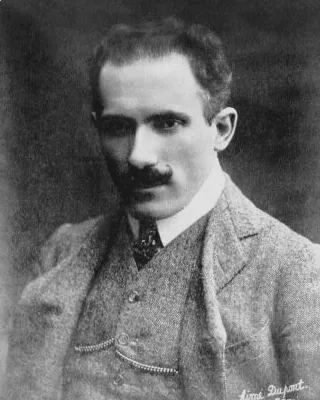
Arturo Toscanini
Human Design Chart
Biography
He was a cellist at age nine and, not long out of school, was hired as first cellist and assistant chorus master by the impresario Claudio Rossi, who was organizing an opera tour of Brazil. Though only 19, Toscanini was forced to lead the performance of "Aida," following the expulsion of the original conductor, and won over an unruly audience prone to jeering. So he began his career as conductor of the Rio de Janeiro opera in 1886.
Returning to Italy, he conducted the premieres of "Pagliacci," in 1892, and "La Boheme," 1896.
Toscanini became principal conductor of Italy’s leading opera house, La Scala, in Milan, from 1898 to 1903. From 1908 to 1915 he was principal conductor of the Metropolitan Opera House in New York City. He conducted the New York Philharmonic from 1926 to 1936. In 1937, he became conductor of the National Broadcasting Company Symphony Orchestra which had been organized specifically for him.
His last concert was on 4 April 1954, when he faltered during a live radio broadcast of an all-Wagner program with the NBC Symphony Orchestra in Carnegie Hall. NBC quickly took the program off the air. Toscanini momentarily recovered, and NBC turned the microphones on again, but then started to leave the podium without completing the piece. He never conducted again.
After a New Year’s party in 1957, Toscanini suffered a hemorrhage, then several more over the next week. He came out of a coma on 15 January 1957 to sing a snatch from Verdi’s "Aida," the opera that had made his name when he had conducted it from memory. The next morning, he was dead.
Arturo Toscanini — Generator with Profile 1/3
Generator 1/3 — Design at a Glance
Arturo Toscanini possessed an enormous and enduring sacral energy quantity that shaped his nature as a Generator. This configuration suggested that his effectiveness did not depend on spontaneous initiatives but strictly operated reactively: Energy was only effectively released and utilized when he responded to internal impulses. His design demanded a clear distinction between the mere will to act and the actual inner confirmation – that gut feeling of saying, “Yes! Let’s get started!”
If Arturo Toscanini lived in harmony with this principle by reacting to signals from his environment and then acting accordingly, a deep fulfillment and undisturbed productivity would be evident. Conversely, ignoring this reactive principle – such as constantly initiating without inner desire or working on tasks that found no resonance – inevitably led to frustration and energy loss. The design warned against being held back externally when there was still power available, just as much as it cautioned against pushing against internal resistance. The central mechanism consisted in not driving but reacting; only thus could the immense endurance of the Generator be utilized sustainably without exhaustion. Each step based on this inner confirmation became a source of his strength, while forced actions acted as stumbling blocks that let his energy seep away.
Emotional Authority
Arturo Toscanini exhibited an internal structure where the defined Solar Plexus Center functioned as authority. This meant that his decision-making was never immediate but followed a natural rhythm. The Emotional Center carried the authority, independent of other definitions in his design. He was subject to an emotional wave that showed itself in constant ups and downs of his feelings. The world appeared to him always colored by his current mood: In one moment full of enthusiasm, in the next deeply negative. His feeling at the moment, however, was only a snapshot, not a final judgment. Spontaneous reactions proved unreliable and could have negative consequences as they confused the temporary mood with true inner truth.
For Toscanini it was essential to gain time. He let decisions mature, often through the conscious “slumbering over” of important questions. This process required patience and enduring uncertainty. Over time, intense feelings subsided, emotional distance arose, and clarity set in. Only then had he gone through the process and could adopt a calm, well-founded stance. This mechanism shaped his life: Long-term steps needed this phase of rest to recognize the true direction, separate from the noise wall of passing emotions. His strength did not lie in the speed of reaction but in the depth of subsequent insight that only became accessible in the stillness of the waves.
The 1/3 Profile — Investigator / Martyr
Arturo Toscanini emerged as someone whose judgments were based on a unique synthesis of deep theoretical knowledge and practical, error-based experience. His design laid out a tendency towards this dual learning process: He combined the need for thorough preparation with the urge to unbiased experimentation.
This configuration corresponds to Profile 1/3, the Researcher and Experimenter. The first line, represented by Gate 17 (Openness), promoted an observant thinking that took in various opinions to better grasp reality. This created a foundation for theoretical depth and future perspectives. Simultaneously, the energy of the third line, here at Gate 58, acted as a driving force for independent experiments. This line allowed him to self-stimulate and not rely on external confirmation but learn through personal trial.
For Arturo Toscanini, credibility only arose from the connection of both aspects: Only what was understood intellectually and practically tested was considered true. External authorities were less important than self-earned insights. When he made a decision or rendered judgment, he had previously examined this matter theoretically as well as practically to his heart’s content. This process of trial and error was central to his understanding of the world; personal mistakes served not as obstacles but as essential sources for true knowledge. His design thus shaped him into a person whose authority rested exclusively on this rigorous, personal scrutiny.
Triple Split Definition — Defined & Open Centers
Arturo Toscanini had a massive, continuous presence in the centers of Generation and Manifestation. His design showed him as someone with a constant inner motor for action-oriented self-realization, supported by defined Sacral, Throat, and G Centers. This configuration gave him a clear identity and the energy to consistently pursue visions. Additionally, his Ajna Center was defined, making mental processes steady and unchanging; he thought constantly and was not easily influenced from outside. His Root Center was also defined, providing a specific way of dealing with stress while Solar Plexus (emotional waves) and Spleen (intuitive perception) were firmly wired. This led to deep emotional intelligence and a strong existential instinct.
The combination of Sacral, G, and Ajna Centers created enormous inner substance: energy, identity, and mental framework worked together. However, Head and Heart Centers were open. The open Head Center meant that inspiration was situational; he tended to be distracted by doubts or the search for others' answers rather than wanting to remain permanently inspired. The open Heart Center showed a vulnerability to proving willpower under pressure. Instead of making promises out of ego motives, he relied on trusting the inner authority of emotional clarity in Solar Plexus and the sacral response. His design marked him as someone who spoke his truth from a reliable source without getting lost in the whirlwind of mental confusion or the cycle of self-proof.
Channels for resources, logic, judgment and emotional intuition.
Arturo Toscanini's design tended towards impulsive, directional mutation paired with an analytical, detail-oriented structuring. This duality shaped his expression: powerful aura on one side, logical clarity on the other.
Channel of Beats 14-2 connected the Sacral Center as a source of generative energy to the G Center for identity and direction. Through Gate 14, adept at handling power, and Gate 2, higher knowledge, he had the resources to initiate new directions. This tantric channel promoted innovation and uniqueness. Toscanini could translate mutative impulses into material reality through trust in his own reaction from the Sacral Center. His aura influenced others; people found their direction by coming across him without active guidance needed. He was the custodian of essential resources to break the status quo and further develop the collective.
Parallel to this, Channel of Accepting 17-62 organized information mentally. This channel connected Ajna Center with Throat Center via Gate 17 of opinions and Gate 62 of details. It was a continuous inner process of logically ordering visual patterns into language. Toscanini possessed the gift to present complex connections as formulas or theories if invited or timing was right, enabling effective teaching and precise communication since he only spoke when his perception was logically integrated.
Additionally, individual gates worked: Gate 52 demanded self-imposed pauses for pattern correction; without clear goals, stress arose. Gate 49 in Solar Plexus Center steered the emotional wave regarding principles and sacrifice while Gate 53 represented the start of new developmental cycles. Gate 5 set the basic rhythm requiring firm habits to build energy. This configuration created a person who blazed new trails through authentic reactions while simultaneously promoting understanding through structured logic.
Collective Circuitry — Circuit Signature
Arturo Toscanini showed penetrating, logical clarity in his work approach. His design was marked by Triple Definition, meaning three separate energetic systems worked parallel without directly flowing into each other. The primary driving force came from the Understanding Circuit. Here Channel 17-62 (Accepting) and Channel 18-58 (Judgment) connected Ajna Center with Throat Center as well as Spleen with Root Center, creating a focused, future-oriented energy aimed at structuring rational insights free of conditioning and clearly expressing them. This was 'emotionless ratio' that ordered complex information through logical analysis and communicated strategically.
Parallel to this existed the Knowledge Circuit with Channel 2-14 (The Beat). It connected Identity Center with Sacral Center providing pulsating, acoustic format energy for self-expression. However, this power stood isolated from the logical structure of the Understanding Circuit.
The third system was the Meaning Circuit with Channel 30-41 (Recognizing), connecting Solar Plexus Center with Root Center and bringing cyclical emotional waves from past experiences into play. This reflection served to find meaning behind events and share feelings. In Arturo Toscanini, these three areas – cool logic for the future, pulsating identity, and emotional processing of the past – worked as parallel independent forces shaping his actions without merging into a single stream.
Right Angle Cross of Service 1
Arturo Toscanini carried the archetypal imprint of the right cross of service. This design established a fundamental orientation towards serving as the central expression of his existence. It was not a conscious choice or learned attitude, but rather a profound and often unconscious motivation that shaped his entire life pattern. His inner drive was to place himself in the service of others and express his own identity through this dedication. The right cross of service does not describe a specific activity but the essence of an underlying disposition where the well-being of the whole or community takes precedence. For Arturo Toscanini, serving was not a means to an end but the core of his life's mission. It influenced his decisions and actions in ways that went beyond mere duty fulfillment. This configuration gives life meaning through self-sacrifice – or rather: manifests as a constant will to serve others. Arturo Toscanini lived this archetypal disposition by aligning his energy and being towards fulfilling a service role that extended far beyond the personal.
Saturn Return · Uranus Opposition · Chiron Return · 2nd Saturn Return — Life Cycles
Arturo Toscanini's design featured a tendency toward structural turning points, which crystallized through concrete life events. His first Saturn return occurred in 1896 when he was 29 years old and conducted the premiere of La Bohème. This cycle often marks the moment where years of groundwork culminate in a viable outcome; for Toscanini, this was professional anchoring via this career-relevant event.
Later, the Uranus opposition came into play, an aspect that frequently indicates sudden changes or new responsibilities in relationships and family. In 1907, at age 40, his daughter Wanda was born. This event underscores the mechanics of the Uranus influence: it represented a significant expansion of his personal sphere, profoundly shaping his life.
Both phases illustrate how biological rhythms in Human Design correlate with external life events. The Saturn return provided the structure for professional success, while the Uranus opposition added a familial dimension. Toscanini did not live these cycles as abstract concepts but rather they manifested – or rather: were evident – in clear, datable milestones of his biography. His experience was marked by these specific temporal windows that propelled action and development.
Generator · Emotional Authority — Synthesis
He was a Generator whose life was characterized by a deep urge for activity and the need to set energy in motion (Sacral Center). This energetic endowment went hand-in-hand with an emotional authority that compelled him not to make decisions spontaneously but to let them ripen through waves of feelings. The profile as a researcher and experimenter reinforced this process, creating a constant need for testing and verification – theoretical knowledge had to be confirmed by practical experience before he relied on it. This combination of sacral endurance and emotional weighing led to a life in which he was always searching for authentic impulses and only implemented them once they were fully aligned internally.
A central paradox lay in the fact that his defined mental landscape (Ajna Center) created consistent concepts, yet his essence was driven by the Beat Channel (14/2), characterized by mutation and innovation. Thus, he was both a creator of clear, conceptual structures and an advocate for the new and unexpected. This tension manifested in the willingness to question conventions and forge his own path (Knowledge Circuit) while simultaneously seeking deep identity and direction. The cycles confirmed this: career successes followed personal turning points that each demanded a new expression of his unique energy.
4 Defined Channels
Incarnation Cross - Right Angle Cross of Service 1
Solar Return
The Solar Return shows the moment when the sun returns to its exact birth position - your personal solar year.
Life Cycles
Discover the life cycles with a detailed triple view (birth chart, cycle chart, composite).
Human Design Profile
- Type
- Generator
- Strategy
- To respond - wait for something to respond to
- Authority
- Emotional Authority
- Profile
- 1/3 - Investigator / Martyr
- Definition
- Triple Split
- Incarnation Cross
- Right Angle Cross of Service 1
- Date of Birth
- 25.03.1867 03:00
- Place of Birth
- Parma, Italy
Frequently Asked Questions
What was Arturo Toscanini's Human Design type?
What Profiles did Arturo Toscanini have?
What Authority did Arturo Toscanini have?
What incarnation cross did Arturo Toscanini have?
When was Arturo Toscanini born?
Discover your own Human Design
Are you also a Generator? Find out in a personal reading how to use your sacral energy correctly and discover deep satisfaction.
More Personalities
Back to overviewAaliyah

Alexia

Alizée

Angèle

Anne-Marie

Arcángel