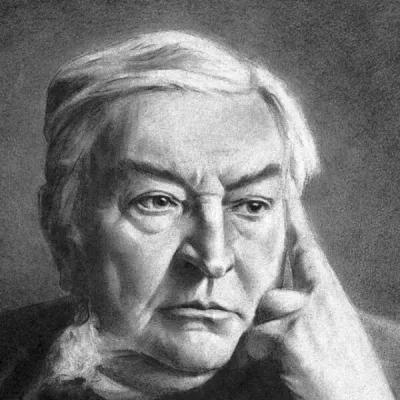
Auguste Beernaert
Human Design Chart
Biography
He was elected to the Chamber of Deputies in 1873, and became Minister of Public Works under Jules Malou, greatly improving the rail, canal and road systems. After his tenure as Prime Minister, he represented Belgium at the Hague conventions of 1899 and 1907. He was also co-winner (with Paul d'Estournelles de Constant) of the Nobel Peace Prize in 1909 for his work at the Permanent Court of Arbitration. He was chosen as president of the panel established under the rules of that organization in the Sarvarkar Case in 1911.
He died 6 October 1912.
The Human Design of Auguste Beernaert: Reflector 1/3
Reflector 1/3 — Design at a Glance
Auguste Beernaerts design lacked defined centers, which did not provide him with constant personal energy. Instead, he acted as a mirror of his environment, intensively absorbing and reflecting the energies of other people as well as natural rhythms like seasons or celestial constellations. This configuration significantly shaped his identity through the potential of his surroundings.
For Auguste Beernaert, it was crucial to live in harmony with these natural cycles. When making important decisions, his design required a strategy of waiting for months – specifically one lunar cycle – to ensure that external energy was clearly and fully perceived. This waiting allowed him to act in accordance with the situation rather than going against the flow.
Adhering to this strategy brought him an emotional reward in the form of joyful surprise as well as a sense of freedom from attachments. He could observe the world without fixed identification. If he lived contrary to this design, it led to deep and lasting disappointment about himself or the state of the world. His path involved accepting this mirror function and finding the right moments for action through patient waiting, thereby automatically seeking environments that suited him.
No Inner Authority
Auguste Beernaerts decision-making did not occur through internal physical signals but rather in exchange with others. As a mental projector, he lacked defined centers below the throat, which is rare. His strategy involved consulting various people. In these dialogues, energetic interactions activated latent potentials in his open centers and provided him with information from many perspectives. This high resonance ability helped him find the right environment and suitable conversation partners for these processes.
Evaluating this diverse input was a complex process requiring time and solitude. Auguste Beernaert needed withdrawal to recognize the red thread and filter out the essential from the flood of information. Through this structuring, he developed his specific intelligence: the ability to make sense of order. This formed his capital for success. For him, it was always important to be in an environment where he felt comfortable and could exchange trustfully. Only there did his sense deepen over time about what truly suited him and which decisions made sense. This process of collecting, withdrawing, and structuring shaped his way of gaining clarity rather than relying on immediate internal responses.
The 1/3 Profile — Investigator / Martyr
Auguste Beernaerts design inclined towards a cyclical process of theoretical foundation building and practical validation. His Profile 1/3, the Researcher and Experimenter, shaped him as someone who gained identity through the synthesis of logical leadership and real experience. The Line 1 with Gate 31 in the Throat Center conveyed to him a rational, manifesting leadership quality. This energy brought form into communication and politics, where light and darkness worked as complementary forces: Light structured the leadership while darkness led into spirituality. However, the effectiveness of this leadership always depended on the interplay with subsequent individuals.
Simultaneously, Line 3 with Gate 27 drove him to experiment. Here it was about adapting through trial and error to enter and break bonds. The associated energy of the second generation brought strength through having more than necessary – a dynamic that also included greed or access to secret information for care.
Auguste Beernaerts judgment was only trustworthy when both intellectually and empirically tested. The tension between Line 1's need for complete theoretical security and Line 3's drive for practical experimentation defined his learning path. He had to move through errors to gain self-discovered insights. Only if something was thoroughly tested both theoretically and practically could he trust its judgment absolutely. His authority thus did not rest on preconceived opinions but on verified truth.
No Definition — Defined & Open Centers
Auguste Beernaerts Human-Design made him stand out due to the absence of any defined centers, making his system completely open. He lacked a constant internal energy source in areas such as mind, communication, identity, or vitality. Instead, he functioned as an open window for the energies of his environment.
This configuration meant that Auguste Beernaert absorbed and amplified situational inspirations, emotional waves, and social pressure without having a consistent personal source for it. His open throat drew attention to him without actively seeking it; the right invitations to speak came naturally. His open G Center did not allow for a fixed identity or direction, so he reflected in relationships and environments and needed others to initiate him to find the correct path.
The central challenge lay in distinguishing between his own reactions and absorbed conditioning pressure. His open solar plexus picked up on other people's emotions while his open root center absorbed external stress. The undefined heart center did not drive him towards competition or making promises, as he lacked a consistent willpower. Instead of being led by these external influences, the wisdom of his design was rooted in trusting strategy and inner authority. Auguste Beernaert showed himself to be an observer who learned to remain calm when mental confusion or emotional waves reached him, waiting for clarity from outside.
Channels & Gates
Auguste Beernaerts Human-Design leaned towards a leadership style that relied less on control than on the direct transmission of energy. His identity in the collective did not manifest through commands but by giving his own power away and thereby setting others into motion. This dynamic was significantly shaped by Gate 31, which defines the mechanics of leading as pure energetic transfer. For him, effect only occurred when he transferred this energy to others; without this release, his leadership persona remained ineffective.
This external orientation stood in tension with internal processes of self-preservation and risk-taking. Gate 27 endowed his actions with a genetic quality of care that had both the welfare of his own kin and his personal survival in mind. It was an altruistic warmth that permeated all activities with a fundamental concern for life's preservation. Simultaneously, Gate 28 required him to make decisions based on the ability to take or reject risks in the here and now. This demanded persistent listening into the current moment to assert his personal meaning against the fear that his life had no value.
The emotional depth of these decisions was influenced by Gate 41. It propelled him evolutionarily from one experience to another, ensuring he understood changes and crises as necessary steps in development. As a source of feeling, it allowed him to maintain a certain distance despite emotional fluctuations. The combination of the energy-charged transmission outward (Gate 31) and the caring, risk-aware inner nature (Gates 27, 28, 41) marked Auguste Beernaert as someone who exercised leadership through giving his power away while always considering long-term preservation and personal meaning in the present.
Circuit Signature
Auguste Beernaerts Human-Design did not exhibit a consistent strategic or energetic orientation at this level of mechanics. It lacked the specific structure that often shapes fixed patterns in perception and reaction. Instead, he showed high flexibility as well as adaptability to external circumstances. Since no internal constraints or set processes limited his actions, he could move situationally without being bound by rigid patterns.
This configuration resulted from the fact that Auguste Beernaert had no active circuits at all. The raw content lists no circuits, meaning there were no energetic connections between centers in this area. There were neither defined flows nor groups of connected centers. The definition was entirely absent.
The absence of a fixed structure allowed him to act free from the constraints of defined channels. He did not react based on predetermined energy flows but could adapt to the conditions of the moment. This openness contrasted with designs featuring strongly defined circuits, which often impose a consistent yet rigid orientation. Auguste Beernaert lacked this internal pressure to repeat specific dynamic processes. His mechanics at this level were marked by this void, allowing him to behave unburdened and without the weight of historically grown energetic obligations. The flexibility was thus not an active process of choice but the direct result of a lack of connecting structure in his design.
Right Angle Cross of the Unexpected 2
Auguste Beernaert's design carried the signature of the right cross of the unexpected. This configuration shaped his life path through a constant openness to the unforeseen and the ability to recognize clear action options in seemingly chaotic or surprising situations. Rather than being dependent on strict planning, Auguste Beernaert was someone who found his true strength in the flow of the moment. The right cross of the unexpected describes an energetic stance that focuses not on controlling events but on how one reacts to new, often unforeseen information. It's about the art of using the moment without having to predict it. For Auguste Beernaert, this meant that his path was less determined by long-term strategies than by spontaneous adaptability. He lived with the certainty that life would take unexpected turns that he could not control but could shape. This attitude allowed him to embrace changes flexibly and benefit from the unexpected rather than being threatened by it. His design suggested that his greatest competence lay in staying present in the here and now and reacting to what came – not on what he had expected.
Saturn Return · Uranus Opposition · Chiron Return · 2nd Saturn Return — Life Cycles
Auguste Beernaert's design was characterized by a structuring over the classical life cycles, without specific Gates or Channels mentioned in the raw content provided. His path followed established rhythms of maturation and change. The first Saturn return marked the transition into full responsibility for his own life, a moment when earlier decisions condensed. The Uranus opposition brought a phase of inner restlessness and the urge for change, questioning established patterns.
Especially formative was the Chiron return around age 49 to 51 years. This cycle did not stand for healing old wounds but for the unfolding of his own purpose. If Auguste Beernaert had previously lived according to his strategy and authority, this phase made his incarnation cross experiential; meaning and direction became clearer in everyday life. The second Saturn return rounded off this development by establishing a new level of wisdom and structure based on previous experiences. This sequence of cycles formed the framework of his personal evolution, driven by the general mechanisms of Human Design as described in standard cycles.
Reflector · No Inner Authority — Synthesis
Auguste Beernaert lived a life marked by the absorption and reflection of what was happening around him. As a Reflector with fully open centers, he was not a source of constant energy but a mirror for the energies of others and nature. This openness predisposed him to recognize patterns that eluded others – both in people as well as in cycles of the world. His Profile combination of Researcher and Experimenter reinforced this aspect by evoking a deep need for experience and verification before making judgments. He gathered information from his environment to filter it and develop an independent perspective.
However, Beernaert's design harbored a central paradox: the tension between the ability for deep perception and the lack of inner, defined authority. While he absorbed the energies of others and the subtle nuances of his surroundings, he lacked a constant internal compass needle to process this information and make decisions. This led him to rely on the Moon cycle as an orientation aid – a slow process that made him vulnerable to external influences while simultaneously offering the possibility to recognize authentic patterns over time.
Incarnation Cross - Right Angle Cross of the Unexpected 2
Solar Return
The Solar Return shows the moment when the sun returns to its exact birth position - your personal solar year.
Life Cycles
Discover the life cycles with a detailed triple view (birth chart, cycle chart, composite).
Human Design Profile
- Type
- Reflector
- Strategy
- Wait a lunar cycle (approx. 28 days)
- Authority
- No inner authority - learn more
- Profile
- 1/3 - Investigator / Martyr
- Definition
- No Definition
- Incarnation Cross
- Right Angle Cross of the Unexpected 2
- Date of Birth
- 26.07.1829 01:00
- Place of Birth
- Oostende, Belgium
Frequently Asked Questions
What was Auguste Beernaert's Human Design type?
What profile did Auguste Beernaert have?
What authority did Auguste Beernaert have?
What incarnation cross did Auguste Beernaert have?
When was Auguste Beernaert born?
Discover your own Human Design
Are you also a Reflector? Find out in a personal reading how to find the right environment and understand your unique mirror effect.
More Personalities
Back to overviewBaekhyun

Jihyo

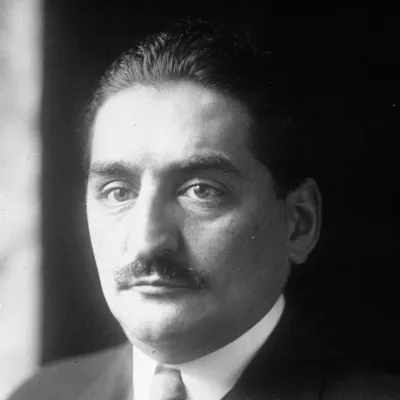
Laurent-Eynac
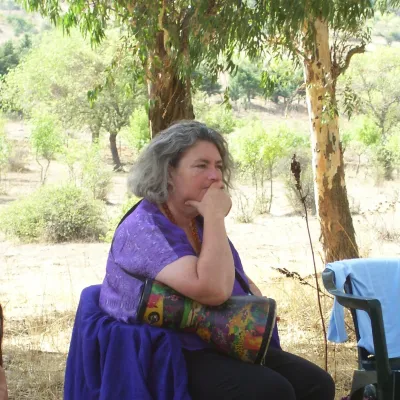
Starhawk
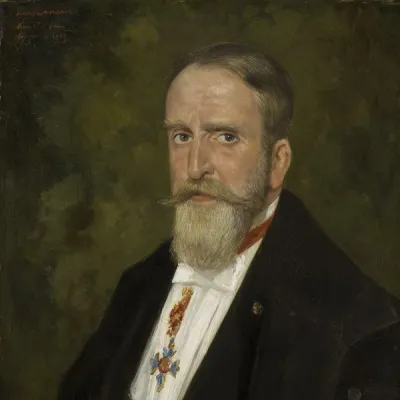
Jan Simon van der Aa
Rune Aanderaa