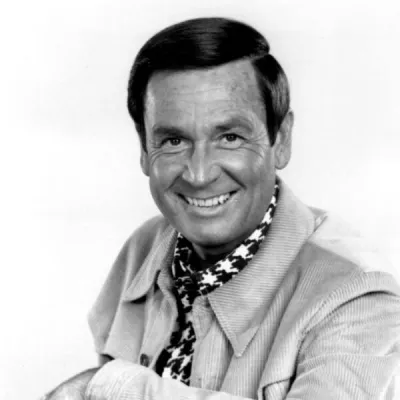
Bob Barker
Human Design Chart
Biography
Barker spent his early years on a native American reservation where his mother was a schoolteacher. His father died when he was six in 1930; his mother remarried when he was 12 and the family moved to Missouri. With a basketball scholarship, he attended Drury College in Missouri but joined the Navy, becoming a fighter pilot, before he completed his studies. When the war ended and he was discharged from the Navy, Barker returned to Drury College. He landed a job with a radio station to help pay for school and graduated summa cum laude with a bachelor's in economics.
After graduation, he became a host of a Palm Beach, Florida radio show, soon after moving to Los Angeles to do another show. But no sooner had he arrived than he had his own TV show, The Bob Barker Show. On 21 December 1956, Barker took over Truth or Consequences where his career took off. He began hosting The Price is Right in 1972.
Handsome, likeable, impeccably dressed, always smiling and always tanned, Barker was a gracious host who effortlessly encouraged and received audience participation. Not just a pretty face, he loved to travel, was a Civil War buff, learned Karate, and was an animal-rights activist. In 1987 and in 1988 he refused to continue hosting beauty pageants unless furs were eliminated from the pageantry. Barker established foundations for spaying dogs and cats and for animal rights activism.
His wife of many years died of lung cancer on 19 October 1981. He never remarried. In 1994 he was accused of sexual harassment by Dian Parkinson, a model who appeared on the show for 18 years. She alleged that he required sex from her in order for her to keep her job.
Human Design Analysis: Bob Barker as Generator 3/5
Generator 3/5 — Design at a Glance
Bob Barker's Design revealed a tendency towards extreme endurance. He was someone who possessed a great deal of sacral energy and used it to bring projects into the material world. This power did not manifest through spontaneous initiation but solely through reacting to inner impulses. His strategy involved waiting for signals from life and only then taking action when his inner self gave a clear "yes."
If he ignored these internal instructions or acted under external pressure, his energy would stagnate. The design warns against doing things where there is no internal resonance; this quickly led to frustration or burnout. Similarly harmful was being prevented from working on his heart project even though he still had plenty of power left to continue.
The deepest satisfaction and a sense of profound fulfillment came for Bob Barker only through consistently following these sacral signals. When he reacted from the gut, nothing could stop him. If he did not live by this pattern, he encountered a lack of energy. His strength lay in his ability to channel the immense power of his design through patient waiting and precise reacting rather than squandering it through premature action.
Emotional Authority
Bob Barker lived with an inner authority that required patience and delay in making decisions. His design featured an emotional wave that manifested as a constant up-and-down of his feelings. The world appeared to him always colored by his current mood: one moment full of enthusiasm, the next deeply negative. This feeling was, however, only a snapshot, not a reliable compass for long-term steps. Spontaneous decisions made impulsively from emotion carried the risk of later proving false, as they mistook the temporary mood coloring for deeper truth.
The mechanics of his emotional authority – carried by the defined Solar Plexus Center – established that this inner voice had priority, regardless of other defined centers in the chart. Clarity did not arise immediately but only after going through the emotional process. Bob Barker needed time to let decisions ripen. Repeatedly "sleeping on" an issue was essential for distinguishing between momentary excitement and true inner truth. Over time, intense feelings subsided, emotional distance grew, and calmness set in. Only then, after going through this process, could he act with clarity. This need for delay protected him from misjudgments and ensured that his decisions were based on a stable, profound insight rather than fleeting impulses.
The 3/5 Profile — Martyr / Heretic
Bob Barker's design was characterized by a dynamic that involved personal experimentation with the role of helper in crises. As a person of Profile 3/5, the Experimenter and Hero, he demonstrated someone who did not blindly accept knowledge but had to try everything himself. This Line 3 attitude was based on trial and error; he learned from his own experiences and failures to develop practical solutions.
This individually acquired wisdom then served others. The energy flowed from personal acquisition to presenting these insights for the community. Bob Barker attracted those around him because he offered a rich treasure trove of practical life experiences that others wanted to learn from. This aligned with Line 5, the Hero's line: In times of crisis, he could rely on his own lessons and provide concrete answers without being personally influenced.
However, this configuration also contained tension. The need to be perceived as a competent helper conflicted with the necessity of enduring public failures during experimentation. His ego had to endure rejection in order to overcome vulnerability and find harmony within the tribe. Thus, the ability to deliver practical answers under pressure was directly linked to his willingness to shape himself through his own mistakes and then share these experiences as valuable treasures.
Split Definition — Defined & Open Centers
Bob Barker's Human Design presents a 'Reactor' with immense, constant vitality. His defined Sacral and Root centers generated a steady energy source that was intuitively guided by his defined Spleen center. This gave him deep existential security and a strong immune system against false paths. At the same time, his Solar Plexus center was defined; he thus had emotional clarity as an inner authority. Decisions were not made impulsively but after waiting for the emotional wave to pass, which endowed him with profound sensitivity and passion.
His mental system was defined through the connection of Head and Ajna centers. This created a constant pressure towards inspiration and concept formation in him. He thought continuously, formulated questions and sought answers. However, since these centers did not have their own energy for implementation, direct action from the mind would have been frustrating. Instead, his mental activity served to inspire or put others under pressure while he himself waited for life to react.
In contrast, his Heart and Throat centers were open. The open Heart center meant an absence of willpower as a driving force; he was not programmed to prove himself through promises or competition. This protected him from exhaustion due to excessive effort but required trust in his inner authority rather than proving his worth. The open Throat center showed vulnerability to the pressure of demanding attention or speaking constantly. The mechanics described here the discomfort when not being the center of attention, or impulsively communicating to fill this void. The challenge was to let go of this urge for manifestation through words and wait until life invited him to correctly apply his sacral energy rather than channeling mental pressure into initiatives.
Channels for intuitive power, deep connection and meaning.
Bob Barker's design showed a tendency towards a skeptical, pattern-recognizing mind. Channel Logic 63-4 connected Head and Ajna centers via Gate of Doubt (63) and Gate of Formulation (4). This doubting mind permanently filtered patterns for consistency; unfounded beliefs were rejected as only verifiable evidence was accepted. This skepticism served the collective as a filter for truth.
Situationally, the ability to deeply intimate was shown through Channel Union 59-6. It connected Sacral and Solar Plexus centers via Gate of Sexuality (59) and Gate of Friction (6). This combination generated a powerful emotional wave from pleasure and pain that made relationships personal and penetrating but required patience.
The search for self-love and individuality was revealed through Channel Research 34-10. It connected Sacral and G centers via Gate of Power (34) and Gate of Self Behavior (10). This promoted holding onto personal convictions and accepting one's uniqueness, independent of external expectations.
Intuitive action to secure survival was supported by Channel Perfect Form 57-10. It linked Spleen and G centers through Gate of Intuitive Insight (57) and Gate of Self Behavior (10). This allowed spontaneous, appropriate behavior in the moment guided by deep consciousness rather than thoughts.
The drive to find meaning in difficulties was shown through Channel Life Struggle 38-28. It connected Root and Spleen centers via Gate of Fighter (38) and Gate of Player (28). This gave the determination to fight for individual integrity and discover significance in challenges.
Intuitive awareness to defend against dangers worked through Channel Power 34-57. It linked Spleen and Sacral centers over Gate of Intuitive Insight (57) and Gate of Power (34). This created a defensive intelligence that immediately responded to threats to protect physical well-being.
Emotional provocation to release spirit and mood entered through Channel Emotions Release 39-55. It connected Root and Solar Plexus centers via Gate of Provocation (39) and Gate of Mind (55). This set the pulsating wave between joy and melancholy in motion, for true spirituality to arise from correctness.
Finally, the drive to transform experiences into stories worked through Channel Abstraction 64-47. It connected Head and Ajna centers over Gate of Confusion (64) and Gate of Understanding (47). This active mind filtered every experience through mental images to ultimately reveal an inspiring perspective or story that could be shared with others.
Individual Circuitry — Circuit Signature
Bob Barker's design structured itself through separate energetic poles: a rational head and a complex web of instinct, emotion, and identity. The Knowledge Circuit connected Spleen, Root, and Solar Plexus centers, generating pulsating energy that intuitively filtered new insights and emotionally expressed them. Parallel to this, the Centering Circuit strengthened self-worth via Sacral and Identity centers; this inner connection fostered courage but often lacked direct articulation.
In the Mind Circuit, Head and Ajna centers worked together. This allowed focused logical thinking for analyzing future structures free from emotional influence. The Sense Finding Circuit used the same centers (Head and Ajna), focusing instead on the past. Here abstract reflections served to process past experiences and reveal their significance to the collective.
The Protector Circuit connected Sacral and Solar Plexus centers. This connection created a primal force for family protection and preservation of genetic lines through instinctive care. Finally, the Integration Circuit integrated Identity, Spleen, and Sacral centers. This united intuitive wisdom with life force to remain action-ready in the present moment. These configurations shaped Bob Barker's way of generating knowledge, solidifying identity, and processing emotions – always as parallel, non-directly merging streams between the rational head pole and the emotional-instinctive body pole.
Right Angle Cross of Rulership 4
Bob Barker's Human Design showed a pronounced tendency towards authority and structural control. He was someone who created order and took on hierarchical responsibility. This attitude stemmed from the right Authority 4 in his chart, emphasizing his identity as a ruler. It conveyed a deep need for structure and the exercise of power in an organizational sense. Bob Barker did not live this energy through chaotic dominance but rather through clear role definitions and boundaries. The right Authority 4 describes a life task connected to the theme 'Ruling'. It is about creating stable systems and taking responsibility for the integrity of these structures. For Bob Barker, this meant that he naturally radiated authority. He did not seek approval by conforming but established rules that should apply to everyone. This mechanism shaped his actions: he organized environments so that clarity and predictability prevailed. The energy of this cross challenged him to carry his inner authority outward. It was not arbitrary power but a pragmatic necessity for maintaining order. Bob Barker's design knew this dynamic as a central drive. He used his position to solidify hierarchies and standardize processes. This was no everyday choice, but a deeply rooted energetic alignment. His chart showed that he secured his own stability through structuring and clear leadership values. The right Authority 4 thus acted as a compass for his actions in all areas where organization was needed.
Saturn Return · Uranus Opposition · Chiron Return · 2nd Saturn Return — Life Cycles
Bob Barker around the years of 1972 showed himself to be someone who translated his long-term experience into a new, defining role. At the age of 49, he took over moderating *The Price Is Right*. This period marked his Chiron Return, a cycle between the ages of 49 and 51. During this time, one's incarnation cross increasingly unfolds in life. If a person has lived according to their strategy and authority, they experience meaning and purpose during this phase. It is an achievement cycle often referred to as a bloom period, where deeper life tasks are concretized. For Bob Barker, this did not mean healing old wounds in a mythological sense but integrating the wisdom from his early years. This inner maturity created the basis for more authentic expression. Taking over moderation was no coincidence but an expression of this unfolding development. The Chiron Return acts as a turning point where earlier experiences become a solid foundation for new tasks. Bob Barker's design indicated that at this age he took up a position that summarized his entire previous development and carried it into the future. The mechanics of Human Design describe this moment as one of confirmation and deepening of one's path. Through this phase, it became clear how his individual strengths could now be effective in a larger context.
Generator · Emotional Authority — Synthesis
Bob Barker lived a life deeply marked by the ability to react in the present moment and draw energy from that reaction. His design as an emotional authority Generator pointed towards strong work capacity, which was most effectively activated through external impulses rather than self-initiative. This natural tendency to react, combined with deep emotional processing, formed a character that experienced intensely but only found clarity after waiting and maturing. The connection of sacral energy and the emotional center created a person capable of acting from the gut yet always conscious of their feelings and their development.
A central paradox in Bob Barker's design lay in the interplay between his generative power and the need to emotionally center himself. On one hand, he possessed enormous endurance and energy to push things forward; on the other hand, his emotional compass required time and space to make decisions that truly aligned with his inner core. This tension field between action and waiting, between spontaneous reaction and conscious reflection, shaped his path and revealed a personality both powerful and profound.
8 Defined Channels
Incarnation Cross - Right Angle Cross of Rulership 4
Solar Return
The Solar Return shows the moment when the sun returns to its exact birth position - your personal solar year.
Life Cycles
Discover the life cycles with a detailed triple view (birth chart, cycle chart, composite).
Human Design Profile
- Type
- Generator
- Strategy
- To respond - wait for something to respond to
- Authority
- Emotional Authority
- Profile
- 3/5 - Martyr / Heretic
- Definition
- Split Definition
- Incarnation Cross
- Right Angle Cross of Rulership 4
- Date of Birth
- 12.12.1923 04:00
- Place of Birth
- Darrington, WA, United States
Frequently Asked Questions
What is Bob Barker's Human Design type?
What Profile did Bob Barker have in Human Design?
Which Authority guided Bob Barker's decisions?
What incarnation cross did Bob Barker have?
When was Bob Barker born?
Discover your own Human Design
Are you also a Generator? Find out in a personal reading how to use your sacral energy correctly and discover deep satisfaction.
More Personalities
Back to overviewAaliyah

Alexia

Angèle

Anne-Marie

Arcángel

Arno