Photo: Wikimedia Commons
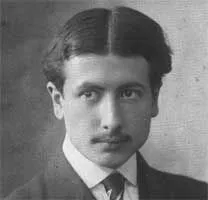
Felix Wankel
Human Design Chart
Biography
Felix Wankel — Generator with Profile 1/3
Generator 1/3 — Design at a Glance
Felix Wankel revealed himself as someone with immense endurance who could unleash his strength primarily when he responded to inner signals. As a Generator, he had plenty of sacral energy that made him strong and steady like a workhorse – provided he genuinely enjoyed the task at hand. His life force was not released through mere initiation but by reacting to impulses from life. When his inner self gave a clear 'yes', he could respond with full power and effectively shape things.
This mechanism brought two central stumbling blocks: Firstly, the risk of burnout if he continuously tackled tasks that did not benefit him and merely wasted his energy. Secondly, the frustrating feeling of being held back from his heart project despite still having a strong drive to act. If Felix Wankel lived in harmony with this strategy of responding, his design rewarded him with deep satisfaction and a sense of fulfillment. However, if he constantly initiated independently against his inner rhythm, sooner or later he would encounter persistent frustration and a lack of energy. His path was not aggressive pushing forward but patient waiting for the right impulse to act from the gut.
Emotional Authority
Felix Wankel showed a decision-making stance that did not exhaust itself in the first impulse but required time to mature. His inner authority lay in the defined Emotional Center – a mechanism that always took precedence over other defined centers regardless of their nature. This meant his perception was shaped by emotional waves: moods swung between enthusiasm and skepticism, with each moment only a provisional coloring, not the final truth.
Spontaneous decisions from this fleeting emotional state often proved misleading or negatively impactful. Instead, Felix Wankel gained clarity by exercising patience and reviewing important steps multiple times. Only when initial emotional intensity subsided and distance was established did calmness set in – the sign that the inner process was complete. This strategy of delay served not to hesitate but for safety: it filtered out transient moods and left only deeper, stable insights. For long-term life decisions that significantly influenced his path, this cooling-off and review process was indispensable. Felix Wankel learned to take time to consider and ask himself repeatedly until the emotional cloud cleared and a clear view of what mattered emerged.
The 1/3 Profile — Investigator / Martyr
Felix Wankel's design tended towards a dual approach: combining deep theoretical study with the necessity of practical experimentation. As a researcher and experimenter, he sought self-discovered insights that were both intellectually grounded and tested through experience. His path was marked by the principle 'trial and error'; mistakes were not seen as failures but as indispensable learning moments for refining his knowledge.
This dynamic arose from the tension between his Line 1, which aimed at perfect timing and thorough preparation, and his Line 3, which demanded courage to act and express individuality. Often, fear of insufficient knowledge could delay implementation, yet ultimately his design required practical testing to make valid judgments. When Felix Wankel evaluated a solution or an object as good, he had thoroughly tested it on heart and gut. His judgment thus rested on a synthesis of study and living experience. Line 3 boldly expressed its personality, which though it might provoke envy, always served the cause of knowledge. Pleasure and reward came to him only when answers were given at the right time in the proper context. Thus, his design showed itself as an ongoing process of learning through doing, where theoretical plans gained their true meaning only through practical validation.
Split Definition — Defined & Open Centers
Felix Wankel revealed himself as a person who was constantly under an internal pressure to ask questions and understand connections. His defined Head and Ajna centers generated constant mental activity; inspiration did not come to him as a complete solution but rather as an ongoing question seeking answers. This state could lead to confusion or doubt, since consciousness itself was part of the process. He lacked a direct energy source in his head to immediately translate these thoughts into reality; attempts to relieve mental pressure through hasty action typically resulted in frustration and resistance. Instead, he acted as a source of inspiration for others by using his conceptual abilities to structure the mental field around him.
His energy source lay in his defined Sacral center. Here daily vital energy was generated but only became available through reaction to external impulses. Felix Wankel had to wait until he was asked or addressed before he could fully unleash this power; initiated actions without such confirmation often led to exhaustion, as the sacral energy then wasn't there to sustain tasks.
Simultaneously, he experienced an emotional wave due to his defined Solar Plexus center. His inner authority lay in this emotional depth; clarity only emerged for him after waiting out the wave movement. Impulsive decisions at the peaks or troughs of his emotions were often regretted later when emotional calm returned.
In contrast, he lacked a firm identity and direction through his open G center. He tended to align himself with his environment and reflected the qualities of those around him. The search for a fixed definition of 'Who am I?' or attempts to actively impose a life path led often to feelings of being lost or uncertain. Additionally, his Heart center was open, meaning he did not have consistent energy for willpower and keeping promises. Attempts to prove his worth through performance or taking on commitments resulted frequently in cycles of overextension and self-doubt due to the lack of necessary energy.
Channels for principles, change, logic, structure, truth and care.
Felix Wankel revealed himself as someone driven by sudden, mutative impulses towards innovation. The Channel of Mutation 60-3 connected the Root center with the Sacral and generated an unpredictable energy between limitation (Gate 60) and new order principle (Gate 3). This frequency led to phases of inner melancholy when the pulse stopped, followed by powerful bursts of evolutionary change. Wankel had to learn not to rationalize this mechanical moodiness but rather patiently wait for his sacral center's reaction until the new mutation passed through him.
Parallel to that, his mind organized complex details logically and precisely. The Channel of Acceptance 17-62 connected Ajna with Throat centers. Through Gate of Opinions (17), he visualized patterns which he then translated into speech via Gate of Details (62). This gave him the ability to pour visual concepts into understandable formulas or theories, provided he waited for an invitation to speak to avoid resistance and ensure clarity.
Emotionally, Wankel sought belonging and protection of his resources. The Channel of Synthesis 19-49 connected Root with Solar Plexus centers. Here, the Gate of Claims (19) drove a desire to make connections while Gate of Principles (49) rejected anything not meeting highest ideals. This emotional wave determined who belonged to the 'tribe' and laid the foundation for loyalty and traditions that held communities together.
His thinking followed an inspired insight process. The Channel of Structuring 23-43 connected Ajna with Throat centers. Spontaneous breakthroughs (Gate 43) were processed and expressed through Gate of Assimilation (23). Wankel developed techniques promoting efficiency by clearly communicating innovative perspectives. Success depended on allowing his mind to assimilate knowledge at its own pace rather than forcing it prematurely.
The source of this thinking was the Channel of Awareness 61-24 between Head and Ajna. Inspiration (Gate 61) was processed through Gate of Rationalizing (24), until sudden knowledge – a Satori – emerged. Wankel did not control his thoughts; he surrendered to inner truth as it surfaced in its own mutative rhythm.
Finally, the Channel of Preservation 27-50 provided stability by connecting Sacral with Spleen centers, uniting care (Gate 27) with traditional values (Gate 50). This gave him the ability to take responsibility and maintain the tribe through selfless interest in others as well as defending fundamental laws.
Individual Circuitry — Circuit Signature
Felix Wankel revealed himself through his design as someone whose inner forces worked in two separate blocks. One block connected life force (Sacral), instinct (Spleen) and emotions (Solar Plexus) with root tension; the other linked thinking (Ajna/Head) with expression (Throat). This separation created parallel, not directly connected streams.
In the Knowledge Circuit, two isolated parts worked: one linking Head, Ajna, and Throat for intuitive ideas and their articulation; the other connecting Sacral and Root through mutations (deviations) and structuring. In the Understanding Circuit, logical insight flowed from Ajna to Throat, separate from emotional centers. The Ego Circuit linked Solar Plexus emotions with Root via synthesis without direct connection to life force. Finally, the Protector Circuit connected Sacral and Spleen through preservation, promoting instinctive protection and care.
Right Angle Cross of Explanation 3
Felix Wankel's design carried the signature of the right cross of statement three. This configuration was characterized by a specific dynamic: it connected the center of personality with will, thereby translating internal impulses directly into tangible results. Felix Wankel showed himself to be someone who not only developed ideas but also consistently brought them to fruition and translated them into reality.
The mechanics of this cross described a process where creative visions were supported by strong personal determination. It was an energy aimed at bringing something new into life and pushing it through against resistance. Felix Wankel lived in a structure that drove him not only to keep his inner perceptions and inventions as thoughts but also to carry them forcefully outward.
This construction promoted a stance of persistence. Once a goal was set, Felix Wankel followed it with almost mechanical precision and endurance. The right cross of statement three created the conditions for abstract concepts to be transformed into tangible forms. It was less about spontaneous inspiration than about the disciplined implementation of visions. Felix Wankel used this energy not only to start his projects but also to see them established sustainably. His work style was characterized by this connection between creative idea and resolute execution.
Saturn Return · Uranus Opposition · Chiron Return · 2nd Saturn Return — Life Cycles
Felix Wankel's design presented itself as a structure in which long-term dedication and structural consolidation played central roles. This became evident in the first Saturn return in 1929: at age 27, he replaced the valve control on a motorcycle with a cam disc and achieved an effective seal. This step marked the beginning of a phase where theoretical concepts were translated into stable, functional realities – a typical expression of how Saturn influences often lead to concrete breakthroughs when inner authority is followed in Human Design.
However, his life path was also strongly characterized by external breaks. In 1945, during the Uranus opposition, his workshops were dismantled by French occupation troops and Wankel was imprisoned. This crisis at age 43 highlighted the disruptive power of this planetary cycle: old structures violently fell apart, which in Human Design is considered a necessary but painful break to clear outdated patterns and make space for new developments.
From this disintegration emerged a new order. In his Chiron return in 1951 at age 49, Wankel established the Technical Development Office (TES). This cycle does not represent healing in a therapeutic sense in Human Design but rather the flowering of personal purpose: long-term work found its meaningful anchoring in a new institutional form.
Consolidation was completed in his second Saturn return in 1958. At age 56, he founded Wankel GmbH together with partners. This showed the typical Saturn dynamics of later life phases: previous experiences and crises were transferred into a lasting legal and structural organization that secured his technical vision sustainably.
Generator · Emotional Authority — Synthesis
Felix Wankel was a Generator whose life was marked by a strong drive for energetic implementation (Sacral Center). This drive manifested in an ongoing search for new insights and the willingness to validate these through experimentation (Profile Researcher/Experimenter Line 1/3), while he always demonstrated the courage to deviate from conventions (Knowledge Circuit, Channel Mutation). The defined connection between Head and Ajna Centers provided a constant mental pressure that spurred him on to profound questions and understanding of complex interconnections – a process often accompanied by a melancholic basic mood.
At the same time, Felix Wankel lived in a tension field between his emotional nature (Emotional Authority) and the need for quick decisions in the creative process. His emotional wave required time to mature while Channel Mutation prompted unpredictable, impulsive steps. This dynamic led to phases of intense inspiration and deep confusion, manifesting in professional breakthroughs (1929, 1951, 1958) as well as crises (1945) – a play between the drive for innovation and the necessity of emotional alignment.
6 Defined Channels
Incarnation Cross - Right Angle Cross of Explanation 3
Solar Return
The Solar Return shows the moment when the sun returns to its exact birth position - your personal solar year.
Life Cycles
Discover the life cycles with a detailed triple view (birth chart, cycle chart, composite).
Human Design Profile
- Type
- Generator
- Strategy
- To respond - wait for something to respond to
- Authority
- Emotional Authority
- Profile
- 1/3 - Investigator / Martyr
- Definition
- Split Definition
- Incarnation Cross
- Right Angle Cross of Explanation 3
- Date of Birth
- 13.08.1902 01:00
- Place of Birth
- Lahr, GER
Frequently Asked Questions
What was Felix Wankel's Human Design type?
What Profiles did Felix Wankel have?
Which Authority did Felix Wankel possess?
What incarnation cross did Felix Wankel have?
When was Felix Wankel born?
Discover your own Human Design
Are you also a Generator? Find out in a personal reading how to use your sacral energy correctly and discover deep satisfaction.
More Personalities
Back to overviewAaliyah

Alain-Fournier
Alexia

Angèle

Angeli
Anne-Marie