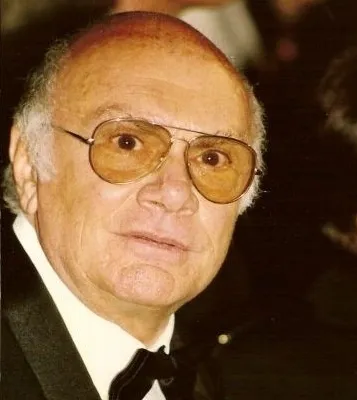
Francesco Rosi
Human Design Chart
Biography
Rosi was one of the central figures of the politicised post-neorealist 1960s and 70s of Italian cinema, along with Gillo Pontecorvo, Pier Paolo Pasolini, the Taviani brothers, Ettore Scola and Valerio Zurlini. Dealing with a corrupt postwar Italy, Rosi's movies take on controversial issues, such as Salvatore Giuliano, a film that won the Silver Bear for Best Director at the 12th Berlin International Film Festival in 1962.
He received the Honorary Golden Bear for Lifetime Achievement on 14 February 2008, accompanied by the screening of Salvatore Giuliano.
Francesco Rosi as a Generator 4/6 in Human Design
Generator 4/6 — Design at a Glance
Francesco Rosi revealed himself as someone with remarkable endurance who knew his strength not through spontaneous impulses but through deep inner resonance. His Generator design indicated that he possessed abundant sacral energy – an internal motor that worked effectively only when responding to external signals rather than initiating on its own. This mechanism meant for him: success and energy flow emerged only in the moment of reacting to life, not through hasty action.
His path was marked by the necessity of trusting these 'gut feeling' impulses. When his sacral core signaled a clear 'yes', he could move forward with tremendous force and materialize projects. Conversely, if he acted against this design – for instance, doing things without inner consent or being hindered from his true work – it inevitably led to frustration and energy loss. The risk of burnout lurked wherever he expended his strength on tasks that did not serve him. In contrast, interrupting his heart project was another stumbling block; his design required continuous exercise of his gift as soon as the inner impulse aligned. Only in harmony with this strategy of waiting and reacting did he find deep satisfaction and unleash his full potential without overextending himself.
Emotional Authority
Francesco Rosi exhibited a fundamental disposition of emotional penetration: His perception was always marked by waves of emotion. The defined Solar Plexus Center carried his inner authority, which means in Human Design mechanics that this center always takes precedence over all other defined centers – regardless of any further structures present in the design. This priority rule is a central mechanism: The emotional wave dictated the rhythm of his decision-making process, not reason or other impulses.
His world appeared to him always colored by the current mood state. A topic could deeply inspire him at one moment and seem negative and repelling the next. This shift was no instability but the nature of his emotional authority: The immediate feeling was merely a snapshot, an initial impression that did not yet represent his ultimate truth. Quick, spontaneous decisions based on this transient emotion would often steer him in false directions.
Instead, his design required patience and conscious hesitation. He had to take time for a decision to mature, often over several days. Only when the intense emotions subsided and emotional distance arose did clarity set in. This process of 'sleeping on it' was essential for him to make long-term decisions that significantly influenced his life path. Through this delay, he reached calmness and made decisions that aligned with his deep inner truth.
The 4/6 Profile — Opportunist / Role Model
Francesco Roso revealed himself as someone who cultivated an experimental attitude in his early decades. His Profile 4/6 appeared like a Line 3 before the first Saturn Return, which prompted him to engage in various attempts at relationships and friendships actively seeking connections without yet bearing the burden of later responsibility.
With the activation of Line 6, an internal conflict came to light: The desire to belong to the community (Line 4) clashed with the need to withdraw and contemplate life's meaning (Line 6). This tension between heart and head shaped his development. In his later years, he was expected to function as a wise role model through cooperation with others. Yet, his large heart remained cautious; he opened up only conditionally to avoid being hurt by false people.
His design also contained specific challenges in knowledge transmission. Gate 43 (Line 4) conveyed a deep fixation on knowledge, but the rigid way of passing it on often hindered understanding for others. Here, linguistic skills were crucial for his effectiveness. Simultaneously, he underwent a learning process through punishment at Gate 4 (Line 6): Repeatedly breaking rules led to consequences that taught him self-control and patience. These excesses did not serve chaos but were the path to finding the right answers for his own life despite mistakes.
Triple Split Definition — Defined & Open Centers
Francesco Rosi revealed himself as someone whose inner drive was characterized by constant mental tension. His defined Head and Ajna centers created a perpetual pressure to ask questions, understand things, and form concepts. This state did not mean he always had answers; rather, he lived in an ongoing process of inspiration, which often came with confusion or doubt, since inspiration is inherently a question that has yet to be answered.
At the same time, Francesco Rosi possessed massive physical and emotional resources. His defined Sacral center provided a constant source of generative energy, while his defined Solar Plexus gave him a deep emotional wave. This combination of mental questioning and strong energetic foundation required patience: he had to learn to wait for emotional clarity before acting to avoid reacting impulsively. His defined Throat enabled him to radiate these inner processes – whether mental concepts or emotional states – into the world, thus influencing others.
In contrast stood his open G Center. Francesco Rosi did not have a fixed identity or a rigid life direction in the conventional sense; instead, he tended to blend with his environment and be initiated by others. The typical trap of this open center was seeking a definitive answer to the question “Who am I?” or “Where is my direction?”, which often led to uncertainty when he was not in the right place. His strength lay precisely in this flexibility: by not clinging to a single identity, he could adopt various roles and perspectives, supported by the stable energies of his defined centers for willpower (Heart) and intuition (Spleen).
Channels for clear structure, logic, intimacy, synthesis and devotion.
Francesco Rosi revealed himself as someone with a sharp, skeptical mind and deep intuition for human dynamics. His design inclined towards logical analysis paired with the ability to instinctively recognize what is essential. This combination shaped his way of viewing the world: not through blind faith but through critical observation and emotional sensitivity.
Central was Channel Logic 63-4, connecting Head and Ajna centers. This channel constantly filtered patterns to test for consistency. Doubt was essential; it drove the process until an answer became logically verifiable and practically functional. Francesco Rosi sought evidence, not unfounded assumptions. His mind worked on formulating questions and answers that served the collective by enabling reliable predictions.
Simultaneously, Channel Union 59-6 linked Sacral with Solar Plexus centers. Here lay a powerful energy of intimacy rooted in sexuality and emotional wave. This channel promoted relationships that were personal and penetrating. Francesco Rosi had a natural sense for confidentiality that allowed him to quickly enter the aura of others. However, this intensity required patience; only by waiting for the emotional wave did it become clear whether a connection was lasting or merely temporary friction.
Channel Devotion 44-26 connected Spleen with Heart centers and gave him an instinctive sense of what the tribe needed. He could assess others and offer fitting solutions, often before they themselves recognized the need. This was not mere salesmanship but a deeper perception of improvement potential. His intuition watched over collective survival by identifying threats or suggesting improvements.
Further Gates like Gate 9 (Detail Work) and Gate 28 (Risks in Here and Now) supported this approach through focused concentration on details and readiness to take risks when appropriate. Gate 37 emphasized the value of friendship and organic community structures. Francesco Rosi lived in a tension field between rational scrutiny and intuitive devotion, where both aspects were necessary to unfold his unique perspective.
Tribal Circuitry — Circuit Signature
Francesco Rosi revealed himself through his design as someone who oscillated between clear logical thinking and structured expression ability. His chart presented a Triple Definition with three separate energetic groups. The first group connected Head, Ajna, and Throat centers. Here the Understanding Circuit worked via Channel Logic (63-4), translating intuitive impulses from the Head center into rational strategies in the Ajna center. Parallel to this, the Knowledge Circuit structured these thoughts through Channel Structuring (43-23) in the Throat center, thus not only thinking but concretely formulating ideas. This created a flow of inspiration over analysis to verbal manifestation.
The second group included Solar Plexus, Sacral, and Root centers. The Archer Circuit here connected via Channel Union (59-6), linking the life force of the Sacral center with the emotions of the Solar Plexus. This generated an instinctive, emotional driving force for survival and preservation of one's genetics.
The third, isolated group consisted of Heart and Spleen centers. The Ego Circuit worked here through two separate channels: Devotion (26-44) connected heart energy with the will to cooperate, while Synthesis (49-19) brought in intuitive wisdom from the Spleen. This combination promoted the joint creation of resources and mutual support, yet without direct connection to the other two energetic blocks. Francesco Rosi thus lived with three parallel, unmerged power fields: rational expression, emotional instinct-driven force, and cooperative resource creation.
Right Angle Cross of Explanation 4
Francesco Rosi demonstrated a fundamental attitude aimed at clarity and direct communication. His design featured the right cross of Explanation Four, a configuration that described a deep need to uncover truth and convey it clearly to others. This was not a superficial interest but a structural imprinting that compelled him to decipher complex connections and communicate them in a way that truly resonated with recipients. The mechanics of this cross promoted an attitude of disclosure: It was about bringing hidden aspects into the light and sharing these insights actively with his environment. Francesco Rosi lived in a dynamic aimed at resolving misunderstandings through clear communication, thereby creating a shared understanding. This inclination towards explanation served to build bridges between different perspectives and ensure that messages were not only sent but also correctly understood. His approach was thus to bring clarity into often confusing situations through precise words and honest revelations.
Saturn Return · Uranus Opposition · Chiron Return · 2nd Saturn Return — Life Cycles
Francesco Rosi showed himself as someone whose creative power unfolded in clear, cyclical phases. His design suggested a structure where external recognition synchronized with inner developmental stages. In 1962, at the age of 40, he experienced his international breakthrough with the film “Who Shot Salvatore G?”. This fell during a Uranus opposition phase, a time when long-held visions often suddenly become public and open new horizons.
Ten years later in 1972, at the age of 50, he won the Grand Prix at Cannes for “The Mattei Affair.” This marked his Chiron Return, a fulfillment cycle lasting about two years. During this phase, one's incarnation cross unfolds increasingly; if one has followed their strategy, meaning and purpose in life become experiential. It was not a moment of healing but rather the bloom and confirmation of his life path.
Another peak followed in 1981 with the success of “Christ Stopped at Eboli,” honored as best foreign film. Rosi was then 59 years old, experiencing his second Saturn Return. This cycle, often around age 59, condenses years of groundwork into a solid result and reinforces the achieved position. Rosi's career thus followed not chance but a deeply rooted rhythmic logic of his design.
Generator · Emotional Authority — Synthesis
Francesco Rosi was a Generator whose life was marked by deep sacral energy and endurance. He lived his authority through an emotional wave that led him to let decisions mature and view things from various perspectives. The profile as Networker/Role Model points to someone who throughout their life oscillated between the desire for community and the need for independent thinking – a conflict between Heart and Head (Line 4/6). The defined mental pressure (Head-Ajna) intensified the necessity to question patterns and transform knowledge, driving him constantly to seek new insights.
A central paradox in his design lay in the interplay of emotional depth and the knowledge circuit. On one hand, he needed time to process his feelings and find a clear direction; on the other hand, impulses from the Head Center spurred him to continuously explore new paths and initiate changes. This led to a tension field between the necessity for inner maturity and the drive towards innovation – an interplay that was evident in documented successes as he achieved groundbreaking results through creative work.
5 Defined Channels
Incarnation Cross - Right Angle Cross of Explanation 4
Solar Return
The Solar Return shows the moment when the sun returns to its exact birth position - your personal solar year.
Life Cycles
Discover the life cycles with a detailed triple view (birth chart, cycle chart, composite).
Human Design Profile
- Type
- Generator
- Strategy
- To respond - wait for something to respond to
- Authority
- Emotional Authority
- Profile
- 4/6 - Opportunist / Role Model
- Definition
- Triple Split
- Incarnation Cross
- Right Angle Cross of Explanation 4
- Date of Birth
- 15.11.1922 01:30
- Place of Birth
- Naples, Italy
Frequently Asked Questions
What was Francesco Rosi's Human Design type?
What Profile did Francesco Rosi have in Human Design?
What Authority did Francesco Rosi have?
What incarnation cross did Francesco Rosi have?
When was Francesco Rosi born?
Discover your own Human Design
Are you also a Generator? Find out in a personal reading how to use your sacral energy correctly and discover deep satisfaction.
More Personalities
Back to overviewAaliyah

Alexia

Angèle

Anne-Marie

Arcángel

Arno