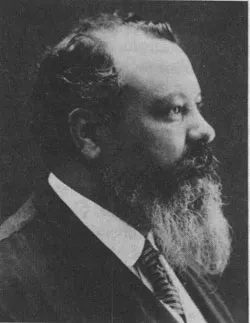
Fritz Sternberg
Human Design Chart
Biography
The Human Design of Fritz Sternberg: Manifestor 4/6
Manifestor 4/6 — Design at a Glance
Fritz Sternberg was someone who moved forward with a clear vision and inspired others through his initiative. His Human Design identified him as a Manifestor, a type that does not wait for the world to change on its own but actively gives impulses. Like an emperor in ancient Rome, he had the imagination for great goals, yet did not fight necessary battles alone; instead, he sent others out to realize his plans.
This pioneering role brought with it a specific dynamic: His ideas often went beyond the understanding of his environment. This led to polarization. While some people were attracted by his big dreams and followed him, he encountered rejection or even hatred from others precisely because of these overwhelming visions. Misunderstandings were not a mistake but a natural accompaniment to his way of working.
To minimize friction and win the right people over, his strategy was in informing them. By timely and precise communication about what he planned, he allowed the appropriate 'followership' to find him and follow him. If Fritz Sternberg lived true to this strategy and followed his inner authority, his design rewarded him with a deep sense of inner peace. When he acted against this nature, however, he felt more often a persistent, deep anger in reaction to the resulting blockages.
Emotional Authority
Fritz Sternberg showed an internal decision-making structure that did not solidify at moments of enthusiasm or rejection. His inner authority was Emotional Authority, carried by the defined Emotional Center. This configuration fundamentally determined his way of judging: He was subject to emotional waves, a permanent up and down of feelings. The world always appeared colored through his current mood. What excited him in one moment could appear completely negative in the next.
For Fritz Sternberg, however, this immediate feeling was only a snapshot, an initial impression that did not necessarily represent his truth yet. Quick, spontaneous decisions based on such emotion often had negative consequences for him. His mechanism required patience and time. He needed to let decisions mature, think them over multiple times, and sleep on them. Only when the strong feelings subsided and emotional distance was gained, clarity and calmness set in for him. This process of 'dressing up' and repeated review was essential for him, especially regarding long-term decisions with significant influence on his life course. Through this delay, he reached a deeper, more comprehensive understanding that lay beyond transient moods.
The 4/6 Profile — Opportunist / Role Model
Fritz Sternberg showed himself to be someone who intensively experimented in the first three decades of his life, particularly in the areas of relationships and friendships. His design as a 4/6 Profile laid out this inclination towards diverse social contacts before the Saturn Return, with Line 6 initially appearing like a Line 3. Later, an internal conflict developed between the deep desire for community belonging (Line 4) and the urge to withdraw to ponder the meaning of life (Line 6). This tension between heart and head shaped his development.
The activation of Line 6 also brought a tendency towards maturity and metamorphosis with it. Fritz Sternberg introduced nonconformist openness into his life, enabling him to create new societal models through mutation. His ability to lay material foundations served higher principles; he used favorable opportunities for collection to be useful to the tribe. As a role model, it was expected of him to put this wise approach into practice and stand out through cooperation with others. Throughout this, his great Line 4 heart kindness remained cautious to avoid opening up to the wrong people and getting hurt. This balance between social engagement and inner distance formed the foundation of his later life phase.
Split Definition — Defined & Open Centers
Fritz Sternberg revealed himself as a person with profound mental and emotional depth, whose life was characterized by a complex interplay of inner inspiration and outer adaptability. His design featured defined Head and Ajna centers, which created a constant pressure to question and engage in conceptual thinking. However, this mental process did not directly connect with energy sources, so he had to learn to leave his ideas to others rather than implementing them himself. His defined Throat center allowed him to clearly express these concepts, while his defined Solar Plexus acted as an emotional authority: He needed time to find clarity through the waves of his feelings before taking action.
At the same time, Fritz Sternberg had a defined Spleen center that provided spontaneous intuitive warnings in the here and now, along with a defined Root center that supplied a constant adrenaline-driven pressure for progress and survival. These stable energy carriers contrasted strongly with his open centers. His open G Center meant he did not have a fixed identity or direction; instead, he adapted to the people and places he encountered to find his true orientation. He tended to question in relationships whether they led him to love rather than seeking a firm personal identity.
His open Heart center made him vulnerable to conditioning in the realm of ego and willpower; he had to learn not to make promises he could not keep from his own inner authority, so as not to devalue himself. Additionally, his Sacral center was open, meaning he did not have a constant supply of generative life energy. He relied on absorbing the energy of his environment and needed to learn to set boundaries and rest rather than being driven to exhaustion by borrowed energy. His path lay in using these open fields not as deficiencies but as spaces for wisdom and adaptation.
Channels for emotional depth, intuition and mental comprehension.
Fritz Sternberg's impact was strongly dependent on his emotional state. The Openness Channel 22-12 connected his Solar Plexus with his Throat center, meaning that his ability to articulate and socially interact was not constant but followed the waves of his mood. When he felt in the right frame of mind, he could deeply touch others through the quality of his voice and inspire change; forced action often led to harshness or misunderstandings. His authority thus lay in waiting for the right emotional timing.
Parallel to this, Fritz Sternberg possessed a deep, instinctive intelligence that he transformed into concrete talent through repeated practice. The Wave Length Channel 48-16 connected his Spleen center with his Throat center. Here, Gate 48 sought life-critical information while Gate 16 expressed it through technical skill and refinement. This required patience and dedication to turn a mere ability into masterful art that needed recognition and resources for further development.
Another defining aspect was his inner drive towards new experiences. The Recognition Channel 30-41 connected the Root center with the Solar Plexus. Pressure from the Root (Gate 41) generated restlessness and fantasy, fueled by emotional intensity (Gate 30). This drove him to embrace new situations but also required patience to gain clarity before acting.
Mentally, Fritz Sternberg was marked by an active mind constantly seeking meaning. The Abstraction Channel 64-47 connected his Head with his Ajna center. He filtered every experience through mental images, which often led to confusion but over time revealed unique perspectives and stories he could then share. His personality was also influenced by gates like Doubt (63) and Provocation (39), as well as the Gate of Tribal Hierarchy (45), pointing towards a complex interplay of intellectual skepticism, bold action, and a need for structural order.
Collective Circuitry — Circuit Signature
Fritz Sternberg revealed himself through a split definition that divided his design into two independent energetic poles. One pole connected Throat, Solar Plexus, and Root centers with the Spleen; here emotions, instinct, and expression worked together. The other pole isolated Head and Ajna centers from the rest of the system. This separation meant intuitive ideas from the mind could not directly transition to emotional processing or physical expression but existed as separate, often abstract impulses.
In the Knowledge Circuit, the Openness Channel connected his Throat with his Solar Plexus center. This shaped a tendency to directly translate inner emotional waves and individual moods into words without prior logical filtering. It was about expressing one's feeling state authentically in the present moment.
Parallel to this, the Understanding Circuit worked through the Wave Length channel between Throat and Spleen centers. Here Fritz Sternberg sought the essential based on internal security and intuition rather than cold logic. He shared insights that felt right to give others orientation.
The Meaning-Finding Circuit consisted of two separate parts. One connected Head with Ajna center (Abstraction), generating quick, intuitive mental sparks but leaving them isolated. The other part linked Solar Plexus and Root centers (Recognition). Here he translated emotional waves into physical energy and action impulses to learn from past experiences and root this energy in the body. This configuration created a tension between isolated mental flashes and a strongly connected system of feeling, instinct, and expression.
Right Angle Cross of Rulership 2
Fritz Sternbergs design carried the structure of the right cross of governance. This configuration established a specific dynamic of authority and influence that did not rely on dominant enforcement but rather on a subtle, often unconscious emanation of stability and trust. In Human Design, this cross marks an ability to instill order through mere presence and to encourage others to join or follow voluntarily without explicit commands. It is an energy of quiet leadership that lies less in loud commanding than in creating a space where clarity arises. Fritz Sternberg possessed this innate quality of awakening respect and loyalty by embodying calmness and constancy himself. The mechanics of this cross show that true authority here is not gained through coercion but through the integrity of one's own stance. Others sought orientation from him because his design fulfilled a natural anchoring function. This was no conscious strategy of manipulation, but rather the automatic functioning of his energetic structure. His way of operating rested on his ability to solidify the ground under others' feet, making them feel secure enough to unleash their potentials or make decisions. This quiet power of governance shapes interactions deeply and creates connections based on mutual trust rather than hierarchy.
Saturn Return · Uranus Opposition · Chiron Return · 2nd Saturn Return — Life Cycles
Fritz Sternbergs design set a tendency towards profound structural upheavals that often appeared as a necessity for reordering the life path. This dynamic became visible in 1923, at age 28: He abandoned his university career and dedicated himself to analyzing imperialism. This step marked the first Saturn return, a cycle where years of groundwork condenses and fundamental life decisions are solidified.
The instability of this phase peaked in 1936. At 41 years old, Sternberg was expelled from Switzerland and settled in Paris. This corresponded with the Uranus opposition, a mechanism that forces unexpected breaks to shatter old structures and reveal new perspectives.
The Chiron return starting at age 48 ushered in a phase of fulfillment. In 1943, he received an immigration visa. During this cycle, his own incarnation cross unfolds increasingly; meaning and purpose become experiential if the strategy is observed. It was not a healing of wounds but the blossoming of his life's mission.
The second Saturn return around age 55 brought further consolidation. In 1950, he visited Europe for the first time since 1939 to speak at an international socialist rally in Frankfurt/Main. This act of returning clarified how the inner clarity of his design now manifested in a stable public position after years of fragmentation – a condensation of his long-term intellectual work.
Manifestor · Emotional Authority — Synthesis
Fritz Sternberg lived a life marked by an inner drive towards leadership and a desire for deep understanding. As a Manifestor (Design) with emotional authority (Authority), he needed time to let feelings mature before making decisions – a necessity amplified by the constant mental pressure of his defined Head Center (Centers). This process allowed him to develop inspirations from within and express them through the channel of openness (Channels/Gates), always considering the emotional resonance of others. The recurring turning points in his career (Cycles), such as abandoning an academic path or being expelled from a country, testify to a life in flow that continually reoriented and transformed – driven by the Knowledge Circuit (Circuit) and the desire for change.
A central paradox in his design lay in the tension between the need for independent leadership as a Manifestor and deep connection with others expressed through his Line 4 in Profile (Profile Role). He sought community and recognition while simultaneously feeling compelled to forge his own path and open new perspectives. This field of tension between heart and head (Profile Role), between the desire for belonging and the necessity to act as a pioneer, shaped his decisions and actions.
4 Defined Channels
Incarnation Cross - Right Angle Cross of Rulership 2
Solar Return
The Solar Return shows the moment when the sun returns to its exact birth position - your personal solar year.
Life Cycles
Discover the life cycles with a detailed triple view (birth chart, cycle chart, composite).
Human Design Profile
- Type
- Manifestor
- Strategy
- To inform others before acting
- Authority
- Emotional Authority
- Profile
- 4/6 - Opportunist / Role Model
- Definition
- Split Definition
- Incarnation Cross
- Right Angle Cross of Rulership 2
- Date of Birth
- 11.06.1895 06:30
- Place of Birth
- Breslau, GER
Frequently Asked Questions
What was Fritz Sternberg's Human Design type?
What profile did Fritz Sternberg have in Human Design?
What authority did Fritz Sternberg have?
What incarnation cross did Fritz Sternberg have?
When was Fritz Sternberg born?
Discover your own Human Design
Are you also a Manifestor? Find out in a personal reading how to use your initiation power peacefully and dissolve resistance.
More Personalities
Back to overviewChristian-Jaque
Kesha

Lucebert
Marilyn

Masaccio
Papus