Papus
Human Design Chart
Biography
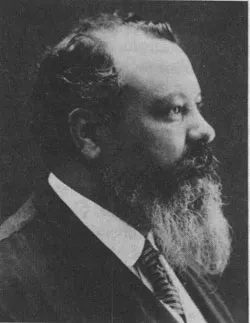
Born Gérard (Anaclet Vincent) Encausse, he was the son of a French chemist, M. Louis Encausse, and a Spanish mother of gypsy descent, Mme. Irene Perez. His family moved to Paris when he was four years old, and he spent a great deal of time there studying at the Bibliothèque Nationale. Shortly after Madame Blavatsky formed the Theosophical Society in 1884-85, he became a member, but he disliked the group’s emphasis on Eastern occultism and soon resigned. In 1888, Papus, along with his first teacher, Marquis Joseph Alexandre Saint-Yves d'Alveydre, and Marquis Stanislas de Guaita helped found the Kabbalistic Order of the Rose-Croix.
On 12 May - 15/1891, he attended a famous pistol duel between writer Jules Bois, and de Guaita, who had taken offense at something Bois had written. All three were involved in occult organizations and felt that their adversaries were aligned with the "dark forces." The so-called "magical war" was fraught with what Bois felt were sinister influences, particularly after his carriage collapsed twice on the way to the dueling ground. The dispute was carried on by Papus, who later faced Bois in a second duel, this time with sabers. Though he was slightly injured, the two eventually became friends.
Papus visited Russia in 1901, 1905 and 1906, where he served Tsar Nicholas II and Tsarina Alexandra as a physician and occult consultant.
The Human Design of Papus: Manifestor 1/3
Manifestor 1/3 — Design at a Glance
Papus emerged as a pioneer and visionary whose nature was to lead the world into a new future. His design resembled that of an emperor in ancient Rome: He had the vision of a great empire but did not wage the necessary wars himself. Instead, he sent his soldiers out to conquer foreign lands for him. These superior plans were obviously not to everyone’s liking. A central pain point in Papus’ life was being misunderstood by others because he often thought ahead of his surroundings. This led to polarization: While some people loved his big dreams and followed him, others disliked or even hated him precisely because of these grand visions. For the right followership to find him, it was crucial that Papus informed others about his intentions early enough and accurately. This strategy of informing was the path to proper resonance. When he followed this pattern, he was rewarded with a feeling of inner peace. However, when he lived against his design, he felt instead a persistent, deep-seated anger within him. This dynamic shaped his interactions and defined the emotional cost of ignoring his natural strategy.
Emotional Authority
Papus displayed an internal decision-making structure that required patience and temporal distance. His inner authority lay in the defined Emotional Center, meaning that his perception was marked by constant emotional wave movements. This mechanism ensured that his feelings were subject to permanent ups and downs; the world appeared either in highest enthusiasm or deep negativity depending on his current mood.
A crucial aspect of this design was that the Emotional Center became the inner authority whenever it was activated – regardless of which other centers were also defined. This priority rule ensured that emotional clarity took precedence over other impulses. Since, however, his immediate feeling was only a snapshot and not an ultimate truth value, spontaneous decisions from such a situation could be misleading.
Papus therefore needed time to mature. Through conscious hesitation and multiple nights of reflection on important questions, he let intense feelings subside. Only when emotional distance had been gained and calmness set in did true clarity emerge. This process of waiting was no obstacle but the necessary path to grounded, long-term insights that could positively influence his life course.
The 1/3 Profile — Investigator / Martyr
Papus showed himself as someone who combined theoretical thoroughness with adventurous experimentation – a scientist and explorer at once. His design inclined him to not only study knowledge but also test it through direct experience. This approach stemmed from his 1/3 Profile, the Researcher-Experimenter. Line 1 drove him toward detailed preparation; it emphasized routine and caution as the basis for lifelong rituals. Yet this inclination toward perfection could block: The desire for complete knowledge sometimes hindered the step into implementation because there was a feeling of not knowing enough yet. Here came Line 3 into play. It demanded trial and error. For Papus, making mistakes was not failure but a necessary data point in the learning process. Through this practical testing, credibility emerged. When he made a decision for something, he had tested it both theoretically and practically to his heart’s content. The assertiveness of Line 3 enabled him to turn errors into advantages and promote growth. Excessive caution would have impaired this potential; instead, he utilized the tension between planning and action. The result was self-tested, reliable insights. His judgments were not based on mere speculation but on the hard reality of experiments. Thus, out of the inner dynamics of preparation and risk emerged a method to validate truth through personal experience.
Split Definition — Defined & Open Centers
Papus revealed himself as a highly autonomous system, characterized by an uncommonly comprehensive definition across nearly all centers. His design established a strong internal structure: The defined Head and Ajna Centers generated constant mental pressure along with continuous inspiration in the form of questions and concepts. However, this state did not directly translate into action motivation, as these centers did not provide energy for implementation. Instead, his strength lay in the defined Throat, Heart, G, and Solar Plexus Centers. He possessed a clear identity and direction (G), paired with willpower (Heart) and emotional depth (Solar Plexus).
His inner authority was emotional, driven by the Solar Plexus. This meant that decisions for him only became clear after running through an emotional wave; impulsivity led to confusion, patience to truth. At the same time, he tended not to impulsively act on the mental pressure from Head and Ajna but rather waited until emotional clarity enabled his strategic use of willpower and identity.
This autonomous system contrasted with his open centers. The open Sacral Center led to unstable energy; Papus was prone to identifying borrowed energy from the environment as his own, exhausting himself through overwork instead of resting. Simultaneously, his open Root Center absorbed external stress that he did not generate himself. The challenge of his mechanics lay in separating these external influences—energetic exhaustion and adrenalized pressure—from his own stable internal structure so he could effectively use his emotional clarity and willpower without falling into conditioning traps.
Channel 20-10: Awakening — Channels & Gates
Papus revealed himself through a mechanism that combined logical structuring with instinctive persuasiveness. His design shaped a mind that constantly sought inner order and translated it into language, paired with an ability to intuitively recognize market needs.
The Acceptance Channel 17-62 organized details logically in the Head (Ajna) and translated visual patterns into speech; this created a constant pressure to speak to show understanding or fill gaps. Parallel to this, the Awareness Channel 61-24 processed inspiration through rationalization until sudden knowledge (Satori); his mind thought constantly, sought silence, and could not be controlled.
This mental work found expression in the Awakening Channel 10-20, which radiated self-love and acceptance as a constant presence of "I am", inspiring others simply by being. Emotional mood, however, steered social access: The Openness Channel 22-12 expressed passion or restraint depending on emotional waves (Solar Plexus) and focused on mutative potential as well as the right timing for interactions.
Entrepreneurially, the Devotion Channel 44-26 used instinctive tribal memories (Spleen) to persuade or sell through willpower (Heart); it was manipulative in terms of market needs and entrepreneurial.
Additional Gates emphasize continuity and material success (32), completing processes for new commitments (42), transferring forces to leadership (31), as well as collective behavior and natural rhythms (15). Control over material things (21), receptivity to evolutionary directions (2), protective reflexes and traditions (50), and promoting individual contributions (8) rounded out his Profile.
Individual Circuitry — Circuit Signature
Papus revealed himself as someone who had to balance two parallel identity axes: a pulsating, emotional transformation and a cool, rational structure. This tension shaped his expression, which only became effective when both systems resonated internally.
The Knowledge Circuit connected the Head, Ajna, Throat, and Solar Plexus Centers. Through the Awareness Channel (Gates 24-61), innovative flashes of insight emerged, while Openness (Gates 12-22) enabled new perspectives. This combination fostered a search for unique individuality and emotional transformation, expressed through pulsating acoustic energies.
Parallel to this ran the Mind Circuit, linking Ajna and Throat Centers via the Accepting Channel (Gates 17-62). Here it was about focused visual reasoning and sharing logical insights free from emotion. This flow aimed at strategic improvement and future-oriented clarity.
Both circuits shared Ajna and Throat Centers, creating a split definition. Papus had to learn to switch between the impulsive creative energy of the Knowledge Circuit and the disciplined structure of the Mind Circuit. Only when both systems harmonized could he unleash his full expressive power.
Additionally, Ego and Integration Circuits were at play. The Ego Circuit connected Heart and Spleen Centers via Devotion (Gates 26-44), promoting cooperation and resource management. The Integration Channel Awakening (Gates 10-20) linked Throat and Identity Centers, manifesting strength from reactions to life in the present moment. These configurations supported Papus in anchoring his unique identity in the world.
Right Angle Cross of Maya 2
Papus' design carried the structure of the Right Cross of the Maya 2. This configuration formed the static framework of his inner architecture without specific behavioral patterns or dynamic expressions being derived from it in the available material. The presence of this cross type served as a structural reference within his Human Design chart, marking a particular energetic orientation whose concrete mechanical details and impact on daily action are not specified here. Papus lived with this underlying form that served as a fixed component of his individual constellation. As no further mechanical explanations or documented events were provided, the description is limited to this simple mention, serving to place him within the overall system without providing content-based interpretations that do not directly arise from the given facts. Papus was defined by this element whose specific dynamics lie outside the scope of the given framework. The structure existed and presented itself as part of his individual signature, ready for deeper analysis which cannot take place here due to lack of data.
Saturn Return · Uranus Opposition · Chiron Return — Life Cycles
Papus' design structured his life through clear phases of consolidation and disruptive renewal. In 1894, at age 29, he obtained his medical degree, marking the first Saturn return: a cycle in which years of groundwork condensed into stable foundations for further development. The structure of his design suggested that this time was a phase of stabilization and professional anchoring.
Ten years later, another mechanism became active: In 1905, at age 40, Papus made another visit to Russia. This fell during the Uranus opposition, a cycle often experienced as disruptive renewal. While the Saturn return sought order and conclusion, this phase demanded a break from established patterns. For Papus, it did not manifest as internal conflict but as concrete action: returning to an environment that had previously held significance, now under changed circumstances. This movement underscores how his design reacted to external impulses by questioning existing structures and seeking new perspectives without entirely abandoning the ground gained during the Saturn return. The sequence of these cycles shaped his life path through a dynamic interplay of consolidation and necessary change.
Manifestor · Emotional Authority — Synthesis
Papus' life was marked by an inner drive to explore knowledge and express it through his voice (Channel 10-20). This ability for inspiration stemmed from a constant mental pressure to ask questions and understand things (defined Head and Ajna Centers), driving him to recognize patterns and articulate them in words (Channel 17-62). He was a researcher whose judgment rested on careful examination (Profile 1/3), always striving to gain deeper understanding through experience and experimentation. His G Center anchored a clear self-identity that motivated him to share these insights with others – when his emotional wave allowed it (emotional authority).
A central tension field in Papus' design lay between his need for mental clarity and the influence of his emotional wave. The constant search for understanding (defined Head and Ajna) clashed with the necessity to not make decisions impulsively but wait until emotional clarity set in (emotional authority). This likely led to an internal struggle between the desire to share knowledge immediately and the responsibility to fully grasp the depth of one's own insights.
5 Defined Channels
Incarnation Cross - Right Angle Cross of Maya 2
Solar Return
The Solar Return shows the moment when the sun returns to its exact birth position - your personal solar year.
Life Cycles
Discover the life cycles with a detailed triple view (birth chart, cycle chart, composite).
Human Design Profile
- Type
- Manifestor
- Strategy
- To inform others before acting
- Authority
- Emotional Authority
- Profile
- 1/3 - Investigator / Martyr
- Definition
- Split Definition
- Incarnation Cross
- Right Angle Cross of Maya 2
- Date of Birth
- 13.07.1865 06:00
- Place of Birth
- La Coruña, Spain
Frequently Asked Questions
What was Papus' Human Design type?
Which Profile did Papus have in Human Design?
Which Authority determined Papus' decisions?
What incarnation cross did Papus have?
When was Papus born?
Discover your own Human Design
Are you also a Manifestor? Find out in a personal reading how to use your initiation power peacefully and dissolve resistance.
More Personalities
Back to overviewChristian-Jaque
Kesha

Lucebert
Masaccio
Petrarch
Pupo