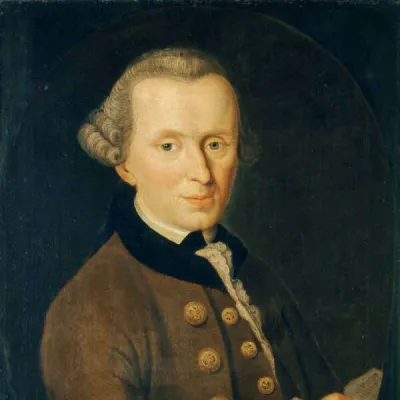
Immanuel Kant
Human Design Chart
Biography
In his doctrine of transcendental idealism, Kant argued that space and time are mere "forms of intuition [German: Anschauung]" that structure all experience and that the objects of experience are mere "appearances". The nature of things as they are in themselves is unknowable to us. Nonetheless, in an attempt to counter the philosophical doctrine of skepticism, he wrote the Critique of Pure Reason (1781/1787), his best-known work. Kant drew a parallel to the Copernican Revolution in his proposal to think of the objects of experience as conforming to people's spatial and temporal forms of intuition and the categories of their understanding so that they have a priori cognition of those objects.
Kant believed that reason is the source of morality and that aesthetics arises from a faculty of disinterested judgment. Kant's religious views were deeply connected to his moral theory. Their exact nature remains in dispute. He hoped that perpetual peace could be secured through an international federation of republican states and international cooperation.
Immanuel Kant as a Manifesting Generator 1/3 in Human Design
Manifesting Generator 1/3 — Design at a Glance
Immanuel Kant's design shows a tendency towards quick and direct action paired with a constant inner energy source. As a Manifesting Generator, he combined the lightning-fast responsiveness of a manifestor with the endurance of a generator, allowing him to skip steps and quickly bring ideas into reality. However, this speed carried risks: without internal consent, frustration threatened, which is his type's central non-self theme.
The mechanics of his design required a clear strategy: reacting rather than initiating. Immanuel Kant had a defined Sacral Center, meaning he needed environmental impulses to act. Only when this center responded with a clear 'yes' was the action energetically covered and sustainable. Acting too early or ignoring the lack of confirmation led to resistance.
Especially important for him was handling multitasking. His nature tended towards pursuing multiple projects simultaneously. This was only fruitful if each individual activity received sacral approval. Without this, his creative enthusiasm quickly turned into exhaustion. With correct application – that is, by constantly checking internal resonance – he could however reach a deep 'play mode'. In this state, variety was no obstacle but rather a source of deeper satisfaction and fulfillment in creation. His energy then flowed smoothly without him having to resist the natural rhythm of his design.
Emotional Authority
Immanuel Kant's design shows a tendency towards emotional wave motion. He appeared as someone whose inner decision-making process was carried by the defined Solar Plexus Center – the emotional authority. This configuration meant that his perception of the world was always colored by his current mood; enthusiasm and rejection could hit the same thing one after another. His immediate feeling was merely a snapshot, not a final judgment.
The mechanics of this authority required time. Spontaneous decisions based on an emotional impulse carried the risk of later proving false as they ignored the fleeting nature of feelings. Instead, patience had to be allowed and important questions mulled over repeatedly. Only when the initial frenzy of emotions subsided and emotional distance was gained did clarity and calmness set in for Immanuel Kant, enabling a well-founded decision. This process of waiting was no obstacle but rather the actual strategy for gaining inner truth. The defined Solar Plexus Center always had priority over other defined centers; his emotional resonance determined the rhythm of his clarity, independent of other energetic factors in his chart.
The 1/3 Profile — Investigator / Martyr
Immanuel Kant appeared as someone who only considered judgments trustworthy if they were both theoretically grounded and practically tested. His design established an identity as a researcher and experimenter (Profile 1/3), driven by the need to gain insights through personal learning and experimentation. This configuration created an internal dynamic between the fear of insufficient knowledge – typical for Line 1, which seeks a solid foundation and self-care – and the urge to act through trial and error, characteristic of Line 3.
For Immanuel Kant, this meant that he first engaged intensively with theory to create a stable base. At the same time, his system was oriented towards experience and adaptation; he learned from mistakes and tested his thoughts against reality. When he made a judgment, he had previously examined the matter both intellectually and through the process of experimentation. This interplay of discipline (Line 3) and the drive for an unshakable foundation (Line 1) shaped his work style: He did not seek quick answers but self-discovered truths that stood up to practical testing. His authority rested on others trusting his judgment because it was the result of a rigorous process of planning and experimental verification.
Single Definition — Defined & Open Centers
Immanuel Kant's design established a foundational structure of constant vital energy and willpower, which contrasted with situational uncertainty regarding identity and mental clarity. His defined Sacral Center generated a steady source of energy that propelled him to act in response to life and find satisfaction in activities for which he felt inner approval. This vital foundation was complemented by his defined Heart Center, which endowed him with natural willpower; he was geared towards keeping promises, recognizing his own worth, and self-determining the use of his resources, giving him a strong sense of 'I'.
At the same time, several open centers acted as areas of conditioning. His open G Center meant that he did not have a fixed, unchanging identity but tended to blend with his environment and seek direction or love by trying out various roles and places. This could lead him to question who he actually was or where his true calling lay instead of having an inner compass.
Additionally, his Head and Ajna Centers were open, making him susceptible to mental pressure and the temptation to adopt others' answers as his own truth or get entangled in endless questions. Instead of constant intellectual clarity, he was geared towards picking up inspirations from the environment and keeping his mind flexible, which could also generate confusion or a feeling that he needed to find answers not coming from him. His defined Throat Center nevertheless allowed him to translate these inner processes as well as his emotions (Solar Plexus) and intuition (Spleen) into clear communication so long as he trusted his inner authority and did not act impulsively.
Channels for care, mysticism, action, success and life struggle.
Immanuel Kant showed himself deeply rooted in the energy of care, channeling this energy not only privately but through the creation of values and laws to preserve the whole. This attitude was shaped by Channel 27-50: Gate 27 (Care) in his Sacral Center drove a selfless interest in others, while Gate 50 (Values) in his Spleen Center defined traditional structures necessary for order and survival. Kant intuitively understood that true care begins with correctly caring for oneself – an 'enlightened selfishness' from which the strength to nourish others and protect the clan emerged.
At the same time, there was a strong drive towards self-determined activity carried by Channel 34-20 of Charisma. Here, raw physiological power at Gate 34 (Power) combined with Gate 20 (Now) in his Throat Center. This configuration called for an immediate, charismatic expression form that had to be strictly guided by sacral reaction. Without this inner guidance, the energy would have erupted as chaotic obsession; correctly applied, it enabled impressive, sustained effectiveness and self-empowerment, with Kant fully immersing himself in satisfying activities.
Another central imprint came from Channel 19-49 of Synthesis. This linked the pressure of his Root Center (Gate 19: Claims) to emotional sensitivity in his Solar Plexus (Gate 49: Principles). Kant was sensitive to his position within the collective and sought a balance between acceptance and rejection based on deepest ideals. For him, loyalty was the glue of the clan; he needed confirmation that he was needed and rejected everything that did not support the spirit of community. This emotional frequency significantly determined who entered his inner circle and who was deemed trustworthy.
Tribal Circuitry — Circuit Signature
Immanuel Kant's design connected primal protective instincts with the ability for cooperative resource acquisition. The Archer Circuit (Channel 27-50) linked the Sacral Center to the Spleen, creating a deeply rooted tendency towards protection and preservation of genetics and family. This energy worked timeless, serving the conservation of the existing through instinctive care.
Parallel to this, the Ego Circuit shaped his social interactions. Here, two separate segments combined different forces: The Throat with Heart (Channel 45-21, Money Line) promoted the joint creation of material resources and prosperity through clear communication. Simultaneously, linking Solar Plexus with Root Center (Channel 49-19, Synthesis) allowed emotional waves to connect with endurance, enabling mutual support within the clan. Since this circuit did not have a direct connection to the Sacral Center, the necessity for rest periods to regenerate life force was central to these cooperative efforts.
Additionally, the Knowledge Circuit worked through Channel 28-38 (Life Struggle), linking Spleen and Root Centers. This gave a pulsating, acoustic quality in dealing with challenges where primal intuition met resistance. The Integration Circuit (Channel 20-34, Charisma) finally connected Throat Center directly to Sacral Center. This allowed Immanuel Kant to draw strength from reacting to life and express this through proper behavior in the present moment. As a simple definition, all defined centers formed a continuous energetic flow seamlessly integrating protection, cooperation, and individual expression.
Right Angle Cross of the Unexpected 1
Immanuel Kant's Human Design legte eine archetypische Prägung durch das „Rechte Kreuz des Unerwarteten 1“ fest. Diese Konfiguration definierte die tiefere, oft unbewusste Lebensdynamik und den karmischen Hintergrund seiner Existenz. Sie fungierte als Rahmen für unerwartete Wendungen und prägte seine Fähigkeit, sich im Unvorhersehbaren zu orientieren.
Das Rechte Kreuz des Unerwarteten 1 beschreibt eine energetische Struktur, die nicht durch lineare Planung, sondern durch das Navigieren in chaotischen oder überraschenden Situationen gekennzeichnet ist. Für Immanuel Kant bedeutete dies, dass sein innerer Kompass darauf eingestellt war, mit dem zu operieren, was sich nicht im Voraus berechnen ließ. Es handelte sich um eine grundlegende Prägung, die seine Reaktion auf das Leben formte: weniger durch Kontrolle des Ausgangs, sondern durch Anpassungsfähigkeit an plötzliche Veränderungen.
Da keine spezifischen Gatter oder Kanäle im Rohinhalt genannt sind, bleibt die Analyse auf diese abstrakte archetypische Ebene beschränkt. Die Betonung liegt ausschließlich auf der Bedeutung dieses Kreuzes als Hintergrundstruktur. Immanuel Kant zeigte sich somit durch eine Dynamik geprägt, bei der das Unerwartete nicht als Störung, sondern als konstitutiver Teil seiner Erfahrungswelt diente. Diese Mechanik schuf den Untergrund, auf dem seine persönlichen Prozesse abliefen, unabhängig von äußeren Umständen oder bewussten Entscheidungen.
Saturn Return · Uranus Opposition · Chiron Return · 2nd Saturn Return — Life Cycles
Immanuel Kants Human Design strukturierte sein Leben in klare Phasen der Reifung und intellektuellen Konsolidierung. Jeder planetarische Zyklus markierte einen Übergang von innerer Entwicklung zu äußerer, publizierter Autorität. Dies zeigte sich konkret im ersten Saturn-Return 1754 (Alter 30), als er eine Theorie über die Verlangsamung der Erdrotation durch den Mond veröffentlichte – ein Moment, an dem jahrelange Vorarbeit zu einem tragfähigen Ergebnis verdichtete.
Die Uranus-Opposition um das 40. Lebensjahr brachte oft einen Bruch mit etablierten Strukturen, um neue Wahrheiten freizulegen. 1764 publizierte Kant seine Untersuchung über die Deutlichkeit der Grundsätze der natürlichen Theologie und der Moral, was diese mechanische Tendenz zur Neuausrichtung bestätigte.
Der Chiron-Return (ca. 49–51 Jahre) ist ein Erfüllungszyklus, in dem sich das eigene Inkarnationskreuz entfaltet und Sinn erfahrbar wird, sofern man gemäß Strategie und Autorität lebt. 1772 (Alter 48), kurz vor diesem Höhepunkt, begann Kant mit Vorlesungen zur Anthropologie an der Universität. Dies signalisierte die Annäherung an seine tiefere Lebensaufgabe und die Verankerung seiner Erkenntnisse in der Lehre.
Der zweite Saturn-Return rund um das 57. Lebensjahr krönte diese Entwicklung. 1781 veröffentlichte Kant die Kritik der reinen Vernunft. Dieser Akt repräsentierte die volle Ausreifung seiner intellektuellen Autorität, wobei sich die vorherigen Phasen der inneren Arbeit nun in ein umfassendes, publiziertes Werk entluden. Die Mechanik seiner Zyklen prägte somit einen klaren Weg von spezifischen naturwissenschaftlichen Theorien hin zur fundamentalen philosophischen Systematisierung.
Manifesting Generator · Emotional Authority — Synthesis
Er lebte einen Prozess stetiger Verfeinerung und Synthese von Erkenntnissen. Die Kombination aus manifestierender Generator-Energie, dem definierten sakralen Zentrum und dem Profil des Forschers/Experimentators (1/3) deutete auf eine Lebensweise hin, die durch tiefes Eintauchen in Themen, praktische Überprüfung und anschließende Weitergabe validierten Wissens geprägt war. Der Kanal der Synthese (Gate 19-49) verstärkte diese Tendenz noch, indem er ein starkes Bedürfnis nach Zugehörigkeit mit dem Streben nach Idealen verband – eine Dynamik, die sich in den belegten Ereignissen während seiner Karriere zeigte, als er Theorien entwickelte und verfeinerte. Die wiederholten Saturn-Returns, verbunden mit karrierebezogenen Veröffentlichungen, unterstreichen diesen fortwährenden Zyklus von Forschung, Prüfung und Kommunikation.
Ein zentrales Paradox lag in der Spannung zwischen dem Impuls zur schnellen Handlung (Manifestor-Aspekt) und der emotionalen Autorität, die eine reifliche Entscheidungsfindung erforderte. Obwohl er dazu neigte, Dinge rasch anzugehen und zu überspringen, musste er sich gleichzeitig der emotionalen Welle hingeben und seine Urteile mehrfach überprüfen, um zur Wahrheit zu gelangen. Diese innere Zerrissenheit zwischen dem Wunsch nach Geschwindigkeit und der Notwendigkeit tiefer Reflexion prägte seinen Ansatz und führte zu einer kontinuierlichen Auseinandersetzung mit den eigenen Prinzipien und Erkenntnissen.
5 Defined Channels
Incarnation Cross - Right Angle Cross of the Unexpected 1
Solar Return
The Solar Return shows the moment when the sun returns to its exact birth position - your personal solar year.
Life Cycles
Discover the life cycles with a detailed triple view (birth chart, cycle chart, composite).
Human Design Profile
- Strategy
- To respond - wait for something to respond to
- Authority
- Emotional Authority
- Profile
- 1/3 - Investigator / Martyr
- Definition
- Single Definition
- Incarnation Cross
- Right Angle Cross of the Unexpected 1
- Date of Birth
- 22.04.1724 05:00
- Place of Birth
- Königsberg, Germany
Frequently Asked Questions
What was Immanuel Kant's Human Design type?
What Profiles did Immanuel Kant have in Human Design?
Which Authority guided Immanuel Kant's decisions?
What incarnation cross did Immanuel Kant have?
When was Immanuel Kant born?
Discover your own Human Design
Are you also a Manifesting Generator? Find out in a personal reading how to unfold your multi-talents and direct your energy wisely.
More Personalities
Back to overviewAldair

Alizée

Angeli

Arletty

Artus

Balthus