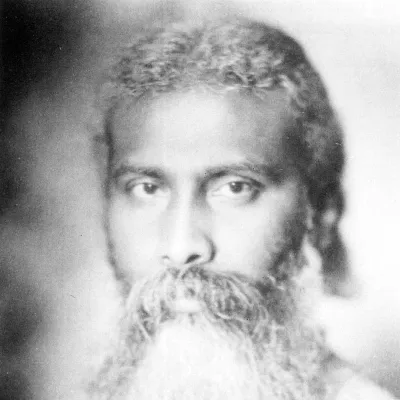
Inayat Khan
Human Design Chart
Biography
He was so fine a master of classical Indian music by the age of twenty that one of the greatest patrons of music, the Nizam of Hyderabad, responded to Inayat Khan's singing by awarding him the greatest musical title in India: Tansen of India.
Having fulfilled his purpose in music, he then relinquished a brilliant career to devote himself to the spiritual path. Having a divine spiritual experience at the age of 21, he found his ideal teacher in the being of Hazrat Abu Hashim Madani, the successor to one of the branches of the Chisti Sufi Order in India. He took the sacred vow of initiation and went through a course of training in the four Sufi Schools: Chishti, Naqshbandi, Qadiri, and Shurawardi, studying for four intense years at his teacher’s side. Before Abu Hashim Madani died, he called his pupil Inayat Khan to his bedside: "Fare forth into the world, my child, and harmonize the East and the West with the harmony of thy music. Spread the wisdom of Sufism abroad, for to this end art thou gifted by Allah, the most merciful and compassionate."
With this blessing the guru enjoined his student to take the message of Sufism to the West. Inayat Khan wrote, "Following my decision and the call of God, I left India in 1910 to sojourn in the Western world, strong in the courage of the most blissful command I had received from my Murshid and in the glory of the noble object he had awakened in my soul." Leaving his home on 13 September 1910, he landed in North America, giving lectures and guiding an ever-growing group of seekers.
Inayat Khan — Manifesting Generator with Profile 5/1
Manifesting Generator 5/1 — Design at a Glance
Inayat Khan revealed himself as someone carrying hybrid energy: the endurance of a Generator paired with the lightning-fast effect of a Manifestor. His design inclined him to draw things into his life while simultaneously responding to inner impulses. This configuration meant that he had constant sacral energy, but through the connection of Motor Centers to the Throat Center, he also had the ability to skip steps in action.
This speed was a double-edged sword. When Inayat Khan reacted to many different impulses at once and started multiple projects simultaneously, his creative enthusiasm could quickly turn into frustration – especially if he omitted important intermediate steps or failed to obtain inner consent. The challenge lay in channeling this rapid dynamics without overloading himself.
However, when strategy and authority were aligned with him, that is, he only reacted after his Sacral Center gave a clear “yes,” this energy transformed into deep satisfaction. In this state, it was no problem for him to work on different tasks simultaneously; rather, variety and entering a playful mode were essential to maintain his creative power. Without this inner “play” and the reaction to real impulses, frustration threatened to take over, along with the non-self theme of his type. His path thus wasn’t linear processing but a dynamic dance with energy, where he learned to direct his speed through conscious pauses and inner confirmation.
Sacral Authority
Inayat Khan lived as a Generator with sacral authority, which structurally simplified his decision-making process. His internal guidance came directly from the defined Sacral Center, which was also his strategy and inner compass. This configuration allowed him to respond to external stimuli with an immediate physical reaction – often as a palpable surge of energy or as an inner confirmation through sounds like “Hmm.” Such signals indicated that his energy had been activated; then he felt vital and acted with great enthusiasm.
Central to this mechanism was the openness of his Emotional Center. Since this center remained undefined, he could not make decisions in emotional troughs or peaks but had to wait for a clear physical response from the sacrum. This protected him from impulsive misjudgments that might arise from fleeting emotions.
Additionally, his activated Spleen Center acted as supporting authority. It gave him quick, instinctive perception and enabled spontaneous reactions to what was happening directly in front of him. Inayat Khan utilized this combination of sacral confirmation and spleen-based intuition to navigate his life reliably. He proceeded without rigid purposefulness but let himself be guided by the joy of activities that truly engaged his energy.
The 5/1 Profile — Heretic / Investigator
Inayat Khan’s design inclined him to act as a Hero, using deep knowledge to help others solve problems. As Profile 5/1, he combined the line of the Researcher with that of the Expert. The first line described his developmental path: it required time and experience to overcome shocks through willpower before a reaction followed. This shaped his ego through slow genetic changes over long periods.
The fifth line gave him the ability to change rules and not just overcome obstacles but creatively circumvent them. In crisis situations, this line could provoke if absolutely necessary to spread mutations and achieve success by bypassing barriers. Others often sought solutions for their problems from him. His almost magnetic quality drew questions, similar to a scientific authority who answered in hour-long conferences.
Without clear boundaries, however, this threatened to drain him, leaving his inbox overflowing with further requests or criticism. By learning also to say no, Inayat Khan maintained the beneficial balance between researching for himself and problem-solving for others. Thus, he used his gifts optimally without being overwhelmed by the expectations of his environment.
Single Definition — Defined & Open Centers
Inayat Khan's design tended towards a constant, clear expression of his inner identity and vital force. His defined Throat Center served as a reliable channel for this energy; it transformed information into communication and action without him having to constantly rediscover himself. This voice did not spring from fluctuating emotions or thoughts but from a stable source.
Central to this was his defined G Center, which gave him a firm self-identity and a clear sense of direction. He knew who he was and where it led him, independent of external expectations. This inner security allowed him to comfort others or present new perspectives without losing his own orientation. His power source also came from the defined Sacral Center. As a Generator, he had an enormous vital energy that felt like a constant hum. However, this energy was only available when he responded to life – waiting until he was asked or invited rather than initiating himself. An affirmative response from the Sacral Center gave him the necessary push for persistence and satisfaction.
Supporting this structure was his defined Spleen Center, which granted him spontaneous intuition and a strong body awareness. It allowed him to act in the present moment and make health-promoting decisions intuitively without having to rationalize them. His defined Root Center also provided the necessary pressure to move forward in the material world and master existential challenges.
In contrast, his vulnerability was evident in open centers. His open Head and Ajna Centers meant he did not have a constant mental inspiration. He tended to take on the mental stress of others or get stuck in doubts when trying to solve problems with the mind that were not his own issue. His open Heart Center made him susceptible to attempts to prove his worth through promises or competitive thinking – a trap, as he lacked the consistent willpower for it. Additionally, his open Solar Plexus absorbed the emotions of the environment; he had to learn to observe these feelings as transient waves and let them go in order to remain emotionally stable.
Channels for intuitive fighting spirit and powerful manifestation.
Inayat Khan's design tended towards mutative innovation driven by the connection between material power competence and higher knowledge. The Beat 14-2 channel connected his Sacral Center with the G Center, giving him access to resources as a keyholder to take on new directions. This configuration promoted a unique life force that worked through trust in inner reactions rather than intellectual planning.
At the same time, there was a strong charisma forcing immediate activity. The Charisma 34-20 channel channeled raw physiological energy from the Sacral Center directly to the Throat. This created an urge to act and express oneself often faster than conscious reflection allowed. Without inner guidance, this energy could appear chaotic, but correctly applied it inspired others through spontaneous vitality.
Intuitive insight flowed seamlessly into this expression. The Brainwave 57-20 channel connected the Spleen with the Throat, allowing deep survival knowledge to be communicated in the moment. Inayat Khan had a penetrating self-awareness that he verbally brought directly into the present. This ability helped him reduce misunderstandings and encourage others to awaken their own inner intelligence.
The basis for this was an obstinate determination in the struggle for meaning. The Life Struggle 28-38 channel connected Root and Spleen Centers, driving him to resist distractions and only engage in battles that had personal value. This struggle served not for destruction but for individuation and finding a deeper life purpose despite adversity.
Additionally, the Power 34-57 channel stabilized his survival ability. It linked sacral energy with intuitive awareness in the Spleen. This kept him physically fit and acoustically alert so he could react spontaneously to dangers or opportunities. This mix of intuition and generative power allowed him to navigate life independently and vitally, always ready to respond to the vibrations of his environment.
Individual Circuitry — Circuit Signature
Inayat Khan's design tended towards impulsive, acoustic creativity. As a simply defined person, he had a continuous energetic flow: Head, Ajna, Heart, Sacral, Throat, Spleen, and Root Centers were directly connected with each other. This created an integrated basis for spontaneous action capability.
The Knowledge Circuit worked in two separate parts on him. On the one hand, it connected the Throat Center with the Spleen and Root Centers (channel 'Flash of Inspiration'). This promoted innovative ideas that came directly from intuition and were expressed acoustically or in the present moment. On the other hand, energy flowed between Identity and Sacral Centers via the channels 'The Beat' and 'Life Struggle'. Here it was about strengthening one's own individuality through rhythmic endurance and fighting for one's existence. These two areas were not energetically directly fused but existed parallel.
Additionally, the Integration Circuit worked, connecting Throat Center, Sacral, and Spleen Centers (channels 'Charisma' and 'Power'). This supported the ability to draw power from reacting to life, guide it through intuitive knowledge, and make it effective in the present moment. The stream of intuition in the Spleen underlined this orientation towards inner feeling as a source for decisions. Overall, Inayat Khan appeared as someone whose expression was strongly marked by spontaneous insights that he supported with a clear, rhythmic identity.
Left Angle Cross of Individualism 1
Inayat Khan's Design revealed a tendency towards deepest self-determination and inner autonomy. He was someone who did not define his identity through external expectations or social roles but acted from a central core that operated independently of environmental influences. This attitude stemmed from the structure of the left cross of individualism in Human Design. This configuration describes a life path where the task is to fully integrate one's essence and move freely from collective constraints. It was not about rebellion for its own sake, but rather the necessity to lead an authentic existence that is only possible when one clearly recognizes and follows their inner guidelines. Inayat Khan lived this dynamic by focusing on his inner truth and often showing the courage to go off established paths. His design promoted a stance of radical self-responsibility for his happiness and direction. This meant that external validation was less important than alignment with the internal compass. Through this orientation, he could assert himself in situations where adaptation was required without denying his own essence. The energy of this cross supported him in using his individuality as strength rather than isolation. Thus, his way of being became an expression of freedom based on staying true to oneself regardless of how the outside world reacted. This characterized his entire existence as someone who consistently followed the path of self-discovery.
Saturn Return · Uranus Opposition — Life Cycles
Inayat Khan's Design revealed a tendency towards structural anchoring and long-term orientation. He was someone who had to translate inner values into external forms in order to find stability. This configuration describes the necessity of making abstract principles tangible through concrete actions and stable conditions. The first Saturn Return marks the transition from an idealistic phase to responsibility for one's own life. Inayat Khan left India in 1910 at the age of 28 to emigrate to the USA. This step was not a fleeting change but a conscious realignment of his life structure. A typical moment for his design: at this point, years-long inner processes condensed into a tangible external reality. The emigration served to create a new foundation on which his later activities could rest. It was about establishing durability and transforming personal convictions into lived practice. Through this change, he created the necessary space for the unfolding of his specific life mission by breaking old ties to build new, more stable structures.
Manifesting Generator · Sacral Authority — Synthesis
Inayat Khan led a life deeply influenced by the interplay between inner drive and the need to impart knowledge. As an Manifesting Generator with sacral authority, he possessed constant life energy (Sacral Center) that enabled him to act swiftly – yet always in response to external impulses. The Profile of Hero/Researcher (5/1) reinforced this trait by revealing a strong desire for knowledge building and its dissemination to others. The connection between sacral energy and the Beat Channel (Gate 14-2) points to an ability to initiate changes through innovative approaches while defining his own identity – a constant giving and receiving in a pulsating cycle.
A central paradox in Inayat Khan's Design lay in the tension field between the speed of the Manifesting Generator and the reactive nature of the Generator. While he could indeed act swiftly, sacral authority demanded that he wait for impulses to avoid skipping important steps. This inner conflict was evident in his need for deep research (Line 1) and simultaneous magnetic attraction to provide solutions for others (Line 5), which sometimes overwhelmed him. The left cross of individualism underscored the necessity of walking one's own path while serving others.
5 Defined Channels
Incarnation Cross - Left Angle Cross of Individualism 1
Solar Return
The Solar Return shows the moment when the sun returns to its exact birth position - your personal solar year.
Life Cycles
Discover the life cycles with a detailed triple view (birth chart, cycle chart, composite).
Human Design Profile
- Strategy
- To respond - wait for something to respond to
- Authority
- Sacral Authority
- Profile
- 5/1 - Heretic / Investigator
- Definition
- Single Definition
- Incarnation Cross
- Left Angle Cross of Individualism 1
- Date of Birth
- 05.07.1882 23:00
- Place of Birth
- Baroda, India
Frequently Asked Questions
What was Inayat Khan's Human Design type?
What profile did Inayat Khan have?
What authority did Inayat Khan have?
When was Inayat Khan born?
Discover your own Human Design
Are you also a Manifesting Generator? Find out in a personal reading how to unfold your multi-talents and direct your energy wisely.
More Personalities
Back to overviewAldair

Alizée

Angeli

Arletty
Artus

Balthus