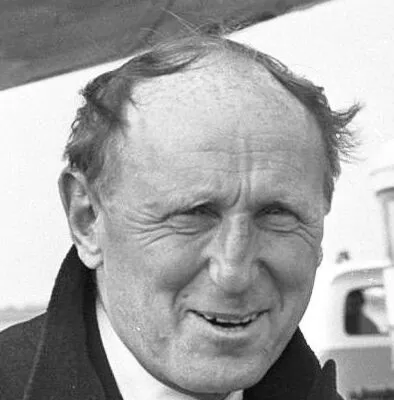
Photo: Wikimedia Commons
John Paul Stevens
Human Design Chart
Biography
He was the 101st Associate Justice of the United States Supreme Court, appointed by President Gerald R. Ford. He came to the high court on 17 December 1975, was sworn in two days later, just three weeks after his appointment had been announced on 28 November 1975. He waited six years to be able to move from his freshman spot on the court, and as of the turn of the century, he was second only to the Chief Justice in seniority.
From a prominent Chicago family, he had a reputation as a sharp-minded and hardworking attorney. Stevens was the youngest of four sons. His prominent father operated the Stevens and LaSalle hotels, among other businesses until the Depression cost the family much of its wealth. He attended the University of Chicago High School, and then the University itself, where he graduated in 1941 with a B.A. degree and a Phi Beta Kappa key.
He joined the Navy during World War II and was stationed in Washington, DC from 1942-1945. For his role as part of a Navy code-breaking team, he won the Bronze Star. He returned to Chicago at the end of the war, and enrolled in Northwestern University School of Law where he graduated first in his class in 1947.
Before practicing law, Stevens spent 1947-1948 as law clerk to Supreme Court Justice Wiley Rutledge. He joined a Chicago law firm in 1948, and acquired experience in antitrust law which helped him when he served as associate council of the House Judiciary Committee’s subcommittee on monopoly power from 1951-1952.
John Paul Stevens as a Projector 4/1 in Human Design
Projector 4/1 — Design at a Glance
John Paul Stevens was characterized by a dense, focusing aura that immediately recognized systemic errors. His design acted like a bright flashlight casting light into dark corners and making inefficient processes in others instantly visible. This ability to identify the core of problems significantly shaped his interaction with the environment.
As a Projector, he did not have a constant internal energy source but was subject to cyclical fluctuations: phases of high intensity and rapid productivity alternated with necessary rest periods to prevent burnout. This rhythmic structure required an awareness of his own limits since continuous tension quickly depleted his resources.
The central challenge of his design lay in restraint. Directly addressing the errors he discovered in others would have quickly provoked resistance and anger, akin to a bright light beam into someone's face. Instead, he was most effective through harmonious radiance; by embodying functioning patterns himself, he attracted others who then sought his advice. His strategy involved waiting for honest invitations.
If John Paul Stevens lived according to this architecture, he was rewarded with success. Deviations from this path led sooner or later to bitterness as an expression of his non-self theme. His design established that true impact did not arise through imposition but through attractive presence and patient waiting for the right invitation.
Emotional Authority
John Paul Stevens exhibited a decision-making stance requiring emotional detachment and time; spontaneous reactions seemed deceptive to him. His design was marked by Emotional Authority, carried by the defined Emotional Center. This configuration was subject to a permanent emotional wave with constant ups and downs of feelings. The world appeared colored through his current mood: one moment totally enthusiastic, the next completely negative about the same thing.
This feeling in the moment, however, was only a snapshot, an initial impression that did not necessarily represent the truth yet. Quick, spontaneous decisions based on emotion could therefore have negative consequences. The more time he took to let a decision mature, the deeper and broader his understanding became. This required patience and multiple reconsiderations of decisions. He should take pride in this process and ask himself several times.
Over time, intense feelings subsided; he gained emotional distance, leading to clarity and calmness. Only then had he gone through the process. This mechanism primarily applied to long-term decisions with significant influence on his life course. Emotional Authority always took precedence regardless of what else was defined in his chart. It determined his inner truth by teaching him to distinguish between transient mood and deeper insight.
The 4/1 Profile — Opportunist / Investigator
John Paul Stevens stood out for a deeply rooted essence that was hardly deviated from by the individual path. As carrier of Profile 4/1 (Networker/Researcher) – the only fixed profile in Human Design – he combined the social breadth of the Four Line with the inner depth of the First Line. This marked the transition from 'I' to 'You'.
His big heart, typical for the Four Line, was protected against injuries. Well-meaning change impulses from outside were often felt by him as an attack. Since his essence could neither be nor wanted to be changed, he quickly excluded people who did not fully accept him from his innermost circle. Externally, this appeared like stubbornness or inability to criticize; internally, it could lead to a loss of trust.
Line 4 enabled the transition to transpersonal and attracted guidance through magnetic attraction to create order out of confusion. At the same time, Gate 41's first line demanded an inner reflection on appropriate feelings for limitation. Fantasies were deeply examined to make meaningful experiences. Neptune enhanced his mysterious aura and obscured his true feelings.
In self-acceptance, John Paul Stevens was stable like a rock in the waves. In this security, he was excellently suited to stand instructively by others' sides since his original essence was firmly anchored and could not be shaken by external influences.
Split Definition — Defined & Open Centers
John Paul Stevens had a design with a clear inner structure: defined centers in Ajna, Throat, G Center, Solar Plexus, and Root formed his constant "operating system." This gave him a stable mental function, reliable expression, and a firm identity. His inner authority lay in the emotional center, the Solar Plexus. From this arose the need to not make decisions immediately but to wait for an emotional wave until clarity emerged. This patience was essential to avoid impulsive action and gain deep insights.
At the same time, four open centers shaped his experience: Head, Heart, Sacral, and Spleen were undefined. The open Head Center made him vulnerable to mental pressure and the temptation to take on questions from others or seek inspiration where it wasn't needed. He tended to be distracted by doubts that didn't belong to him. In the heart, there was no constant willpower; he was conditioned to prove his worth through promises – a trap that could pull him into spirals of self-doubt if he did not trust his authority.
The open Sacral Center meant no constant energy flow. Stevens absorbed life force from his environment, which could lead to overextension if he ignored boundaries or overworked himself. He had to learn when it was enough since his body wasn't designed to process this "borrowed" energy permanently. Finally, the undefined Spleen Center revealed a sensitivity for health and well-being, paired with the danger of making spontaneous decisions out of fear or false security. Instead of acting impulsively, his design required awareness that intuition here was not a reliable compass. Through waiting for emotional clarity and protection from conditioning influences in Head, Heart, Sacral, and Spleen, Stevens could fully activate his defined strengths – clear thinking, authentic communication, and stable identity.
Channels for leadership, insight and emotional clarity.
John Paul Stevens showed a tension between logical, collective leadership and individual, mutative structuring. His design required invitation by the majority for future-oriented orientation while his cognitive energy brought spontaneous insights often perceived as outsider perspectives.
The Alpha Animal Channel 7-31 connected G Center to Throat Center. This formed the foundation for logical leadership based on tested patterns and trends. Gate 7 provided the role to lead society – described as "power behind the throne" – while Gate 31 represented the collective leader whose voice had valuable influence. This configuration required John Paul Stevens to gain trust through the community; his legitimacy of leadership depended on invitation and confirmation by the collective, not absolute authority. He could only show the way if the majority was willing to follow.
At the same time, Channel 23-43 for structuring connected Ajna Center with Throat Center. Here spontaneous breakthroughs (Gate 43) met the ability to assimilate and clear expression form (Gate 23). This connection promoted innovative perspectives and efficiency improvements through metaphorical thinking. However, this energy needed the right timing and acceptance to be effective. Without inner authority and patience, John Paul Stevens risked his unique insights being rejected or him feeling alienated. His mind often worked light-years ahead, which was a challenge since he had to learn to explain his knowledge simply so it could be accepted by the collective.
Additionally, Gates like 3 (Mutation), 50 (Protective Reflex/Tradition), and 1 (Uniqueness) shaped his expression. Gate 3 drove him to create new orders from confusion while Gate 50 protected conservative values and tribal rules. Gate 1 emphasized individual creativity in the here and now. This combination underscored the need to balance collective adaptation (Alpha Animal) with individual innovation (structuring), which only became effective when communicated at the right time.
Collective Circuitry — Circuit Signature
John Paul Stevens was marked by two clearly separated, parallel operating energy fields. One field connected Ajna Center with Throat Center via Channel of Structuring (Gates 43-23). This created a pulsating, creative force for intellectual order and expression of new insights. The other field linked Solar Plexus and Root Center through the Recognition Channel (Gates 30-41), allowing cyclical emotional reflection on past experiences. This separation generated a tension field: rational structuring creativity in the Head-Throat area stood against wave-like meaning finding in the Belly-Root area.
Additionally, the Understanding Circuit worked via the Alpha Animal Channel (Gates 31-7) connecting Throat Center with Identity Center. This promoted logical, strategic sharing of insights towards a better future free from emotional influence. Since John Paul Stevens had a split definition, these systems existed as independent forces alongside each other without direct energy flow between groups. The energy in the Knowledge Circuit was acoustic and creative while the Meaning Finding Circuit worked visually and emotionally-abruptly. The Understanding Circuit complemented this with focused, rational clarity. Thus, John Paul Stevens lived in constant alternation between structuring new ideas, logically sharing strategies, and deep cyclical processing of his personal history.
Juxtaposition Cross of Mutation
John Paul Stevens revealed himself through the Juxtaposition Cross of Mutation as someone whose inner drive was directed towards fundamental changes and deep transformations. This specific configuration in his Human Design chart indicated a tendency toward disruptive transformation processes that did not remain superficial but touched upon the structure of his being. The energy of this cross often acts like a catalyst for mutations in personal or collective consciousness, where old forms must be relinquished to make way for new, adapted structures. For John Paul Stevens, this meant that his life was marked by the necessity to work through these intense phases of change rather than remaining stagnant. The transformative power of this configuration demanded constant adaptability and the willingness to question established patterns and reform them. It was not about arbitrary fluctuations but a deeply rooted mechanical impulse towards evolution through change. This dynamic shaped how he dealt with challenges: by using them as an opportunity for a fundamental reconfiguration of his perspective or actions. Thus, the Juxtaposition Cross of Mutation created the framework for a life that was constantly in flux and whose core was the ability to undergo deep metamorphosis.
Saturn Return · Uranus Opposition · Chiron Return · 2nd Saturn Return — Life Cycles
John Paul Stevens showed a career development structured through clear cyclical maturation phases correlated with institutional affirmation and ascension to higher judicial offices. His design suggested that his professional identity did not develop linearly but condensed into marked intervals.
In 1948, at the age of 28, he began working at a law firm in Chicago. This coincided with his first Saturn Return, a time when years of groundwork often condenses into a solid professional foundation and initial structural anchoring is created.
Ten years later, in 1970 at the age of 50, he was nominated to serve on the U.S. Court of Appeals for the Seventh Circuit. This marked his Chiron Return, a fulfillment cycle of blooming. Herein, one's incarnation cross increasingly unfolds; if lived according to strategy and authority, meaning and purpose become experiential. The nomination was not mere coincidence but an expression of this inner alignment manifesting outwardly.
The peak of this structuring occurred in 1975 when he was appointed to the Supreme Court at the age of 55 as a successor to William O. Douglas. This corresponded with his second Saturn Return, the phase of full maturity and authority. The mechanics of his design were evident here through confirmation by highest institutions: each step was not an isolated event but part of a coherent sequence of maturation and recognition that significantly shaped his legal career.
Projector · Emotional Authority — Synthesis
John Paul Stevens’ life was marked by a profound ability to recognize patterns and develop logical structures (defined Ajna Center, Alpha Animal Channel). This talent combined with a strong inner compass calibrated through emotional waves (Emotional Authority), leading him not to rush decisions but to let them ripen in a process. His profile as Networker/Researcher indicates that he had a deeply rooted essence and formed connections based on mutual acceptance – an attribute strengthened by his ability to identify flaws in the system (Projector Type). The repeated professional turning points (Saturn Returns, Chiron Return) were shown through consistent development within established structures rather than radical breaks.
A central paradox lay in how Stevens’ brightness – his ability to recognize and logically order things – interacted with the need to strategically apply this knowledge (Gate 31). As a Projector, he possessed the gift of highlighting weaknesses, yet his emotional nature required careful navigation through others' reactions. This likely led to tension between the impulse to communicate directly and precisely and the necessity to convey messages in such a way that they were not perceived as attacks – a balance further emphasized by his fixed profile.
3 Defined Channels
Incarnation Cross - Juxtaposition Cross of Mutation
Solar Return
The Solar Return shows the moment when the sun returns to its exact birth position - your personal solar year.
Life Cycles
Discover the life cycles with a detailed triple view (birth chart, cycle chart, composite).
Human Design Profile
- Type
- Projector
- Strategy
- Wait for the respectful invitation
- Authority
- Emotional Authority
- Profile
- 4/1 - Opportunist / Investigator
- Definition
- Split Definition
- Incarnation Cross
- Juxtaposition Cross of Mutation
- Date of Birth
- 20.04.1920 04:12
- Place of Birth
- Chicago, IL, United States
Frequently Asked Questions
What was John Paul Stevens' Human Design type?
What profile did John Paul Stevens have?
What authority did John Paul Stevens possess?
What incarnation cross did John Paul Stevens have?
When was John Paul Stevens born?
Discover your own Human Design
Are you also a Projector? Find out in a personal reading how to unfold your leadership qualities and recognize the right invitations.
More Personalities
Back to overviewSissy Spacek

Alain-Fournier
Anémone

Angeli
Ann-Margret

Bourvil