
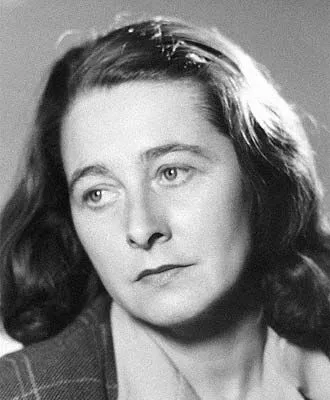
Margarete Buber-Neumann
Human Design Chart
Biography
She was a member of the Communist Party of Germany during the years of the Weimar Republic. She survived imprisonment in concentration camps during World War II in both the Soviet Union and Nazi Germany. After the war, she wrote a memoir of her time in both of these camps and served as a star witness during the so-called "trial of the century" in the Kravchenko Affair in France.
In 1976, she published Die erloschene Flamme: Schicksale meiner Zeit ("The Extinct Flame: Fates of My Time"), in which she argued that Nazism and Communism were in practice the same. By this time, she had become a political conservative, joining the Christian Democratic Union (CDU) in 1975.
In 1980, Buber-Neumann was awarded the Great Cross of Merit of the Federal Republic of Germany.
She died 6 November 1989.
Human Design Analysis: Margarete Buber-Neumann as Generator 2/4
Generator 2/4 — Design at a Glance
Margarete Buber-Neumann's Design revealed a tendency towards great endurance and inner strength. As a Generator, she possessed abundant sacral energy that enabled her to tackle tasks with remarkable stability – comparable to a workhorse that carries on as long as it finds intrinsic motivation for its burden. However, her life force was not released through self-initiated action but rather responded to signals from the environment. The central dynamic of her character lay in responding to impulses and then acting when her inner voice gave a clear "yes."
This mechanism carried two specific risks: On one hand, exhaustion threatened if she became involved in activities that did not resonate with her internally and merely wasted her energy. On the other hand, she suffered frustration when external circumstances prevented her from working on projects for which she still had plenty of energy. Living in harmony with this structure – that is, by responding rather than initiating – led to a deep sense of fulfillment. Ignoring this strategy and instead trying to initiate things independently without waiting for an inner signal resulted in persistent frustration and a lack of vitality. Her strength therefore did not lie in pushing forward but in powerfully responding to what was presented to her.
Sacral Authority
Margarete Buber-Neumann's design inclined her towards intuitive, body-based decision-making. As a Generator, she possessed sacral authority, which unified her strategy and inner guidance and simplified the process of choice. This mechanism only worked under the condition of an open emotional center. Her internal signals appeared as gut feelings or sudden bursts of energy triggered by external stimuli. They manifested in physical sounds like grunting or humming as well as verbal affirmations. When her sacral motor kicked in, she felt vital and alive, with seemingly inexhaustible energy at her disposal that allowed her to tackle tasks with great enthusiasm. This fostered an attitude of joy and contentment in everyday life, enabling her to immerse herself fully in activities without being bound to a specific purpose. Additionally, an activated Spleen acted as supportive authority. This connection to the Sacral Center enabled quick, spontaneous reactions. She had immediate access to her physical well-being and instinctive perception, which reliably guided her.
The 2/4 Profile — Hermit / Opportunist
Margarete Buber-Neumann's design set a tendency towards a swinging rhythm between deep withdrawal and social engagement. As a 2/4 Profile described as "Natural Talent / Networker," she constantly oscillated between the need of Line 2 for solitude and that of Line 4 for community with trusted friends. This tension required clear communication: She had to signal when she sought company or wanted to be left alone. In her "Me-Time," represented by Line 2, she immersed herself in internal processes to gain clarity and calm. Only after this need was satisfied did she emerge from her "cave" to spend time with her favorite people. This cycle allowed her to reflect on the knowledge of her network during solitary times and develop brilliant ideas. The second line of Gate 50 brought determination and a certain value system, which could meet resistance if the foundation had not yet been solidified. This sometimes led to a determined withdrawal in confrontation. At the same time, she used Gate 56 on Line 4 to communicate ideas as a storyteller. Here it was necessary to apply clever calculation and wait for or seize appropriate opportunities to effectively convey messages. Thus, her design combined intelligent presentation with strategic timing, overcoming resistance by retreating into her inner security.
Split Definition — Defined & Open Centers
Margarete Buber-Neumann's design indicated a tendency towards consequent, powerful self-determination. Her defined G Center gave her a firm identity and inner direction; she knew who she was without needing external confirmation. This constancy was fueled by her defined Sacral Center: an immense source of vital energy was available to her, but it could only be activated through correct reactions – not through mental initiatives, but through waiting responses to life.
Her mind worked with precise definition (defined Ajna Center). She consistently generated concepts and theories independent of external influences. These mental structures flowed directly into her voice: the defined Throat Center allowed her to clearly and reliably express or manifest what she thought. Her actions were also marked by a defined Spleen Center – she had a sharp instinct for health and well-being in the present moment, which protected her from existential dangers. The constant pressure of her defined Root Center drove her to survive materially and move forward in the world.
At the same time, she was vulnerable to external disturbances through her open centers. Her open Head Center left her exposed to mental pressures; she tended to identify with others' questions or seek inspiration that did not come from within herself. Her open Heart Center lacked consistent willpower; she was tempted to make promises to prove her worth, which often ended in frustration as the energy for this was lacking. Additionally, her open Solar Plexus absorbed the emotions of the environment. She mirrored other people's moods and risked experiencing foreign fears or whims as her own, clouding her emotional clarity if she did not consciously distance herself from these fields.
Channels for change, rhythm, logic and clear structure.
Margarete Buber-Neumann's design indicated a tendency towards sudden, deep transformation processes that were flanked by strong inner rhythms. The channel of Mutation 60-3 connected her Root Center with the Sacral Center and generated potential for evolutionary change through the Gate of Limitation (60) and the Gate of Order (3). This configuration brought forth a pulsating, often melancholic energy that pushed her to accept limitations and move beyond the confusion of a new beginning. Mutation in her did not occur linearly but like music between pulses – unexpectedly and compelling adaptation.
Parallel to this, the channel of Rhythm 5-15 shaped her life path. It connected her Sacral Center with her G Center through the Gate of Fixed Rhythms (5) and the Gate of Extremes (15). This gave her a unique sense of timing determined from within, which closely linked her to the natural flow of life. While Gate 5 held fast to fixed habits, Gate 15 paved the way for variety in social structures through its love of extremes. This channel magnetically drew others into her energy field and often set the course of her environment.
Her thinking was marked by the channel of Structuring 43-23, which linked her Ajna Center with her Throat Center. Through the Gate of Insight (43), she received spontaneous breakthroughs that she processed and expressed through the Gate of Assimilation (23). This allowed her to communicate innovative perspectives clearly and reinforce efficiency through metaphorical processes. Simultaneously, the channel of Judgment 58-18 between Root and Spleen Centers influenced her. It connected the Gate of Vitality (58) with the Gate of Correction (18), giving her an insatiable urge to question and perfect patterns to regain joy in life.
Additionally, Gates like 50 (Protection Reflex, Values) and 56 (Inspiration, Storytelling) contributed to awareness, while Gates like 1 (Uniqueness), 2 (Receptivity) and 9 (Detail Work) in the personality area promoted creative mutation and precise focus. In her design, Gates like 32 (Continuity), 53 (Freedom, Cycles) and 4 (Formulation) supported her ability for long-term planning and pioneering spirit.
Individual Circuitry — Circuit Signature
Margarete Buber-Neumann's design indicated a tendency towards a divided energetic structure. Her powers were not united in one continuous flow but formed two parallel independent systems. This shapes her experience of the world as someone who often had to process different life areas separately or sequentially rather than simultaneously integrating them.
The Knowledge Circuit connected her Ajna Center (Intellect) with her Throat Center (Expression). This connection allowed intellectual concepts to be directly translated into words and actions. Parallel to this, the same circuit linked her Sacral Center (Life Energy) with her Root Center (Survival/Pressure). Here a pulsating energy aimed at mutations and structuring – new paths driven by the necessity of the moment. However, these two parts were not connected; intellectual expression and energetic impulse ran alongside each other.
At the same time, the Understanding Circuit was active. It linked her Identity Center (Who Am I) with her Sacral Center. This created a rhythm through which her identity manifested in action. Additionally, this circuit connected her Spleen (Intuition/Survival) with her Root Center. Here focused visual energy of judgment aimed at sharing logical insights free from conditioning to contribute to the improvement of the future. These connections also formed their own system separate from the Knowledge Circuit. Margarete Buber-Neumann thus navigated through two distinct energetic maps: one for creative expression and structural change, the other for strategic action and intuitive self-awareness.
Right Angle Cross of Laws 3
Margarete Buber-Neumann's Human Design profile featured the right cross of Laws 3. This configuration established a specific life dynamic characterized by tension between individual freedom and collective constraints. In Human Design, this cross symbolizes resistance against oppression and defense of rights, often during times of societal upheaval or conflict. It does not describe a passive stance but rather a deep inner necessity to engage with systems that limit the individual.
For Margarete Buber-Neumann, this meant her life was shaped by confrontation with authoritarian structures. The right cross of Laws 3 activates themes such as justice, resistance, and the search for truth in an environment that suppresses these values. It is a pattern showing how someone maintains their integrity by standing against unjust laws or power structures. This energy drives them not only to fight for themselves but also to speak up for others who face similar pressures. The challenge was always to maintain her stance without falling into the same harshness as the system. This design element underscored her role as someone who, in times of extreme political persecution, retained their humanity and will for freedom.
Saturn Return · Uranus Opposition · Chiron Return · 2nd Saturn Return — Life Cycles
Margarete Buber-Neumann's Human Design indicated a tendency towards structural anchoring that intensified during phases of maturity. In 1926, at the age of 25, she joined the Communist Party of Germany – marking her first Saturn Return. This cycle often signifies the transition from experimental commitment to binding responsibility; here, her political orientation was stabilized and made actionable through a firm institutional tie.
Later, her chart showed dynamics of sudden disintegration of established structures. In 1940, at age 39, during the Uranus Opposition, she was deported to Germany and imprisoned in Ravensbrück concentration camp. The Uranus Opposition describes a point of extreme instability where external circumstances violently dismantle one's order; this experience was not a choice but an enforced shattering of her previous life framework by unpredictable power dynamics.
From this disintegration followed not an end, but an integration of the experience. In 1948, at age 47, her report “As a Prisoner under Stalin and Hitler” first appeared in Swedish. This coincided with her Chiron Return, a cycle of fulfillment where one's essence – if lived authentically before – unfolds as a meaningful force. Her publication was not merely processing suffering but an effective expression of her incarnation purpose: conveying a truth validated through extreme trials.
Generator · Sacral Authority — Synthesis
Margarete Buber-Neumann led a life deeply influenced by her sacral authority and the Generator type. Her energy flowed strongest when she immersed herself in tasks triggered by an inner surge – a state that brought her joy and satisfaction. The profile as a natural talent and networker suggests she oscillated between the need for withdrawal and the desire for community, with clarity during “me-time” essential to connect with others afterward. This rhythm was mirrored in the Channel of Mutation (Channels/Gates), which released pulsating energy coupled with melancholy and the urge for change.
A central paradox in her design lay in the tension between the knowledge circuit and the right cross of Laws 3 (Cross). While she could create concepts and inspire others through a defined Ajna Center, her path was also marked by a deep need for individuality and the courage to deviate. The events of her life – joining a political party (Saturn Return 1), imprisonment under extreme conditions (Uranus Opposition) and finally publishing her experiences (Chiron Return) – bear witness to this inner dynamic where creative expression and transformative power collided with the laws and limitations of life.
4 Defined Channels
Incarnation Cross - Right Angle Cross of Laws 3
Solar Return
The Solar Return shows the moment when the sun returns to its exact birth position - your personal solar year.
Life Cycles
Discover the life cycles with a detailed triple view (birth chart, cycle chart, composite).
Human Design Profile
- Type
- Generator
- Strategy
- To respond - wait for something to respond to
- Authority
- Sacral Authority
- Profile
- 2/4 - Hermit / Opportunist
- Definition
- Split Definition
- Incarnation Cross
- Right Angle Cross of Laws 3
- Date of Birth
- 21.10.1901 13:30
- Place of Birth
- Potsdam, Germany
Frequently Asked Questions
What is Margarete Buber-Neumann's Human Design type?
Which Profile did Margarete Buber-Neumann have in Human Design?
What Authority guides Margarete Buber-Neumann in Human Design?
What incarnation cross did Margarete Buber-Neumann have?
When was Margarete Buber-Neumann born?
Discover your own Human Design
Are you also a Generator? Find out in a personal reading how to use your sacral energy correctly and discover deep satisfaction.
More Personalities
Back to overviewAaliyah

Alexia

Angèle

Anne-Marie

Arcángel

Arno
