
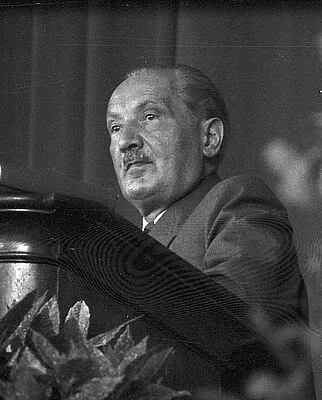
Martin Heidegger
Human Design Chart
Biography
Heidegger's magnum opus, Being and Time (1927), is widely considered one of the most significant works of modern philosophy. In it, he introduced the concept of Dasein ("being-there") to describe the distinctive character of human existence, arguing that humans possess a "pre-ontological" understanding of being that shapes how they live and act, which he analyzed in terms of the unitary structure of "being-in-the-world". Through his analysis of Dasein, Heidegger sought to reawaken what he called "the question of being": the fundamental inquiry into what makes entities intelligible as the entities they are. In other words, Heidegger's governing "question of being" is concerned with what makes beings intelligible as beings. This question, he believed, had been neglected or obscured throughout the history of Western philosophy since the ancient Greeks.
His later work turned increasingly to questions of technology, language, art, and poetry, developing themes of human "dwelling" in the world and critiquing what he saw as the nihilistic trajectory of modern technological civilisation.
Martin Heidegger as a Manifesting Generator 6/2 in Human Design
Manifesting Generator 6/2 — Design at a Glance
Martin Heidegger's Human Design suggests a tendency towards hybrid dynamics: As an Manifesting Generator, he had the constant, sacral energy of a Generator combined with the ability to skip steps and quickly draw results into his life. This configuration described someone who needed to react to inner impulses but should not initiate them; however, once in motion, they worked at a speed that could often be perceived as rushed.
The mechanics showed two central challenges: First, he tended to skip important intermediate steps, which led him occasionally to have to return and rework things to gain stability. This could cause frustration since the non-self theme of the Manifesting Generator lies in dissatisfaction with this apparent inefficiency. Second, he often reacted simultaneously to several impulses, leading to parallel projects. Without the consistent application of his strategy – waiting for sacral confirmation ("Yes") before each action and regularly checking inner consent during the process – this creative power quickly turned into overextension.
However, when the strategy was adhered to, Martin Heidegger found deep satisfaction in his work. In this state, variety was not a barrier but necessary; he needed a playful mode to sustainably use his energy. The demand to complete only one thing at a time contradicted his nature. Instead, he flourished in an environment that allowed him to agilely switch between different tasks as long as each was legitimized by the inner impulse.
Sacral Authority
Martin Heidegger's decision-making process ran through direct physical resonance. As a Generator, he possessed sacral authority, meaning his strategy and inner guidance were identical: waiting for external stimuli and then responding from the gut. This simplified his process considerably, as no complex weighing was necessary as long as his emotional center remained open and did not anticipate.
His responses showed up as vital bursts of energy or loud affirmations like a "Mhm". When his sacral motor engaged with something, he felt alive and acted with great enthusiasm. He was born to perform tasks without rigid purposefulness and immerse himself in them. This energy was inexhaustible as long as it was triggered by real stimuli.
Additionally, his activated Spleen Center worked as supporting authority. This gave him the ability to react particularly quickly and spontaneously. He had immediate access to his instinctive perception and physical well-being. The combination of sacral confirmation and spleen-induced speed allowed Martin Heidegger to make decisions instantly and reliably, guided by deep inner knowledge about what was good for him and energizing.
The 6/2 Profile — Role Model / Hermit
Martin Heidegger's Human Design suggests a tendency towards two-phase development: initially experimental action, later detached wisdom. As a 6/2 Profile (Role Model/Natural Talent), the energy of Line 3 influenced his behavior before the age of thirty. This promoted trial and error as driving principles; he sought personal experiences, withdrew after mistakes, and learned through direct practice.
Around thirty years old, Line 6 (Gate 46) activated. This phase was characterized by integrity and the search for true wisdom. Martin Heidegger appeared in this time as someone who looked back at his earlier experiments with distance. It was a period of intense reflection that simultaneously allowed healing and deep self-awareness. Line 6 offered an overview of commitments and limitations; he learned to say "No" through experience and accept innocent obligations.
The combination with Line 2 (Gate 52) brought consideration and concern into play, flanked by mental concentration. While the second line conveyed the talent to focus on something and embrace the other, it warned against egoistic pauses that could endanger others. The opposition to Line 58 showed the danger of selfish withdrawal.
When the time was ripe, Martin Heidegger emerged from his metaphorical "cave" as a wise man. Others recognized his wisdom and sought his advice to partake in his life lessons and learn the ability for deep introspection. As a role model, he smoothed the path for others by clearly seeing and successfully projecting the nature of people around him.
Single Definition — Defined & Open Centers
Martin Heidegger's Human Design profile points towards a clear, identity-based communication style driven by deep inner confidence. His defined G Center provided him with a consistent sense of self-identity and direction; he knew who he was and where his path led without needing to impose this on others. This internal stability flowed directly into his voice: The also defined Throat Center ensured that he spoke from this reliable source – not impulsively or emotionally, but with the clarity of someone who knows their truth and expresses it authentically.
His motor lay in his defined Sacral Center, which provided him with immense vital energy. However, this power was reactive: It was only available when he waited for life to respond to him. Initiated actions without this inner confirmation led to frustration; reactive actions were carried out by a persistent endurance that endured stagnation phases until breakthroughs occurred. This was complemented by his defined Spleen Center, which gave him spontaneous, moment-to-moment intuition. He did not act based on long-term planning but from a deep bodily feeling for what was healthy and correct in the present.
At the same time, Martin Heidegger showed vulnerability in areas he could not control. His open Head and Ajna Centers meant that he lacked consistent mental inspiration. He tended to take on mental pressure from others or get entangled in questions that were not his own, which confused him when he tried to solve everything intellectually. His open Heart Center left him vulnerable to the need to prove his worth through willpower – a trap he had to avoid as he did not have consistent energy for this. Additionally, his open Solar Plexus absorbed foreign emotions, making him emotionally restless if he did not distance himself from the environment. Finally, his open Root Center took on external stress; instead of succumbing to this pressure and becoming hyperactive, he had to learn to recognize it as an alien element and let go.
Channels for determination, presence, intuition and expression.
Martin Heidegger's Human Design profile points towards a tendency for radical presence and intuitive self-awareness. His character was marked by the ability to act and speak in immediate presence, driven by deep inner wisdom that did not rely on intellectual analysis.
This attitude stemmed from the Awakening Channel 10-20, which connects the G Center with the Throat Center. Through the Gate of Appearance (10) and the Gate of Now (20), individual knowledge was transformed into correct action. It was about stating 'I am! I live NOW!', establishing self-love and trust as a basis for survival. Martin Heidegger lived this wisdom by accepting himself, thereby unconsciously inspiring others to do the same.
This was complemented by the Perfect Form Channel 10-57, which linked the Spleen Center with the G Center. Here, the Gate of Intuitive Insight (57) worked in conjunction with the Gate of Self Behavior (10). This created a creative integration where behavior was guided by intuitive awareness. The acoustic sensitivity of Gate 57 allowed for responses to vocal tones and not just words, ensuring spontaneous and appropriate actions.
The Lightning Flash Channel 20-57 strengthened this dynamic by directly channeling intuitive insight into communication in the Throat Center. This enabled a penetrating self-awareness and the expression of truth 'I know that I am living now'. Spontaneous verbal outbursts often hit the core of an issue faster than others' contemplative considerations.
Additionally, the Discovery Channel 29-46 acted on the personality level. It connected the Sacral Center with the G Center through the Gate of Saying Yes (29) and the Gate of Self Determination (46). This promoted persistence and the ability to lose oneself in experiences to share meaningful insights later. The combination of these channels formed a person who worked through authentic presence and intuitive clarity without seeking external recognition.
Individual Circuitry — Circuit Signature
Martin Heidegger's Human Design profile points towards impulsive, creative impulses that were directly translated into the present moment. As a simple defined type, he possessed a continuous energetic flow through G-, Throat-, Spleen- and Sacral Centers. This created an integrated structure where identity, expression, and survival were inseparable.
The Knowledge Circuit worked through Channel 20-57 (Lightning Flash). It connected the Throat Center with the Spleen. This allowed for innovative, creative insights that stemmed from intuitive knowledge in the Spleen and were articulated in the moment of now by the Throat Center. It was about expressing unique individuality through new insights.
The Meaning Circuit activated Channel 46-29 (Discovery). It connected the Identity Center with the Sacral Center. This connection channeled the cyclical energy of survival towards the past. Emotional waves and experiences were reflected to find meaning behind past events. These felt insights served to learn collectively from history and share this with the collective.
The Integration Circuit bound the forces together. Channel 20-10 (Awakening) connected Throat Center and Identity, while Channel 10-57 (Perfect Form) linked Identity and Spleen. Together with the Knowledge Circuit, these channels formed a closed group of Throat-, Identity-, and Spleen Centers. Power from reacting to life was guided by correct behavior and intuitive knowledge to act in the present moment. This strengthened highest individuality and secured survival through self-affirming expression.
Left Angle Cross of Healing 2
Martin Heidegger's Human Design showed a deep, often unconscious dedication to the process of inner transformation. This configuration, known as the Healing Left Cross, shaped his life path through a strong focus on his own emotional and energetic development. It was not a consciously directed goal but rather a fundamental orientation of his essence: The search for integrity and wholeness stood at the center of his experiential world.
For Martin Heidegger, the path to self-discovery was closely linked with the willingness to break old patterns and explore new forms of being. This dynamic affected less external successes than the quality of his inner experience. The energy of this cross promoted continuous reflection on the self and its place in the world.
This orientation meant that Martin Heidegger often went through periods of intense inner work, which were not always visible to outsiders. His design suggested that true strength arose from the ability to heal and renew oneself. This process was central to his understanding of existence and freedom. The configuration supported a way of life where personal growth took precedence over societal expectations. Martin Heidegger lived this tendency toward inner order and healing as a fundamental principle of his being.
Saturn Return · Uranus Opposition · Chiron Return · 2nd Saturn Return — Life Cycles
Martin Heidegger's Human Design profile was characterized by a clear rhythm of maturation and public validation. In 1917, at the age of 28, he married Elfride Petri. This marked his first Saturn Return, a time when internal structuring often leads to binding life decisions. His personal anchoring served as a foundation for the subsequent phase.
Ten years later, in 1928 at the age of 39, an Uranus Opposition occurred. In this year, Heidegger succeeded Husserl on his chair. This astrological configuration signals often a sudden break or rise in one's career path, driven by new and unconventional claims. Taking over this prestigious position aligned with this dynamic energy of change and new authority.
In 1936, at the age of 47, he experienced his Chiron Return. Heidegger assigned an important role to Hölderlin. This cycle does not represent healing but rather the flowering of one's purpose: The realization was now actively carried into the world and found its specific, meaningful form.
His second Saturn Return came in 1946 at the age of 57. Heidegger delivered the lecture "Why Poets?" and pointed to technological world domination. The second Saturn cycle condenses earlier experiences into a mature, often critical or warning wisdom. His engagement with technology was shown here as the result of years of internal work, now presented in a clear, structured form externally.
Manifesting Generator · Sacral Authority — Synthesis
He was a Manifesting Generator whose life was marked by a profound sacral authority. The ability to quickly initiate things (Design) and the constant availability of sacral energy (Authority) created an impulse generator that moved through life more by reacting to the present moment than by planning. This reactivity was amplified by the Awakening Channel – continuously absorbing principles and immediately putting them into action.
The Line 6 in his Profile indicates that he initially gathered intense experiences, which allowed him to withdraw later on and develop wisdom from this depth, which he then passed on (Profile Role).
A central paradox lay in the combination of quick initiating power and the need for withdrawal and reflection. The design pointed to a person who acted in flow, while the profile suggested a phase of intensive self-observation and healing after a period of experimentation. This tension was evident in phases of his life, such as transitioning from active career phases (Uranus Opposition, Chiron Return, Saturn Return 2) to times of intense engagement with philosophical questions and their expression (Knowledge Circuit).
4 Defined Channels
Incarnation Cross - Left Angle Cross of Healing 2
Solar Return
The Solar Return shows the moment when the sun returns to its exact birth position - your personal solar year.
Life Cycles
Discover the life cycles with a detailed triple view (birth chart, cycle chart, composite).
Human Design Profile
- Strategy
- To respond - wait for something to respond to
- Authority
- Sacral Authority
- Profile
- 6/2 - Role Model / Hermit
- Definition
- Single Definition
- Incarnation Cross
- Left Angle Cross of Healing 2
- Date of Birth
- 26.09.1889 11:30
- Place of Birth
- Messkirch, Germany
Frequently Asked Questions
What was Martin Heidegger's Human Design type?
What profile did Martin Heidegger have in Human Design?
Which authority guided Martin Heidegger's decisions?
What incarnation cross did Martin Heidegger have?
When was Martin Heidegger born?
Discover your own Human Design
Are you also a Manifesting Generator? Find out in a personal reading how to unfold your multi-talents and direct your energy wisely.
More Personalities
Back to overviewAldair

Alizée

Angeli

Arletty

Artus

Balthus
