Philippe Pozzo Di Borgo
Human Design Chart
Biography
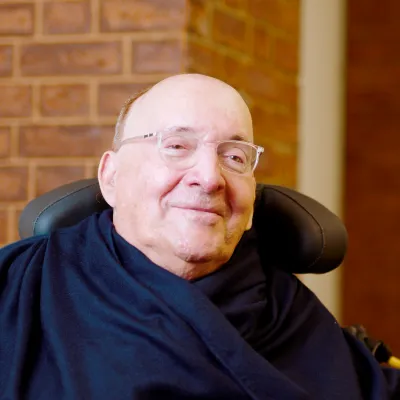
Pozzo di Borgo published an autobiographic book, Le Second Souffle (The second wind) in 2001, in which he describes the drama of his life and his return into it, including the rediscovery of love. The successful French movie Intouchables (2011) is based on this book.
Pozzo di Borgo lived in Morocco, where he died in Marrakesh on 1 June 2023 at the age of 72.
Philippe Pozzo Di Borgo — Generator with Profile 1/3
Generator 1/3 — Design at a Glance
Philippe Pozzo Di Borgo was someone with immense inner endurance. His design as a Generator pointed towards a tendency for great work capacity, comparable to a strong working horse that generated energy – provided it had the right task. This strength was not a free pass for arbitrary action; it only worked effectively when he responded to impulses from his environment. The strategy did not lie in initiating but rather in waiting for a signal and then reacting to it once his sacral center – the area of gut feeling – gave a clear 'yes'.
This principle was crucial for his satisfaction. When he followed this inner compass, he experienced deep fulfillment and could stop no one. If he did things that brought him no joy or acted against his will, he risked burnout through wasted energy. Equally frustrating for him was being held back from his heart project when he still had plenty of power to keep working. The danger lay in initiating rather than responding. This inevitably led to frustration and a lack of energy. His path to confirmation thus did not lie in forcing goals but in the patience to wait until life posed a question that he could answer with his specific endurance.
Emotional Authority
Philippe Pozzo Di Borgo lived with emotional authority, meaning his defined Emotional Center was his inner decision-making instance. This configuration was primary regardless of other defined centers in his design. He experienced wave-like emotions, showing constant fluctuations between enthusiasm and pessimism. His perception of the world was always colored by his current mood; the same situation could appear completely different depending on the moment.
For Philippe Pozzo Di Borgo, however, this immediate feeling was only a provisional snapshot, not the final truth. Quick, spontaneous decisions from an emotional peak often proved problematic. Instead, his design required patience and time to gain clarity. He had to let decisions mature, rethink them multiple times, and sleep on them. Only when intense feelings subsided and he gained emotional distance did calmness set in. This process was especially essential for long-term, life-defining decisions. Only through this conscious waiting could he reach his deeper, more comprehensive understanding rather than being guided by fleeting moods. His inner voice thus did not speak immediately but needed the distance of time to point out the true direction.
The 1/3 Profile — Investigator / Martyr
Philippe Pozzo Di Borgo was someone who collected knowledge not just theoretically but validated it through active experimentation and learning from mistakes. His design as a Researcher and Experimenter pointed towards a tendency to seek security in his Head Center before going into practice. Line 1 of his Profile emphasized calmness and inner peace; it demanded clarity before experience to integrate feelings without being overwhelmed by them. This created a stable foundation, but could also lead him to hesitate because he felt he did not know enough.
At the same time, Line 3 drove him to transform these theoretical insights into material power. Here was about trial and error as a necessary path for development. Philippe Pozzo Di Borgo learned through practical experience whom to dedicate his energy to. Selfless service to others proved key in preserving his individuality and fostering growth. When he made a judgment or decision, it was based on double-checking: both theoretical assurance from Line 1 and practical validation from Line 3. This interplay ensured that his insights were well-founded and could be confidently passed on to others since they had been thoroughly tested on heart and gut.
Triple Split Definition — Defined & Open Centers
Philippe Pozzo Di Borgo was someone who constantly questioned and sought answers under mental pressure. His defined Head and Ajna centers provided continuous inspiration but this wasn't directly translatable into action; he had to wait until others were ready to receive his ideas. This mental activity flowed into his defined Throat center, enabling him to communicate his concepts clearly without acting impulsively.
His actions were guided by a deep inner direction. His defined G Center gave him a reliable sense of self and the feeling of being lovable, while his defined Solar Plexus acted as an emotional authority. He learned to wait out the waves of his emotions until clarity emerged before making important decisions. This emotional depth was complemented by his defined Spleen center, which provided spontaneous intuition for health and well-being in the present moment. Additionally, he possessed immense vital energy through his defined Sacral center; his energy became available only when responding to questions rather than initiating on his own. The constant pressure of his defined Root Center propelled him forward and helped him cope with stress.
In contrast, his Heart Center was open. This meant that Philippe Pozzo Di Borgo wasn't designed to maintain willpower or keep promises. He tended to question whether he had enough worth when he couldn't keep up, risking a cycle of self-doubt if he tried to prove his value through achievement. Instead, he found strength in fulfilling the promises of others and avoiding competitions for recognition since he lacked constant energy from ego-driven commitments.
Channels for doubt, focus, intuition, endurance and emotion.
Philippe Pozzo Di Borgo demonstrated a mind that used skepticism as a tool. The Logic Channel 63-4 connected Head and Ajna centers; it continuously filtered patterns to test consistency. Doubt was essential here: Only verifiable, functional answers were considered true. This created healthy distance from unfounded belief.
At the same time, he possessed the ability for deep focus. The Concentration Channel 52-9 linked Root and Sacral centers. It kept body and senses still to direct energy precisely on details. This formative energy carried qualities of the entire Understanding Circuit, allowing him to challenge and perfect patterns as long as he followed his reactions.
His perception was also marked by intuitive insights. The Brainwave Channel 57-20 channeled knowledge from Spleen center directly to Throat. Philippe Pozzo Di Borgo spoke the truth of the moment – “I know that I am living now” – without much thought, awakening others' own survival intelligence.
In his life journey, he sought experience over theory. The Discovery Channel 29-46 connected Sacral and G centers. He had to let go of expectations to lose himself in the process; only through persistent affirmation did he find discoveries at the right time and place. Control was misplaced here, patience with the cycle crucial.
Emotionally, a strong drive for novelty propelled him. The Recognition Channel 41-30 linked Root and Solar Plexus centers. Restlessness generated fantasies fueled by emotional waves. Philippe Pozzo Di Borgo learned to give space to this longing without succumbing immediately to the pressure of instant fulfillment.
Additionally, Gates like 14 (Power with Grace), 8 (individual contribution) and 22 (social openness) as well as 47 (meaning from past experiences) influenced him. They supported his direction-finding abilities, leadership potential, and capacity to transform collective confusion into clarity.
Collective Circuitry — Circuit Signature
Philippe Pozzo Di Borgo's design showed a complex, triply divided structure. His energies flowed in three parallel, unconnected streams. The Knowledge Circuit connected his Throat and Spleen centers via the Flash of Insight Channel. This promoted intuitive, innovative ideas that were directly expressed.
The Understanding Circuit consisted of two isolated parts: Head with Ajna center (Logic) as well as Sacral with Root center (Concentration). Here rational strategy and focused endurance worked alongside without direct exchange.
The Meaning Circuit also included separate segments: Identity with Sacral center (Discovery) and Solar Plexus with Root center (Recognition). This connected his own essence with the life force on one hand, and emotional waves with the base energy of others on the other.
As Philippe Pozzo Di Borgo had a triple definition, these three power fields existed independently. There was no continuous flow between intuition, logic, and emotion. Instead, he acted from these separate, strong centers, each area having its own dynamics: creative impulses, strategic planning, and emotional reflection ran as independent experiences.
Right Angle Cross of Contagion 1
Philippe Pozzo Di Borgo exhibited a fundamental attitude that was marked by a deep, often unconscious search for the meaning of suffering. His design featured the "Right Cross of Infection," a configuration that does not represent a medical diagnosis but describes a specific spiritual and psychological orientation. This structure connected him to an inner mission, through personal experiences or observing crises in others, to gain a deeper understanding of human vulnerability and resilience.
It was not about passive experience but rather an active, though often painful integration of experiences that appeared negative or burdensome at first glance. His design suggested that Philippe Pozzo Di Borgo tended to draw insights from these situations that went beyond the individual level. The mechanics of this cross indicate that he played a role that allowed him to redefine the boundaries between health and illness, strength and weakness. He did not live this dynamic as a victim but rather as someone who developed a unique form of wisdom or empathy through confrontation with vulnerability. This orientation shaped his essence sustainably by prompting him to engage with the darker aspects of human existence and thereby form an authentic perspective that could serve as guidance for others.
Saturn Return · Uranus Opposition · Chiron Return · 2nd Saturn Return — Life Cycles
Philippe Pozzo Di Borgo demonstrated himself as someone who fulfilled his life's mission through clear structures and public work. His Human Design configuration promoted a stance that took responsibility and made results visible. This was particularly evident at the age of 40: in 1991, he assumed leadership of the champagne house Pommery. This step marked the pinnacle of his professional integration into a large system, driven by the need for stable authority and clear positioning within an established hierarchy.
Ten years later, at the age of 50, he reached a phase of inner fulfillment. The Chiron Return around 2001 brought his deepest life intention to bloom: He published the book "Le Second Souffle". This was not an act of healing in a medical sense, but rather the concrete expression form of his incarnation purpose – the sharing of personal truth with the world. The mechanics of this cycle show how long-term inner work condenses into tangible work when one follows their strategy.
At the age of 60, in 2011, he received another confirmation through the second Saturn Return. His story was made into a film called "Intouchables". This success underscored the enduring quality of his contribution and his ability to impact beyond his own life. The combination of career consolidation, literary self-expression, and cultural resonance marked a path from structural clarity to broad social recognition.
Generator · Emotional Authority — Synthesis
Philippe Pozzo Di Borgo was a Generator whose life was marked by a deep drive for experience and understanding. The sacral energy (Generator type) fueled an unceasing search – not only for practical solutions but also for the comprehension of underlying patterns (defined Head and Ajna Centers, Channel 63/4). This quest was amplified by the Investigator/Experimentor Profile, which required both theoretical depth and practical application to reach a valid understanding. Emotional authority demanded time to let feelings and evaluations mature before decisions could be made – a process intensified further by constant mental pressure (defined Head Center).
A central paradox in his design lay in the tension between the need for deep analysis and the desire for immediate implementation. The Logic Channel called for continuous scrutiny and doubt, while sacral energy pushed towards action. This dynamic was evident in cycles where professional successes (1991, 2011) and personal achievements (2001) often resulted from intense engagement with existing structures and the development of new approaches – an expression of the Knowledge Circuit and the Cross of Influence.
5 Defined Channels
Incarnation Cross - Right Angle Cross of Contagion 1
Solar Return
The Solar Return shows the moment when the sun returns to its exact birth position - your personal solar year.
Life Cycles
Discover the life cycles with a detailed triple view (birth chart, cycle chart, composite).
Human Design Profile
- Type
- Generator
- Strategy
- To respond - wait for something to respond to
- Authority
- Emotional Authority
- Profile
- 1/3 - Investigator / Martyr
- Definition
- Triple Split
- Incarnation Cross
- Right Angle Cross of Contagion 1
- Date of Birth
- 14.02.1951 14:45
- Place of Birth
- Tunis, TUN
Frequently Asked Questions
What was Philippe Pozzo Di Borgo's Human Design type?
Which Profiles did Philippe Pozzo Di Borgo have?
What authority guided Philippe Pozzo Di Borgo?
What incarnation cross did Philippe Pozzo di Borgo have?
When was Philippe Pozzo Di Borgo born?
Discover your own Human Design
Are you also a Generator? Find out in a personal reading how to use your sacral energy correctly and discover deep satisfaction.
More Personalities
Back to overviewAaliyah

Alexia

Angèle

Anne-Marie

Arcángel

Arno