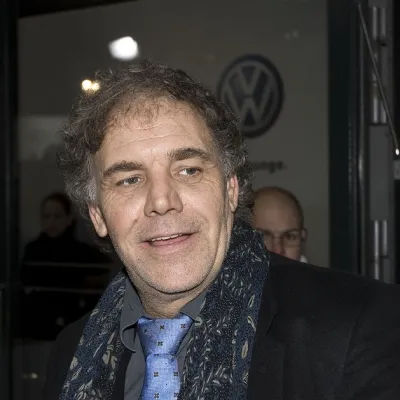
Christian Kohlund
Human Design Chart
Biography
The Human Design of Christian Kohlund: Projector 6/2
Projector 6/2 — Design at a Glance
Christian Kohlund's design pointed towards a tendency for precise diagnosis: He was someone who immediately saw where systems were stuck. This ability stems from his nature as a Projector. Projectors project their energy focusedly onto the environment, comparable to a bright flashlight that shines directly into dark corners. They find the flaw in the system instantly.
If a Projector addresses these weak spots directly, it often feels like light in someone's face – unpleasant and confrontational. The environment then quickly reacts with defense mechanisms. More elegantly for Christian Kohlund was simply to shine pleasantly, perhaps through his own harmony. Then others would be drawn to him automatically and ask for advice. His strategy involved waiting for a respectful invitation from others rather than pushing forward himself.
Since Projectors do not have a defined Sacral Center, they lack constant intrinsic life energy. Instead, they experience phases of high productivity followed by necessary rest periods to avoid burnout. Traditional school systems or standard jobs often don't account for this rhythmic need. When a Projector lives according to this design, he is rewarded with success. Ignoring it and acting without invitation leads sooner or later to the non-self theme 'Bitterness' – a sign that his own strategy has been neglected.
No Inner Authority
Christian Kohlund was someone whose decision-making did not rely on a single inner voice but emerged through exchange with others. His design lacked internal authority – a rare trait making him either a mental Projector or Reflector. As a mental Projector, he used the energetic interactions in his open centers to activate dormant potentials during dialogue. This allowed him to view issues from many perspectives and gather information from various angles.
However, analyzing these complex data was not a quick process. Christian Kohlund needed time alone to discern the key points and separate the essential from the non-essential. Only through this targeted structuring could he develop his specific intelligence and organize it meaningfully. Alternatively, as a Reflector, his orientation would have been tied to the lunar cycle, requiring about 28 days for important decisions to recognize reliable patterns.
Regardless of the specific type, a central key in his life was choosing the right environment. Only where he felt comfortable and could exchange with trustworthy people did his sense deepen for what truly belonged to him. This openness was not a lack of direction but high resonance ability allowing him to gain clarity through contact with the right community.
The 6/2 Profile — Role Model / Hermit
Christian Kohlund's design was marked by an experimental search followed by later, deeper reflection. His Profile 6/2 line suggested that his early life was shaped by the principle 'trial and error': Before age thirty, collecting diverse experiences was paramount, often accompanied by retreats after mistakes. This initial phase served to acquire practical wisdom through direct experience.
With the activation of the sixth line around age thirty, this dynamic fundamentally changed. Christian Kohlund likely then withdrew into a period of intense distance and introspection to process previous experiments. This time for healing and self-discovery was essential before he emerged as a wise person whose life insights attracted others.
The mechanics of his lines supported this path: The sixth line in Gate 4 demanded patience and self-control through conscious rule-breaking and punishment to find the right answers. Simultaneously, the second line of Gate 8 held the potential of a natural talent that selflessly contributes to the collective. This talent often acted as a role model but was vulnerable to crises when individual contributions were not recognized. Thus, a tension field emerged between the need for personal growth through mistakes and the pressure to serve a higher purpose.
Single Definition — Defined & Open Centers
Christian Kohlund's design created a tendency towards constant mental pressure to ask questions and understand connections. This configuration between the Head Center and Ajna Center (both defined) established a trustworthy, specific mental function: He always thought, processed data, and formulated concepts in his own way. Since there was no direct energy available for implementing these thoughts, the challenge lay in not transforming this pressure into hasty actions but rather using it as inspiration for others who could put the ideas into practice.
This strong mental focus contrasted with his open centers, making him susceptible to conditioning. His open G Center meant he had no fixed identity or direction; instead of seeking his own path, he relied on others to initiate him into the right environment and relationships. Similarly, his open Heart Center lacked a constant willpower, which could lead him to feel pressured to prove his worth through promises or competitive behavior – often ending in self-doubt if he did not follow his inner authority.
His open Sacral Center also showed no consistent vital energy. Christian Kohlund tended to absorb and amplify the generative power of others, leading to overexertion without conscious boundaries. His open Solar Plexus absorbed the emotional field of his surroundings; he had to learn to distinguish between his own feelings and those he merely reflected. Finally, his open Root Center took on external stress, putting him under pressure to constantly act to escape this unease. The wisdom of his design lay in not seeing these open fields as a lack but rather as mirrors for the energies of the world while relying on his mental clarity and strategy.
Channels for mental images and abstract comprehension.
Christian Kohlund was marked by a mind that sought to transform the chaos of experience into a coherent narrative. This inclination resulted from Channel Abstraction 64-47, which linked the spontaneous intuition of the Head Center with the conceptual thinking of the Ajna Center. This mechanism subjected every life event to constant mental filtering; even dreams were analyzed to uncover hidden patterns. The challenge was that this process often led to a kind of 'mental confusion' – a feeling as if the mind jumped uncontrollably between possibilities. Yet, precisely this apparent disorder was the prerequisite for crystallizing a unique perspective with patience, which he then shared with others as an inspiring story. Crucial for him was recognizing that this active mind could never serve as his inner authority but rather was a tool to decipher the world around him.
Alongside this dominant channel, additional gates contributed to his structure: Gate 4 promoted the development of logical patterns and formulas to catch future uncertainties. Gate 49 brought an emotional wave responding to principles and tribal loyalty, while Gate 8 expressed a drive for individual contribution and leadership. This was complemented by Gate 14, which required skillful handling of power and resources, as well as Gate 17, emphasizing logical teaching and the maintenance of rights. Together, these elements formed a profile oscillating between deep abstraction and concrete, principle-guided action.
Collective Circuitry — Circuit Signature
Christian Kohlund was marked by a design focused on processing past experiences and their emotional resonance. His chart reveals a tendency to draw meaning from the past rather than primarily investing in cool future logic. This orientation results from the active Perception Circuit, whose energies revolve around feelings, memories, and reflecting earlier events.
In Christian Kohlund's case, this circuit was specifically activated by Channel Abstraction (Gate 64–47). This channel directly connected his Head Center with his Ajna Center. Since both centers lie in the same group, there was a continuous energetic flow: Intuition and visual images from the Head Center seamlessly flowed into the abstract processing of the Ajna Center. This allowed him to translate inner impulses into clear, often pictorial concepts, heavily influenced by the emotional wave of the Solar Plexus – even though this center is not directly connected through this channel, the circuit overall shapes this wave-like, cyclical nature.
The energy does not flow linearly but in waves with a beginning, middle, and end. Christian Kohlund used these abstract insights to share them and thus learn from past experiences collectively. His Simple Definition ensured a stable, integrated basis for this specific kind of perception without other separate energy blocks directly determining or disrupting the process.
Left Angle Cross of Revolution 2
Christian Kohlunds design points to a tendency towards revolutionary change driven by the power of the left cross of revolution. This configuration describes an inner impulse not just to question existing structures but actively and often radically to reshape them. It is an energy aimed at deep transformation, focusing on breaking old systems and creating new realities.
The mechanics of this cross combine various aspects of Human Design that work together to generate a strong will for change. Christian Kohlund was someone who was not content with the status quo but constantly sought ways to improve or do things differently. This manifested in an attitude often perceived as revolutionary, as he had the courage to question established norms and rules.
For his design, this was a central theme: the ability to bring about change through personal effort and clear visions. It was not about chaotic destruction but targeted renewal based on deep inner conviction. Christian Kohlund used this energy to influence his environment and pave new paths while always ensuring that changes were sustainable and meaningful. This configuration shaped his life with an ongoing drive for progress and innovation.
Saturn Return · Uranus Opposition · Chiron Return · 2nd Saturn Return — Life Cycles
Christian Kohlund's life showed a clear, cyclical structure of turning points. His design indicated regular phases of consolidation and change that occurred not randomly but mechanically. The first Saturn return marked the transition into a phase of solidified responsibility and long-term structuring. Shortly after came the Uranus opposition, a period often characterized by a need to break free from old bonds and sudden insights. This constellation demanded flexibility and the ability to embrace new realities without losing inner stability.
With the Chiron return around midlife in his early 50s, an achievement cycle began. If Christian Kohlund had lived according to his strategy and authority up until then, this phase increasingly unfolded his incarnation purpose. It was not about healing old wounds in a mythological sense but rather the tangible blossoming of his life's mission where meaning and purpose became palpable. The second Saturn return completed this process by bringing previously gained insights into a final stable form. This sequence of structuring, change, fulfillment, and consolidation shaped his life as a coherent arc where each phase built upon the previous one to contribute to the maturation of the overall design.
Projector · No Inner Authority — Synthesis
A central red thread runs through the design: the ability to recognize patterns and shed light on darkness. As a projector with defined Head and Ajna Centers (Channel 64-47), there is an ongoing pressure to analyze experiences and understand connections. This mental sharpness, combined with open resonance capability, allows recognizing and highlighting others' potentials – a natural role as a model (Profile 6/2) that only unfolds its full impact after intensive self-reflection. The cyclical phases of withdrawal and wisdom transmission underscore this process of recognition, processing, and passing on insights.
The design harbors a central paradox between the drive to understand and the lack of inner authority. Constant questioning and analysis (defined Head Center) require external validation through exchange with others (mental projector authority). At the same time, the left cross of revolution points to an inner longing for change and renewal that does not spring from a firm internal source. This tension between the need for clarity and dependence on external impulses shapes a life in which wisdom arises through resonance – a process of constant weighing and sharing.
1 Defined Channel
Incarnation Cross - Left Angle Cross of Revolution 2
Solar Return
The Solar Return shows the moment when the sun returns to its exact birth position - your personal solar year.
Life Cycles
Discover the life cycles with a detailed triple view (birth chart, cycle chart, composite).
Human Design Profile
- Type
- Projector
- Strategy
- Wait for the respectful invitation
- Authority
- No inner authority - learn more
- Profile
- 6/2 - Role Model / Hermit
- Definition
- Single Definition
- Incarnation Cross
- Left Angle Cross of Revolution 2
- Date of Birth
- 17.08.1950 06:55
- Place of Birth
- Basel, Switzerland
Frequently Asked Questions
What is Christian Kohlund's Human Design type?
What profile does Christian Kohlund have in Human Design?
What inner authority does Christian Kohlund have?
Which incarnation cross is active for Christian Kohlund?
When was Christian Kohlund born?
Discover your own Human Design
Are you also a Projector? Find out in a personal reading how to unfold your leadership qualities and recognize the right invitations.
More Personalities
Back to overviewSissy Spacek

Alain-Fournier

Anémone

Ann-Margret

Arletty
Arno