
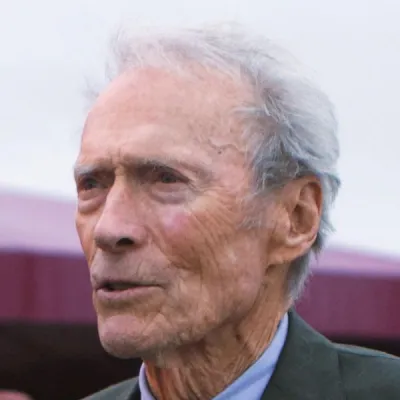
Clint Eastwood
Human Design Chart
Biography
Eastwood's greatest commercial successes are the adventure comedy Every Which Way but Loose (1978) and its action comedy sequel Any Which Way You Can (1980). Other popular Eastwood films include the Westerns Hang 'Em High (1968), The Outlaw Josey Wales (1976) and Pale Rider (1985), the action-war film Where Eagles Dare (1968), the prison film Escape from Alcatraz (1979), the war film Heartbreak Ridge (1986), the action film In the Line of Fire (1993), and the romantic drama The Bridges of Madison County (1995). More recent works include Gran Torino (2008), The Mule (2018), and Cry Macho (2021). Since 1967, Eastwood's company Malpaso Productions has produced all but four of his American films.
An Academy Award nominee for Best Actor, Eastwood won Best Director and Best Picture for his Western film Unforgiven (1992) and his sports drama Million Dollar Baby (2004).
Clint Eastwood as a Manifesting Generator 5/1 in Human Design
Manifesting Generator 5/1 — Design at a Glance
Clint Eastwood's design tends towards lightning-fast implementation, allowing him to bring things into his life without having to go through all the intermediate steps. As a Manifesting Generator, he has constant sacral energy, which gives him immense creative power. However, this configuration carries specific risks: The speed can lead to skipping important steps, forcing him to catch up later and causing frustration – the non-self theme of this type. Additionally, his design tended to pursue multiple projects simultaneously rather than moving linearly.
To make this energy useful, strategy was crucial: Not initiating but responding to impulses. Only when the sacral center gave a clear "yes" should he act. Regular checks to see if inner authority still supported the paths he had begun prevented him from falling into frustration. With correct application of this strategy, Clint Eastwood drew deep satisfaction from his work. For him, the phrase "Finish one thing before starting another" was counterproductive; instead, he needed variety and a playful mode to maintain his energy and effectively work on various fronts simultaneously.
Emotional Authority
Clint Eastwood's design shows a tendency towards emotional wave motion that significantly influences his perception and decision-making. He experiences his environment through the filter of his current mood—sometimes driven by enthusiasm, only to be overshadowed by skepticism or negativity in the next moment. These fluctuations are merely transient impulses and not necessarily the deeper truth.
This mechanism stems from the emotional authority present when the Emotional Center is defined. Regardless of which other centers are active in his graph, this inner guidance always takes precedence. It subjects him to a constant up-and-down of feelings. Quick, spontaneous decisions made from such an emotional peak could thus be misleading or negative, as they are based on an incomplete snapshot.
His design's strategy requires patience: "sleeping" on important questions to wait out the wave pattern. Only when intense emotions subside and emotional distance is gained does clarity emerge. This process of maturation allowed him to make long-term decisions with calmness rather than reacting to passing moods. By enduring this uncertainty, he gained access to a more comprehensive understanding that went beyond initial impressions.
The 5/1 Profile — Heretic / Investigator
Clint Eastwood's design establishes a tendency towards a deep, almost magnetic attraction that draws others to seek his inner reservoir of knowledge and solutions for their own problems. As a 5/1 – the Hero/Explorer – he possessed the ability to build a solid foundation through years of intensive research (Line 1) and then provide this understanding as an authoritative solution for the collective (Line 5). This configuration, however, created a specific tension field: While others sought him out because of his expertise, he tended to undervalue his own talents or critically question external recognition.
This inner doubt is characteristic of Line 1, which requires calm in dealing with uncertainties and seeks logical evidence to answer questions. At the same time, Line 5 carries the archetype of the "Spoilsport," who often does not feel talented themselves and only learns through transformation to use their gifts without shame. For Clint Eastwood, this meant that he had to learn how to set clear boundaries so as not to be exhausted by others' expectations. Only through conscious saying no could he maintain a balance between his private research work and his public role as problem solver without depleting his energy.
Split Definition — Defined & Open Centers
Clint Eastwood's Human Design profile points towards a tendency for persistent, powerful expression characterized by vital energy and emotional depth. His defined centers – Throat, Sacral Center, Solar Plexus, Spleen, and Root – created a foundation of reliable action capability and intuitive sharpness. The connection between the Throat and Sacral Centers allowed him to communicate his truth with ease and honesty, driven by an enormous source of generative energy. However, this sacral power required patience: he tended to wait for stimuli before responding correctly rather than initiating impulsively.
At the same time, his defined Solar Plexus acted as inner authority. Eastwood had a tendency not to make decisions in the moment but to wait out emotional waves until clarity emerged. This ability to move through highs and lows of emotions gave his actions a certain depth and resonance that he consciously utilized. His defined Spleen Center provided spontaneous intuition in the present moment, while the Root Center supplied the necessary pressure to exist materially.
In contrast, his undefined centers – Head, Ajna, G-, and Heart Centers – revealed specific vulnerabilities. Without constant mental inspiration from open Head and Ajna Centers, he tended to be influenced by others' confusion or sought answers that did not come from him. The open G-Center meant that his identity and direction were strongly shaped by the environment; he relied on initiation from the surroundings to understand who he was and where he was going. Additionally, lacking constant energy in the open Heart Center for willpower and promises, Eastwood did not prove himself through competition or keeping commitments but learned to let go of this burden to live his true nature.
Channels for focus, emotional depth and meaningful struggle.
Clint Eastwood's Human Design profile points towards a tendency for extreme inner stillness and focused endurance. The Channel of Concentration 52-9 connects Root with Sacral Center, creating a calm pressure that holds the body still – like in a yoga pose – to direct energy precisely onto details. This formative energy carries the qualities of the Understanding Circuit and forces step-by-step logical review of patterns. Without this concentrated attention, powerful energy loses its effect; it remains restless until an activity is worth focusing on.
At the same time, there was an impulsive drive for meaning through resistance. The Channel of Life Struggle 38-28 connects Root with Spleen Center and provides stubborn determination to fight external forces to preserve individual integrity. This is not about blind struggle but intuitively recognizing which resistance has value and makes fighting worthwhile. This channel brings the process of individuation alive: one risks security to stand for something that gives meaning. Regular movement serves to release the emerging adrenalized pressure and gain clarity.
Social interactions, however, were dependent on emotional waves. The Channel of Openness 22-12 connects Solar Plexus with Throat Center and regulates articulation through mood. Gate 22 brings passion and drama, while Gate 12 exercises cautious restraint to limit the impact on mutative potentials. When mood and timing aligned, Clint Eastwood could use his voice to emotionally move others or stir change. However, when forced into social interaction while his Solar Plexus was in the trough, this led to harshness and misunderstandings. Only during the right emotional phase did the barrier fall so that his uniqueness could fully exert its transformative effect.
Individual Circuitry — Circuit Signature
Clint Eastwood's Human Design profile points towards a tendency for separate, parallel processing of intuition and logic. His structure showed as Split Definition: two independent energetic islands existed side by side without direct exchange. This shaped an attitude where spontaneous insights and rational planning do not automatically interweave but work as separate forces.
The Knowledge Circuit formed two isolated segments. On one hand, it connected the Throat Center with Solar Plexus (Channel 12-22), transferring emotional waves directly into voice – a pulsating, acoustic expression form. On the other hand, Channel 28-38 joined Spleen and Root Centers together, stabilizing inner rhythm through intuitive security. However, these two areas were not connected; intuition did not automatically flow into emotional communication.
Parallel to this, the Understanding Circuit acted. Here, Channel 9-52 linked Sacral with Root Center, creating focused visual energy for strategic improvement of structures and sharing rational insights. Since this segment was also isolated, logical strategy remained free from Solar Plexus' emotional fluctuations or Spleen's intuitive leaps. Thus, Clint Eastwood appeared as someone whose creative voice, inner security, and strategic clarity worked as independent, not directly connected systems.
Left Angle Cross of Identification 1
Clint Eastwood's Human Design shows a tendency towards clear and almost cutting perception. He was someone who not only saw things but immediately categorized and named them. This attitude stems from the so-called left cross of identification 1. In Human Design mechanics, this configuration represents a specific energy: the ability to recognize patterns and make them visible through direct communication. It's not about diffuse intuition but rather a focused gaze that distinguishes the essential from the inessential.
This structure influenced his way of dealing with his environment. Instead of pondering or weighing options for long periods, his design tended to quickly take a position and clearly express it. The energy of this cross acts like a filter: it takes in complex reality, identifies the core of an issue, and then precisely conveys it. For Clint Eastwood, this meant an inner discipline of clarity. He didn't need to say much to be understood; his presence alone carried this identifying quality. It was less about speaking than pointing – clearly indicating what really mattered. This mechanism created authority not through volume but through the sharpness of observation.
Saturn Return · Uranus Opposition · Chiron Return · 2nd Saturn Return — Life Cycles
Clint Eastwood's design shows a tendency towards impulsive, path-setting actions that often only reveal their full impact in hindsight. This configuration describes an energy that sets new directions and challenges existing structures without prior consultation.
In 1971, at age 41, the film 'Dirty Harry' marked his breakthrough to superstar status. For his design, this was a typical moment of the Uranus opposition cycle: a phase of sudden change and expansion where years of groundwork or latent potentials often explosively manifest outwardly. The role embodied exactly this disruptive force – a figure who ignores established rules and sets their own standards, which in Human Design is read as an expression of an inner necessity for radical reorientation.
Later, in 1979 at age 49, he took on the role in 'Escape from Alcatraz.' This fell during his Chiron Return, a fulfillment cycle lasting about two years. Here, one's incarnation cross becomes increasingly visible in life – provided one has followed their strategy and authority. It's not about healing old wounds but rather the blossoming of one's purpose: the experience that one's personal path makes sense and manifests concretely. Eastwood's portrayal of a man asserting his identity against impossible odds reflects this phase of self-empowerment and purpose fulfillment.
In 1986, at age 56, he had a son Scott with Jacelyn Reeves. This corresponded to the second Saturn Return, a time of consolidation and taking responsibility. After expansive phases before, life condensed into sustainable structures. The establishment of a new family unit shows this human side of the mechanism: the need to build something stable and responsible after long movement and change, serving as necessary grounding for the design.
Manifesting Generator · Emotional Authority — Synthesis
A central red thread in this design is the dynamic connection between initiation and reaction. As an Initiator Generator (with defined Sacral Center), this person has a constant life energy that isn't meant to start things from their own power but rather to respond to internal impulses – fueled by the sacral center – and utilize the ability for quick implementation (Throat Center). This combination of energetic availability and the need to follow the flow of life shapes a character that is both action-oriented and adaptable. The Knowledge Switch Circuit and the defined Root Center (Channel 52/9) strengthen this process through the ability to deeply immerse oneself in topics and work focusedly when circumstances allow.
The design reveals a central paradox between the drive for knowledge and emotional waves. The Hero/Researcher Profile (Profile 5/1) implies a deep knowledge base and the desire to offer solutions, while emotional authority requires thorough maturation of decisions. This person seems to oscillate between the need to quickly respond to challenges and share knowledge (sacral center, Channel 52/9) and the necessity to take time for emotional clarity – a tension field illuminated further by Uranus opposition cycles (breakthrough) and Saturn Returns (relationships).
3 Defined Channels
Incarnation Cross - Left Angle Cross of Identification 1
Solar Return
The Solar Return shows the moment when the sun returns to its exact birth position - your personal solar year.
Life Cycles
Discover the life cycles with a detailed triple view (birth chart, cycle chart, composite).
Human Design Profile
- Strategy
- To respond - wait for something to respond to
- Authority
- Emotional Authority
- Profile
- 5/1 - Heretic / Investigator
- Definition
- Split Definition
- Incarnation Cross
- Left Angle Cross of Identification 1
- Date of Birth
- 31.05.1930 17:35
- Place of Birth
- San Francisco, United States
Frequently Asked Questions
What is Clint Eastwood's Human Design type?
What profile does Clint Eastwood have in Human Design?
What authority determines Clint Eastwood's decision-making process?
What is Clint Eastwood's incarnation cross?
When was Clint Eastwood born?
Discover your own Human Design
Are you also a Manifesting Generator? Find out in a personal reading how to unfold your multi-talents and direct your energy wisely.
More Personalities
Back to overviewSissy Spacek

Aldair

Alizée

Anémone

Angeli

Ann-Margret
