Photo: Wikimedia Commons
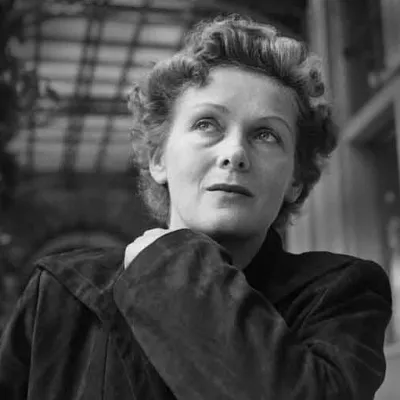
Elisabeth Schwarzkopf
Human Design Chart
Biography
Schwarzkopf had to join the Nazi party during the war in order to continue singing and hence was blacklisted after the war until being exonerated early in 1947.
That same year she moved to London. She married Walter Legge in 1953, a record producer who became her Svengali; she was widowed in 1979.
She participated in the film Elisabeth Schwarzkopf: A Self Portrait by Gerald Caillat, made for television in 1995, and released by EMI Classics in 1997.
The soprano died in her sleep during the night of 2–3 August 2006 at her home in Schruns, Vorarlberg, Austria, aged 90.
Elisabeth Schwarzkopf — Manifesting Generator with Profile 6/2
Manifesting Generator 6/2 — Design at a Glance
Elisabeth Schwarzkopf was someone who possessed hybrid energy: She had the constant power of a Generator, but her active connection to her Throat Center also allowed for quick implementation. This design enabled her to skip steps and quickly pull things into her life. However, this speed carried the risk of overlooking important phases or starting multiple projects simultaneously, which could lead to frustration without inner alignment – the specific non-self theme of her configuration.
Her path to deep satisfaction lay in not initiating herself but reacting to impulses from the environment. Only when her defined Sacral Center responded with a clear “yes” did she begin to act. This strategy protected her from overload and allowed her to experience her creative power in “play mode.” Instead of focusing on one thing, Elisabeth Schwarzkopf benefited from variety and parallel activities as long as her inner authority was involved. Thus, she transformed the potential danger of haste into a source of lasting satisfaction and effective shaping power.
Emotional Authority
Elisabeth Schwarzkopf never made decisions in the heat of the moment. Her design carried Emotional Authority, meaning that her defined Emotional Center always took precedence over all other internal voices – an absolute rule in her system. She was subject to natural waves of emotions: The world appeared colored by her current mood. What filled her with enthusiasm at one moment could seem negative the next. This initial impression was merely a snapshot, not the final truth. Quick, spontaneous judgments from this emotional heat would often have misled her.
Instead, Elisabeth Schwarzkopf needed time to gain clarity. She let decisions mature, often over several nights. Through this conscious waiting and hesitation, intense feelings subsided initially. Only when the emotional distance was great enough did calmness set in and her true inner response became visible. This process of “sleeping on it” was for her no sign of weakness or indecision but a necessary mechanical function of her design. Only thus could she ensure that her choice was not based on a passing mood, but on deep, comprehensive insight. This patience shaped her approach to long-term life questions that had a significant impact on her further path.
The 6/2 Profile — Role Model / Hermit
Elisabeth Schwarzkopf showed herself as a natural talent who learned through trial and error. In her youth, the 3-line defined her design: She experimented intensely with life, withdrew after setbacks, and thus gathered personal experiences. This process of tinkering was the engine of her early development.
After turning thirty, the sixth line of her profile activated. Then she turned away from external experiments and sought distance to reflect on her past. This phase served for healing and deep self-knowledge. She looked back with new clarity at her earlier mistakes and integrated these lessons.
Her ambition, a feature of the second line, helped her free herself from entanglements. Yet she also recognized the limits of her own projection outward. While she tried early on to draw meaning from experiences, she often lacked deep understanding for the true purpose of these events. Only through the maturation of the sixth line was this deficiency balanced.
Unexpected events, typical of the sixth line, always struck her again. Instead of fighting against them, she learned to accept this universal flow. This acceptance strengthened her development and led to contentment with what she had. Finally emerging from her “cave” of reflection as a wise person, she was ready to pass on her gained insights and teach others the ability for deep introspection.
Single Definition — Defined & Open Centers
Elisabeth Schwarzkopf was characterized by a design rooted in a deep inner direction and an immense source of power. Her defined G Center provided her with a fixed sense of self-identity; she knew who she was and where her love lay, without being dependent on others. This internal security allowed her to comfort or offer new perspectives to others rather than getting lost in their uncertainties.
This identity was fueled by her defined Sacral Center with vital energy. As a Generator, she possessed a constant power source that only worked satisfactorily when reacting to life instead of initiating it herself. Her truth lay in the sacral response – a mechanical yes or no – signaling whether energy was available for a task. Ignoring this reaction in favor of mental decisions led to frustration and exhaustion.
Her communication, guided by her defined Throat Center, was a reliable expression of this inner structure. She did not speak out of impulsive drive but transmuted information from her defined centers into clear messages. Since her throat was connected with the G and Sacral Centers, her voice came from an authentic identity and available energy, giving her a consistent, honest way of expressing herself.
At the same time, she was subject to the dynamics of her defined Solar Plexus Center. Emotional clarity did not come in the moment but only after running through her emotional wave. She relied on delaying decisions until the emotional charge had subsided and calmness prevailed; otherwise, she tended to impulsively jump into or out of situations, creating chaos.
In contrast, her Head, Ajna, and Heart Centers were open. She did not have a consistent mental inspiration (open Head) or conceptual mind (open Ajna) providing answers; instead, she was open to the ideas of others without identifying them as her own truth. Her open Heart Center meant that she was not designed to make promises or use willpower in terms of competition. She tended to want to prove her worth through performance, which led into a cycle of self-doubt if she failed. The wisdom of her design lay in not mistaking these mental and ego-driven impulses as her own authority but trusting instead in her emotional clarity and sacral response.
Channels for rhythm, leadership, reflection and emotional change.
Elisabeth Schwarzkopf was someone who was perpetually moved by the inner flow of life. The Rhythm Channel 5-15 connected her Sacral Center with her G Center; Gate 5 held onto fixed habits, while Gate 15 integrated the diversity of society into the life stream. This magnetic monopole drew her forward and set a timing that felt effortless as long as it was based on her natural reactions.
Her way of working was also marked by logical, collective leadership. The Alpha Animal Channel 7-31 connected G with Throat Center: Gate 7 provided the role behind the throne, while Gate 31 offered the voice of a collective leader. She naturally sought her influence area and showed the path without taking it away, depending on whether she was invited by her community.
Parallel to this, Elisabeth Schwarzkopf gathered life stories as a natural listener. The Lost Son Channel 13-33 connected G with Throat Center; Gate 13 listened and stored secrets while Gate 33 withdrew to reflect deeper truths. She shared these insights only after patient observation, valuing the magic of completion.
Driven emotionally by the search for new experiences, she was moved by the Transience Channel 35-36 connecting Solar Plexus with Throat; Gate 36 perceived inexperience as a crisis to generate movement while Gate 35 manifested the urge for change. She learned through emotional depth and used her wave to make clear decisions.
Additionally, she reflected past experiences to understand patterns (Gate 47), showed calmness during social mutations (Gate 22) and possessed a life-affirming persistence (Gate 29). Her voice abstracted mental processes into pictorial narratives (Gate 56), thereby making complex connections understandable.
Collective Circuitry — Circuit Signature
Elisabeth Schwarzkopf was someone who linked logical structures with emotional depth. Her design united rational clarity and felt experience in a continuous stream between Sacral, Identity, Solar Plexus, and Throat Centers. This enabled communication that was both strategically grounded and empathetically relatable.
The Understanding Circuit shaped her ability for focused analysis. Through the Alpha Animal Channel connecting Throat with Identity Center, she created a clear, authentic voice for rational insights. The Rhythm Channel between Identity and Sacral Center provided the necessary endurance to consistently carry these logical concepts into the future – always free from distracting emotions.
Parallel to this, the Meaning Circuit focused on past experiences and emotional waves. Through the Lost Son Channel connecting Throat with Identity Center, it promoted sharing personal, often hard-to-explain experiences. Simultaneously, the Transience Channel between Solar Plexus and Identity brought the cyclical nature of feelings into play: emotions were not only felt but reflected upon and put into words.
Both circuits culminated in the Throat Center. Thus, Elisabeth Schwarzkopf could integrate cool logic with warm empathy. She did not just share facts but also the human experiences behind them. This combination allowed her to convey complex connections so that they were both intellectually convincing and emotionally touching – a rare synthesis of mind and feeling.
Left Angle Cross of Separation 2
Elisabeth Schwarzkopf was marked by the left cross of separation, a configuration often associated with a deep and sometimes painful confrontation with one's essence. This design element points to an internal process where old bonds or identities must be dissolved in order to achieve true self-discovery. It was not an easy journey; rather, it characterized a life phase during which Elisabeth Schwarzkopf had to break away from external expectations and roles that no longer fit her.
The mechanics of this cross describe a path of separation – not just interpersonal but also internal. It is about letting go of what holds one back, whether through relationships, beliefs, or life circumstances. For Elisabeth Schwarzkopf, this might have meant periods of isolation or withdrawal in which she intensely engaged with her own identity. This separation was not an end but a necessary step towards reshaping her life path.
Without specific events in the raw content, the interpretation remains general: Elisabeth Schwarzkopf lived through this process of inner liberation and self-determination, driven by the necessity to break free from external determination. Her design suggested that she became a stronger, more authentic version of herself through this separation – a path often lonely but ultimately liberating.
Saturn Return · Uranus Opposition · Chiron Return · 2nd Saturn Return — Life Cycles
Elisabeth Schwarzkopf was a person whose life rhythm was marked by profound transformation processes. The Uranus opposition signified a phase of intense inner upheavals and the search for new identity. In 1953, at age 38, she married Walter Legge. This event was under the sign of this astrological constellation: It was not mere routine but a conscious step into a new life order that broke old structures and demanded personal freedom and change.
Later, her second Saturn return shaped her existence. This cycle demands stability, structure, and consolidation of what has been achieved so far. In 1971, at age 56, Elisabeth Schwarzkopf bid farewell to the opera in her role as Marchioness in Brussels' Monnaie Theatre. This departure was not a sudden break but the logical conclusion of a long career. It reflected Saturn's energy: The creation of a dignified framework for the end of a chapter, the consolidation of earned legacies and reflection on essential values at the peak of maturity. Both cycles formed her biography through clear turning points that connected inner development with external milestones.
Manifesting Generator · Emotional Authority — Synthesis
Elisabeth Schwarzkopf lived a lifestyle marked by a deep internal rhythm and the ability to transform. The connection between sacral energy (Sacral Center) and the G-Center through the Rhythm Channel endowed her with a strong sense of timing and the natural flow of things, manifesting in a disciplined work ethic. This inner imprint was reinforced by emotional authority that required careful maturation of decisions – a process that took time but led to profound insights. The definition in the Throat Center pointed to a voice that was not just an expression of personal feelings but also conveyed messages from deeper layers of the body and transformed them.
A central paradox in her design lay in the combination of manifesting generator energy and the role model/natural talent profile. While she could potentially tackle things swiftly, her emotional authority required a phase of reflection and waiting. This led to a tension between the impulse for quick implementation and the necessity to let decisions mature calmly – an interplay that was particularly evident during defining life phases, such as the decision to leave the stage (documented event).
4 Defined Channels
Incarnation Cross - Left Angle Cross of Separation 2
Solar Return
The Solar Return shows the moment when the sun returns to its exact birth position - your personal solar year.
Life Cycles
Discover the life cycles with a detailed triple view (birth chart, cycle chart, composite).
Human Design Profile
- Strategy
- To respond - wait for something to respond to
- Authority
- Emotional Authority
- Profile
- 6/2 - Role Model / Hermit
- Definition
- Single Definition
- Incarnation Cross
- Left Angle Cross of Separation 2
- Date of Birth
- 09.12.1915 16:00
- Place of Birth
- Jarocin, POL
Frequently Asked Questions
What was Elisabeth Schwarzkopf's Human Design type?
What profile did Elisabeth Schwarzkopf have in Human Design?
What authority did Elisabeth Schwarzkopf possess?
What incarnation cross did Elisabeth Schwarzkopf have?
When was Elisabeth Schwarzkopf born?
Discover your own Human Design
Are you also a Manifesting Generator? Find out in a personal reading how to unfold your multi-talents and direct your energy wisely.
More Personalities
Back to overviewAaliyah

Aldair
Alexia

Alizée

Angèle

Angeli