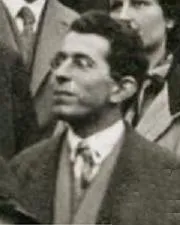
Fritz London
Human Design Chart
Biography
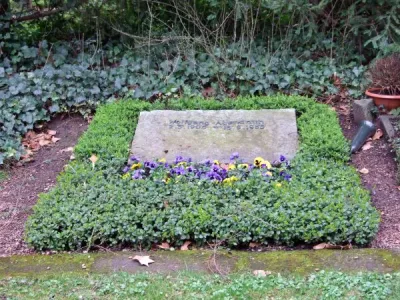
Being a Jew, London lost his position at the University of Berlin after Hitler's Nazi Party passed the 1933 racial laws. He took visiting positions in England and France, and emigrated to the United States in 1939, of which he became a naturalized citizen in 1945. Later in his life, London was a professor at Duke University. He was awarded the Lorentz Medal in 1953. He died from a heart ailment in Durham, North Carolina on 30 March 1954, aged 54.
The Human Design of Fritz London: Reflector 6/2
Reflector 6/2 — Design at a Glance
Fritz London's design established an attitude of open reflection. As a reflector, he lacked defined centers, meaning that constant, personal energies were missing from him. Instead, he acted as a sensitive receiver of his environment. His nature was to strongly perceive and mirror the energy of other people as well as rhythmic forces of nature – such as seasons or astronomical constellations. This structure shaped his lifestyle through a deep need for synchronization with external cycles. For important decisions, it was crucial for him to wait at least one moon cycle to fully grasp changing influences. If he adhered faithfully to this strategy, he automatically found environments that suited him well. In such moments, he could observe freely from personal attachment and was rewarded with a feeling of joyful surprise. However, if he deviated against his design, it often resulted in deep, lasting disappointment – both regarding himself as well as the state of the world. His existence thus wasn't static adherence but a dynamic process of perceiving and adapting to the pulsating reality around him.
No Inner Authority
Fritz London lacked inner authority – a rare configuration that marked him either as a mental projector or reflector. These individuals do not have a physical decision-making instance in the lower part of their design. Instead, his orientation was through exchange: In dialogue with others, dormant potentials in his open centers were activated. This allowed him to view issues from many perspectives and express information in various ways. His high resonance ability helped him find the right environment and suitable conversation partners for this exchange.
The evaluation of these diverse impulses was a complex process that required time and solitude. Over the years, Fritz London learned to recognize the thread running through them and filter out the essential from a mass of information. This ability to structure meaningful insights formed his capital success. As a projector, he deepened his sense of what belonged to him through trusting exchange in a nurturing environment. If he was a reflector, his decision-making depended on the moon cycle. He needed about 28 days for important turning points until the moon had passed through his entire body graph. These regular conditioning patterns gave him orientation over his essence. In both cases, he must never be rushed into decisions; patience and choosing the right environment were keys to his specific intelligence.
The 6/2 Profile — Role Model / Hermit
Fritz London's design set a tendency towards a two-phase development: initially an experimental phase marked by trial and error, followed by a period of deep introspection. As a 6/2 profile ("Role Model/Natural Talent"), energy before the age of 30 was like a 3-line – driven by the need to gather personal experiences and make mistakes to learn from them. This early period was characterized by experiments and necessary setbacks, serving as driving principles.
Around thirty years later, the sixth line fully activated itself. Fritz London metaphorically retreated into a 'cave' – not for isolation but to look back at his past experiments with distance. This phase of intense reflection served healing and deep self-knowledge. The second-line in the profile promoted learning from painful experiences and using memory for past patterns.
From this inner work emerged clear wisdom. Fritz London eventually stepped forward as a role model, ready to share his gained insights. Others sought his advice to benefit from his ability of deep introspection. Nostalgia was not merely looking back but a tool to overcome old doubts and raise new, valuable questions for the future. Thus, early mistakes transformed into leadership qualifications based on authentic life experience.
No Definition — Defined & Open Centers
Fritz London was someone whose design was consistently open without defined centers. This created a special receptivity to external influences and mental currents. His undefined Head Center lacked consistent inspiration; he tended to engage with other people's questions or get mentally confused rather than rely on his own answers. However, his open Ajna Center allowed him to flexibly absorb concepts and theories from the environment without holding them as personal truth – a characteristic of great intellectuals.
His undefined G Center meant no fixed identity or direction; he relied on relationships and places to initiate himself in order to feel connected. His open Heart Center lacked consistent willpower; he avoided making promises he couldn't keep and did not seek proof for his worth. Instead, he was sensitive to the egos of others.
His undefined Sacral Center had no constant energy flow; he absorbed the vitality of others, which could lead to exhaustion if boundaries were ignored. His open Solar Plexus absorbed emotions from the environment, causing him to fluctuate between moods without identifying them as his own. The undefined Spleen Center carried a fundamental fear of survival; spontaneous decisions were risky because intuition was unreliable. Finally, his open Root Center took on external stress, making him vulnerable to pressure and chaos. Overall, he acted like a mirror of his environment, open to inspirations and emotions from others without internalizing them.
Channels & Gates
Fritz London showed himself as someone whose inner drive was strongly shaped by the need to intellectually penetrate uncertainties while simultaneously advancing collective development. His design tended towards using doubts not as paralysis but as motoric force for mental clarity. This was steered by Gate 63, the Gate of Doubt, which urged him to deeply understand things and answer security-seeking questions. The associated mental process brought satisfaction only through resolving these doubts and improving uncertain patterns. Reflecting this, Gate 64 in the Council acted as a transitional stage on the path to clarity, solving confusion by interpreting past experiences and forming concepts from them. This figurative mental process was crucial for structuring temporal experiences and making correct decisions.
Alongside this cognitive processing, Fritz London's Heart Center had a specific dynamic of conviction and innovation. Gate 26 here represented a weak ego closely tied to the immune system, possessing the ability to make the conservative branch accept innovations to prevent genetic retardation. Characteristic for this energy were phases of rest followed by the power to convince others. Additionally, Gate 45 embodied the complete expression of the tribal level and gathered energy. It derived its strength from the Heart Center and expressed willpower as well as blood hierarchy. The attraction of like forces through this gate was beneficial for the entire tribe, enabling it to press material aspects of life pure without being bound to pure having. This constellation created a person who sought intellectual security before then bringing about collective changes with calm determination.
Circuit Signature
Fritz London's design tended towards complete openness and flexibility. As a person without defined centers, he acted free from inner, firmly anchored energetic patterns. This configuration means there were no specific drives or automatic reactions in the system determining his behavior. Instead, he was able to respond anew and impartially to every situation, unaffected by past experiences or entrenched beliefs.
Since there were no defined centers, there were also no direct connections between them. There was no channel maintaining a specific energy flow, and thus no separate groups of forces existing side by side. This fundamentally differed from designs with split or triple definitions where isolated energetic blocks can exist. With Fritz London, the entire system was undefined, allowing for uniform receptivity to external influences. He could adapt into various roles and environments without losing or maintaining a fixed core. This structure shaped him as someone not burdened by internal conflicts between different energy demands but had the freedom to choose his path based on the current context. Without defined circuits or streams, there were no specific themes dominating his life; instead, he remained open to all possibilities presented to him.
Left Angle Cross of Dominion 1
Fritz London's Human Design profile indicated a tendency towards strategic action in the realm of power and control. This configuration, the left cross of the Authority domain 1, shaped his way of exercising or submitting to authority. It was not arbitrary dominance but rather a structured approach to leadership issues. The mechanics of this cross describe a process often associated with establishing rules and boundaries. Fritz London carefully weighed the dynamics between command and obedience. His focus lay on how authority could be legitimized and maintained without slipping into repressive force. This influenced his interactions by always defining the framework within which decisions were made. The energy of this cross promoted an awareness of the necessity for structure in social or professional hierarchies. Fritz London used this ability to provide clear directions and reduce uncertainties through defined order principles. His approach was always geared towards maintaining a functioning system that clearly delineated leadership from follower positions. This characteristic significantly shaped his role within groups or organizations.
Saturn Return · Uranus Opposition · Chiron Return — Life Cycles
Fritz London's development paths were marked by clear structural turning points. His design indicated a tendency for profound life changes, often correlated with external pressure or expansion cycles. This mechanism became visible in 1928 at the age of 28 when he habilitated himself in Berlin. This first Saturn return typically marks the moment when years of groundwork condenses into a viable institutional result – a phase of consolidation and confirmation of the previous path.
A decade later, another significant cycle occurred: the Uranus opposition around his 39th year. This aspect stands for sudden change, liberation from old structures, and often unexpected realignment. For Fritz London, this was concretely expressed in 1939 with his emigration to the USA and taking up a professorship for theoretical chemistry at Duke University in Durham. Here we see the typical dynamics of this cycle: an existing foundation is left behind to make way for a new, often more expansive context. The combination of the stabilizing Saturn influence earlier and the disruptive Uranus push later defined his career as a sequence of anchoring and radical change driven by astrologically-designated time windows.
Reflector · No Inner Authority — Synthesis
Fritz London lived as a Reflector whose life was deeply influenced by the energies of his environment. Without defined centers, he perceived the world as a mirror (Design), making him an observer who subtly resonated with seasons and external influences. This open reception of external stimuli led him to always seek dialogues and interactions with others to gain clarity (Authority). The Line 6 in his Profile pointed towards a process of experimenting followed by phases of intense reflection and wisdom-seeking – a pattern marked by the Uranus opposition that led him into a new environment. He was thus characterized by constant adaptation to the flow of energy around him, connected with the need to understand it and transform it into insights (Gate 63).
A central paradox lay in the tension between his openness and his quest for clarity. The undefined Head Center led to doubts and confusion (Centers), yet this very doubt drove him to question and improve things (Gates 63/64). He was a resonant body for the world, simultaneously trying to recognize patterns and find security. This inner conflict manifested in his life as an alternation between absorbing influences and retreating into reflection – a dynamic that accompanied him until the Saturn return (Cycles) and shaped his ability to learn from experiences and develop wisdom.
Incarnation Cross - Left Angle Cross of Dominion 1
Solar Return
The Solar Return shows the moment when the sun returns to its exact birth position - your personal solar year.
Life Cycles
Discover the life cycles with a detailed triple view (birth chart, cycle chart, composite).
Human Design Profile
- Type
- Reflector
- Strategy
- Wait a lunar cycle (approx. 28 days)
- Authority
- No inner authority - learn more
- Profile
- 6/2 - Role Model / Hermit
- Definition
- No Definition
- Incarnation Cross
- Left Angle Cross of Dominion 1
- Date of Birth
- 07.03.1900 20:15
- Place of Birth
- Breslau, Germany
Frequently Asked Questions
What was Fritz London's Human Design type?
What Profile did Fritz London have in Human Design?
What Authority did Fritz London have according to Human Design?
What incarnation cross did Fritz London have?
When was Fritz London born?
Discover your own Human Design
Are you also a Reflector? Find out in a personal reading how to find the right environment and understand your unique mirror effect.
More Personalities
Back to overviewBaekhyun

Jihyo

Nadar
Rune Aanderaa

George Abell

Wolfgang Abendroth