
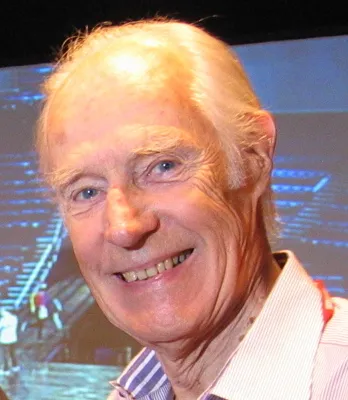
George Martin
Human Design Chart
Biography
Influenced by a range of musical styles, encompassing Cole Porter and Johnny Dankworth, he attended the Guildhall School of Music and Drama from 1947 to 1950, studying piano and oboe. Following his graduation, he worked for the BBC's classical music department, then joined EMI on 28 November 1950 at its daughter company Parlophone Ltd in Abbey road, London. Martin produced comedy and novelty records in the early 1950s, working with the likes of Peter Sellers and Spike Milligan.
In a career spanning over six decades, Martin has worked in music, film, television and live performance. He has also held a number of senior executive roles at media companies and contributes to a wide range of charitable causes, including his work for the Prince's Trust and the Caribbean island of Montserrat.
In recognition of his services to the music industry and popular culture, he was awarded as Knight Bachelor in 1996.
On 3 January 1948, his 22nd birthday Martin married Jean "Sheena" Chisholm, a soprano. They had two children, Alexis (born 1953) and Gregory Paul Martin (born 21 January 1957). He later married Judy Lockhart-Smith, a secretary with whom he had an office affair already in 1957, on 24 June 1966, and they also had two children, Lucy (born 9 August 1967) and Giles Martin (born 9 October 1969).
George Martin died on the night of 8 March 2016 at the age of 90.
George Martin — Manifesting Generator with Profile 4/6
Manifesting Generator 4/6 — Design at a Glance
George Martin revealed himself as someone who, through a hybrid energy configuration, combined the endurance of a Generator with the direct impact of a Manifestor. His design featured a defined Sacral Center, providing him with constant life energy. At the same time, an active channel connected one of the four Motor Centers to the Throat Center, allowing him to skip steps and quickly draw results into his life.
This speed, however, brought specific challenges. Often, he acted too quickly and skipped necessary intermediate steps, leading to the need to return later to fill in gaps. This could result in frustration, as the Non-Self theme of the Manifesting Generator is often associated with an inability to control this efficiency. Additionally, he tended to pursue multiple projects simultaneously, driven by various impulses.
To use this energy constructively, it was crucial not to initiate himself but to wait for external stimuli. Only when the Sacral Center responded with a clear "yes" did he begin to act. Regularly checking this inner approval was necessary to maintain his creative drive. When this strategy was followed, he found deep satisfaction in his work. For him, the parallel progression of various tasks was not an obstacle but a source of fun and play, feeding his creative power as long as he remained in the flow of reaction.
Emotional Authority
George Martin lived with an emotional authority, meaning his defined Emotional Center served as the internal framework for all decisions. This configuration was always prioritized regardless of all other defined centers in his chart. He was subject to a natural emotional wave that manifested in a constant up and down of his feelings. The world appeared to him always colored by his current mood; in one moment he could be totally excited about something, and in the next view the same thing negatively. However, his feeling in the moment was only a snapshot, a first impression that did not necessarily represent his truth. Therefore, quick, spontaneous decisions based on emotion often had negative consequences. George Martin needed time to let a decision mature. The longer he waited, the deeper and more comprehensive he could see the situation. This required patience and the need to sleep on a choice multiple times. He should take his time and ask himself multiple times. Over time, the intense feelings subsided, he gained emotional distance, and clarity and calmness set in. Only then had he gone through the process. This mechanism was especially important for long-term decisions that could have a significant impact on his life course.
The 4/6 Profile — Opportunist / Role Model
George Martin's Human Design profile sets a tendency towards a shifting life focus: In the first three decades, he was experimental and actively sought connections, while later an internal conflict emerged between the desire for community and the need for detached reflection. This Profile 4/6, known as "Networker/Role Model," precisely describes this tension. Line 4 in the profile emphasized analysis and waiting for the right alliance partners during his earlier phase, with trust and individual processes being crucial. Aggressive resistance often hindered the necessary investigation and limited trustworthiness.
With the activation of Line 6, typically after the first Saturn return, self-actualization and the development line came to the forefront. George Martin now appeared less as a pure experimenter and more as someone who could share his deep well of inspiration and pass patterns on to others to confirm their value. Collective suggestions helped him further develop this depth. Life thereafter revolved around balancing the cautious heart of Line 4, which was wary of opening up to the wrong people, and the head-oriented wisdom of Line 6, which pondered the meaning. He was expected to meet the high standards of a wise role model and stand out through cooperation, always aware of the danger of being hurt by false attention.
Split Definition — Defined & Open Centers
George Martin was characterized by an immense, constant source of energy. His design indicated a tendency towards consistent expressiveness and willpower. The defined centers – Sacral, Heart, Throat, Solar Plexus, and Spleen – formed a dense network of motor skills and voice. The Sacral Center generated daily vital energy, which became effective through reaction, not initiation. This energy flowed directly into the defined Throat, enabling reliable, clear communication. The Heart Center endowed him with the willpower to keep promises and take care of his resources, while the Solar Plexus Center acted as an internal authority: decisions needed time to mature through the emotional wave before clarity emerged. The defined Spleen Center provided spontaneous, intuitive security in the moment.
In contrast to this inner firmness stood the open centers Head, Ajna, G, and Root. Without its own mental definition, he tended to absorb mental pressure from others or get entangled in their questions, rather than impose his own concepts. The open G Center meant that identity and direction were not set but reflected by the environment and relationships; he did not actively seek a fixed 'who', but allowed himself to be initiated by correct places and people. The open Root Center absorbed external stress, making him vulnerable to the adrenalized pressure of his environment, which he did not generate himself. His strength lay in using his own sacral energy and voice while keeping his mental and identity-related fields open to the influences of the world.
Channels for emotional depth, instinctive devotion and intuitive power.
George Martin's design inclined towards emotional openness, steered by his inner wave. The Openness Channel 22-12 connected his Solar Plexus to the Throat Center, making his articulation dependent on mood and feeling. He was most effective when he waited for the right timing to generate emotional resonance through his voice, rather than acting impulsively.
Parallel to this, there was an instinctive awareness of what the tribe needed. The Devotion Channel 44-26 connected Spleen and Heart, giving him the ability to intuitively recognize historical memories and needs and communicate them convincingly. This created an entrepreneurial quality, where he formulated offers perceived as improvements, driven by a sense of the market.
Furthermore, he possessed deep survival intelligence. The Power Channel 34-57 connected the intuitive insight of the Spleen with the sacral energy, allowing him to recognize dangers immediately and react spontaneously. This combination ensured a vital presence and the ability to assert himself based on pure, unconditional reactions in the moment.
Additionally, Gates like 48, which promoted pattern recognition and depth, and 38, which set boundaries to preserve integrity, contributed to narrative representation, while Gate 14 supported strategic power accumulation. These configurations shaped a personality navigating between emotional expressiveness, instinctive strategy, and intuitive self-defense.
Individual Circuitry — Circuit Signature
George Martin's design showed him oscillating between separate energetic poles. His structure was divided into two unconnected groups: a connection between Throat and Solar Plexus Centers, and a separate chain of Heart, Spleen, and Sacral Centers. This separation meant that emotional impulses could not directly transition into action or will.
In the Knowledge Circuit, the Openness Channel connected his Throat Center to the Solar Plexus. This created a pulsing energy aimed at transforming his identity and new knowledge through expression. George Martin used this connection to articulate emotional waves and initiate change.
Parallel to this, the Ego Circuit operated through the Devotion Channel, linking Heart and Spleen Centers. This was about cooperation and the joint creation of resources. Since this area was not directly connected to the life force of the Sacral Center, George Martin needed rest periods to regenerate his material and social resources.
The Integration Circuit bridged the gap by connecting the Sacral Center to the Spleen through the Power Channel. This allowed him to draw strength from reacting to life and guide it through intuitive knowledge. Thus, he secured his survival by manifesting inner strength in the present, separate from his emotional expression.
Right Angle Cross of Tension 4
George Martin was marked by the right cross of tension 4, a configuration that suggests a deep, often unconscious struggle with the theme of trust and security. This design element signaled an internal tension between the desire for absolute certainty and the experience of uncertainty or betrayal. It was not a superficial trait but a fundamental life impulse that significantly influenced his perception of the world and his relationships.
In Human Design, the right cross of tension 4 represents a specific energetic alignment, manifesting in the way one feels secure or threatened in the world. For George Martin, this meant that he constantly grappled with the question of whom or what he could trust. This internal dynamic drove him to question structures and connections to find a stable basis for his actions. It was a continuous process of verification and learning that shaped his decisions and reactions. The configuration suggested that he was particularly sensitive to situations where trust was tested, and he drew important lessons from these experiences for his further development. This energy characterized his life as a constant search for confirmation and security in an often unpredictable environment.
Saturn Return · Uranus Opposition · Chiron Return · 2nd Saturn Return — Life Cycles
George Martin's design showed a tendency towards structured responsibility, evident in clear career phases. As a Generator, he responded to inner resonance, which shaped his decisions. In 1955, at the age of 29, he was appointed as the head of Parlophone Records. This coincided with his first Saturn return, a cycle in which years of groundwork often condenses into a solid result and fundamental structures in life are strengthened.
His Human Design also included elements of innovative breakthrough. In 1966, at the age of 40, production began on 'Penny Lane' and 'Strawberry Fields Forever'. This corresponded with the Uranus opposition, a phase in which established patterns often dissolve and new, unexpected paths open up, leading to creative leaps.
The fulfillment of his incarnation purpose was experienced during his Chiron return. In 1975, at the age of 49, he produced the LP 'Hearts' for the trio America. This cycle marked a bloom in which his life's purpose increasingly unfolded and became experiential, provided he lived according to his strategy.
During his second Saturn return, in 1983 at the age of 57, he produced 'Pipes of Peace' and 'Say Say Say'. This later maturation process confirmed the enduring power of his design to take responsibility and accompany projects to completion, underscoring his long-term endurance and consistency.
Manifesting Generator · Emotional Authority — Synthesis
George Martin lived a life marked by an internal dynamic between initiation and reaction. As a Manifesting Generator (MG), he possessed the ability to quickly initiate things and bring them into his life, yet he was bound by his defined sacral center to wait for the right impulse. This combination led to a lifestyle where he actively shaped his environment but was always dependent on an inner readiness – a give-and-take that was evident in career turning points, where career events (such as taking a position or starting new productions) coincided with phases of inner maturation and emotional clarity. The Networker/Role Model aspect of his profile strengthened this inclination towards connection and exchange, while the Knowledge Circuit underscored the need to gain personal insights and express them through authentic communication.
A central paradox in George Martin's design lay in the tension between his desire for community (Line 4 in the profile) and the need for independent thinking and reflection (Line 6). This tension field, amplified by emotional authority, led to an internal seesaw, weighing perspectives before he decided to express or initiate something. The open channel of openness (22/12) allowed him to express emotions and creative impulses, yet the associated melancholy and moodiness required careful navigation to convey his message clearly and effectively.
3 Defined Channels
Incarnation Cross - Right Angle Cross of Tension 4
Solar Return
The Solar Return shows the moment when the sun returns to its exact birth position - your personal solar year.
Life Cycles
Discover the life cycles with a detailed triple view (birth chart, cycle chart, composite).
Human Design Profile
- Strategy
- To respond - wait for something to respond to
- Authority
- Emotional Authority
- Profile
- 4/6 - Opportunist / Role Model
- Definition
- Split Definition
- Incarnation Cross
- Right Angle Cross of Tension 4
- Date of Birth
- 03.01.1926 14:29
- Place of Birth
- London, United Kingdom
Frequently Asked Questions
What was George Martin's Human Design type?
What profile did George Martin have in Human Design?
What authority did George Martin have?
What incarnation cross did George Martin have?
When was George Martin born?
Discover your own Human Design
Are you also a Manifesting Generator? Find out in a personal reading how to unfold your multi-talents and direct your energy wisely.
More Personalities
Back to overviewAaliyah

Aldair

Alexia

Alizée

Angèle

Angeli
