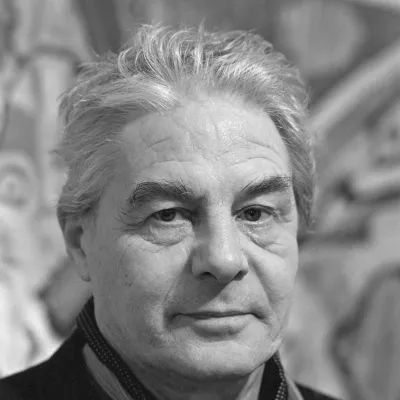
Photo: Wikimedia Commons
George Sand
Human Design Chart
Biography
Sand was the daughter of a man of royal ancestry. When she was four, he died and she was unhappily caught in between the conflicts of her mother and grandmother. After three convent schools she went to Nohant to live with her grandmother. There she developed a love of nature and her own free spirit, which she indulged by wearing men's clothing.
At the age of 18, she married Casimir Dudevant on 10 September 1822 and subsequently had two children, a son, Maurice (born 30 June 1823) and a daughter, Solange (born 13 September 1828). Her frustration with the conventional life of a French housewife became intolerable until she abandoned the pretence. Never able to form a lasting romantic relationship, she had a series of lovers. Most of her later life was spent in Nohant, where she found in nature the fulfilment she could not find in a man.
Fame eluded her until she left her husband and kids on 4 January 1831 and headed to Paris. Once there, she lived a bohemian lifestyle, taking outstanding lovers, both male and female, and continuing to write. Her first novel Indiana was published in 1832 under the pseudonym George Sand. Though not an attractive woman, she had a spirit and passion that attracted two of the most romantic figures of her day. In June 1833, she met Alfred de Musset and began a tempestuous love affair that continued until 6 March 1835. She obtained a legal marriage separation in July 1836 and later that year met Frederic Chopin. They carried on a passionate romance which lasted nine years, from May 1838 to 1846.
What does Manifestor 6/3 mean for George Sand?
Manifestor 6/3 — Design at a Glance
George Sand revealed herself as a Shaper with the inner mission to lead the world into a new future. Her design marked her as a Manifestor – a type that does not fight every battle themselves, but instead acts like an ancient emperor by envisioning and instructing others to implement these visions. This role came at the price of misunderstanding: Her superior perspectives polarized her environment inevitably. While some loved her great dreams and followed her, she encountered rejection or hatred from others precisely because she thought differently than the majority.
This divide between admiration and aversion was not a personal failure but a structural necessity of her design. The path out of this polarization led through clear strategy: George Sand had to inform her environment timely and accurately about her intentions. Only through transparent communication could she find those who shared and supported her visions.
The consequence of this action was immediately felt. When she informed others and followed her nature, her system rewarded her with a deep sense of inner peace. However, if she lived against this strategy by acting without creating clarity beforehand or reacting to resistance without explaining her position, it was accompanied by persistent, deep anger. Her life thus became an ongoing balance between the power of her vision and the discipline of communicating it correctly to experience peace rather than frustration.
Ego Authority
George Sand possessed rare authority in ego, a configuration that only Projectors or Manifestors with defined Ego Center and open Emotional, Sacral, and Spleen Centers exhibit. This design marked her as someone whose truth did not lie in rational thought but in spontaneous will. Since her mind often served the interests of her environment – an effect of the open centers – she had to learn to listen to herself while speaking. Only the uncensored words that came directly from her throat matched her inner truth.
Her willpower was most evident on topics close to her heart; here, she kept her promises and achieved her goals. This consistent following of her own will could be perceived as selfish from the outside. For George Sand, it was essential that every action also served her own benefit, whether material success or the urge to transcend limits and be first. She used this will not only for herself but also led others into new directions with it.
A central mechanism of her design was the necessity of a pause after goal achievement. Continuous work without these recovery phases did not lead to desired success but to unhealthy exhaustion and illness. Her strength lay in staying true to herself and clearly distinguishing between mental manipulation of others and the authentic voice of her ego.
The 6/3 Profile — Role Model / Martyr
George Sand exhibited an attitude of constant self-experimentation. Her design suggested that she primarily acted as a Self-Experimenter during the first three decades of life. The Profile 6/3 means that the line of the Adventurer (Line 3) dominated early on, leading to numerous self-experiments and inner restlessness. She did not seek ordinary perfection or conformity but aimed for an extraordinary life. This search for the 'right' often seemed unsatisfying as it was far from standards.
After Saturn's return, around age 30, this dynamic changed. Experimentation slowed down but never ceased entirely since Line 3 remained permanently present in her profile. The accumulated experiences now transformed into wisdom. George Sand used her unusual life paths to become a wise and humorous role model. Responsibility and foresight became natural for her.
The sixth line (Gate 52) promoted the desire for inner peace and spirituality. She entered this state only when the circuit was fulfilled. Simultaneously, the third line (Gate 21) brought themes of trial and error as well as confrontation with superior forces into play. George Sand learned to avoid dependencies and walk her own path to prevent experiences of powerlessness. Thus, early restlessness turned into mature tranquility.
Single Definition — Defined & Open Centers
George Sand's Human Design profile indicated a tendency towards consequent and authoritative presence. Her defined Ajna Center ensured consistent conceptual thinking; her mind was always active in processing data into clear concepts. This mental resilience flowed directly into her defined Throat Center: What she thought, she spoke out. Her communication thus appeared as a reliable manifestation of her inner convictions, independent of external moods.
This voice rested on a stable identity foundation. The defined G Center provided her with firm self-awareness and a clear sense of direction. She did not need external validation to feel lovable or right. This was complemented by the defined Heart Center, which supplied strong willpower and ego structure. George Sand controlled her resources herself, kept promises as an expression of her integrity, and showed natural competitiveness. She was designed to keep her word and enforce boundaries, further emphasizing her authority.
At the same time, a tension towards situational receptivity was revealed. Her open Head Center made her vulnerable to mental pressure and others' inspiration; she tended to seek answers that did not come from within rather than relying on her own consistent mind. The open Sacral Center meant an inconsistent energy flow; she was sensitive to the vitality of her environment and risked exhaustion if she used borrowed energy as her own or neglected boundaries.
Emotionally, she was exposed to a wave pattern due to her open Solar Plexus Center. She absorbed and amplified others' feelings, which could lead to confusing other people's moods with her own emotions. The open Spleen Center brought fundamental survival anxiety and sensitivity towards health; she instinctively sought safety from others rather than trusting spontaneous impulses. Finally, the open Root Center took on external stress, leading to a feeling of pressure that was not self-generated. The challenge lay in not endangering her inner strength from mind, voice, and will by attempting to interpret these flowing, external fields as her own truth.
Channels & Gates
George Sand's Human Design profile indicated a tendency towards intense, self-imposed pauses. Gate 52 (the Buddha Gate) required strong focus on pattern correction and concentration; without clear goals, this could lead to stress or depression. This need for silence to format understanding stood in tension with her internal pressure through Gate 58 (Experimentation, Perfectionism) and Gate 48 (deep logical correction), which demanded constant review of incorrect patterns.
Her external impact was marked by Channel Alpha Animal 7-31. This channel connected the G Center with the Throat Center and described logical, collective leadership. George Sand had to earn trust and be invited by a majority before she could assume her role as a guide; she could show the way but not take it herself. This leadership energy worked in conjunction with Channel Money Line 21-45, which connected the Heart Center with the Throat. Here, it was about the material level: the conflict between control (Gate 45) and service (Gate 21). She sought independence to follow her natural rhythm since dependence caused stress.
Innovative insights were brought by Channel Structuring 23-43, which connected the Ajna Center with the Throat. This allowed spontaneous breakthroughs (Gate 43) and their assimilation (Gate 23). However, this gift was time-dependent; without strategy and waiting for the right answer, her unique knowledge often went ununderstood or rejected. The combination of these channels showed a person who had to balance withdrawing into inner clarity (Gate 52) with the necessity of articulating their logical leadership claims and material interests at the right moment to be recognized.
Circuit Signature
George Sand's Human Design profile indicated a tendency towards structured emotional self-assertion, flanked by strategic logic and resource-oriented cooperation. Her chart was marked by three active circuits that defined her energetic landscape. The Knowledge Circuit connected her Ajna Center with the Throat Center through Channel Structuring (Gates 43-23). This allowed her to pour internal concepts and thoughts into clear, articulated forms – a skill for precise expression of individual identity. Parallelly, the Understanding Circuit linked the Throat Center with the Identity Center via Channel Alpha Animal (Gates 31-7). Here, an emotionless, rational strategy was evident: the ability to formulate logical insights and communicate them directly from her essence, free from impulsive conditions. A third pole was the Ego Circuit, which connected the Throat Center with the Heart Center through Channel Money Line (Gates 45-21). This created a dynamic of giving and taking in a cooperative context; her words were not only expressions or strategies but instruments for building resources and mutual support. Since all these circuits touched the Throat Center, her communication worked as a central node: emotionally structured, rationally strategic, and cooperatively resource-building simultaneously. This configuration described a person who advanced both their own transformation and logical orderings through speaking and formulating, while also strengthening social bonds – all driven by a defined flow between mind, identity, and willpower.
Left Angle Cross of Demands 1
George Sands Design inclined towards formulating demands. She was someone whose inner dynamics were marked by making demands – whether on herself or others. This configuration corresponds to the so-called left cross of demands 1. In Human-Design mechanics, this pattern describes a life task centered around dealing with expectations. It is not about arbitrary claims but rather a structural necessity to create clarity about what is needed. George Sand lived in constant interaction with this concept of demand as her central life motif. Her personality was shaped by articulating boundaries and needs instead of passively accepting them. This created tension between what was and what should be. The mechanics of this cross imply that life is formed through these active demands. It is a process of definition: Who am I in relation to my claims? What do I expect from my environment? George Sand navigated her existence through this specific lens. Every interaction was potentially a moment of demand, an opportunity to clarify her own position. This was not just a trait but the core of her energetic structure. She had to learn how to make these demands without overburdening herself or others. The energy of this design calls for expression and precision regarding needs. George Sand embodied this drive towards clarity through actively formulating expectations. Her path was thus an ongoing dialogue with her demand posture.
Saturn Return · Uranus Opposition · Chiron Return · 2nd Saturn Return — Life Cycles
George Sand’s life followed a clear cyclical structure, in which recurring astrological transits served as crucial milestones for her development. Her first Saturn return around the age of 28 marked a moment of condensing years of preparatory work: in 1832 she published her first solo-authored novel "Indiana" under the pseudonym George Sand. This step signalled the transition from a private creative phase to public recognition and solidified her identity as an author.
The Uranus opposition at age 42 brought a period of upheaval and new forms of expression, often accompanied by a break with previous patterns. In 1846 this was evident in the publication of the novels "La Mare au Diable" and "Lucrezia Floriani", works that further expanded her established career and ventured into new literary directions.
The Chiron return, a cycle of bloom and incarnation purpose, occurred around age 48. Here her life theme increasingly unfolded in the public sphere: in 1852 she successfully intervened on behalf of four convicted socialists before Louis Napoleon, who were subsequently pardoned. This act highlighted the effectiveness of her engagement beyond pure literature.
The second Saturn return around age 60 signalled another phase of structuring and stock-taking. In 1864 she moved to Palaiseau with Alexandre Manceau, a step that reorganised her private life and accompanied the conclusion of a long creative period. These cycles shaped George Sand’s biography as a sequence of consolidation, change, and fulfilment of her specific path.
Manifestor · Ego Authority — Synthesis
George Sand lived a lifestyle marked by a deep drive towards initiation and design. As a Manifestor with defined mental center power, she seemed constantly to develop concepts and express them through her voice (Authority in Ego), often against conventional expectations. The Profile as Role Model and Experimenter points to an ongoing search for authentic forms of expression that went beyond the ordinary – a pursuit evident in the publication of new works (documented event 1832) and advocating for unconventional ideas (documented event 1852). This process of experimentation and moving forward was not confined to her early years but characterized her entire life.
At the same time, an internal tension revealed itself between the desire for independent design and the necessity of dealing with others' expectations. The combination of the ability for logical leadership (Channel of the Alpha) and emotionally open graphics (Authority in Ego) suggested a paradox: Sand could develop visions and inspire others but was also vulnerable to external influences and had to learn to distinguish her inner voice from the interests of others. This dynamic manifested during phases of intense creative work (documented event 1846) as well as in a desire for personal connections (documented event 1864).
3 Defined Channels
Incarnation Cross - Left Angle Cross of Demands 1
Solar Return
The Solar Return shows the moment when the sun returns to its exact birth position - your personal solar year.
Life Cycles
Discover the life cycles with a detailed triple view (birth chart, cycle chart, composite).
Human Design Profile
- Type
- Manifestor
- Strategy
- To inform others before acting
- Authority
- Ego Authority
- Profile
- 6/3 - Role Model / Martyr
- Definition
- Single Definition
- Incarnation Cross
- Left Angle Cross of Demands 1
- Date of Birth
- 01.07.1804 15:00
- Place of Birth
- Paris, France
Frequently Asked Questions
What Human Design type was George Sand?
What Profile did George Sand have in Human Design?
What inner authority did George Sand possess?
What incarnation cross did George Sand have?
When was George Sand born?
Discover your own Human Design
Are you also a Manifestor? Find out in a personal reading how to use your initiation power peacefully and dissolve resistance.
More Personalities
Back to overviewAlain-Fournier
Angeli
Christian-Jaque
Juninho

Kesha

Lucebert