
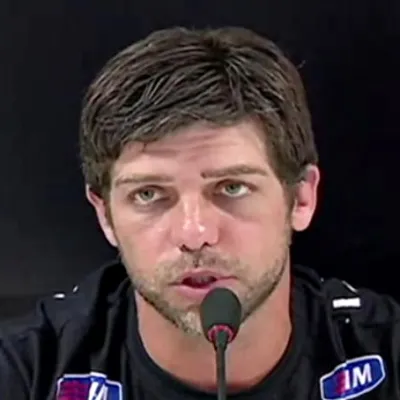
Juninho
Human Design Chart
Biography
Juninho began his professional career in 1993 with Brazilian club Sport do Recife. Two years later he joined Vasco da Gama where he played over 100 matches and won no fewer than six titles. In 2001, he joined Ligue 1 side Olympique Lyonnais where he played for the next eight years, winning seven consecutive league titles and scoring 100 goals in 350 official appearances for the club. Following his departure from Lyon in 2009, Juninho played in Qatar with Al-Gharafa and in the US with New York Red Bulls, with the latter stint wedged between two spells back at Vasco, where he ultimately retired in 2013.
Having made his international debut in 1999, Juninho played 40 games for the Brazilian national team and scored six goals. He represented Brazil at the 2001 Copa América and was part of the squad which won the 2005 FIFA Confederations Cup before retiring from international football after the 2006 World Cup.
Since 2013, Juninho has been a football commentator with Brazilian sports network Rede Globo.
The Human Design of Juninho: Projector 3/5
Projector 3/5 — Design at a Glance
Juninhos design pointed towards a tendency for precise system recognition: He immediately identified weaknesses in structures or relationships. This ability sprang from his nature as a projector, whose aura acts like a bright flashlight and focuses on areas that are in the dark. Instead of addressing these flaws directly – which would often be perceived as unpleasant by those around him – Juninhos most effective approach was through harmonious role modeling. By living successful patterns himself, he became attractive to others; they came to him naturally seeking advice rather than receiving criticism.
This process was based on the central strategy of waiting for a sincere invitation. Through this patience, Juninho avoided the risk of bitterness, his typical non-self theme, if he acted against the will of others or did not feel valued. Additionally, his undefined Sacral Center shaped his energy balance: He had no constant intrinsic source of life energy. Instead, he experienced phases of high productivity followed by necessary rest periods for regeneration. This up-and-down often conflicted with societal expectations of continuous performance. When Juninho lived according to this design – through focused shining and respectful waiting – he was rewarded with success. His influence did not come from pressure but through the natural attraction of his clear perspective on complex connections.
Emotional Authority
Juninhos inner compass was not located in the Head Center, but anchored deep within the emotional landscape. His design established that the defined Solar Plexus Center carried authority – regardless of which other centers were also filled. This emotional authority followed a natural wave of ups and downs that constantly colored his perception. In one moment he could be enthusiastic about an idea, in the next view the same situation completely negatively. This fluctuation was not a mistake but a mechanism: The current feeling was only a snapshot, not yet the truth.
Quick decisions during emotional highs or lows distorted therefore his clarity and could have negative consequences. The path to the right choice lay in patience. Juninho had to learn to take time and consider important questions multiple times before „sleeping on them“. Only when intense feelings subsided and an emotional distance emerged, true calm set in. This process of waiting was not hesitation but a necessary filtering. Only through this distance could he recognize what truly mattered instead of just reacting to fleeting moods. Long-term decisions required this cycle of activation and rest to find the deeper truth behind the emotional surface.
The 3/5 Profile — Martyr / Heretic
Juninhos design pointed towards a tendency for pragmatic experimentation paired with the need to act as a competent problem solver for others. As Profile 3/5, he first learned through personal trial and skepticism towards given solutions. This process along Line 3, rooted in Gate 19, emphasized vigilance in relationships and nutrition as well as the protection of resources and territory. The Venus amplification promoted natural ease in exchange and sensitivity to the productivity of partners, strengthening mutual dependencies.
Simultaneously, Juninho carried the burden of Line 5 (Gate 44), which pushed him into the role of a rescuer. His task was to solve problems based on personal experience and protect the tribe from failure – often through subtle manipulation or unusual pattern recognition driven by Uranus. This dynamic created tension: While he had the right to make public mistakes to learn, others expected constant competence due to his hero role. His success depended on bringing this practical wisdom into a clear hierarchy since only then material well-being and tribal security were guaranteed. The attractiveness of his knowledge drew others in but made public failures especially painful as they threatened the image of the competent helper.
Single Definition — Defined & Open Centers
Juninhos design pointed towards deep emotional resonance and instinctive presence. His defined Solar Plexus Center acted as inner authority: Truth did not reveal itself in impulsive now, but only after running through the emotional wave. This patience protected against hasty decisions; clarity emerged when the emotional charge subsided. Complementarily, his defined Spleen Center provided spontaneous intuition in the moment – a non-verbal alarm that perceived health and well-being in the present. The also defined Root Center delivered constant existential pressure for correction and survival security, creating a stable inner triad of emotion, instinct, and life force.
Opposite this internal structure stood six open centers as mirrors reflecting environmental influences. The open Head Center tended to engage with doubts or questions from others rather than possessing its own mental inspiration. Here it was necessary to remain an unattached observer of thoughts. Similarly, the open Ajna Center reflected foreign concepts; Juninho showed the ability to take on ideas without identifying them as personal truth. The open Throat Center naturally drew attention but required waiting for the right invitation to speak rather than actively seeking recognition.
The open G Center meant no fixed identity or direction. Juninho was designed to be initiated through correct places and relationships; false environments created a feeling of being lost. The open Heart Center made him vulnerable to pressure to prove his worth or make promises – a trap he could circumvent by trusting in his authority. Finally, the open Sacral Center mirrored environmental energy; it was not designed to provide constant generative power. Here lay the danger of overextending himself through „borrowed“ energy until exhaustion rather than trusting natural rhythms of work and rest.
Channels for logical clarity and emotional waves.
Juninhos design pointed towards a charged duality: A sharp, logical sentry stood in contrast to a pulsing emotional wave. This combination shapes him as someone who is both critically analytical and emotionally provocative.
The Judgment Channel 58-18 connects the Root Center with the Spleen Center through Gate of Vitality (58) and Gate of Correcting (18). It generates an insatiable, root-driven urge for perfection. Logic must prove here that it has the best answers; there is a constant impulse to question and correct patterns to keep the collective moving. Juninho often showed himself as someone who uncovered mistakes unasked – which can lead to dissatisfaction if this judgment is not invited. His art lies in bringing this judgment only when solutions are sought.
Parallel to this, the Channel of Releasing Feelings 39-55 worked. It connects the Root Center with the Solar Plexus through Gate of Provoking (39) and Gate of Mind (55). This channel generates an emotional wave of moods, melancholy, and passion. It is an endless continuum between joy and sorrow that must not be rationalized but lived authentically. For Juninho this meant: Actions required the right mood to maintain authenticity and spiritual depth. Only in the correct mood could he fully unfold his effect; otherwise manipulation or emotional tensions threatened.
The challenge lay in integrating these forces: offering judgment as sought-after solutions instead of constant criticism, and using the emotional wave as a creative impulse rather than being at its mercy. Additional Gates like 19 (Resources/Territory) or 33 (Reflection/Retreat) supported this process by emphasizing the need for security and inner stillness to balance the intense energy of the two main channels.
Individual Circuitry — Circuit Signature
Juninhos design pointed towards a dual working style: A pulsing, emotional drive toward individual transformation and a focused, rational strategy for the future. These two forces existed parallel alongside each other since Juninho had a Simple Definition.
The Knowledge Circuit connected his Solar Plexus with the Root Center through the channel „Releasing Feelings“. This described an acoustic, pulsating rhythm of personal identity. New insights and emotional waves from the Solar Plexus were expressed through the Throat Center, initiating change. It was the inherent path, supported by emotional authenticity.
Simultaneously, the Understanding Circuit worked, connecting Spleen with the Root Center. The channel „Judgment“ provided logical framework and strategic focus. Here it was about rational structure and sharing insights free from conditioning and emotions – a visually oriented energy for the future.
The tension between these two circuits shaped Juninhos experience: On one side the acoustic-emotional expression of unique identity, on the other the sober, analytical judgment capability. Both streams converged in the Root Center but did not form a continuous connection between Solar Plexus and Spleen, remaining as separate yet complementary systems.
Right Angle Cross of the Four Ways 4
Juninhos design established a fundamental orientation towards practical implementation of ideals. He showed himself as someone who sought the „right path“ not as an abstract concept but through concrete action in the material world. This sprang from the structure of the four paths cross, specifically the fourth aspect requiring integration of knowledge into active steps.
His life task was to navigate between various possibilities and find a stable path through experience and adaptation. The challenge always lay in maintaining clarity: Juninho had to learn not to be confused by changing circumstances or new information. Instead of remaining in theoretical space, it was necessary to translate ideals into physical reality.
This mechanism described no linear journey but an ongoing process of alignment. Juninho sought the right path through action itself. The integration of insights only became effective when they translated into concrete actions. His design challenged him to close the gap between visionary aspiration and everyday practice by focusing on the here and now. Thus, his identity was defined by the ability to break down complex connections into simple, actionable steps and pursue them consistently.
Saturn Return · Uranus Opposition · Chiron Return — Life Cycles
Juninhos design pointed towards cyclical turning points marked by clear phases of anchoring and abrupt endings. This structure does not appear as a continuous flow but as a sequence of stages where external circumstances fundamentally shift.
The first Saturn Return often marks the transition to professional maturity and stability in Human Design. For Juninho, this moment occurred in 2001 at age 26 when he joined Olympique Lyonnais in Ligue 1. This step condensed years of groundwork into a tangible result and anchored him in a new stable professional structure. It was the point where his potential became concrete reality.
Decades later followed the Uranus Opposition, a phase often associated with sudden breaks and necessary let-go processes in design. In 2013 at age 38, Juninho ended his active football career. This was not a gradual exit but a clear end of a life phase. The mechanics of this cycle often require a radical cut to make room for the new.
These two events illustrate the rhythmic nature of his design: First the painful yet necessary anchoring in structure, later the equally inevitable detachment from it. Both phases were crucial for his development and showed how external turning points accompanied internal maturation processes.
Projector · Emotional Authority — Synthesis
Juninhos life seems marked by a deeply rooted drive towards authenticity and an ability to recognize and correct patterns (Channel 58-18). This combination of logical judgment and perception of what is not flowing hints at a natural talent for improving both himself and his environment. The undefined Sacral, Head, and G Centers amplify this tendency further by opening him up to the energies of others and prompting him to constantly seek new experiences and definitions – a life in the flow of change filtered through his emotional wave (emotional authority).
A central paradox in Juninhos design lies between his need for correctness and his inherent openness to influences. He is destined to recognize and correct patterns, yet simultaneously he absorbs others' energies and can easily be carried away by them (open Sacral and G Centers). This tension between the desire for autonomy and the ability to adapt shapes his decision-making and life as someone who both thinks independently and acts in connection with others.
2 Defined Channels
Incarnation Cross - Right Angle Cross of the Four Ways 4
Solar Return
The Solar Return shows the moment when the sun returns to its exact birth position - your personal solar year.
Life Cycles
Discover the life cycles with a detailed triple view (birth chart, cycle chart, composite).
Human Design Profile
- Type
- Projector
- Strategy
- Wait for the respectful invitation
- Authority
- Emotional Authority
- Profile
- 3/5 - Martyr / Heretic
- Definition
- Single Definition
- Incarnation Cross
- Right Angle Cross of the Four Ways 4
- Date of Birth
- 30.01.1975 07:15
- Place of Birth
- Recife (Pernambuco), Brazil
Frequently Asked Questions
What Human Design Type is Juninho?
What Profile does Juninho have?
What authority does Juninho possess?
What Incarnation Cross does Juninho have?
When was Juninho born?
Discover your own Human Design
Are you also a Projector? Find out in a personal reading how to unfold your leadership qualities and recognize the right invitations.
More Personalities
Back to overviewSissy Spacek

Alain-Fournier

Anémone

Angeli

Ann-Margret

Bourvil
