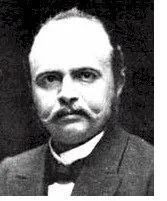
Hans Driesch
Human Design Chart
Biography
Hans Driesch — Generator with Profile 3/6
Generator 3/6 — Design at a Glance
Hans Driesch proved to be someone with considerable endurance and an enormous capacity for investing energy into his tasks. His Generator design established a foundational structure that described him as robust and dependable, provided he had the necessary inner strength. However, this energy did not automatically become available to him; it was only released when he responded to impulses from his environment. The central mechanics of his design did not require spontaneous initiative but rather a response to signals from life.
His strategy involved waiting until his Sacral Center – the place of his internal confirmation – gave a clear “yes.” Only then would he respond with action. If Hans Driesch acted in accordance with this reaction, the system rewarded him with a feeling of deep fulfillment and satisfaction. Conversely, if he went against his nature by initiating things without inner desire or was prevented from pursuing his heart’s project despite being full of energy, it inevitably led to frustration and an energy deficit. The risk of burnout lurked where he wasted his strength on tasks that did not resonate with his inner truth. Therefore, his path to effectiveness always lay in responding to what spoke to him from the gut.
Emotional Authority
Hans Driesch exhibited a decision-making stance deeply influenced by emotional waves. His internal authority resided in the defined Emotional Center – a mechanism that always took precedence over all other definitions in his design. This meant that his perception was always colored by the current mood: What appeared inspiring at one moment could seem negative the next. These fluctuations were merely snapshots, not ultimate truths.
Quick, spontaneous decisions made from such emotional excitement often risked negative consequences as the initial impression had yet to mature. For Hans Driesch, patience was the key tool. He needed to give himself time for decisions to ripen – ideally by sleeping on them multiple times. Only when intense feelings subsided and an emotional distance was gained did clarity and calmness emerge. This process of waiting and seeing was indispensable for long-term life decisions as it allowed him to transcend transient affect and reach the true inner truth.
The 3/6 Profile — Martyr / Role Model
Hans Driesch’s design tended towards a two-phase life path: initially characterized by experimentation, later by reflective wisdom. As Profile 3/6, he primarily acted as an “Explorer” in his first half of life. Until Saturn returned, around age 29.5 years, the energy of Line 3 dominated. This phase was marked by adventure-seeking and risk-taking to achieve personal goals. Driesch appeared playful and ready to embrace new situations often without prior rational deliberation.
Only after the first Saturn return, at about 30 years old, did Line 6 activate. This marked a turning point: Driesch increasingly withdrew to reflect on his previous experiences and gain broader insight into his life. The earlier freedom now led by the wiser, more cautious Line 6. This phase required trust in the process and absolute certainty for the future; without this assurance, the design tended to retreat.
In later life, around age 50, both perspectives merged. Driesch integrated the youthful curiosity of Line 3 with the mature insight of Line 6. This synthesis enabled him to become a role model for others through charm and accumulated wisdom. He carried within himself both the eight-year-old and the eighty-year-old self, which empowered him to not only experience but also clearly convey complex connections.
Split Definition — Defined & Open Centers
Hans Driesch revealed himself as a person with a fixed, reliable self-identity and a deep sense of his own direction. His defined G Center gave him the ability to love others without becoming dependent on them, as well as a natural authority in showing new paths. This inner security contrasted with the challenge not to direct others when they were not invited but rather to pursue his own mission.
His energy source lay in a defined Sacral Center, which provided him with constant vital power. Driesch was dependent on responding to questions or invitations to use this energy correctly; initiatives from the mind often led to frustration and exhaustion because the sacral response was then missing. The persistence of this energy helped him to overcome stagnation phases until a breakthrough came.
At the same time, his defined Solar Plexus Center shaped his decision-making through emotional clarity. Driesch needed time to wait out the waves of his feelings; spontaneous decisions on emotional highs or lows were misleading for him. Only after going through this cycle did a deeper truth about relationships and actions emerge. His defined Root Center also provided a steady pressure that propelled him forward and nourished existential as well as emotional awareness.
In contrast, his open Head and Ajna Centers revealed a susceptibility to mental confusion and the pressure to find answers that were not coming from him. Driesch tended to get entangled in other people's questions or interpret concepts as his own truth rather than using his open mind as a flexible source of inspiration. His open Heart Center led to him not being consistently willful; ideally, he avoided making promises to prove himself, as this ended in a cycle of self-doubt and failure. Finally, his open Throat and Spleen Centers made him vulnerable to the pressure to demand attention and for spontaneous decisions out of fear rather than trusting the correct invitation or inner authority.
Channels for resource management, impulse and emotional clarity.
Hans Driesch was someone who initiated new directions with powerful, mutative energy. This tendency was marked by the Channel of The Beat 14-2. It connected the power competence of Gate 14 in the Sacral Center – focused on material resources for innovation – with the higher knowledge of Gate 2 in the G Center, which guides identity and direction. This configuration acted as a tantric channel that promoted unusual and unique things. Driesch had the keys to transform the mutative impulse into material reality by trusting his generative energy.
At the same time, the Channel of Recognition 30-41 propelled him forward. It connected the pressure from the Root Center (Gate 41), which generated restlessness and fantasies of countless scenarios, with the emotional recognition of Gate 30 in the Solar Plexus. This connection intensified the drive for new experiences. Driesch intensely sought to immerse himself in the unknown, where his emotions strengthened the original impulse. The challenge was not to follow this desire blindly but to wait out the emotional wave to gain clarity before making decisions.
Additionally, individual Gates influenced his approach. Gate 28 challenged him to take risks here and now and persistently listen hard to recognize his personal sense. Gate 27 introduced a genetic role of care that enriched activities through altruistic warmth and self-preservation. Gate 31 supported the transmission of power and leadership to the collective. Gate 6 regulated further development through emotional friction and biological limits. Gate 37 promoted organic community structures and friendship, while Gate 1 enabled creative mutation without restrictions at the right time. Finally, provocation and analysis after Gate 39 activated adrenaline for necessary reassessments.
Individual Circuitry — Circuit Signature
Hans Driesch's design laid a tendency towards a pulsating, rhythmic identity. As a person with split definition, his energetic system consisted of two independent, not directly connected power areas. The first area linked the Identity and Sacral Centers through the Knowledge Circuit. Here, the Channel 'The Beat' (Gates 2–14) stood for an acoustic, now-rooted creativity. This configuration promoted the expression form of a unique individuality through rhythmic energy without logical planning being in the foreground.
Parallel to this existed a second, separate stream: The Meaning Circuit linked the Solar Plexus and Root Centers. Through the Channel 'Recognition' (Gates 30–41), Hans Driesch went through emotional wave cycles with beginning, middle, and end. This area referred to past experiences; it served to reflect feelings and grasp their meaning to share them later with others. Since both circuits were not connected to each other, Hans Driesch experienced these aspects – the creative self-expression power on one side and the emotional processing of the past on the other – as coexisting independent forces that did not control or form a common flow.
Right Angle Cross of the Unexpected 3
Hans Driesch's design indicated a tendency towards unexpected turns that were often experienced as challenges or sudden insights. This configuration, known as the Unexpected Right Cross 3, describes a life dynamic where external circumstances or internal processes unexpectedly unfold and thus break established patterns. For Hans Driesch, this meant he frequently found himself confronted with situations that were unpredictable and forced him to be flexible in his responses. Instead of following a rigid plan, his design showed an openness to the unknown, which allowed him to adopt new perspectives and find creative solutions. This ability to stay in the flow of life and engage with spontaneous events shaped how he perceived and moved through the world. The Unexpected Right Cross 3 endows a special sensitivity for moments of change where old structures must be dissolved to make way for something new. For Hans Driesch, this was not an obstacle but an integral part of his path that encouraged him to always be ready for the unexpected and use it as an opportunity for further development.
Saturn Return · Uranus Opposition · Chiron Return · 2nd Saturn Return — Life Cycles
Hans Driesch's design indicated a tendency towards structural confirmation that intensified in later life stages. In 1923, at age 56, he received honorary doctorates from Hamburg University and Nanking University – a classic expression of the second Saturn return. This cycle often marks the point where years of work lead to institutional recognition and the personal foundation is firmly established.
Earlier in his life, in 1907 when he was 40 years old, another dynamic emerged: The lectures at Aberdeen University as part of the Gifford Lectures corresponded with the Uranus opposition. This phase often brings unexpected realignments or public visibility on new fields. For Driesch, this meant stepping into an international academic context far from his usual framework.
His configuration thus combined a need for stable anchoring with the ability to reposition himself in unconventional moments. The mechanics of his chart suggest that he did not simply wait passively but actively built structures (Saturn) while remaining open to disruptive impulses (Uranus). This tension between stability and change shaped his path: He sought grounding within established systems, yet allowed external opportunities to expand his reach. The honorary titles in 1923 were thus more than mere rewards; they were the result of a long-term strategy to systematize knowledge while making it accessible.
Generator · Emotional Authority — Synthesis
Hans Driesch was a Generator whose life was marked by deep sacral energy (Generator Type). This power fueled a continuous readiness for experimentation (Profile 3/6), which initially drove him into new directions and later – after the return of Saturn – led to a phase of reflection. His emotional authority required time to mature decisions, showing in an inner wave of enthusiasm and skepticism. Through the Beat Channel (14/2) he combined power with higher knowledge, a synergy that propelled him to explore new paths and advance innovation – particularly concerning resource availability and their transformative potential.
A central paradox in Hans Driesch's design lay between his generative energy and the need for reflection. He lived through a phase of experimentation followed by a time of contemplation (Profile 3/6), creating a tension field between active engagement and inner withdrawal. This dynamic was reinforced by the Knowledge Circuit, which drove him to acquire and express new knowledge while emotional authority required careful consideration. A significant event in 1907 showed itself in lectures, hinting at a drive to disseminate insights, while later success in 1923 underscored his ability to establish knowledge.
2 Defined Channels
Incarnation Cross - Right Angle Cross of the Unexpected 3
Solar Return
The Solar Return shows the moment when the sun returns to its exact birth position - your personal solar year.
Life Cycles
Discover the life cycles with a detailed triple view (birth chart, cycle chart, composite).
Human Design Profile
- Type
- Generator
- Strategy
- To respond - wait for something to respond to
- Authority
- Emotional Authority
- Profile
- 3/6 - Martyr / Role Model
- Definition
- Split Definition
- Incarnation Cross
- Right Angle Cross of the Unexpected 3
- Date of Birth
- 28.10.1867 17:00
- Place of Birth
- Bad Kreuznach, Germany
Frequently Asked Questions
What was Hans Driesch's Human Design type?
What Profile did Hans Driesch have in Human Design?
What Authority did Hans Driesch have?
What incarnation cross did Hans Driesch have?
When was Hans Driesch born?
Discover your own Human Design
Are you also a Generator? Find out in a personal reading how to use your sacral energy correctly and discover deep satisfaction.
More Personalities
Back to overviewAaliyah

Alexia

Angèle

Anne-Marie

Arcángel

Arno