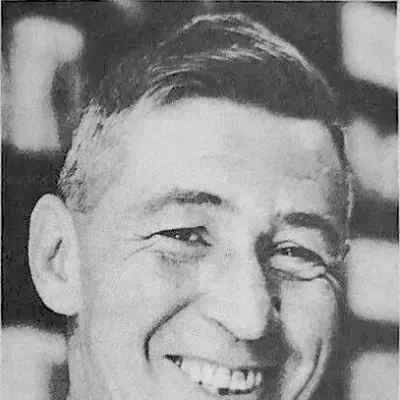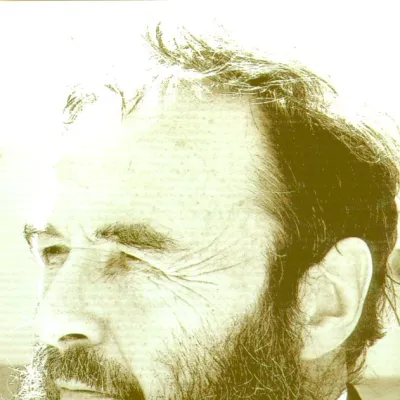
Harald Szeemann
Human Design Chart
Biography
Harald Szeemann as a Projector 4/6 in Human Design
Projector 4/6 — Design at a Glance
Harald Szeemann's design inclined towards a focused and penetrating perception. As a Projector, his aura acted like a bright beam that pointed out weaknesses in the environment and brought light to dark places. This configuration described the ability to recognize systemic flaws immediately but required a specific strategy: waiting for an honest invitation from others before sharing knowledge. Directly addressing deficiencies would have provoked resistance; it was more elegant to attract through harmony, thus prompting others to ask questions. Since Projectors do not possess a constant internal energy source, Szeemann's work rhythm followed phases of high intensity, followed by necessary rest periods for regeneration. Ignoring this need for recovery threatened burnout. Conversely, living according to this mechanism – holding back until invited and respectfully leading – rewarded him with success. If he deviated from it or forced his insights, bitterness would eventually manifest as a consequence of not self-acting. Thus, his design marked him as someone who did not drive through personal force but rather worked by the targeted direction and illumination of other systems, provided he received the necessary recognition and space for his cyclical energy distribution.
Emotional Authority
Harald Szeemann's design inclined towards profound emotional waves that significantly shaped his perception of the world. As a carrier of Emotional Authority, he was subject to constant ups and downs in feelings; current mood colored his view on situations and people. What appeared inspiring at one moment could turn negative the next. His design indicated these immediate impressions were mere snapshots, not necessarily his deeper truth. Quick decisions made from an emotional peak often proved problematic for him.
The mechanics of his inner authority required patience and time. With Emotional Center defined and thus carrying internal authority – regardless of other definitions in the chart – Szeemann's rule was that this emotional guidance always took precedence. He had to let decisions mature, hesitate, and sleep on them multiple times. Only when intense feelings subsided and emotional distance was gained did clarity and calmness set in for him. This process of waiting until calm was key to his long-term life-changing decisions, as it allowed filtering out his true truth from the passing waves.
The 4/6 Profile — Opportunist / Role Model
Harald Szeemann's design inclined towards experimental action in the first decades of life, followed by a later orientation toward wise mentorship. Profile 4/6 described this progression: Before age thirty, energy resembled that of a 3er profile, manifesting in intense and often changing social bonds and friendships. With the activation of the sixth line, an inner conflict emerged – between the deep need for belonging (Heart) and the urge to reflect distantly on life's meaning (Head). This tension shaped his development towards a role demanding cooperation with others while remaining cautious to protect his heart from false allies.
Additionally, Gate 45 in the profile influenced direction-setting in a transpersonal context. Here it was about shaping material actions so they benefited the community and brought advantages, seizing favorable opportunities to serve higher principles. Parallel to this, Gate 22 on line six exhibited traits of maturity and metamorphosis. It promoted leadership qualities through social interaction and introduced nonconformist openness into the world. This configuration allowed creating new societal models through change while establishing a stable material foundation by aligning form with content.
Split Definition — Defined & Open Centers
Harald Szeemann's design inclined towards a constant mental pressure and conceptual work. His defined Head and Ajna centers generated an unending flow of questions, inspiration, and conceptual thinking. This state was not a choice but his natural way to understand the world; he felt compelled to grasp connections and find answers. This mental activity directly flowed into his defined Throat center, which served as a pivot point to translate these concepts into communication and action. Szeemann did not speak impulsively but articulated what his mind had conceptualized – a reliable yet limited form of expression.
Alongside this intellectual structure, he possessed defined Heart and Solar Plexus centers. The Heart gave him willpower and the ability to keep promises as well as control resources; he enjoyed working independently and sought recognition for his contribution. The Solar Plexus acted as an emotional authority: Szeemann had to wait until clarity emerged before taking decisive steps. His emotional wave strongly colored the environment, as others picked up and amplified this frequency.
Simultaneously, he was vulnerable to external influences through open centers. His open G center meant no fixed identity; Szeemann tended to blend with his surroundings and borrow direction from others. He could easily feel lost or seek a firm role rather than wait for the right place and people to initiate him. His open Sacral center made him sensitive to foreign energy; he risked overworking himself through borrowed vitality and experiencing exhaustion because he did not always know when enough was enough. Additionally, his open Root center absorbed external stress, leading to a sense of chaos if he tried to escape this pressure by acting. The open Spleen center confused him regarding health and safety; spontaneous decisions here were risky as intuition could come from the environment rather than himself. Szeemann's challenge lay in utilizing his defined mental and emotional strength without falling into the traps of open centers – identity search, overwork, and stress absorption.
Channels for mental order, community and abstract comprehension.
Harald Szeemann's design inclined towards analytical clarity when conveying complex connections. Channel Acceptance 17-62 connected his Ajna center with the Throat center, shaping logic in his thought processes. He mentally organized information based on substantial details; everything he integrated into his inner image could be understood and translated through words. This created a constant pressure to communicate opinions in detail, while paying attention to the timing of his listeners.
At the same time, there was a deep connection with social fabric. Channel Community 37-40 linked his Solar Plexus center with the Heart center, driving him to build bridges between individuals. He sought his place within the whole and understood the necessity for fair agreements based on mutual support rather than hierarchy. This energy required emotional clarity and time to establish trusting bonds within a group.
His mind was also inclined towards framing experiences in narrative structures. Channel Abstraction 47-64 connected his Head center with the Ajna center, filtering every experience through mental images. He sought stories that made sense by trying perspectives to understand the past. This process could be confusing but led to new insights when given patience, which he then shared.
Additionally, specific gates were at work: Gate 45 gathered energy on a tribal level and expressed willpower; Gate 26 enabled innovation in conservative environments; Gate 22 promoted calm listening and individual processes without intrusiveness. In the personality aspect, Gate 55 played a role for emotional awareness and mood shifts, while Gate 63 in his design drove mental processes through doubt to improve uncertain patterns. This configuration marked him as someone who logically organized complex content, built community, and sought hidden stories.
Collective Circuitry — Circuit Signature
Harald Szeemann's design inclined towards clear, rational communication that appeared free from emotional conditioning. This was evident through the active channel 'Acceptance' in the Understanding Circuit, which directly connected his Ajna center (focus, strategy) with the Throat center (expression, sharing). This connection allowed him to articulate logical structures and future-oriented concepts precisely – an 'emotionless ratio' aimed at improving society through clear reasoning.
Parallel to this was a separate, unconnected stream in the Meaning Circuit. Here, the channel 'Abstraction' linked his Head center (inspiration, impulse) with the Ajna center. This part of his design was cyclical and emotionally marked: it reflected past events to grasp their deeper meaning. These wave-like processes served to learn from the past and share these experiences with others – in contrast to the cool logic of the Understanding Circuit stood here emotional processing of old patterns.
A third, also isolated area was the Ego Circuit. Through the channel 'Community', his Heart center (willpower, promises) and Solar Plexus center (emotions, reactions) were connected. This created a dynamic of giving and taking as well as mutual support within a group ('tribe'). As there was no connection to the Sacral center, this energetic constellation required regular rest pauses for regenerating resources for the community.
Due to his split definition, these three areas – rational future shaping, emotional past reflection, and tribal cooperation – existed as parallel adjacent forces. They were not directly merged but formed separate, independent fields of experience in his life.
Right Angle Cross of Rulership 2
Harald Szeemann's design inclined towards strategic influence that relied less on direct confrontation and more on subtle control of power structures. This orientation was evident in his ability to steer complex situations through targeted interventions without having to stand at the center of events.
The underlying mechanics of this pattern describe a specific kind of authority: it wasn't about mere command but rather the art of applying leverage where it mattered most. Harald Szeemann intuitively knew where pressure needed to be applied in a system to bring about desired changes. This required a cool distance and a sharp eye for power dynamics that often remained hidden.
His approach was marked by the insight that true leadership is rarely loud. Instead, it worked through precise, well-weighed steps that prompted others to adjust their positions or take new paths. Harald Szeemann used this skill to set clear directions in his projects and collaborations by cleverly utilizing and modifying existing structures. This created space for innovation without leading to open conflicts. His strength lay in pulling the strings behind the scenes so that the outcome was both effective and acceptable to all involved.
Saturn Return · Uranus Opposition · Chiron Return · 2nd Saturn Return — Life Cycles
Harald Szeemann's design inclined towards structural anchoring followed by radical renewal later on. This dynamic manifested in his life stations, often corresponding with astrological cycle turns. In 1961, at age 28 during his first Saturn Return, Szeemann was elected director of the Kunsthalle Bern by its board of trustees. This cycle typically marks a transition from searching to stable positioning and responsibility.
Ten years later in 1972 at age 39, the Uranus Opposition hit his life. That year he married artist Ingeborg Lüscher whom he had met during Documenta 5 in Kassel. The Uranus phase often promotes sudden changes or liberating blows in both private and professional environments, as seen here through a new partnership.
In 1983 at age 50, Szeemann reached his Chiron Return. This cycle signifies the blossoming of one's purpose and the integration of earlier experiences into a coherent whole. In this year he conceived the famous exhibition 'The Tendency towards Total Art' in Kunsthaus Zurich. Here his long-term work culminated in a peak that clearly defined his specific contribution to the art world.
Finally, in 1993 at age 60, his second Saturn Return followed. That year he organized a retrospective of Joseph Beuys's works in Kunsthaus Zurich. This later cycle confirmed and solidified his established role by reordering existing structures and anchoring his influence sustainably.
Projector · Emotional Authority — Synthesis
Harald Szeemann's life was marked by a deeply rooted drive to recognize patterns and articulate them (Channel Accepting: Gate 17/62). His ability to grasp details and logically organize them fueled his inspiration (defined Head Center) and allowed him to shed light on the dark aspects of systems and ideas for others – a projector who unveiled hidden facets. However, his emotional authority required time for decision maturation in contrast to his quick problem-solving skills. This led to an ongoing internal process of weighing and structuring that drove him to make complex connections understandable for others.
A central paradox in Szeemann's design lay in the interplay between his desire for community (Line 4 in Profile) and the need for independent reflection (Line 6). This was evident in his professional stations where he took leadership roles (1961, 1993), as well as personal connections (1972). He moved between the need to be part of a larger whole and the inner necessity to reflect on meaning from a distanced perspective – a tension that shaped his work and life path.
3 Defined Channels
Incarnation Cross - Right Angle Cross of Rulership 2
Solar Return
The Solar Return shows the moment when the sun returns to its exact birth position - your personal solar year.
Life Cycles
Discover the life cycles with a detailed triple view (birth chart, cycle chart, composite).
Human Design Profile
- Type
- Projector
- Strategy
- Wait for the respectful invitation
- Authority
- Emotional Authority
- Profile
- 4/6 - Opportunist / Role Model
- Definition
- Split Definition
- Incarnation Cross
- Right Angle Cross of Rulership 2
- Date of Birth
- 11.06.1933 23:15
- Place of Birth
- Bern, SWTZ
Frequently Asked Questions
What was Harald Szeemann's Human Design type?
What profile did Harald Szeemann have?
What authority did Harald Szeemann have?
What incarnation cross did Harald Szeemann have?
When was Harald Szeemann born?
Discover your own Human Design
Are you also a Projector? Find out in a personal reading how to unfold your leadership qualities and recognize the right invitations.
More Personalities
Back to overviewSissy Spacek
Alain-Fournier

Anémone
Ann-Margret
Bourvil
Hergé