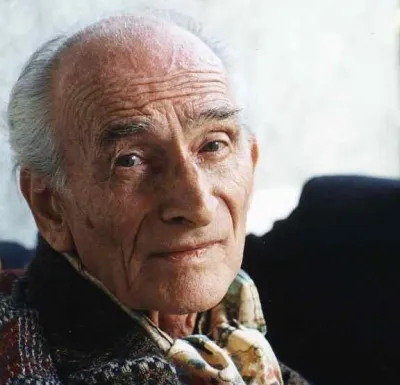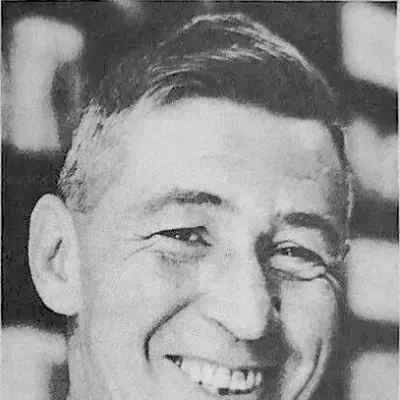
Hergé
Human Design Chart
Biography
Born to a lower-middle-class family in Etterbeek, Brussels, Hergé began his career by contributing illustrations to Scouting magazines, developing his first comic series, The Adventures of Totor, for Le Boy-Scout Belge in 1926. Working for the conservative Catholic newspaper Le Vingtième Siècle, he created The Adventures of Tintin in 1929 on the advice of its editor Norbert Wallez. Revolving around the actions of boy reporter Tintin and his dog Snowy, the series' early instalments – Tintin in the Land of the Soviets, Tintin in the Congo, and Tintin in America – were designed as conservative propaganda for children. Domestically successful, after serialisation the stories were published in book form, with Hergé continuing the series and also developing both the Quick & Flupke and Jo, Zette and Jocko series for Le Vingtième Siècle.
Human Design Analysis: Hergé as Projector 6/3
Projector 6/3 — Design at a Glance
Hergé's design inclined towards sharp, focused perception. As a projector, his aura acted like a bright flashlight, directing itself to areas in the system that were still dark or not functioning properly. This configuration allowed him to immediately recognize errors in structures and connections. However, a direct attack on these flaws would have generated resistance; instead, his strategy was to attract others through his own harmony. When he set an example by shining brightly, people sought him out for advice. The wait time for an honest invitation was crucial to avoid the bitterness of non-self and be rewarded with success.
This dynamic unfolded against a backdrop of cyclical energy structure. With his undefined Sacral Center, Hergé did not have a constant internal source of life energy. Instead, he experienced phases of high activity where he could work quickly, followed by necessary rest periods for regeneration. Ignoring this rhythm would have led to burnout; adapting to it ensured his effectiveness. His design thus required precise, inviting presence rather than constant production, which only worked when the environment was ready to follow the illuminated paths.
Emotional Authority
Hergé showed a clear tendency to hesitate in decision-making and needed time to gain clarity. His design featured Emotional Authority, meaning that his defined Solar Plexus Center determined his inner guidance. Regardless of other defined areas in his chart, this authority always took precedence. He was subject to an emotional wave that manifested as constant ups and downs in his feelings. The world appeared colored by his current mood; at one moment he could be totally enthusiastic, the next seeing the same thing negatively. His immediate feeling was only a snapshot, not necessarily his truth yet. Quick, spontaneous reactions from emotion were risky for him and could have negative consequences. Instead, his nature required patience. He let decisions mature, slept on them multiple times, and consciously delayed to gain emotional distance. Over time, intense feelings subsided. Only then did calmness set in, and he was through the process. This mechanism was particularly important for long-term steps with significant influence on his life course. By waiting until calmness, he found his true direction rather than being led by passing moods.
The 6/3 Profile — Role Model / Martyr
Hergé aspired to an extraordinary life far from standard norms. His design established a foundational stance: the search for authenticity that was not just correct but transformative and should change social structures.
This stemmed from his Profile 6/3, the role model and experimenter archetype. In the first three decades of his life, he lived effectively as a Line-3 doppelganger: marked by intense self-experiments and adventures. This phase served to learn adaptability through trials and errors. Experimentation slowed down after Saturn's return around age 30 but never ended entirely since Line 3 was permanently anchored in his essence.
In later life, the focus shifted towards integrating these experiences. Hergé used his unusual experiences to become a wise and humorous role model. Responsibility and wisdom became natural for him. His development at Gate 8 demanded an authentic stance without hypocrisy, only achievable after the
Single Definition — Defined & Open Centers
Hergé's design shows a tendency towards emotional depth, coupled with the constant pressure to manage relationships and stress. His defined Solar Plexus Center was his inner authority; it required waiting out the emotional wave for clarity before making decisions. Impulsivity led to chaos in him, while patiently exploring his feelings allowed for comprehensive perception. The also defined Root Center provided a constant pressure to handle emotional stress and shaped his way of dealing with interpersonal dynamics.
In contrast, Head, Ajna, Throat, G, Heart, Sacral, and Spleen were open. These centers reflected the environment situationally and were not consistent personal resources. The open Head Center tended to get lost in mental monologues or take on questions from others instead of seeking its own inspiration. The open Ajna Center made him susceptible to interpreting answers as personal truth or compensating for uncertainty with feigned certainty.
The open Throat Center showed vulnerability towards the pressure to attract attention or communicate unpredictably when it did not trust his own authority. The open G Center meant a lack of fixed identity; Hergé relied on being initiated through right places and relationships rather than forcing a direction himself. The open Heart Center made him susceptible to trying to prove his worth through promises or competition, which often ended in cycles of disappointment.
The open Sacral Center led to taking up the energy of the environment and easily overexerting himself since he did not have consistent vital force available. The open Spleen Center carried a fundamental survival fear; it tended to hold onto things that were not good for him just to feel a sense of security or well-being absorbed from others. The challenge was in using the emotional authority of his Solar Plexus to separate from the conditioning environment of these open centers and achieve clarity instead of impulsivity.
Channels for the expression of feelings and moods.
Hergé was marked by a pulsating emotional wave that swung between ecstatic joy and melancholic uncertainty. This dynamic came from Channel Emotions Free 39-55, which connected Root Center with Solar Plexus. Driven by Gate 39 of Provocation and Gate 55 of Mind, this mechanism did not rationalize moods but served the authentic alchemy between highs and lows. Hergé had the ability to tease out the minds of others through his own mood; he intuitively sensed which people resonated with his inner truth.
His impact strongly depended on his current mood. If he was not in a state to socialize, he withdrew to spend time with his inner muse. This solitude connected him with a deep emotional creativity and truth that belonged only to him. He learned to recognize the right moment for actions since forcing activities without matching mood diminished his joy and reduced potential.
Additionally, Gate 8 in his design gave an impulse to individually advocate for group goals and gain attention through bringing his uniqueness alive. Gate 14 endowed him with skillful handling of power and direction, where self-control was central to maintain this energy gracefully. In the background, gates like 59 represented a genetic strategy for bonding without personal preferences, as well as Gate 36, which understood crises as cyclical movements for releasing emotional energy. Gate 41 propelled him through specific experiences and changes while Gate 38 set boundaries and defended individual integrity once support arrived. This constellation formed someone who used his emotional depth as a creative engine to both understand himself and sharpen others' perceptions of reality, always dependent on the correct inner mood and authentic expression of his mutative qualities.
Individual Circuitry — Circuit Signature
Hergé's design points towards creating new, individual knowledge that is not just intellectual but marked by emotional waves. This configuration connects Root Center with Solar Plexus through Channel 'Emotions Free'. Here a pulsating acoustic energy was generated aimed at transformation through one's identity.
The Knowledge Circuit described a process of innovation and emotional resonance. New knowledge here did not arise in isolation, but was set free by the impulse of the Root Center and carried by the emotions of Solar Plexus. This led to a rhythmic flow that combined creativity with a certain melancholy. The focus was on expressing this unique individuality to effect change in the world. Since Hergé had a Simple Definition and both centers lay in the same group, this connection worked as a direct, cohesive energetic stream. The mechanics emphasized that one's identity was strengthened through this exchange, where the emotional wave provided the pulse for 'now'. Thus, Hergé showed himself to be someone whose creative expression was inseparable from this inner, pulsating dynamic aimed at bringing new things into the world and generating emotional resonance.
Left Angle Cross of Uncertainty 1
Hergé's design set a tendency towards existing in the tension field between clarity and ambiguity. His chart was defined by the "left cross of uncertainty 1," indicating a life architecture that constantly had to grapple with this ambivalence. This configuration did not describe a passing confusion but rather a fundamental inner dynamic: The uncertainty was not an error state, but a constant companion on his path. For Hergé, this meant that absolute certainty often remained unattainable; instead, he learned to navigate within the uncertainty and use it as a driving force. The mechanics of this cross were evident in how questions often held more importance than definitive answers. It was a structure that predisposed him to understanding processes as open-ended rather than seeking rigid conclusions. This attitude profoundly shaped his way of perceiving and acting. Instead of fighting against ambiguity, he accepted it as an integral part of his experiential world. This created a unique resilience towards the unpredictable. Hergé thus lived in a world that never fully settled, allowing him to respond flexibly to changes and adopt new perspectives without losing his footing. The uncertainty was the space within which he moved and acted.
Saturn Return · Uranus Opposition · Chiron Return · 2nd Saturn Return — Life Cycles
Hergé's development took place in three clear phases, structurally marked by planetary cycles. In 1935, at the age of 28, he drew the first pages of the series "Jo, Jette and Jocko" for *Coeurs vaillants*. This first Saturn return signalled the moment of professional anchoring: years of preparatory work condensed into a solid creative commitment.
The second turning point came in 1946 when Hergé was hired by Raymond Leblanc to found *Tintin*. At age 39, he experienced the Uranus opposition. This cycle often brings external structural support or institutional establishment. The founding of the magazine proved to be the step towards a stable platform for his work, supported by external conditions.
The third phase began in 1958 with Hergé's separation from his wife and liberation from his nightmares. At age 51, he went through the Chiron return, an actualization cycle where one’s incarnation cross unfolds. This was not about healing in a medical sense but rather internal release and emotional freedom. The meaning of his path became experiential as old bonds were dissolved. Progression spanned from initial creative work to external structuring and then to inner clarity and the experience of one's life purpose.
Projector · Emotional Authority — Synthesis
Herge's Design reveals a profound thread of emotional depth, characterized by the combination of defined emotional authority (Solar Plexus Center) and an open G Center. This configuration points to someone who intensely perceives the world emotionally and whose inner truth only becomes clear after experiencing the entire emotional wave – a process that led him to meticulous observation of human conditions (Channel 39-55). The openness for identity (undefined G Center) further enhanced this ability by allowing him to absorb and reflect the essence of others. He drew from the diversity of experiences to find his own unique expression – a trait reflected in his work (Gate 8).
A central paradox lies in the tension between his deep emotional sensitivity and undefined Sacral Center. Although Herge was not endowed with constant life energy, he absorbed the energy of others intensely. This led to phases of creative peak performance followed by exhaustion (open Sacral), forcing him to continually realign himself and consult his inner authority to find his path (Cross of Uncertainty). This field of tension between absorption and alignment shaped his life and work.
1 Defined Channel
Incarnation Cross - Left Angle Cross of Uncertainty 1
Solar Return
The Solar Return shows the moment when the sun returns to its exact birth position - your personal solar year.
Life Cycles
Discover the life cycles with a detailed triple view (birth chart, cycle chart, composite).
Human Design Profile
- Type
- Projector
- Strategy
- Wait for the respectful invitation
- Authority
- Emotional Authority
- Profile
- 6/3 - Role Model / Martyr
- Definition
- Single Definition
- Incarnation Cross
- Left Angle Cross of Uncertainty 1
- Date of Birth
- 22.05.1907 07:30
- Place of Birth
- Etterbeek, Belgium
Frequently Asked Questions
What is Hergé's Human Design type?
What Profile did Hergé have in Human Design?
What Authority did Hergé have?
What incarnation cross did Hergé have?
When was Hergé born?
Discover your own Human Design
Are you also a Projector? Find out in a personal reading how to unfold your leadership qualities and recognize the right invitations.
More Personalities
Back to overviewSissy Spacek

Alain-Fournier

Anémone

Ann-Margret

Baekhyun

Balthus