Photo: Wikimedia Commons
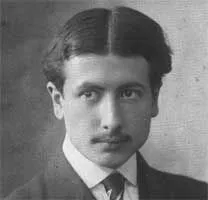
Jacques D'Adelswärd-Fersen
Human Design Chart
Biography
As he was related on his paternal side to Axel von Fersen, a Swedish count who had had a supposed relationship with Marie Antoinette, D'Adelswärd took on the name Fersen later in his life to advertise his link with his distant relative.
Apart from joining the military, he travelled extensively and settled down as a writer. He published Chansons Légères (1900) and Hymnaire d'Adonis (1902) and other poems and novels. In 1902 he holidayed in Venice, where he associated with the novelist Jean Lorrain. On his return to Paris he published his novel, Notre Dame des mers mortes.
In 1903 Adelsward and his friend, Hans de Warren, were rumoured to be holding "entertainments" – tableaux vivants of pupils from the best Parisian schools – in his house at 18 Avenue de Friedland. They were arrested on charges of inciting minors to commit debauchery, and Fersen served a six-month prison sentence plus being fined 50 francs and losing civil rights for five years. The "entertainments" had been attended by the cream of Parisian society, a factor which may have induced the court to drop some charges.
After his marriage plans were foiled, d'Adelswärd-Fersen moved to the island of Capri which had already attracted other homosexual or bisexual visitors, such as Christian Wilhelm Allers, Somerset Maugham. E.
What does Manifesting Generator 2/4 mean for Jacques D'Adelswärd-Fersen?
Manifesting Generator 2/4 — Design at a Glance
Jacques D'Adelswärd-Fersen was characterized by a hybrid energy configuration: He possessed the constant, sacral power of a Manifesting Generator, yet also had the ability to skip steps and achieve results quickly. This combination of a Manifesting Generator meant that he didn't just wait for impulses but could implement them at a speed that often set several projects in motion simultaneously.
His life task was to respond to inner signals before acting. Only when his sacral center gave a clear 'yes' could he effectively use his creative power. If he did not do this, or ignored the confirmation of his inner authority, his initial enthusiasm quickly turned to frustration. Particularly problematic for him was the tendency to move too quickly and overlook necessary intermediate steps. In such cases, he was forced to backtrack and make up for what was missed, which cost him energy.
Despite these challenges, Jacques D'Adelswärd-Fersen found deep satisfaction in creation once he entered a playful mode. For him, it was essential to have variety and not be fixated on a single project. The demand to finish one thing before starting the next was contrary to his nature. Instead, he flourished when he followed several threads simultaneously, as long as he felt the resonance of his sacral center and did not work against his inner rhythm.
Emotional Authority
Jacques D'Adelswärd-Fersen showed a decision-making process that was marked by a strong emotional wave. His inner authority lay in the defined Solar Plexus Center. This configuration meant that his feelings were subject to constant ups and downs. He saw the world colored by his current mood. In one moment, he could be enthusiastic about something, in the next, he would negatively evaluate the same thing. His immediate feeling was only a snapshot, not necessarily the truth. Quick, spontaneous decisions based on emotion often had negative consequences.
The mechanics of his emotional authority required patience. The more time he took to let a decision mature, the deeper and more comprehensive he could see. This meant reconsidering decisions multiple times and 'sleeping on them'. He should hesitate and ask himself multiple times. Over time, the intense feelings subsided. He gained emotional distance, leading to clarity and calmness. This process was crucial for long-term decisions that influenced his life course. Since the Solar Plexus Center was defined, this authority was always in effect, regardless of other defined centers in his chart. Jacques D'Adelswärd-Fersen had to learn to wait for emotional clarity before acting to grasp the true essence of a situation.
The 2/4 Profile — Hermit / Opportunist
Jacques D'Adelswärd-Fersen was characterized by a constant interplay between a deep need for withdrawal and the urge for close connection. His design, marked by Profile 2/4, suggested a fundamental tension: Line 2 demanded solitude and protection, while Line 4 sought community with chosen individuals. This configuration required clear communication of his needs to create a safe environment. During times of withdrawal, he immersed himself in internal processes to gain clarity. Once this inner peace was achieved, he returned from his 'cave' to spend time with his trusted companions.
This dynamic was further colored by specific gates. Gate 55, Line 2, brought a fickle emotional mindset that was often projected outward. Emotional balance depended heavily on the trust of others, which was not always available. Attempts to actively prove trustworthiness often backfired. At the same time, Gate 34, Line 4, contained a transpersonal intuition for the here and now. This power was undeniable and fostered respect in others. Successful action here was based on delicate handling and strengthening trust. Misuse of this power or ignoring individual survival quickly led to mistrust and conflict. Jacques D'Adelswärd-Fersen used the solitude of Line 2 to reflect on the knowledge of his network and develop new impulses, which he then reintroduced into the community.
Split Definition — Defined & Open Centers
Jacques D'Adelswärd-Fersen was characterized by a constant inner dynamism marked by mental intensity and vital endurance. His design featured defined Head and Ajna Centers, generating a persistent pressure towards inspiration and conceptual thinking. This mental flow was not only a source of concern for him but also a trustworthy process that shaped questions and concepts without the immediate need to act on them. The connection of these centers to his defined Throat Center enabled him to articulate his thoughts and theories clearly, thereby inspiring others to reflect.
At the same time, Jacques D'Adelswärd-Fersen had a defined Sacral Center, which provided him with a vast source of generative energy. However, this vital force required a reactive stance; he found satisfaction in responding to inquiries or life circumstances rather than initiating actions himself. His defined Heart Center also endowed him with a natural willpower and the need to maintain control over his resources and promises. He tended to prove his ego and power, which helped him fulfill promises and solidify his value.
In contrast, Jacques D'Adelswärd-Fersen had an open G Center. This meant he did not have a fixed identity or direction in life. Instead, he was susceptible to the influences of his environment and tended to mirror himself in relationships and places to find a sense of belonging and purpose. The typical trap of this open center was constantly searching for a fixed identity or the "right" love, which could lead to confusion if he tried to construct it himself. His strength lay in waiting for external initiation to discover the correct direction and appropriate setting, rather than actively forcing it. Through the combination of mental clarity, sacral energy, and the flexibility of the open G Center, he navigated life by reacting, communicating, and adapting to the right environments.
Channels for emotional openness, intuitive power and community.
Jacques D'Adelswärd-Fersen was characterized by a complex mix of intuitive sharpness and emotional volatility. His design was marked by Channel of Awareness 61-24, generating sudden insights that could not be logically deduced but were revealed as spontaneous knowledge. This mental clarity was linked to Channel of Brainwave 57-20, allowing him to articulate intuitive truths in the present moment, directly stemming from his Spleen Intuition.
His social interaction followed Channel of Openness 22-12, subject to emotional ebbs and flows. Jacques D'Adelswärd-Fersen only appeared charming or open when his mood allowed; he used his voice to emotionally touch others but withdrew during inner unrest. This contrasted with Channel of Charisma 34-20, which endowed him with a powerful, manifesting energy based on sacral reaction. He acted impulsively when properly addressed, often appearing restless as he was always ready to act.
This dynamic was reinforced by Channel of Power 34-57, linking his survival intuition with physical energy. He was vigilant and reacted quickly to threats, which gave him a certain distance from others. At the same time, he sought connection through Channel of Community 37-40, which required fair exchange and emotional affirmation in relationships. He needed time to build trust and integrate into groups.
His emotional life was shaped by Channel of Emotion Release 39-55, using provocation and melancholy as creative forces. Jacques D'Adelswärd-Fersen often provoked to test the true nature of others and explore his own emotional depth. Additional Gates like Gate 59 (genetic strategy of pairing) and Gate 38 (boundaries and integrity) underscored his drive for connection, paired with the necessity to maintain his boundaries. Gate 54 connected his worldly ambition with spiritual goals, while Gate 53 propelled him as a pioneer for new experiences.
Individual Circuitry — Circuit Signature
Jacques D'Adelswärd-Fersen was characterized by a split definition, meaning two parallel, not directly connected energetic systems in his design. One system connected Head and Ajna Centers, the other Throat, Solar Plexus, Heart, Root, Sacral, and Spleen Centers. This separation created internal tensions between divided energy fields.
The Knowledge Circuit shaped his expression. It connected his Head and Ajna Centers (conceptual innovation) as well as a broad network of Throat, Solar Plexus, Root, and Spleen Centers. This enabled the expression of new ideas, driven by emotional waves and individual creativity. Awareness and Mental Flash Channels promoted innovative impulses, while Openness and Emotion Release supported the expression.
The Ego Circuit connected Heart and Solar Plexus Centers. This concerned giving and taking in communities. Without a direct connection to the Sacral Center in this circuit, creating resources and cooperations required necessary pauses to regenerate energy.
The Integration Circuit connected Throat, Sacral, and Spleen Centers. This ensured survival through reacting to life. Charisma and Power Channels channeled power from intuitive knowledge and correct behavior into the immediate present. The Awareness Stream of Emotions in the Solar Plexus Center underscored the individual emotional dynamics. Jacques D'Adelswärd-Fersen thus navigated between divided mental and body-emotional energy fields.
Right Angle Cross of the Sleeping Phoenix 1
Jacques D'Adelswärd-Fersen carried the design of the right cross of the sleeping phoenix. This configuration shaped his essence through a profound, often hidden intuition and a strong connection to collective, archetypal patterns. He possessed a unique ability to sense subconscious currents and collective energies without always actively or loudly carrying them outward. His design promoted a stance of inner observation and waiting rather than aggressive action.
In Human-Design, this cross describes a person who serves as a channel or bridge between the individual and the collective. The energy is subtle and often works in the background, intuitively grasping deeper truths and connections. It is not about creating something new in the external sense, but about perceiving and integrating already existing yet hidden information. Jacques D'Adelswärd-Fersen lived this dynamic by relying on his inner voice and trusting the process. His strength lay in his ability to bring calm and clarity to chaotic situations by recognizing underlying patterns. This required patience and the trust that things would unfold in their own time. His influence was less visible through direct actions, but through the quiet yet effective presence he radiated, which subtly touched and guided others.
Saturn Return · Uranus Opposition — Life Cycles
Jacques D'Adelswärd-Fersen exhibited extreme vulnerability to sudden, disruptive forces that fundamentally shook his inner balance. His design carried a specific weakness in dealing with unexpected, chaotic life upheavals. This configuration created an inner tension that, when confronted with radical changes, often led to an overload of personal resources rather than a stable adaptation.
At the age of 43, in 1923, this critical point was reached: Jacques D'Adelswärd-Fersen died from a cocaine overdose. This event marked the peak of the dynamics described by the Uranus opposition. Uranus stands in Human-Design for the unforeseen, the sudden, and what breaks established structures. An opposition to this planet indicates that external shocks or internal impulses to escape reality were experienced as existential threats rather than integrated. The substance was not understood as a tool but as an attempt to control the uncontrollable chaos, which in his design worked as a fatal maladjustment to his own energy structure. Death was the direct result of this unresolved tension between the need for stability and the violent confrontation with the unforeseen.
Manifesting Generator · Emotional Authority — Synthesis
Jacques D'Adelswärd-Fersen lived a life marked by an inner dynamic between creative energy and emotional depth. As a Manifesting Generator (MG), he had the ability to quickly initiate things, driven by sacral energy, yet always connected to the necessity of letting emotional decisions mature (emotional authority). This interplay was evident in a constant oscillation between the need for spontaneous action and the inner commitment to finding his own emotional truth. His profile as a natural talent and networker points to an inner source of inspiration (defined Head Center) that he could unfold in connection with others, while simultaneously seeking phases of withdrawal and self-discovery.
A central paradox in his design lay in the tension between the drive for quick initiation, typical of the manifestor aspect, and the necessity to respond to sacral impulses, characteristic of generators. The open channel of openness (22/12) intensified this ambivalence by linking emotional expressiveness with a certain reticence. This inner conflict, further amplified by the knowledge circuit and the right cross of the sleeping phoenix 1, led to a life marked by creative peaks and deep emotional processes, culminating in an abrupt end.
7 Defined Channels
Incarnation Cross - Right Angle Cross of the Sleeping Phoenix 1
Solar Return
The Solar Return shows the moment when the sun returns to its exact birth position - your personal solar year.
Life Cycles
Discover the life cycles with a detailed triple view (birth chart, cycle chart, composite).
Human Design Profile
- Strategy
- To respond - wait for something to respond to
- Authority
- Emotional Authority
- Profile
- 2/4 - Hermit / Opportunist
- Definition
- Split Definition
- Incarnation Cross
- Right Angle Cross of the Sleeping Phoenix 1
- Date of Birth
- 20.02.1880 13:30
- Place of Birth
- Paris Arrondissement 8, France
Frequently Asked Questions
What was Jacques D'Adelswärd-Fersen's Human Design type?
What Profile did Jacques D'Adelswärd-Fersen have in his Human Design?
What Authority guided Jacques D'Adelswärd-Fersen's decisions?
What incarnation cross did Jacques D'Adelswärd-Fersen have?
When was Jacques D'Adelswärd-Fersen born?
Discover your own Human Design
Are you also a Manifesting Generator? Find out in a personal reading how to unfold your multi-talents and direct your energy wisely.
More Personalities
Back to overviewAlain-Fournier
Aldair

Alizée

Angeli
Arletty
Artus