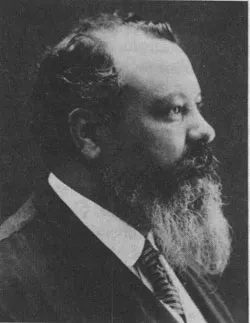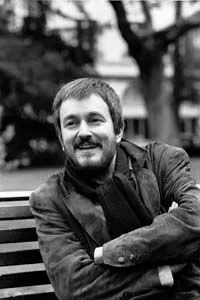
Jean-Jacques Beineix
Human Design Chart
Biography
Beineix was married to Agnès. Together they had a daughter, Frida. He died on 13 January 2022 at the age of 75 in Paris following a long illness.
Human Design Analysis: Jean-Jacques Beineix as Manifestor 6/2
Manifestor 6/2 — Design at a Glance
Jean-Jacques Beineix's Human Design profile established him as a pioneer and visionary who was meant to lead the world in new directions. His character bore the traits of an emperor in ancient Rome: he possessed great vision but did not fight the necessary battles himself; instead, he delegated their execution to others. This role brought with it a central challenge. Because his thoughts often reached further than those around him, he was misunderstood and highly polarizing. Some loved him for his grand dreams and followed him, while others rejected or even hated him precisely because of this superiority.
To minimize this resistance and attract the right followers, it was crucial for Jean-Jacques Beineix to inform others about his intentions in a timely and precise manner. This formed his strategy. When he adhered to this need for communication, he was rewarded with a deep sense of inner peace. If, however, he lived against his design and neglected communication, it led to persistent, deep-seated anger within him. His path therefore lay in reducing polarization through clear information and finding the peace that aligned with his nature as a leader.
Splenic Authority
Jean-Jacques Beineix's design inclined towards extremely high spontaneity; he was someone who made decisions exclusively in the immediate moment. This attitude stemmed from his Spleen Authority, an over-lifespan intelligent alarm system that acted as a fine impulse, signaling immediately whether a situation or environment was healthy. Since both his Emotional Center and Sacral Center were open – a prerequisite for this authority type – his access to inner truth remained purely impulsive and not filtered through emotional waves or sacral energy. The first impulse was the only correct one; it served his immediate well-being and allowed him to rigorously isolate himself from harmful influences. This impulse, however, came only once and was very easy to miss. Therefore, his inner guidance required high vigilance or a targeted retreat from external disturbances in order to follow these fine signals. Long-term commitments did not fit this mechanism, as the inner truth only revealed itself in the moment. Plans were short-term and flexible for him; rigid structures would have hindered his spontaneous adaptability. His design thus promoted a lifestyle with much freedom, where he allowed himself little commitment and instead trusted the immediate resonance of his body to choose what was right.
The 6/2 Profile — Role Model / Hermit
Jean-Jacques Beineix's design is characterized by a clear division of his life path, determined by Profile 6/2. In the first three decades, Line 2 energy dominated, marked by an experimental "trial and error" approach. This phase was characterized by external activity; he sought new beginnings, with failures often leading to necessary retreats to realign impulses. Early success could foster impatience, yet patience remained key for sustainable development.
After the age of thirty, marked by his Saturn return, Line 6 activated. Beineix metaphorically retreated into a "cave on the mountain." This period was not one of passivity but rather intense reflection and healing. He looked back at his earlier experiments with distance to gain deep self-knowledge. This inner work allowed him to deepen his intuitive clarity and inspiration.
Finally, he emerged from this retreat as a wise mentor. Others now sought his advice to learn from his life wisdom and introspective abilities. He shared the patterns he had developed and helped others confirm their value. His path illustrated the transition from a naturally gifted experimenter to an exemplary teacher who gained authority through personal experience and reflection.
Single Definition — Defined & Open Centers
Jean-Jacques Beineix's Human Design shows a stable foundation of defined willpower, existential intuition, and a reliable voice. His energy flows from the Heart Center's will through the spleen center's intuitive perception into the concrete expression form of the throat center. This shaped a presence based on self-determination, keeping promises, and spontaneous, body-based judgments.
The defined heart center gave him the strength to determine his life and consistently fulfill commitments. He tended to clearly express his own value and worked primarily according to inner mechanisms. The defined spleen ensured momentary awareness; he made decisions based on intuitive alarm signals in the present without needing to rationalize them. This connection culminated in the defined throat: His communication was not a product of abstract thoughts but a direct manifestation of his willpower and intuition. He spoke from an 'I want' place, making his statements both authentic and limited.
At the same time, he faced pressure from open centers. The open head and ajna centers exposed him to mental stress and confusion caused by others. He tended to question whether he had the right answers or was inspired, even though these questions did not originate with him. The open G center meant that he did not carry a fixed identity but rather took it from his environment; often searching for the right place to find direction. Additionally, his open solar plexus absorbed foreign emotions, making him vulnerable to emotional waves that he could not recognize as his own. The open root center led to him taking on external stress and possibly trying to escape this pressure through hyperactivity rather than resting in the stability of his defined centers. The challenge was to not use his stable voice as a defense against these uncertainties but to let it anchor him in the moment.
Channels for ego-driven action and instinctive devotion.
Jean-Jacques Beineix's design shows someone who combines material responsibility and instinctive selling. This configuration archetypically marked him as an entrepreneur or capitalist, managing resources and intuitively recognizing what the tribe needed for success.
This attitude came from Channel 21-45, connecting the ego center with the throat center. It united Gate 21, the Hunter, who needs control to calm his heart, with Gate 45, the Gatherer, representing the authoritative voice of the tribe and deciding on resources. This channel suggested that Jean-Jacques Beineix used willpower to survive on a material level, working hard but seeking independence to avoid being controlled. The challenge was to assert his will in such a way that he served others without overloading himself.
Simultaneously, Channel 46-26, linking the spleen center with the ego center, worked through Gate 44, Awareness, giving Jean-Jacques Beineix an instinctive sense of threats and needs before others became consciously aware. In conjunction with Gate 26, the Egotist, he used this intuitive intelligence along with his willpower to sell products or ideologies persuasively. This channel enabled him to act as a promoter at the forefront, skillfully manipulating other egos so they desired what he had to offer.
The synthesis of these two channels created a structure where material control through will (Channel 21-45) merged with instinctive selling ability (Channel 46-26). Jean-Jacques Beineix was designed to master the material plane by using his inner authority to acquire resources and simultaneously applying his sense for how to successfully convey these to the market or community. It was about using his will in service while utilizing intuitive gifts to place ideas effectively.
Tribal Circuitry — Circuit Signature
Jean-Jacques Beineix's design showed a clear focus on cooperation and the joint creation of resources within the context of the 'tribe'. His design directly connected the throat, heart, and spleen centers, creating a dynamic foundation for collaboration. Central was the Marketing Channel (26-44), which gave him the ability to communicate and convey ideas - essential for transporting ideas within a group. Additionally, the Money Line (Channel 21-45) promoted material accumulation of resources. This configuration emphasized a pragmatic dynamics of giving and taking: 'Today I give, tomorrow you give'. It was less about individual ego than mutual support and maintaining shared values. Since Jean-Jacques Beineix had no connection to the sacral center, he lacked the constant, unbounded life force of this center. Regular rest breaks were therefore essential for regenerating energy for the collective. Without these pauses, his ability to generate resources would have been exhausted. His design was thus geared towards supporting the tribe through strategic communication and material care, with recovery being an integral part of this process.
Left Angle Cross of Endeavour 2
Jean-Jacques Beineix's Design established a foundational disposition characterized by persistent and often invisible effort. He was someone whose energy flowed continuously in the pursuit of confirmation or mastery—not as sudden explosions but as consistent application over long periods.
This structure originates from the left cross of Effort 2. In Human Design, this configuration describes an archetypal path where value is not found in immediate results but in the process of enduring itself. The challenge lay in the fact that effort was often not directly visible to others; it frequently occurred behind the scenes, far from public recognition. This required inner discipline because feedback from the environment could be delayed or unclear.
For Jean-Jacques Beineix, this meant that his identity and self-worth were closely tied to this quality of perseverance. It was not a path of easy validation but one that demanded patience and endurance. The mechanics of this cross emphasize that true mastery here is not achieved through quick victories but through the ability to stay engaged even without external validation. His design pointed to his greatest strength lying in this consistent, unflappable intensity, which allowed him to work on projects or life areas with a depth often overlooked by superficial observers.
Saturn Return · Uranus Opposition · Chiron Return · 2nd Saturn Return — Life Cycles
Jean-Jacques Beineix's creative journey followed a clear rhythmic structure marked by three astrological cycles. In 1977, at the age of 31, he completed his first short film "Le chien de Monsieur Michel" and won first prize at the Trouville Festival. This first Saturn return often marks the beginning of a phase of consolidation, where years of groundwork condense into a solid, recognized result – here specifically as a breakthrough in filmmaking.
Ten years later, in 1987, his work gained international resonance: "Betty Blue – 37,2 Degrees at Dawn" was nominated for an Oscar for best foreign language film. The Uranus opposition around the age of 40 typically signifies a period of liberation from old structures and sudden visibility, which in this case was confirmed by global recognition of his style.
Another turning point occurred in 2004 when Beineix debuted with the first volume of the comic "L’Affaire du siècle". The second Saturn return around age 58 often brings a redefinition of one's authority and expansion into new areas. For Jean-Jacques Beineix, this was not only evident in cinema but also through his exploration of the comic medium, highlighting his creative flexibility and adaptability. This sequence illustrated how cyclical phases of structuring (Saturn) and breaking free (Uranus) shaped his artistic output.
Manifestor · Splenic Authority — Synthesis
Jean-Jacques Beineix was a pioneer whose life was marked by a profound drive for manifestation and creation (Manifestor type). This driving force combined with an acute ability to intuitively grasp the needs of his environment (defined Spleen Center), enabling him to listen authentically to his inner authority and act accordingly. The interplay of vision and instinct manifested in his pursuit of creative expression and his capacity to attract material resources through his work – a pattern rooted in the Ego Circuit (Channel 21/45). Repeated successes (recorded events) underscore this dynamic.
A central paradox in Beineix’s design lay in the tension between his need for independent creation and his ability to absorb the energy of others (open Sacral and Solar Plexus Centers). While he was destined as a Manifestor to initiate projects, he also had to learn to protect himself from external influences and maintain his own boundaries. This interaction between active creation and passive absorption shaped his path and challenged him to always find a balance between self-fulfillment and the well-being of the collective.
2 Defined Channels
Incarnation Cross - Left Angle Cross of Endeavour 2
Solar Return
The Solar Return shows the moment when the sun returns to its exact birth position - your personal solar year.
Life Cycles
Discover the life cycles with a detailed triple view (birth chart, cycle chart, composite).
Human Design Profile
- Type
- Manifestor
- Strategy
- To inform others before acting
- Authority
- Splenic Authority
- Profile
- 6/2 - Role Model / Hermit
- Definition
- Single Definition
- Incarnation Cross
- Left Angle Cross of Endeavour 2
- Date of Birth
- 08.10.1946 19:15
- Place of Birth
- Paris, France
Frequently Asked Questions
What is Jean-Jacques Beineix's Human Design type?
What Profile did Jean-Jacques Beineix have in Human Design?
What Authority did Jean-Jacques Beineix have?
What incarnation cross did Jean-Jacques Beineix have?
When was Jean-Jacques Beineix born?
Discover your own Human Design
Are you also a Manifestor? Find out in a personal reading how to use your initiation power peacefully and dissolve resistance.
More Personalities
Back to overviewChristian-Jaque

Kesha

Lucebert

Marilyn

Masaccio

Papus