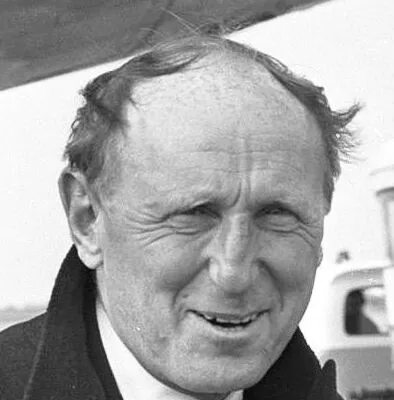
Jules Bianchi
Human Design Chart
Biography
Jules Bianchi — Projector with Profile 4/6
Projector 4/6 — Design at a Glance
Jules Bianchi had a dense, focused aura as a Projector, acting like a bright flashlight. This characteristic allowed him to immediately identify system errors in his environment and guide others. However, since he did not have an undefined Sacral Center, Jules Bianchi did not have constant life energy. Instead, he worked in phases of high intensity followed by necessary rest periods to prevent burnout. His design challenged him not to confront criticism directly but to attract others through his own harmony. When he maintained this inner radiance, people sought him out and asked for his assessment. The strategy was to wait for an honest invitation. This protected Jules Bianchi from bitterness, the typical non-self feeling of a Projector that arises when one intervenes in systems without consent. By paying attention to this dynamic, he could effectively use his unique ability to identify errors and was rewarded for it. His influence was thus not marked by constant presence but by the quality of his targeted, invited interventions.
Self-Projected Authority
Jules Bianchi had the Projector Authority 'Self Authority', a rare configuration that deeply connected his decision-making with his inner identity. This design gave him great openness but also brought the risk of being distracted by external motoric energies. The greatest danger was to sink into this receptivity and constantly seek external energy rather than trusting in inner truth.
His orientation occurred through two paths. First, through spontaneous self-talk or dialogue when invited to do so. Crucial here was listening to one's own speaking and distinguishing whether the true essence spoke or the mind. Spontaneous, unreflected statements revealed his uniqueness and made him recognizable to others. Second, a physical feeling that drew him geographically or thematically in a specific direction. By following this inner attraction, he could become a guide for others. His specific potential for success lay in recognizing and staying true to his own direction rather than being distracted by surrounding energy. This mechanism shaped how he navigated life and expressed his identity.
The 4/6 Profile — Opportunist / Role Model
Jules Bianchi was characterized in his early phase through intense experimentation with relationships and friendships. As Profile 4/6, his design acted similarly to a Profile 3/5 until around age thirty: actively seeking new experiences and testing various social dynamics. This corresponded to Line 6, which still acted impulsively and curiously during this life stage.
Over time, however, the tension field between his emotional need for belonging (Line 4) and the growing urge for reflexive withdrawal (Line 6) deepened. While his heart yearned to be part of a community, his head pulled him back into isolation to contemplate the meaning of life. This internal conflict between heart connection and transpersonal distance significantly shaped his development.
His Line 4 demanded silence and reflection for regeneration but warned against the risk of burnout if this pause was not consciously structured. At the same time, he sought through Line 6 transformative knowledge that should enable a new direction in life. He had to learn to wait for the right moment to avoid emotional injuries from false connections and instead recognize the opportunity for a deep change in his orientation.
Single Definition — Defined & Open Centers
Jules Bianchi revealed himself through a strong inner foundation: His defined throat and his defined G Center created a consistent voice and clear identity. He spoke from his personal direction, allowing him to express his truth with ease and honesty. This configuration conveyed a deep sense of self-love and purpose in life.
In contrast, most other centers were open, making him vulnerable to external influences. His open heart center meant he was not consistently willful; he tended to prove himself through promises to demonstrate his worth rather than trusting his inner authority. The open sacral center led to a lack of constant generative energy; instead, he absorbed and amplified the life force of others, often leading to overexertion and exhaustion as he did not know when enough was enough.
The mental centers – head and Ajna – were also open. Jules Bianchi was receptive to inspirations and concepts from his environment but risked becoming mentally confused or doubtful when trying to solve problems that weren't his own. His open solar plexus absorbed emotional waves, leading him to experience foreign emotions as his own and feel emotionally unstable. The open spleen center made him sensitive to questions of health and well-being, putting him at risk of clinging to unhealthy things for security. Finally, his open root center took on stress from the environment, generating pressure he did not generate himself but only amplified.
The challenge lay in the tension between his stable inner identity (G/Throat) and the fluidity of the open centers. The mechanics showed that preserving his defined voice depended on not being conditioned by the heart's (will-proving), sacral's (energy consumption), or mental centers' (confusion). Instead, he had to trust his inner authority to use absorbed energies and thoughts as information without personalizing them.
Channels for awake awareness and principled action.
Jules Bianchi was someone whose mere presence exerted a quiet but powerful influence on his surroundings. His design laid the groundwork for authenticity signaled not through loud speech but by consistently living out his nature. This stance was not a conscious strategy, but a natural expression of his inner structure.
Central to this was Channel of Awakening 10-20. This pathway between the G Center and Throat Center conveyed the deepest form of self-affirmation: “I am! I live NOW!” Through Gate of Appearance (10) and Gate of Now (20), Jules Bianchi transformed individual knowledge into right action. It was not about intellectual thinking but an underlying behavior that created security in interaction. The mechanics of this channel emphasized self-love and self-confidence as essential survival factors. By simply being who he was, he radiated clarity that inspired others to find themselves too. This presence generated genuine invitations from the outside while protecting him from unnecessary resistance or internalizing criticism.
Alongside this central axis, other energetic streams played a role. Gate 33 promoted reflection and withdrawal to condense experiences. Gate 19 sought security in resources and community, while Gate 24 aimed for inner stillness through mental renewal. Gate 44 brought awareness into relationships. On the design level, Gate 23 with its communication ability, Gate 16 with its experimental spirit, as well as Gate 1 with his unique creativity were added. Gate 15 rounded out the picture by adapting to natural rhythms. Together, these elements formed a personality rooted in the here and now, touching their environment through authentic presence without fighting or proving themselves.
Individual Circuitry — Circuit Signature
Jules Bianchi's design laid a tendency towards acoustic self-affirmation closely linked to his individual identity. This configuration was evident through Channel of Awakening (Gates 10 and 20), which directly connected his Throat Center with the Identity Center.
This channel channels power from the reaction to life – represented by Gate 34, serving as origin in this circuit – through right action (Gate 10) and intuitive knowledge (Gate 57). In Jules Bianchi's case, however, this flow was specifically between Throat and Identity. The energy was used to find a highly individual affirmation in the present moment, the
Right Angle Cross of the Four Ways 2
Jules Bianchi's design carried the signature of the right cross of the four paths. This configuration established an inner dynamics centered around the integration of various routes and perspectives. It was not a linear path but rather a complex web of possibilities that required constant evaluation and synthesis. The mechanics of this cross described a life task where different directions and approaches had to be merged into a coherent whole. Without specific activation through channels or centers, this tendency remained confined to structural potential; it appeared as an abstract assignment without concrete behavioral prediction in detail. Jules Bianchi lived with this architectural foundation that encouraged him to always seek connections between seemingly separate paths. The four paths symbolized not only physical routines but also mental and emotional approaches to the world. His challenge was to order this diversity without falling into contradiction. Thus, the right cross of the four paths shaped his inner experience as a continuous search for balance between diverging forces. It was a static characteristic of his design that accompanied him regardless of external circumstances or specific life events. This structure did not offer an easy solution but rather defined the framework within which Jules Bianchi processed and interpreted his experiences.
Projector · Self-Projected Authority — Synthesis
Jules Bianchi's design reveals a central thread of adaptability and recognition. As a Projector with an open Head and Ajna Center, he perceived the world intensely, filtered information, and recognized patterns – both in people and systems (Channel 10/20). His ability to see the potential and flaws of others was enhanced by his defined G- and Throat Centers, which naturally endowed him with authority when invited to share his insights. Yet this perception required quiet phases as his undefined Sacral Center did not have a constant energy source; a continuous balance between intake and regeneration characterized his path.
A central paradox in Jules Bianchi's chart lies in the tension field between his innate ability for insight and the necessity of waiting for an invitation (Projector type). His open mental center absorbed information unfiltered while his defined G Center provided clear direction. This combination potentially led to internal conflict: the urge to share observations and simultaneously the risk of rejection or misunderstanding through unsolicited advice. The balance between recognizing flaws (Gate 23) and waiting for the right moment for transformation (Gate 16) defined his potential.
1 Defined Channel
Incarnation Cross - Right Angle Cross of the Four Ways 2
Solar Return
The Solar Return shows the moment when the sun returns to its exact birth position - your personal solar year.
Life Cycles
Discover the life cycles with a detailed triple view (birth chart, cycle chart, composite).
Human Design Profile
- Type
- Projector
- Strategy
- Wait for the respectful invitation
- Authority
- Self-Projected Authority
- Profile
- 4/6 - Opportunist / Role Model
- Definition
- Single Definition
- Incarnation Cross
- Right Angle Cross of the Four Ways 2
- Date of Birth
- 03.08.1989 07:10
- Place of Birth
- Nice, France
Frequently Asked Questions
Which Human Design Type was Jules Bianchi?
Which Profile did Jules Bianchi have in Human Design?
What Authority did Jules Bianchi possess?
Which incarnation cross did Jules Bianchi have?
When was Jules Bianchi born?
Discover your own Human Design
Are you also a Projector? Find out in a personal reading how to unfold your leadership qualities and recognize the right invitations.
More Personalities
Back to overviewSissy Spacek

Alain-Fournier

Aldair

Anémone

Ann-Margret

Bourvil