
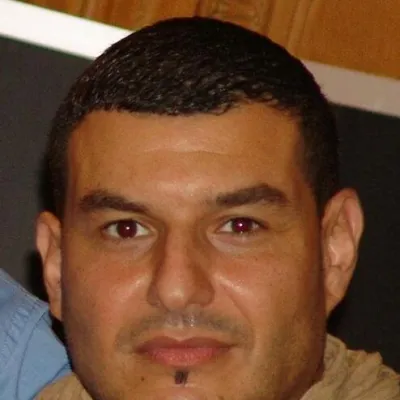
K-mel
Human Design Chart
Biography
He was married to Muriel Hurtis, a French sprinter.
Human Design Analysis: K-mel as Manifesting Generator 2/5
Manifesting Generator 2/5 — Design at a Glance
K-mel's design set a tendency for lightning-fast action combined with the ability to push multiple projects forward simultaneously. As a Manifesting Generator, K-mel had the constant energy of defined Sacral Center, typical for Generators, along with the driving speed of Manifestors. This configuration allowed skipping steps in pushing things forward and changing life circumstances rapidly.
However, this quickness brought specific risks: K-mel tended to skip important stages or take on too many impulses at once. Without the correct strategy - namely waiting until life sets a trigger and then acting only with positive sacral confirmation - this energy could quickly turn into frustration, the central non-self theme of this type.
If K-mel waited for inner consent and regularly checked projects against their lasting joy, potential overburdening transformed into deep satisfaction. In this state, multitasking was no burden but an expression of creative joy. K-mel could then dive into a productive 'play mode', where variety and parallel work were experienced as natural strengths rather than the pressure to finish one thing before starting another.
Emotional Authority
K-mel's design set a tendency for patient hesitation at important crossroads; spontaneous action impulses were systematically delayed. This results from the emotional authority carried by the defined Solar Plexus Center. In Human Design mechanics, this authority always takes precedence over all other defined centers regardless of further configurations in the chart.
K-mel was subject to a natural wave dynamics of feelings, a permanent up and down. Perception of the world was always colored by current mood: A project could appear highly relevant at one moment, worthless the next. Since this first emotional impression only represented a snapshot and did not necessarily reflect deeper truth, quick decisions from challenging situations were often counterproductive.
The strategy consisted in allowing time to pass. K-mel used 'sleeping on dilemmas' to let intense feelings dissipate. Only through this temporal distance did the system gain emotional breathing room. Initial restlessness gave way to calmness, and only then true clarity emerged. This process was particularly crucial for long-term life decisions as it ensured that choices were not made from a passing mood but from stable inner insight. Patience here was no lack but the necessary mechanism for filtering noise and signal.
The 2/5 Profile — Hermit / Heretic
K-mel's design set a tendency towards internal ambivalence: a strong desire to withdraw clashed with the external pressure to be available as a competent problem-solver. This configuration of the Profile 2/5, 'Natural Talent / Hero and Saviour', described a fundamental tension between the need of Line 2 for solitude - the image of a monk in his cave - and the expectations of Line 5 that others saw K-mel as savior or hero. For K-mel it was crucial to actively use this 'alone time' to gain clarity about who and when this heroic role should be taken on. Without conscious selection, there was a risk of forgetting oneself through constant reactivity to other people's problems.
The energy of this design was fueled by confirmation; K-mel showed 'prima donna' qualities, a natural talent often remaining unconscious but gaining power with recognition. This could however lead to unrealistic demands both from outside and inside. Line 5 also brought the ability to adapt in crisis times coupled with a tendency towards overcompensation when inner flow was disturbed. K-mel's task was to channel these extreme stances in crises, show determination without breaking their own boundary of withdrawal. It was about finding what one wanted to stand for so as not to be broken by commitments to others' expectations.
Split Definition — Defined & Open Centers
K-mel's design showed a tendency towards constant inner authority, characterized by defined centers such as the G Center for firm self-love and direction, and the Sacral Center as a source of vital energy. This structure revealed someone who was dependent on reaction rather than initiation: The Sacral responded with 'Yes' or 'No' to signal energy availability, while the defined Throat translated these responses along with impulses from the Solar Plexus and Spleen into communication. The Solar Plexus required waiting for emotional waves for clarity, and the Spleen provided spontaneous, intuitive warnings in the present moment.
In contrast, Head-, Ajna-, Heart- and Root Centers were open. The open Head and Ajna Centers were receptive to inspiration and concepts situationally without a constant mental truth; they tended to be influenced by others' doubts. The open Heart Center lacked a consistent willpower, making K-mel susceptible to the pressure of having to make promises and prove value – a trap of not being oneself. Similarly, the open Root Center absorbed external stress and adrenaline from the environment rather than generating its own physical pressure. This openness did not mean weakness but flexibility: K-mel could take on foreign perspectives without solidifying them as personal truth, so long as the defined inner authorities – Sacral reaction, emotional clarity, and intuitive Spleen warning – remained the compass. The challenge was to avoid falling into conditioned patterns like overpromising or stress absorption, instead trusting reliable, defined energy sources.
Channel 10-34: Exploration — Channels & Gates
K-mel's design inclined towards authentic self-acceptance and intuitive life assurance. This attitude did not manifest as a rigid rule but rather as a dynamic interplay of sacral reaction and momentary perception. Central to this was Gate 10 (Behavior of the Self), which worked in two channels: In the Channel of Exploration 34-10, it connected inner strength from the Sacral Center with the G Center. Here, it was about trusting one's convictions and loving oneself, especially when reacting to external stimuli. This energy was not imposed but acted through the example of authentic behavior that invited others to connect with their individual power.
Parallel to this, Channel 57-10 formed self-love through intuitive clarity. It connected the Spleen with the G Center and enabled letting go of unfounded future fears. Through acute perception of the environment – often via sounds or vibrations – K-mel acted spontaneously and appropriately in the here and now. This created a quality of behavior based on physical well-being and trust in one's survival instinct.
The connection between these two aspects was made through Channel 34-57, which linked the Sacral Center directly to the Spleen, forming the archetype of an individualized human being. The generative life force supported existential intelligence to recognize dangers and react quickly. This was not a mental process but a deep physical connection that kept K-mel independent and vital. Through this configuration, K-mel learned to focus on their own survival and well-being without involving others or prioritizing their needs. The result was a life marked by inner security and spontaneous adaptability, with intuition always at the forefront.
Individual Circuitry — Circuit Signature
K-mel's design inclined towards deep inner centering where self-worth and identity are closely intertwined. This configuration fostered a strengthened personality with strong convictions that were often difficult to communicate externally. The reason lies in the structure: K-mel possessed the Centering Circuit, which directly connected the Sacral to the Identity Center (Channel 10-34). This created a closed loop of life energy and self-image, strengthening individuality – 'I am who I am' – without needing to verbalize this stance through a Throat Center.
Parallel to this, K-mel's Integration Circuit was active. Here, channels connected the Identity with the Spleen Center (Gate 10-57) as well as Sacral and Spleen Centers (Gate 34-57). This connection integrated intuitive wisdom and survival instinct into one's own power, allowing K-mel to draw energy from reacting to life and channel it in the present moment.
A third aspect was the Meaning-Finding Circuit, which at K-mel connected the Solar Plexus with the Throat Center (Channel 35-36). This enabled reflecting on emotional waves from the past and expressing these experiences. Since K-mel's definition was shared, these power fields existed as two independent systems: one side being inner, silent affirmation through identity, heart energy (implicitly in the context of centering) and sacrum; the other side being emotional expression through Solar Plexus and Throat. Both areas were not directly energetically connected but worked as separate parallel forces.
Right Angle Cross of the Vessel of Love 3
K-mel's design indicates a tendency towards deep, often painful experiences of unconditional love and connection as a central life path. The 'vessel' in this configuration symbolizes the capacity to hold such emotional intensity at all.
The right cross of the Love Vessel 3 marks an archetypal path. On it, the soul experiences its true nature through immersion into the dynamics of love and relationship. This involves transformation through surrender. The underlying insight is that love is both source and goal. K-mel thus showed a specific life task: not only to love but also to provide the structure for it and grow in the depth of these connections. The mechanics here do not describe an easy path, but rather an intensive training of the heart where holding feelings takes precedence.
Saturn Return · Uranus Opposition · Chiron Return — Life Cycles
K-mel's design shows a structure that is marked by recurring astrological cycles without specific Human Design mechanisms like Gates or Channels being present. Available data are limited to standard transits: the first Saturn return cycle, the Uranus opposition and the Chiron return. These events mark general life phases in which inner developments can turn outward.
The first Saturn return cycle typically occurs in early adulthood and often signals a phase of consolidation where earlier structures are reviewed and stabilized. The Uranus opposition follows later and usually brings an impulse for change or liberation from established patterns. Finally, the Chiron return marks a fulfillment cycle, during which one's incarnation cross unfolds if lived according to strategy and authority. Here meaning is experienced without it being understood as healing of old wounds.
Since there are no specific HD facts like defined centers or channels present, an individual character trait cannot be derived. Instead, the description remains limited to these general cyclical patterns that can run similarly for many people. K-mel's experience of these phases depends on personal engagement with each life stage without a clear energetic orientation emerging from the design.
Manifesting Generator · Emotional Authority — Synthesis
K-mel's design reveals a central thread of deep individuation, fueled by the combination of a manifesting generator and defined centers for identity and sacral energy. This constellation allows a powerful, spontaneous reaction to life (Sacral), which is underpinned by strong self-awareness (G Center). The connection through the channel of exploration further strengthens this individuation by emphasizing the ability to act authentically and encourage others in their uniqueness – as long as emotional authority cooperates. The open definition of several centers points towards a high sensitivity to external influences, which is always directed back to one's own center by the defined base.
A central paradox lies in the tension between the urge for quick reaction and manifestation (manifesting generator) and the need for emotional clarity (emotional authority). K-mel is designed to respond to impulses but must also wait out the emotional wave to ensure that these reactions are authentic and sustainable. This shift between spontaneity and reflection requires navigating between a desire for variety and avoiding frustration through rash steps.
4 Defined Channels
Incarnation Cross - Right Angle Cross of the Vessel of Love 3
Solar Return
The Solar Return shows the moment when the sun returns to its exact birth position - your personal solar year.
Life Cycles
Discover the life cycles with a detailed triple view (birth chart, cycle chart, composite).
Human Design Profile
- Strategy
- To respond - wait for something to respond to
- Authority
- Emotional Authority
- Profile
- 2/5 - Hermit / Heretic
- Definition
- Split Definition
- Incarnation Cross
- Right Angle Cross of the Vessel of Love 3
- Date of Birth
- 22.09.1972 23:40
- Place of Birth
- Gouvieux, France
Frequently Asked Questions
What is K-mel's Human Design type?
What Profile does K-mel have in Human Design?
What Authority guides K-mel?
Which incarnation cross determines K-mel's life path?
When was K-mel born?
Discover your own Human Design
Are you also a Manifesting Generator? Find out in a personal reading how to unfold your multi-talents and direct your energy wisely.
More Personalities
Back to overviewAaliyah

Aldair

Alexia

Alizée

Angèle

Angeli
