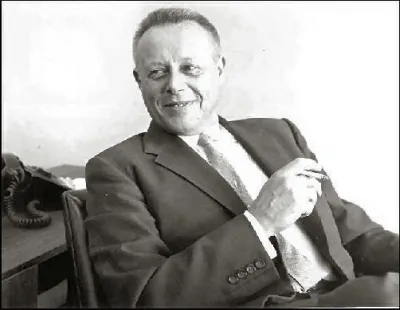
Karel Jan Bossart
Human Design Chart
Biography
The Human Design of Karel Jan Bossart: Generator 1/3
Generator 1/3 — Design at a Glance
Karel Jan Bossart revealed himself as someone with considerable endurance and a deep inner well of strength. His design indicated an excess of sacral energy, making him robust and dependable like a workhorse – provided he used these resources for tasks that appealed to him. The core mechanics of his Generator type lay in not initiating things himself but reacting to impulses from the environment. This strategy of „acting from the gut“ was crucial: When the sacral center signaled a clear „Yes!“, he could respond with action and thus materialize his energy effectively.
If Karel Jan Bossart lived in harmony with this reactive approach, his design rewarded him with a sense of deep fulfillment and satisfaction. Deviations from this path led to two specific pitfalls. If he initiated things against his inner impulse or suppressed his passion for his heart project through external pressure, he quickly fell into frustration and energy depletion. Particularly dangerous was it when he was prevented from pursuing his passion despite still being full of power; such an interruption could lead to burnout despite his high potential. His success thus depended less on sheer will than on whether he learned to perceive the signals of his body and wait before acting.
Emotional Authority
Karel Jan Bossart demonstrated decision-making based on emotional clarity, avoiding immediate reactions. For his design, impulsivity was a trap; he needed time to distinguish between transient mood and deeper truth. This stance arose from his emotional authority, carried by the defined Solar Plexus Center. In Human Design mechanics, anyone with this configuration experienced an ebb and flow of emotions. The world appeared colored by current mood: a moment of excitement could quickly turn into negative perception. His feeling in the moment was merely a snapshot, not final truth. Quick decisions from this emotional heat often had negative consequences. Therefore, his process required patience and conscious „sleeping on“ choices. The more time Karel Jan Bossart took, the deeper he could see. Intense feelings faded over time, creating emotional distance. Only then did clarity and calm set in. This mechanism was particularly relevant for long-term life-changing decisions. Through hesitation and repeated questioning, he filtered transient emotional waves from his true inner truth. Emotional authority always had precedence over other defined centers, making this patient reflection the central strategy of his design.
The 1/3 Profile — Investigator / Martyr
Karel Jan Bossart was someone whose work was based on synthesis between theoretical foundation and practical validation through mistakes. His design inclined him to intellectually penetrate revolutionary principles before applying them in practice. This dynamic stemmed from his Profile 1/3, the Researcher and Experimenter. Here, a drive for complete theoretical certainty met the compulsion for experimental action.
The Sun in Gate 49 urged him to recognize the „Law of Necessity“ – the foundation of every revolution. However, this gate warned against not waiting out emotional waves; otherwise, ghastly results could ensue. Simultaneously, his Profile’s Line 3 demanded a process of trial and error. Karel Jan Bossart had to learn to tolerate criticism and show adaptability, even if it meant renewal at the cost of personal reputation.
His judgment was only trustworthy when both theoretically and practically tested. Like Indiana Jones, he combined scientific mind with adventurous spirit. If he believed something to be right, he had thoroughly examined it beforehand. His value lay in conveying wisdom validated by his own experience, resolving the dilemma between knowing one’s correctness and enduring criticism. Thus emerged a life task: uncovering hidden connections and passing them on after they had passed the harsh test of reality.
Triple Split Definition — Defined & Open Centers
Karel Jan Bossart revealed himself through a nearly completely defined system that created constant inner presence in thinking, expression, and vitality. His design was marked by a permanent mental pressure (defined Head and Ajna centers), driving him to question and understand continuously without providing the direct energy for implementation. This pressure was complemented by his defined Root Center as a persistent physical drive.
The central mechanics of his design lay in the strategy of reacting: His defined Sacral Center had an enormous power source that only became effectively usable when he waited for questions or circumstances to respond with a clear yes or no answer. Initiatives from the mind typically led to frustration and resistance, as sacral energy was not available for mental decisions.
His inner authority was his defined Solar Plexus. This meant Karel Jan Bossart had to patiently wait through the rise and fall of his emotional wave to gain clarity. Immediate decisions in emotional highs or lows were prone to error; only after going through the cycle did the truth of a situation reveal itself. His defined G Center gave him stable identity and direction, while his defined Spleen Center provided intuitive, momentary warning signals.
The sole variable factor was his open Heart Center. Here constant willpower was lacking; instead, he reflected the expectations of his environment. The typical trap of this open center lay in wanting to prove himself through promises or competition to generate value, often leading into a cycle of overextension and self-doubt as the energy for holding such commitments was not present. His strength lay in renouncing this proof compulsion and utilizing his emotional depth and reactive power rather than fighting against inner pressure.
Channels for self-exploration, logical structuring and intuitive synthesis.
Karel Jan Bossart's design was marked by a deep dedication to the emotional resonance within his social environment. The channel of synthesis 19-49 formed the absolute energy focus and propelled a strong need for tribal belonging forward. This connection between Root and Solar Plexus centers generated waves of acceptance or rejection that served to clearly define who belonged to the inner community and who did not. Loyalty and protection of shared resources were crucial factors for his well-being; he sought after a safe harbor where his principles would be respected.
This collective orientation was complemented by the channel of exploration 34-10, which promoted individual self-love and authenticity. As a connection between Sacral and G centers, this channel allowed Karel Jan Bossart to react from his inner truth and encourage others to embrace their own uniqueness. While the synthesis channel sought cohesion, the exploration ensured that these bonds were based on genuine self-acceptance rather than conformity alone.
His thought process was structured by the channel of logic 63-4, connecting Head and Ajna centers, giving him a healthy, skeptical mind that questioned patterns before accepting them. Doubt was not an obstacle for him but an essential tool to verify reality. Additionally, the channel of judgment 18-58, linking Root and Spleen centers, drove an insatiable search for perfection and correction of patterns, granting him the ability to evaluate life and support only what he deemed healthy and functional. The channel of structuring 23-43 rounded off his profile by translating spontaneous insights into clear, innovative expressions that often required time to be understood by others.
Individual Circuitry — Circuit Signature
Karel Jan Bossart's design inclined towards cooperative action and balancing giving and taking. His ego circuit was active, with channel 49-19 (synthesis) connecting the Solar Plexus Center with the Root Center, promoting emotional intelligence in cooperation and the ability to regulate tensions through mutual support. However, lacking a connection to the Sacral Center, constant life force was missing; thus, regular rest periods for regeneration were necessary to provide resources for the tribe.
Additionally, separate energetic streams operated. The knowledge circuit connected via channel 43-23 (structuring) Ajna and Throat centers, enabling logical structuring and articulation of thoughts. Parallel to this, the centering circuit linked via channel 10-34 (exploration) Identity Center with Sacral Center, fostering inner stability and bold self-assertion without direct external communication. The understanding circuit consisted of two isolated parts: Channel 63-4 (logic) connected Head and Ajna centers for strategic planning, while channel 18-58 (judgment) linked Spleen and Root centers to strengthen intuitive security and survival instincts. This triple definition created parallel existing, not directly interconnected power fields.
Right Angle Cross of Explanation 1
Karel Jan Bossart's design carried the signature of the right cross of Explanation 1. This configuration shaped an inner attitude oriented towards clarity and uncovering connections. It was not mere curiosity but a deep impulse to understand things and make these insights accessible. The structure of this cross promoted thinking that ordered complex matters into understandable forms. For Karel Jan Bossart, it meant a natural tendency to reduce confusion and formulate answers that helped others better understand their own situation. His way of being was marked by this drive towards explanation and transparency. He did not seek secrets for their own sake but rather how knowledge could work when clearly presented. This mechanism created a foundation for interactions where understanding took precedence. Karel Jan Bossart lived this orientation by focusing on what truly needed to be said to avoid misunderstandings. His influence lay in shedding light on topics that would otherwise have remained obscure. Through this specific arrangement of energies, his life showed a consistent line towards enlightenment and sharing insights. It was a path defined by the need not only to find truth but also to articulate it so that others could receive it and see its impact.
Saturn Return · Uranus Opposition · Chiron Return · 2nd Saturn Return — Life Cycles
Karel Jan Bossart's life followed the structural turning points of the four classical astrological cycles. These phases marked rhythms of maturation, rebellion, and inner transformation in his design. The first Saturn return challenged him to solidify early life plans and take responsibility for his own structure. It was a phase of consolidation where the foundations of his character crystallized.
The Uranus opposition brought a period of rebellion and breaking free from established patterns. Here, the need for change and individual freedom often came with internal tensions against old bonds or structures that no longer served. This cycle forced adaptation to new life circumstances and fostered the development of an independent perspective.
The Chiron return, as a fulfillment cycle in midlife, allowed Karel Jan Bossart to integrate his deeper existential question. If he had lived according to his strategy, this marked a phase of bloom where his incarnation purpose increasingly unfolded and became experiential. It was not about healing in the medical sense but about completing his personal journey.
The second Saturn return rounded off this process. It stood for final maturation and acceptance of acquired wisdom. In this phase, experiences from previous cycles condensed into a stable, mature life stance. These transitional planetary positions shaped internal structures regardless of his specific Human Design type by continuously presenting new demands to his consciousness.
Generator · Emotional Authority — Synthesis
Karel Jan Bossart lived a life deeply marked by an inner logic and the need for authenticity. His Generator type, combined with emotional authority and a profile as researcher/experimenter, points to a person who drew energy from reactions and through experience reached profound insight. The defined structure of Head, Ajna, Throat, and Root centers underscored a constant mental clarity that allowed him to recognize patterns and express them uniquely – a process that required time and the waiting for emotional waves. The connection of these centers with the Sacral center indicates an impulse to apply this knowledge not only for himself but also for the benefit of others.
A central paradox in Karel Jan Bossart's design lies in the interplay between internal pressure and the need for reaction. His defined Head and Ajna centers generated a constant mental drive, while the Sacral center released energy only through external impulses. This led to a tension between the desire for inspiration and the ability to carry it into the world – a field of tension that forced him to pay attention to timing and share his insights only when circumstances were ripe.
5 Defined Channels
Incarnation Cross - Right Angle Cross of Explanation 1
Solar Return
The Solar Return shows the moment when the sun returns to its exact birth position - your personal solar year.
Life Cycles
Discover the life cycles with a detailed triple view (birth chart, cycle chart, composite).
Human Design Profile
- Type
- Generator
- Strategy
- To respond - wait for something to respond to
- Authority
- Emotional Authority
- Profile
- 1/3 - Investigator / Martyr
- Definition
- Triple Split
- Incarnation Cross
- Right Angle Cross of Explanation 1
- Date of Birth
- 09.02.1904 09:30
- Place of Birth
- Antwerp, Belgium
Frequently Asked Questions
What was the Human Design type of Karel Jan Bossart?
Which Profile did Karel Jan Bossart have?
What Authority guided Karel Jan Bossart?
What incarnation cross did Karel Jan Bossart have?
When was Karel Jan Bossart born?
Discover your own Human Design
Are you also a Generator? Find out in a personal reading how to use your sacral energy correctly and discover deep satisfaction.
More Personalities
Back to overviewAaliyah

Alexia

Angèle

Anne-Marie

Arcángel

Arno