
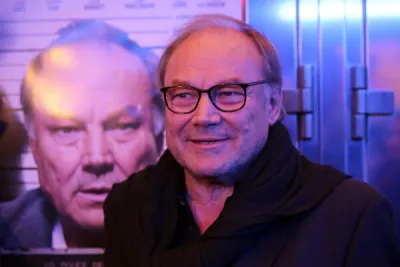
Klaus Maria Brandauer
Human Design Chart
Biography
Brandauer began acting onstage in 1962. After working in national theatre and television, he made his film debut in 1972. His starring and award-winning role in István Szabó's Mephisto (1981), based on the book by Klaus Mann, playing a self-absorbed actor, launched his international career.
Following his role in Mephisto, Brandauer appeared in his first English-speaking role in playing Maximillian Largo in Never Say Never Again (1983), a remake of the 1965 James Bond film Thunderball. Roger Ebert said of his performance: "For one thing, there's more of a human element in the movie, and it comes from Klaus Maria Brandauer, as Largo. Brandauer is a wonderful actor, and he chooses not to play the villain as a cliché. Instead, he brings a certain poignancy and charm to Largo, and since Connery always has been a particularly human James Bond, the emotional stakes are more convincing this time.". He starred in Out of Africa (1985), opposite Meryl Streep and Robert Redford, for which he was nominated for an Oscar and won a Golden Globe, and Szabó's Oberst Redl (1985).
In 1988 he appeared in Hanussen opposite Erland Josephson and Ildikó Bánsági. He co-starred with Connery in The Russia House (1990).
Brandauer directed his first film in 1989, Georg Elser - Einer aus Deutschland, with himself in the title role.
Human Design Analysis: Klaus Maria Brandauer as Manifesting Generator 3/5
Manifesting Generator 3/5 — Design at a Glance
Klaus Maria Brandauer's design points to a tendency towards hybrid energy: He possesses the constant power of a Generator but also has the ability to skip steps and quickly pull things into his life. This configuration describes an Manifesting Generator – a connection from Motor Centers to Throat Center, combining initiation speed with sacral endurance.
For Klaus Maria Brandauer, this did not mean pure reaction like in classic Generators, but rather a dynamic pattern: He could pursue multiple projects simultaneously and fall into a “play mode” when his inner authority agreed. The challenge lay in the speed; without confirmation from the sacral center, skipped steps and frustration were likely. However, with clear approval, he drew deep satisfaction from his work. Parallelism was not an obstacle but a source of power for him as long as he did not work against his inner impulse. His design thus showed someone who acted through quick, impulsive actions – always dependent on whether the sacral center confirmed the direction or if he had to backtrack to make up for missed steps.
Emotional Authority
Klaus Maria Brandauer's design points towards a tendency of emotional depth and necessary delay in decision-making. His inner authority is Emotional Authority, carried by his defined Emotional Center. In Human Design mechanics: Whenever the Emotional Center is activated, it takes over as the inner authority regardless of other defined centers. This means for Klaus Maria Brandauer submission to an emotional wave that shows in a permanent up-and-down of his feelings. He saw the world colored through his current mood; one moment totally excited, the next moment the same thing negatively evaluated. His feeling at the moment was however only a snapshot, a first impression which did not necessarily represent his truth yet. Therefore, quick spontaneous decisions based on emotion could have very negative effects. The more time he took to let a decision mature, the deeper and more comprehensive he could understand something. This required patience and multiple reconsiderations of a choice. He should take pride in this process and ask himself several times. Over time, intense feelings subsided, he gained emotional distance, clarity as well as calmness set in. Only then had he gone through the process. This mechanism is primarily relevant for long-term decisions that have a significant impact on his life path.
The 3/5 Profile — Martyr / Heretic
Klaus Maria Brandauer's design points towards appearing as someone who gathers knowledge through personal experimentation and failure to offer it later as solutions to others. The Profile 3/5 describes this journey: Line 3 of the Experiencer learns through trial and error; one initially believes nothing until experiencing it oneself. This often leads to an “I-Inflation” when the chosen strategy immediately works for others and receives recognition. This modesty destroys itself in moments of confirmation.
Line 5 of the Hero and Saviour projects these accumulated experiences outward. Others see Klaus Maria Brandauer as someone who can heal or save because he has already made the mistakes. But this role is double-edged: It flatters the ego but becomes painful if the experiment fails in public. Line 5 also demands a withdrawal for inner healing to not be dependent on conditioning by others. Only through self-perception does true healing arise from essence, rather than just fulfilling the need to be rescued or admired by others. Thus, the practical experience of the Experiencer connects with the projected authority of the Hero – a path built on recognition but finds its deep meaning in failure and withdrawal.
Triple Split Definition — Defined & Open Centers
Klaus Maria Brandauer's Human Design profile indicated a tendency towards consistent self-expression supported by defined Throat, G, and Heart Centers. His voice was reliable and came from a firm identity and willpower. This mechanism means: The Throat transmutes inner impulses into speech; the G Center provides direction and self-love; the Heart delivers energy for promises and action.
At the same time, he had defined Sacral, Solar Plexus, Spleen, and Root Centers. His Sacral Center generated vital energy waiting to be acted upon – not initiated. The Solar Plexus required patience before making decisions in response to emotional waves. The Spleen offered spontaneous intuition; the Root provided constant pressure for survival and progress.
Open Head and Ajna Centers showed a different dynamic: There was no consistent mental processing here. Instead, he tended to absorb inspiring or confusing thoughts from his environment without identifying them as personal truth. Typical non-self patterns could be like: “I must find the answer,” “What should I think?” These internal questions were not personal tasks but reflections of external influences. The challenge lay in not falling into mental monologues but trusting inner authority – here emotional clarity and intuitive certainty.
Overall, his design was marked by stable energy sources (Sacral, Heart), clear communication (Throat), and deep emotional as well as existential awareness (Solar Plexus, Spleen). Open mental centers required an attitude of openness towards ideas without binding to them. Klaus Maria Brandauer thus appeared as someone who spoke and acted from inner firmness while remaining mentally flexible – ready to embrace new perspectives without being overwhelmed by them.
Channels for leadership, awareness, synthesis, love and preservation.
Klaus Maria Brandauer's Human Design profile indicated a tendency towards logical, collective leadership. The Alpha Channel 7-31 connects the G Center with the Throat Center through the role of self and leading. This shapes a form of leadership based on tested patterns that must gain trust before becoming effective. Brandauer appeared as someone who did not exercise absolute authority but guided from an influential position – like an alpha in a pack, seeking its own influence area. His leadership competence requires perfection and recognition by the majority; he represents society as long as it chooses him.
This collective orientation is complemented by the Initiation Channel 51-25 connecting Heart Centers. Here, competitive shock energy meets universal love of Higher Self. Brandauer had the ability to contribute to individualization through initiation – a process leading from “we are” to “I am.” He could provide the necessary impulse to encourage others to cross their limits and reach new levels of consciousness, provided he was invited. Without invitation, this channel remains unsatisfied; with it, it becomes an art of transformation.
Additionally, the Synthesis Channel 19-49 between Root and Solar Plexus Centers worked. This tribal channel is based on emotional sensitivity for needs and principles. Brandauer was sensitive to his position in the whole, driven by a desire to be needed and show loyalty. The emotional frequency of this channel determines who belongs to the tribe; it seeks balance between feasibility and fairness to strengthen cohesion through traditions and rituals.
The Awakening Channel 10-20 also connected G with Throat Center, this time via Appearance and Now. This expresses wisdom in accepting oneself in every moment. Brandauer inspired others simply by being himself – a clarity that avoids resistance and elicits genuine invitations. His survival and self-reinforcement resulted from acting as a living expression of awakened self-love.
The Preservation Channel 27-50 connected Sacral with Spleen Centers through care and values. Brandauer automatically attracted trust; people looked to him for support. As a natural caregiver, he took responsibility for the tribe – whether defending laws or caring for the weak. Yet only through sacral reaction did he know if his energy was available; “enlightened self-interest” ensured that he first cared correctly for himself to nourish others.
Individual Gates rounded out the picture: Gate 15 (collective behavior) established flow in societies by adapting to natural rhythms. Gate 46 (devotion) promoted full participation in the process, with the body as a temple being tended. Gate 13 (continuity) collected experiences for collective memory. Gate 55 (emotional awareness) brought extreme mood swings while Gate 56 (narration) depicted mental processes figuratively. Gate 45 (tribal level) gathered energy and expressed willpower. Gate 22 (openness) allowed individual mutation through calm listening. Gate 53 (freedom) enabled him to pioneer new paths. Gate 16 (collective gate) promoted mastery through experimentation.
Individual Circuitry — Circuit Signature
Klaus Maria Brandauer's Human Design profile indicated a tendency towards solidified individuality paired with a strong need for inner confirmation. The Centering Circuit connected his Identity and Heart Centers via the Initiation Channel, creating pulsating self-worth energy that marked him as a courageous loner; firm convictions were present but often hard to verbalize without Throat Center connection.
Parallel to this was a focus on strategic clarity. The Understanding Circuit connected his Throat with the Identity Center via Alpha Channel. This was about sharing logical insights free of emotional coloring, creating structures for the future. This rational component stood alongside individual firmness as separate power.
A third aspect was the emotional reaction to life. The Ego Circuit connected Solar Plexus and Root Centers through Synthesis Channel. This generated a wave-like emotional dynamic requiring pauses, as no direct life force flowed from Sacral Center. It was timeless energy of support and giving and taking.
Furthermore, survival themes were present: The Archer Circuit connected Sacral and Spleen Centers via Preservation Channel. This gave him primal instincts for protection and preservation of his genetics, coupled with constant life force. Finally, the Integration Channel (Awakening) reconnected Throat and Identity Centers to channel power from reactions in Now. These three separate definitions – individually, emotionally, and instinctively – existed parallel without directly flowing into each other.
Right Angle Cross of the Vessel of Love 2
Klaus Maria Brandauer's Human Design profile indicated a tendency towards deep, often unspoken dedication. He viewed relationships not superficially or transactionally but as the central place of his existence and emotional exchange. This attitude stemmed from a specific energetic configuration in Human Design: the so-called 'right cross of the vessel of love'.
This structure does not describe general romance but rather a very concrete form of connection. It implies a strong need for mutual nourishment and validation through another person. For Klaus Maria Brandauer, this meant that his emotional stability and self-worth were closely tied to the quality of his interpersonal bonds. He did not simply seek company but resonance that affirmed him and gave him the feeling of being seen and valued.
The 'vessel' here refers to the ability to take in feelings, process them, and pass them on. It is not a passive container but an active process of emotional digestion. The 'cross' points towards a specific orientation – in this case, to the right, which often correlates with an open, radiating form of love that is ready to open up and give for another.
For Klaus Maria Brandauer, this dynamic was defining. He appeared as someone whose inner world was strongly shaped by interaction with partners or close confidants. His energy flowed strongest where he felt a genuine, mutual connection. Without this validation, there could be internal emptiness or insecurity. With it, however, he found his strength and affirmation. It was less about control than trust in the shared emotional foundation. This configuration challenged him to be authentic to find true resonance rather than conforming.
Saturn Return · Uranus Opposition · Chiron Return · 2nd Saturn Return — Life Cycles
Klaus Maria Brandauer's Human Design profile indicated a tendency towards profound structural shifts that often became visible through concrete career milestones. In 1971, at age 28, he directed the original radio play 'Ein Schiff fährt nach Venia' for ORF Burgenland. This fell exactly into his first Saturn Return, a cycle in Human Design marking the condensation of years of groundwork into sustainable results and often cementing initial professional anchoring.
Ten years later, in 1981 at age 38, he received his lead role as well as an award for István Szabó's 'Mephisto'. This success corresponded with the Uranus Opposition, a phase of strong energetic upheavals and sudden openings. While Saturn represents stability, the Uranus phase often brings unexpected, groundbreaking opportunities that can radically change one's life path. Brandauer's design showed a clear sequence: first, the Saturn cycle laid the foundation before the later Uranus energy enabled expansive public recognition. This progression underscores how his inner mechanics responded to external events – not as random chains but as an expression of his specific energetic rhythm between structuring and sudden liberation.
Manifesting Generator · Emotional Authority — Synthesis
A central red thread runs through the chart: the dynamic connection between internal perception and external expression. The defined Sacral Center (Centers) provides a constant energy source, which however undergoes a process of maturation under emotional authority – waiting for clear feelings beyond initial impressions. This inner processing is then transformed into communicable, transformative energy by the defined Throat Center (Channels/Gates), often with a logical and forward-looking leadership component (Circuit). The profile as an Explorer/Hero (Profile Role) reinforces this cycle: experiences are collected, tested, and ultimately used to inspire and guide others.
The chart reveals a central paradox between the impulse for quick action and the need for emotional clarity. As a Manifesting Generator (Design View), there is a tendency to skip steps and quickly bring things into life, yet the emotional center demands patience and thorough engagement with one's feelings. This tension between the desire for initiation and the inner wave requires navigating between speed and maturity – an ongoing balance of action and observation to communicate authentically and powerfully (Cross).
5 Defined Channels
Incarnation Cross - Right Angle Cross of the Vessel of Love 2
Solar Return
The Solar Return shows the moment when the sun returns to its exact birth position - your personal solar year.
Life Cycles
Discover the life cycles with a detailed triple view (birth chart, cycle chart, composite).
Human Design Profile
- Strategy
- To respond - wait for something to respond to
- Authority
- Emotional Authority
- Profile
- 3/5 - Martyr / Heretic
- Definition
- Triple Split
- Incarnation Cross
- Right Angle Cross of the Vessel of Love 2
- Date of Birth
- 22.06.1943 20:45
- Place of Birth
- Bad Aussee, Australia
Frequently Asked Questions
What is Klaus Maria Brandauer's Human Design type?
What profile does Klaus Maria Brandauer have?
What authority does Klaus Maria Brandauer have?
Which incarnation cross is active for Klaus Maria Brandauer?
When was Klaus Maria Brandauer born?
Discover your own Human Design
Are you also a Manifesting Generator? Find out in a personal reading how to unfold your multi-talents and direct your energy wisely.
More Personalities
Back to overviewSissy Spacek

Aldair

Alizée
Anémone

Angeli
Ann-Margret
