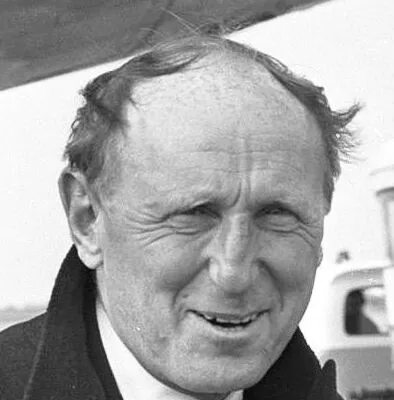
Paul (1963) Belmondo
Human Design Chart
Biography
Through 1987 he participated in Formula 3 and Formula 3000, although he was never a top 10 championship finisher in either. In 1992 he joined the March F1 team as a pay driver, getting a ninth place at the Hungarian Grand Prix, but only qualifying 4 more times before he ran out of money and was replaced by Emanuele Naspetti. Two years later he became a member of the uncompetitive Pacific Grand Prix team, where he only qualified for two races and was usually behind team-mate Bertrand Gachot. Thereafter he concentrated on GT racing, at the wheel of a Chrysler Viper GTS-R. He started his own team, Paul Belmondo Racing which raced in the FIA GT Championship and Le Mans Endurance Series championship before folding in 2007.
Married to Luana Tenca, Italian former model, chef, and TV presenter, in 1990. They have 3 sons.
What does Projector 1/3 mean for Paul (1963) Belmondo?
Projector 1/3 — Design at a Glance
Paul (1963) Belmondos design points to a tendency towards focused perception that immediately recognizes systemic errors. His aura acted like a bright flashlight, directing light onto areas in the environment where processes were hidden or not functioning properly. However, this ability to identify faults instantly brought a central conflict: Directly addressing these deficits often provoked resistance or even hostility from others, akin to shining bright light directly into someone else's face.
Paul (1963) Belmondo's optimal strategy therefore did not lie in active correction but rather in radiating his own harmony. By embodying functioning patterns himself, he was automatically drawn to others who then sought his advice and invited him to illuminate their paths. Waiting for an honest, appreciative invitation served as a crucial protective mechanism against overextension and the development of bitterness.
Since his Sacral Center is undefined, Paul (1963) Belmondo lacks a constant internal source of life energy. He experiences phases of high activity followed by mandatory rest periods for regeneration. A life without these pauses leads to burnout as modern systems often do not accommodate this rhythmic need. Living according to this design rewarded him with success; ignoring the invitation and rest strategy led sooner or later to his non-self theme of bitterness.
Emotional Authority
Paul (1963) Belmondos design points towards a cyclical emotional distancing tendency. He showed himself as someone who did not immediately act on spontaneous impulses but waited until the internal wave had smoothed out. This resulted from his emotional authority: The defined Solar Plexus Center carried this inner guidance. In Human Design, this authority always takes precedence over other defined centers regardless of further configurations.
The mechanics describe a permanent emotional wave with ups and downs. These mood changes color perception; what is exciting in one moment can seem negative the next. A felt impulse is only a snapshot, not an ultimate truth. Quick decisions based on these fleeting emotions could prove misleading.
His strategy was to allow time. Paul (1963) Belmondo needed patience and multiple nights of reflection for important questions. Through this waiting period, intense feelings subsided, creating emotional distance. Only then did clarity and calm set in. This process filtered out the transient mood and revealed a deeper, comprehensive insight. It was especially relevant for long-term decisions that could significantly influence his life path. The necessity of this temporal distancing served to filter out mood swings before making final choices.
The 1/3 Profile — Investigator / Martyr
Paul (1963) Belmondos design points towards a cyclical life path that combines theoretical foundation building with practical validation. As a researcher and experimenter, he showed himself as someone who not only accumulates knowledge but tests it through direct experience. His judgment was trusted because it relied on a synthesis of careful preparation and bold experimentation; something was truly understood for him only after being intellectually grasped and practically tested in everyday life.
This dynamic results from Profile 1/3. Line 1, influenced by Gate 27, emphasizes the need for a stable base and self-sufficiency. Here lies the inner drive to care for oneself and create a solid foundation, with envy often signaling necessary improvements in this independence. Simultaneously, Line 3, represented by Gate 41, demands learning through trial and error. This process was characterized individually by material discipline and the urge to collect experiences within the collective. The internal conflict between fear of lacking knowledge (Line 1) and the impulse to act despite ignorance (Line 3) shaped his development. Only through this double testing – theoretically as well as practically – could Paul (1963) Belmondo reach secure insights that he then shared with others.
Split Definition — Defined & Open Centers
Paul (1963) Belmondo's design indicated a tendency towards permanent internal activation driven by defined Head, Ajna, and Solar Plexus centers. This created constant mental pressure as well as emotional waves as driving forces. However, the open G center lacked a firm identity, the open Heart center lacked willpower, the open Sacral center lacked generative energy, and the open Spleen center lacked spontaneous intuition.
This configuration meant: Paul (1963) Belmondo found himself in a tension field between internal drive and situational dependency on his environment. The defined Head and Ajna centers created constant pressure to question and form concepts without possessing the energy for direct implementation. The Solar Plexus center as inner authority required waiting for emotional clarity before making decisions.
At the same time, Paul (1963) Belmondo was vulnerable to conditioning through his open centers. His open G center sought identity and direction from the environment, often asking where love or the right path might be. The open Heart center lacked consistent willpower; he tended to make promises to prove value, which often led to failure. The open Sacral center had no constant energy flow; he risked exhaustion by taking on others' energy and did not always know when enough was enough. The open Spleen center lacked spontaneous intuition for health and values; he tended to project fears or cling to unhealthy situations for security.
The challenge lay in using the mental pressure and emotional wave without falling into the traps of his open centers: seeking identity rather than taking it from outside, avoiding promises instead of simulating willpower, conserving energy instead of overloading it, and acknowledging fears instead of reacting spontaneously. Through strategy and inner authority, Paul (1963) Belmondo could integrate these dynamics by waiting for initiation through the environment and respecting his own processes.
Channels for acceptance, logical doubt and mystical synthesis.
Paul (1963) Belmondo's design was characterized by a mind that constantly filtered patterns and sought verifiable evidence. This attitude stemmed from Channel of Logic 63-4, connecting Head and Ajna centers. Here, Gate 63 (Doubt) and Gate 4 (Formulating) worked together: skepticism was not an obstacle but essential for understanding. An answer only mattered if it functioned practically; unfounded belief found no place here. This pressure served the collective through well-considered predictions based on current data rather than personal life guidance.
In contrast, Channel of Accepting 17-62 organized mental information. Through Gate 17 (Opinions) and Gate 62 (Details), he translated visual patterns into language to integrate them into an existing worldview. What could not be logically categorized was not understood. This channel promoted the ability to structure complex details while the design channel provided a critical filter.
Additionally, gates like 27 (Care) and 28 (Risks in Here and Now) connected genetic roles of survival with momentary decision-making abilities. Gate 41 drove evolutionary development through specific experiences, while Gate 31 represented power transmission within the collective. Further influences came from gates such as 23 (Communication), 33 (Reflection), and 56 (Narration), abstracting mental processes or translating them into stories. Gate 60 stood for accepting limitations as a path to transcendence, while Gate 64 sought clarity through past experiences. Gate 61 challenged the fight for inner truth and silence. This constellation created a mind navigating between skeptical verification (design) and structured organization (personality), always validating patterns or precisely fitting details.
Collective Circuitry — Circuit Signature
Paul (1963) Belmondo showed a clear distinction between rational analysis and emotional resource management. His design contained two separate, unconnected circuits: the Understanding Circuit and the Ego Circuit. This resulted in strong expression in both areas through Split Definition but no integrated overall strategy, only coexisting forces.
The Understanding Circuit connected his Head, Ajna, and Throat centers. Through Channel of Logic (63-4) and Channel of Accepting (17-62), an 'emotionless ratio' operated. This energy focused on logical structure, visual future visions, and sharing rational insights free from conditioned emotions. As Ajna lay in the Awareness Stream, this analytical perspective was a central aspect of his perception.
Completely separate from that, the Ego Circuit acted, connecting Solar Plexus and Root centers. Channel of Synthesis (49-19) here steered cooperation within the clan. It involved creating shared resources, traditional give-and-take, and material well-being. Since this circuit had no connection to the Sacral center, regular rest periods were necessary to regenerate energy for the clan.
The tension lay in the discrepancy between the future-oriented, quick logic of one pole and the conservative, rhythm-based resource management of the other. Paul (1963) Belmondo navigated these separate worlds not as a unit but as two distinct operational modes: once seeing clearly and structuring tomorrow while managing today's material foundations for the collective with patience.
Right Angle Cross of the Unexpected 1
Paul (1963) Belmondo's design carries the structural signature of the Right Cross of the Unexpected 1. This configuration marks a specific architectural element in Human Design, which exists without further descriptive attributes or behavior-related implications. Since the underlying raw content does not provide an informative description and no substantiated event is given, no derived characteristic or specific behavioral pattern can be inferred from this position. The mention of the cross serves solely as a reference to the presence of this structural element in the chart. It represents a neutral statement about the constellation without allowing conclusions to be drawn about Paul (1963) Belmondo's personality, life path, or action patterns. In this case, the mechanics are limited to the mere existence of this structure, which does not manifest or act in any specific way. This underscores the necessity to adhere strictly to the provided facts and refrain from adding interpretations that are not explicitly anchored in the material. The Right Cross of the Unexpected 1 thus stands as an isolated fact, hinting at the complexity of the design but revealing no deeper meaning without further data.
Saturn Return · Uranus Opposition · Chiron Return · 2nd Saturn Return — Life Cycles
Paul (1963) Belmondo demonstrated a clear tendency towards identity consolidation and assuming concrete responsibility during his first Saturn return phase. This mechanism marks the transition from experimental youth to a stable, self-determined life structure in which inner values are turned outward.
In 1990, at age 27, Paul (1963) Belmondo married Luana Tenca. This decision exemplifies the dynamics of this period: The Saturn influence field demands anchoring and creates conditions where one's essence is defined through binding structures. The marriage here was not a mere biographical coincidence but an expression of an inner maturation process, in which the search for stability led to active shaping of partnership.
The first Saturn return often acts as a test stone for previous development. It forces confrontation with one's seriousness and long-term goals. For Paul (1963) Belmondo, this meant that the abstract designs of his youth were now translated into tangible reality. The connection to Luana Tenca served as both a mirror and foundation to strengthen this newly gained stability. This phase laid the groundwork for a life path where responsibility was not seen as a burden but as an expression of self-determination.
Projector · Emotional Authority — Synthesis
Paul Belmondo seems to have been marked throughout his life by a deep tension between the need to understand and communicate (Channel 63-4, 17-62) and the ability to mobilize resources and build relationships (Channel 49-19). This combination of mental sharpness and the drive to create connections points towards a researcher (Profile 1/3), constantly seeking new insights and wanting to share them with others – as long as circumstances allow. The undefined Root and Sacral Centers imply sensitivity to other people's energy and a need to protect oneself from overstimulation, which is reinforced by the emotional center that requires time to gain clarity.
A central paradox lies in the discrepancy between the desire for logical analysis (Mind Circuit) and the emotional response to the world. While Belmondo tends to recognize patterns and filter information, he is simultaneously compelled by his emotional authority to let decisions mature over a longer period. This tension between quick thinking and slow decision-making could have been a defining characteristic of his life, leading him both to profound insights and inner conflict.
3 Defined Channels
Incarnation Cross - Right Angle Cross of the Unexpected 1
Solar Return
The Solar Return shows the moment when the sun returns to its exact birth position - your personal solar year.
Life Cycles
Discover the life cycles with a detailed triple view (birth chart, cycle chart, composite).
Human Design Profile
- Type
- Projector
- Strategy
- Wait for the respectful invitation
- Authority
- Emotional Authority
- Profile
- 1/3 - Investigator / Martyr
- Definition
- Split Definition
- Incarnation Cross
- Right Angle Cross of the Unexpected 1
- Date of Birth
- 23.04.1963 04:00
- Place of Birth
- Boulogne Billancourt, France
Frequently Asked Questions
What is Paul Belmondo's Human Design type?
Which profile does Paul Belmondo have?
What authority guides Paul Belmondo?
Which incarnation cross determines Paul Belmondo's life purpose?
When was Paul (1963) Belmondo born?
Discover your own Human Design
Are you also a Projector? Find out in a personal reading how to unfold your leadership qualities and recognize the right invitations.
More Personalities
Back to overviewSissy Spacek

Alain-Fournier

Aldair

Anémone

Ann-Margret

Bourvil