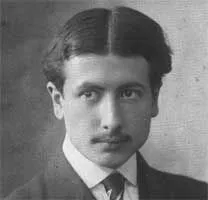
Photo: Wikimedia Commons
Paul-Emile Victor
Human Design Chart
Biography
From the time he was a youngster, Victor was fascinated by adventure novels, ethnographic magazines and demonstrated a certain talent for drawing. In 1928 he became an engineer and after his military service in 1931 he got his pilot’s license. In 1934 he set foot in Greenland for his first polar expedition. In 1936 he crossed Greenland from west to east on foot and sledge and spent fourteen months with an Inuit family.
During WWII Victor enlisted in the United States Army, 1940-44, and accomplished missions in the northern territories as instructor, pilot and paratrooper. On 28 February 1947 he was commissioned by the government to organize the French polar expeditions. From 1947 to 1974 he led seventeen expeditions in Terre-Adélie and Groenland.
From 1962, along with Alain Bombard, Jacques-Yves Cousteau, Maurice Herzog and Haroun Tazieff he became involved in environmental issues. In 1976 he resigned as head of the French polar expeditions and one year later left with his family to live in Bora-Bora, French Polynesia.
He is the author of scientific documents and adventure novels, including "My Eskimo Life," 1938,"The Milky Way," 1961 "The Great Hunger," 1955 and "Nanouk, The Eskimo," 1979.
Victor made a second marriage 1 March 1965. He died on 7 March 1995 in Motu Tane, on the island of Bora-Bora, in French Polynesia (and not the 8th as given in some reports).
Paul-Emile Victor — Manifestor with Profile 3/5
Manifestor 3/5 — Design at a Glance
Paul-Emile Victor was a Manifestor, a type designed to be a pioneer and visionary. His design saw him as someone who should lead the world into a new future, similar to an emperor in ancient Rome who had the vision of a great empire but did not wage the necessary wars himself but sent others to do so. This configuration brought a specific dynamic with it: He was often misunderstood because he thought further ahead than others, which led to polarization. While some loved and followed him because of his big dreams, others disliked or even hated him for the same reason.
To find the right followers, it was crucial for him to inform others in a timely and precise manner about his visions. This was his strategy. If he followed this strategy and his inner authority, he was rewarded with a feeling of inner peace. Living against his design, he instead felt a persistent, deep anger. His character was thus marked by this tension between the urge to lead and the necessity to inform. He was dependent on clearly communicating his intentions to minimize resistance and pave his way. Without this information, frustration arose, while clear communication led to inner calm. His design challenged him not only to act but also to explain why he acted to gain the necessary support and avoid conflicts.
Emotional Authority
Paul-Emile Victor showed himself to be someone who did not make decisions in the first impulse but needed conscious time to gain clarity. His design was marked by Emotional Authority, located in the defined Emotional Center. This center was subject to a permanent wave of emotional ups and downs. His perception of the world was always colored by his current mood; what appeared inspiring in one moment could be perceived negatively in the next. This first emotional impression was, however, not the final truth but only a snapshot. Spontaneous decisions that directly stemmed from this fleeting emotion often proved problematic. Instead, it was essential for Paul-Emile Victor to let decisions mature. This required patience and the conscious overnighting of important questions. Through this time shift, the intense emotional fluctuations subsided, allowing him to gain emotional distance. Only then did the necessary calmness and deep insight set in. This process was particularly crucial for long-term, life-defining decisions. Emotional Authority always took precedence over other defined centers, regardless of further configurations in his chart. Paul-Emile Victor therefore had to take his time and ask multiple times before acting to ensure that his choice was based on clear insight and not on transient excitement.
The 3/5 Profile — Martyr / Heretic
Paul-Emile Victor showed himself to be someone who learned through personal experimentation and later provided this knowledge to others. His Human Design Profile 3/5, that of the experimenter and hero, established this tendency. Line 3, represented by Gate 52, described a learning process through trial and error. Victor had to experience things himself to understand them; external constraints or inactivity promoted his concentration. This phase of collecting practical experiences laid the foundation for his later role.
Line 5, embodied by Gate 17, emphasized the importance of hierarchies and mutual dependence. Victor was attractive to others because he had learned from his own mistakes and successes. He solved other people's problems with this self-learned knowledge. This heroic role flattered him but could also be painful if experiments failed in front of others. His design demanded an acknowledgment of each individual's place in the whole to create order and harmony. Refusing to accept this position led to tensions. Victor lived this dynamic: first the intensive, often chaotic learning through personal experience, then the synthesis and passing on of this knowledge to society. His authority did not stem from theoretical knowledge but from lived practice and the ability to learn from setbacks. This shaped his interaction with others and his role in the community.
Split Definition — Defined & Open Centers
Paul-Emile Victor revealed himself as someone whose inner compass was guided by a constant emotional wave. His defined Solar Plexus Center made patience the central life task: Decisions matured only after the emotional turbulence had subsided. This depth allowed him to grasp connections not just superficially, but in their full breadth.
His thinking was equally structured and independent. The defined Ajna Center provided a reliable conceptual basis, which he translated directly into the world through his defined Throat Center. He spoke what he thought, and understood how his mental concepts manifested through communication. Supported by his defined Spleen Center, he had a fine sense of the „now“ – a spontaneous intuition for health and well-being that helped him act in the moment without over-rationalizing. The constant, but orderly pressure of his defined Root Center ensured that these energies were always present to move forward.
At the same time, he was exposed to certain vulnerabilities. His open Head Center made him prone to mental confusion when trying to find answers that didn't come from him. He tended to question whether he understood the essence, rather than trusting his inner authority. His open G Center meant that he did not carry a fixed identity, but was defined by the environment; he sought the right place where he felt comfortable, rather than dictating a direction. The open Heart Center made him vulnerable to the desire to prove himself through promises, which often ended in frustration. Finally, he lacked the constant energy in his open Sacral Center for continuous work; he had to learn to react to the energy of others without overloading himself, and recognized that rest periods were essential to avoid burnout.
Channels for emotional outbursts, mood, acceptance and judgment.
Paul-Emile Victor revealed himself through a complex dynamic between emotional intensity and logical structuring. His design was characterized by the search for experience and the ability to translate this into clear patterns.
The Channel of Openness 22-12 connected his Solar Plexus to the Throat Center. This created a social presence that was strongly dependent on his emotional wave. His voice and expression were tools to emotionally touch others, but only when he was in the right mood. Compulsion led to withdrawal; spontaneous openness, on the other hand, generated a transformative effect on his surroundings.
Parallel to this, the Channel of Acceptance 17-62 organized his perception. It connected his Ajna Center to the Throat Center, allowing him to logically translate visual patterns and details into language. This process served to structure information so that it fit into his worldview. He found relief in explaining complex connections in detail, provided he was invited to do so.
The driving force was provided by the Channel of Transience 36-35. As an emotional channel in the personality area, it drove him to collect new experiences and use crises as catalysts for change. This restless search for the new stood in contrast to the stabilizing power of the Channel of Judgment 58-18. This channel connected the Root and Spleen Centers and ensured a critical examination of patterns. It corrected errors and aimed for perfection to improve life in the collective, but worked most effectively when asked for advice.
Individual Gates like Gate 52 promoted deep concentration and silence for pattern correction, while Gate 54 linked worldly success with spiritual development. Gate 53 allowed him to pioneer new paths, even if this could lead to depression without completion. Overall, his design worked as a combination of impulsive experience-seeking and the logical necessity to order and correct these experiences.
Collective Circuitry — Circuit Signature
Paul-Emile Victor revealed himself through his design as someone who lived between two distinct energetic poles. His split definition clearly separated rational processes from emotional expression forms.
The Understanding Circuit formed a logical, cool pole. Here, the Ajna Center (mind, strategy) connected the Throat Center (expression) with the Channel „Acceptance“. Parallel to this, the Channel „Judgment“ connected the Spleen Center (intuition, health) with the Root Center (survival energy, stress). These two segments were not connected to each other, but existed as separate, focused forces of reason and instinct.
The Knowledge Circuit worked quite differently. It connected the Solar Plexus Center (emotions) directly to the Throat Center through the Channel „Openness“. This allowed a pulsating, acoustic expression of his individuality, driven by emotional waves.
The Meaning Circuit complemented this through the Channel „Transience“, which also connected Solar Plexus and Throat. Here, it was about the cyclical sharing of experiences from the past.
Together, these circuits painted a picture: Paul-Emile Victor used his logical structure and intuitive judgment as separate tools, while he articulated his unique identity aspects and emotional learning processes directly and authentically. The separation between the „emotionless reason“ of understanding and the felt, wave-like nature of knowledge and meaning shaped his way of interacting with the world.
Right Angle Cross of Service 2
Paul-Emile Victor revealed himself through a deeply rooted tendency to prove himself in service to others and to define his worth through concrete support. His design suggested that he did not primarily strive for individual greatness or isolated fame, but rather strongly linked his identity with the ability to help others and carry their burdens. This configuration, the right cross of service, describes a life energy that unfolds when one selflessly commits and takes responsibility for the well-being of fellow humans. For Paul-Emile Victor, this was not merely a choice but an inner necessity that guided his actions. He did not find his confirmation in solitude but in the act of giving and helping. This mechanism shaped his way of experiencing the world: as a space where he found his own substance and meaning through service. It was a strong impulse to prove his usefulness and to connect with others through practical support. His inner compass always pointed towards the needs of others, giving him a clear, though often demanding, direction in life.
Saturn Return · Uranus Opposition · Chiron Return · 2nd Saturn Return — Life Cycles
Paul-Emile Victor showed himself as someone whose life structure was marked by clear cycles of consolidation and new beginnings. His design indicated a tendency to make significant life changes at Saturn returns, those times when long-term stances condense into solid results. In 1934, at the age of 27, he undertook his first polar expedition to Greenland. This marked his first Saturn return, at which years of groundwork often condense into a sustainable outcome and a new level of responsibility is taken on.
The Uranus opposition around the 40th year often brings a radical realignment or the formalization of previous impulses. In 1947, at the age of 40, Paul-Emile Victor founded the French Polar Expeditions (EPF). This aligned with the typical dynamics of this cycle, where inner urges for freedom and innovation are poured into a stable, institutional form to have a lasting impact.
The second Saturn return around the 58th year stands for the ripening and confirmation of one's values. In 1965, at the age of 58, Paul-Emile Victor married for a second time. This step underscored the importance of this cycle for anchoring in personal relationships and creating a new, mature life foundation after earlier chapters were concluded. His life paths thus followed the rhythmic guidelines of his astrological transits.
Manifestor · Emotional Authority — Synthesis
Paul-Emile Victor was a Manifestor, who through his defined Mental Center (Ajna) and the Channel of Openness (22-12) possessed a visionary power. He experienced the world always colored by his emotions, which he allowed to mature through his emotional authority before acting. This combination of initiating power and emotional depth shaped his life, in which he gained knowledge through experimenting (Line 3) to make it accessible to others as a Hero and Saviour (Line 5). His energy was always oriented towards transformation, by stepping into new paths through creative expression and the articulation of his unique identity.
A central paradox in his design lay in the combination of the impulsive, forward-moving character of the Manifestor and the necessity of emotional maturation. While he was destined to initiate and bring about changes, his emotional authority required patience and the reflection of decisions. This led to a tension between the urge to act quickly and the inner wisdom that demanded a deeper consideration – a dynamic that was evident in the defining moments of his career path.
4 Defined Channels
Incarnation Cross - Right Angle Cross of Service 2
Solar Return
The Solar Return shows the moment when the sun returns to its exact birth position - your personal solar year.
Life Cycles
Discover the life cycles with a detailed triple view (birth chart, cycle chart, composite).
Human Design Profile
- Type
- Manifestor
- Strategy
- To inform others before acting
- Authority
- Emotional Authority
- Profile
- 3/5 - Martyr / Heretic
- Definition
- Split Definition
- Incarnation Cross
- Right Angle Cross of Service 2
- Date of Birth
- 28.06.1907 17:30
- Place of Birth
- Geneva, SWTZ
Frequently Asked Questions
What was Paul-Emile Victor's Human Design type?
What Profile did Paul-Emile Victor have?
What Authority did Paul-Emile Victor have?
What incarnation cross did Paul-Emile Victor have?
When was Paul-Emile Victor born?
Discover your own Human Design
Are you also a Manifestor? Find out in a personal reading how to use your initiation power peacefully and dissolve resistance.
More Personalities
Back to overviewAlain-Fournier
Angeli
Christian-Jaque
Juninho

Kesha

Lucebert