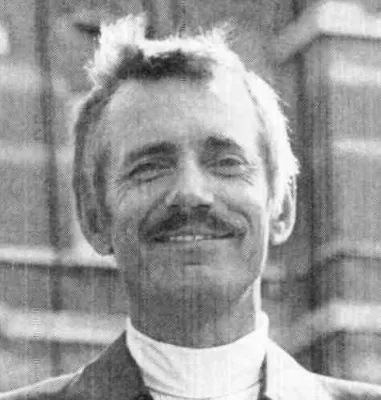
Paul Mauriat
Human Design Chart
Biography
What does Manifestor 3/5 mean for Paul Mauriat?
Manifestor 3/5 — Design at a Glance
Paul Mauriat lived as a Manifestor, characterized by an independent and often forward-thinking energy. His design did not see him as someone who operated in the background or waited for approval but rather as an initiator who directly influenced and set his environment in motion. However, this configuration carried a specific challenge: The tendency towards polarization. Since his internal compass often ticked faster than his surroundings, he inevitably encountered resistance or misunderstanding from those who could not immediately follow his direction.
The mechanics of his design indicated that this friction was unavoidable as long as he pursued his visions. His path to an effective presence lay in clear communication about his intentions. By informing his environment early on about his plans and motivations, he could minimize the natural resistance and create space for voluntary resonance. This strategy of informing served not as a request for permission but as a reduction of friction. When Paul Mauriat followed this principle, he experienced deep inner peace as a reward. If he deviated from this path and tried to work against the current or in secret, it resulted in persistent frustration and anger. His design challenged him to embrace his pioneering role while remaining transparent to channel his influence constructively.
Emotional Authority
Paul Mauriat was influenced by an emotional wave that significantly shaped his experience and decision-making process. His design featured an emotional authority carried by the defined Solar Plexus Center. In Human Design mechanics, once this center is activated, it always takes on the role of inner authority regardless of other definitions in the chart. This meant for him that his perception of the world was always colored by his current mood. He could be fully enthusiastic about a situation one moment and negatively assess the same situation shortly after.
This mechanism highlighted that his immediate feeling was merely a snapshot – an initial impression, which did not necessarily reflect his deeper truth yet. Quick, spontaneous decisions made directly from such emotional peaks risked negative consequences. The strategy of his design lay in patience: He needed time for decisions to mature. Through multiple nights of reflection and allowing questions to arise, he gained the necessary distance. As time passed, intense feelings subsided, making way for clarity and calmness. This process was essential for long-term shifts that influenced his life trajectory. Only through this delay could he ensure that his choice stood on a stable foundation rather than merely reflecting a transient emotional reaction.
The 3/5 Profile — Martyr / Heretic
Paul Mauriat revealed himself through his 3/5 Profile as someone who primarily acquired knowledge through personal experimentation. The line of the experimenter drove him to initially make no assumptions and instead actively dive into things. This trial-and-error process was essential for him; good questions led him to necessary answers, with the nature of questioning being crucial. Through this practical approach, he amassed a rich treasure trove of life experiences that he gladly presented to others.
The line of the Hero and Rescuer complemented this process: From his self-acquired insights, he solved problems for others. This gave him natural appeal as people wanted to learn from his experiences. This role flattered his design but could also be painful when experiments failed in public. In crisis situations, his configuration brought forth practical solutions; he was often perceived as enlightened because he remained calm and saw the hidden meaning of situations. For Paul Mauriat, enlightenment did not mean isolation but waiting in his own rhythm to find strength and secure his place in the flow of things. The dynamics between the pressing urge for answers and the necessary calm formed the basis of his impact on others.
Split Definition — Defined & Open Centers
Paul Mauriat was marked by a constant inner tension originating from his defined Head and Ajna Centers. This configuration created a permanent mental pressure to question and understand connections. He lived in a state of continuous inspiration, but it did not provide direct energy for implementation. Instead, his mind served as a source of inspiration for others; he inspired the environment through his conceptual clarity while accepting the mental process without hastening its resolution.
This intellectual intensity was connected with a deep emotional wave through his defined Solar Plexus Center. His inner authority lay in emotion, meaning that he did not make decisions in the moment but waited until emotional clarity emerged. The combination of mental pressure and emotional depth created a complex dynamic: He had to learn to reconcile the restlessness of his mind with the patience of his feelings.
At the same time, he lacked a firm identity through his open G Center. Paul Mauriat tended to reflect in relationships and environments rather than assert a fixed direction. He did not actively seek a stable place but waited for the right places and people to initiate him. This openness extended to his open Heart Center where he did not possess constant willpower. Instead of making promises or proving his worth, he learned not to get entangled in competitions for recognition.
His Sacral and Spleen Centers were also open. This meant that he lacked a consistent energy flow and was vulnerable to exhaustion when taking on the energy of others. Additionally, he did not have the spontaneous sense of security from a defined Spleen; he had to face his fears rather than act impulsively. His strength lay in seeing these opennesses not as deficiencies but as spaces where he could find the correct resonance by waiting and aligning with his emotional authority.
Channels for logic, change and emotional release.
Paul Mauriat was characterized by a mind that combined logical rigor with emotional instability. His design was marked by the Channel of Logic 63-4, which used doubt as an essential filter for patterns; only verifiable, consistent processes found entry into his thinking. This contrasted with the Channel of Transience 36-35, driving him to seek emotional depth through new experiences and even provoked crises rather than relying on rational planning. His inner dynamics were further shaped by the Channel of Emotion Release 39-55, which created a pulsating wave of moods, melancholy, and passion. This mechanism required accepting his mood swings as a source of creative truth instead of rationalizing them.
Additional Gates deepened this structure: Gate 64 sought clarity through interpreting past experiences while Gate 5 emphasized the fundamental life rhythm and necessity of habits. In the personality realm, Gate 52 focused on silent concentration and pattern correction, while Gate 54 saw worldly success as a prerequisite for spiritual insight. Typical to his design, Gates 24 supported the process of mental renewal in the pulse of life, Gate 58 promoted experiments to perfect patterns under pressure, Gate 11 provided visual memories for situational assessment, and Gate 22 allowed a calm openness for mutation. Paul Mauriat lived in the tension between the need for logical consistency and the urge for emotional renewal.
Collective Circuitry — Circuit Signature
Paul Mauriat's design presented itself as a configuration of separate, parallel operating energies characteristic of a Split Definition. This meant that his inner forces did not flow together in one continuous stream but existed in two independent blocks each with its own logic and dynamics.
The first block united the Head with the Ajna Center through the Understanding Circuit. Here, the energy of Logic (Channel 63-4) was geared towards focused and rational structuring. This connection promoted visual, future-oriented thinking characterized by clear strategy and sharing logical insights—a 'cold ratio' that brought order to complex connections.
Simultaneously, a completely separate energetic block existed encompassing the Throat, Solar Plexus, and Root Centers. Within this group, the Knowledge Circuit through Channel 55-39 connected the emotional wave of the Solar Plexus with the endurance of the Root Center. This allowed for releasing emotions in pulsating, acoustic, and present-moment expressions. Parallel to this block, the Meaning-Finding Circuit through Channel 35-36 between Throat and Solar Plexus Centers operated. Here it was about sharing experiences from the past carried by a cyclical, wave-like emotional quality aimed at learning together with others from past events and grasping their meaning.
This separation between the rational, future-oriented mind (Head-Ajna) and the emotional, expressive forces of the past and moment (Throat-Solar Plexus-Root) created an inner tension. Paul Mauriat navigated between these two separate worlds: on one hand, cool strategic planning; on the other, intuitive emotional expression needs that came in waves. Thus, his design mechanics showed no integrated unity of thinking and feeling but rather two parallel independent power fields each fulfilling their specific tasks—one through logical structuring, the other through emotional expression and reflection.
Right Angle Cross of Consciousness 1
Paul Mauriats Human-Design shows a specific orientation characterized by the presence of the right cross of consciousness. This configuration set a tendency towards a certain kind of perception and interaction with the environment, less influenced by rational analysis but rather by an intuitive, often unconscious guidance. The right cross of consciousness did not describe a conscious strategy but a deeply rooted mechanism that significantly influenced his reactions and decisions. It was a structure that helped him find the appropriate path automatically in complex situations without needing to intellectually understand this process. This inner logic acted as a compass guiding him through life, while the exact workings of this mechanism often remained hidden, even from himself. The presence of this element in his chart indicated that his strength lay in relying on these internal impulses and giving them space rather than fighting against them or over-analyzing them. This shaped both how he approached challenges and opportunities, granting him a certain ease resulting from trust in this hidden order. Paul Mauriat therefore did not only live by external guidelines but followed an inner dynamic structured by this cross, influencing his entire life path.
Saturn Return · Uranus Opposition · Chiron Return · 2nd Saturn Return — Life Cycles
Paul Mauriats Human-Design showed a tendency towards structured, recurring confirmation. His life energy was not displayed as a single outburst but rather as a cyclic condensation of experience and competence. This mechanism became particularly effective in his later years when he solidified his established position.
In 1971 at the age of 46, Paul Mauriat released the album 'El Condor Pasa'. This marked a phase of professional bloom where his creative potential unfolded increasingly. It was an achievement cycle where the meaning and purpose of his work became tangible.
However, this structure was most evident during his second Saturn return. In 1985 at age 60, he released albums 'Classics in the air', 'Classics in the air 2' and 'Classics in the air 3'. For his design, this was a typical moment: The second Saturn return condensed years of groundwork into a sustainable result. It was not about starting anew but confirming one's substance. Paul Mauriat used this phase to bundle his achievements in a series of works. This underscores the nature of his character: He sought stability in the proven and created new stability from it. His strategy consisted of building on his past rather than leaving it behind. Thus, experience became a solid foundation for further creative expressions.
Manifestor · Emotional Authority — Synthesis
Paul Mauriat was a Manifestor whose life was marked by a constant flow of emotional depth. The combination of manifesting authority and defined Head Center (Channel 63/4) points to someone who developed visions but subjected them to intense inner scrutiny. This process led to a continuous mental pressure to question patterns and seek consistency – a sign that he did not simply accept what was, but always strove for understanding. The Profile as an Explorer/Hero (Profile 3/5) strengthened this drive towards practical experience; he had to try things himself to gain knowledge and then pass it on.
A central paradox in his design lay in the interplay of initiating power and emotional maturity. As a Manifestor, he was destined to set off and lead forward, yet emotional authority required careful consideration and sleeping over decisions. This led to a tension between the need for quick action and the necessity of gaining inner clarity through experiencing the emotional wave – an exchange that showed in documented career cycles when creative impulses (1971) were later shaped by phases of deeper elaboration and publication (1985).
3 Defined Channels
Incarnation Cross - Right Angle Cross of Consciousness 1
Solar Return
The Solar Return shows the moment when the sun returns to its exact birth position - your personal solar year.
Life Cycles
Discover the life cycles with a detailed triple view (birth chart, cycle chart, composite).
Human Design Profile
- Type
- Manifestor
- Strategy
- To inform others before acting
- Authority
- Emotional Authority
- Profile
- 3/5 - Martyr / Heretic
- Definition
- Split Definition
- Incarnation Cross
- Right Angle Cross of Consciousness 1
- Date of Birth
- 04.03.1925 15:00
- Place of Birth
- Marseille, France
Frequently Asked Questions
What was Paul Mauriat's Human Design type?
What Profile did Paul Mauriat have in Human Design?
Which Authority guided Paul Mauriat in his decisions?
What incarnation cross did Paul Mauriat have?
When was Paul Mauriat born?
Discover your own Human Design
Are you also a Manifestor? Find out in a personal reading how to use your initiation power peacefully and dissolve resistance.
More Personalities
Back to overviewAaliyah

Alexia

Alizée

Angèle

Anne-Marie

Arcángel