Prus Boleslaw
Human Design Chart
Biography
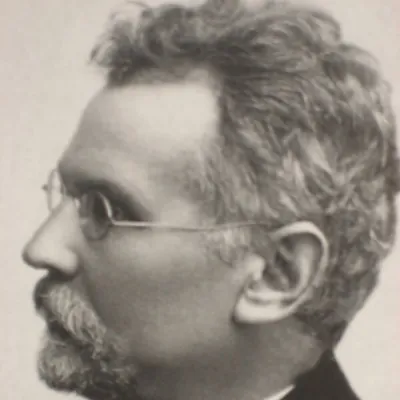
Born to an impoverished gentry family, Prus was orphaned early in life and struggled unsuccessfully to complete his education. As a young man, he took an active part in the January Insurrection. Throughout much of his life he contributed articles called “chronicles” to daily papers and periodicals; these reveal the talent for detailed observation and lively presentation that was to make his novels and short stories so effective.
A strong proponent of Poland’s version of Positivist philosophy, Prus gradually changed from a journalistic career to fiction, and became known as a leading Polish prose writer of the second half of the 19th century. Among his best-known short stories are “Anielka” (1880; “Annie”), “Katarynka” (1881; “The Barrel Organ”), and “Kamizelka” (1882; “The Waistcoat”). “The Barrel Organ” and “The Waistcoat” are included in the English-language volume of Prus’s stories entitled The Sins of Childhood and Other Stories (1996). As a novelist, he was considered a major Realist, with his Lalka (1890; “The Doll,” filmed 1969) giving a complex picture of Warsaw’s social classes at the end of the century. In Faraon (1897; The Pharaoh and the Priest) he used the conflict between ruler and clergy in ancient Egypt as a metaphor for his depiction of the power struggle in modern society.
He died 19 May 1912.
The Human Design of Prus Boleslaw: Manifestor 3/5
Manifestor 3/5 — Design at a Glance
Prus Boleslaw's design established the foundational structure of a pioneer and visionary destined to lead the world into a new future. His inner mechanics resembled that of a Roman emperor: He possessed the overarching vision for the empire but did not personally engage in wars or battles, delegating their execution to others to conquer foreign territories on his behalf.
This superior mindset was also his greatest challenge. Because he often thought ahead of his surroundings, Prus Boleslaw was frequently misunderstood and polarizing. His grand visions elicited extreme reactions: Some people loved them and followed him; others rejected or even hated the same ideas because of their magnitude.
To resolve this conflict and attract the right followers, it was crucial for him to inform his environment precisely about his intentions at the right time. This strategy of informing was key to attracting those who wanted to follow him. By adhering to this approach, he was rewarded with a sense of inner peace. However, living against this design led to persistent and deep-seated anger. His path thus involved minimizing misunderstandings through clear communication to create space for his leadership.
Emotional Authority
Prus Boleslaw's design established a tendency towards coercive waiting periods in decision-making: Spontaneous judgments were risky; true clarity only emerged after emotional waves subsided. This structure stems from Emotional Authority carried by the defined Solar Plexus Center. In Human Design, this authority is always leading for inner guidance, regardless of other defined centers in the chart.
The Solar Plexus Center follows a natural rhythm of ups and downs in emotions. The current mood heavily influences perception: What inspires one moment can seem negative the next. This feeling is only a snapshot and not the deeper truth. Quick reactions to these transient states can lead to poor decisions as they do not capture the full scope of the situation.
The mechanism requires patience and consciously 'sleeping on' important questions. Only when intense feelings subside and emotional distance is gained does calmness set in. This process is especially crucial for long-term life decisions, ensuring actions are based on clarity rather than temporary excitement. Prus Boleslaw thus sought inner peace through time to separate his truth from fleeting emotions.
The 3/5 Profile — Martyr / Heretic
Prus Boleslaw's design established a tendency towards a pragmatic lifestyle shaped by personal experimentation. As Profile 3/5, the Experimenter and Hero, he was initially skeptical of given truths and had to test everything himself. This 'trial and error' approach on Line 3 meant that mistakes were not defeats but necessary learning moments. Through this withdrawal for processing and self-correction, he amassed a rich trove of practical experiences.
This lived experience became the foundation of his appeal to others. Line 5 projected a heroic role: Prus Boleslaw could solve other people's problems with his self-acquired knowledge. Yet, this dynamic also carried a specific danger. The pain point lay in public failure during experimentation when the expectation of the 'savior' was not met. His strength lay in providing a time-limited contribution only upon request before withdrawing to explore new paths. This interplay between necessary withdrawal for processing (Line 3) and projected expectations as a hero (Line 5) shaped his interactions. He learned that inaction at times was wiser than rash action, using his experience to serve others without binding himself permanently. His authority lay in the ability to offer clear solutions after experimentation, drawn purely from practice.
Split Definition — Defined & Open Centers
Prus Boleslaw's design is characterized by persistent willpower and emotional depth, paired with a reliable ability to express himself. His defined Heart Center gave him the ability to determine his own life and consistently keep promises; he had permanent access to his own energy to pursue goals and control resources. This inner strength was modified by his also defined Solar Plexus Center, which served as his internal authority. Instead of acting impulsively, Prus Boleslaw tended to make decisions only after riding the emotional wave, thereby achieving emotional clarity and gaining deep insights.
His defined Throat allowed him to clearly translate these inner processes into words or actions, coupled with the persistent pressure of the Root Center, which propelled him forward. In contrast, his openness in the Centers for Identity and Energy: His open G Center meant that he did not have a fixed, unchanging identity but adapted situationally and was initiated through relationships, making him susceptible to taking on others' directions. His open Sacral Center led to an unstable energy flow; he tended to overextend himself on "borrowed" energy from others rather than respecting his own rhythm of work and rest.
Furthermore, Head and Ajna were open, which made him receptive to external inspiration but also conditioned him to seek answers that did not come from within. This created mental pressure to answer questions or understand concepts that actually belonged to others. His open Spleen Center amplified his vulnerability to fears and the need to cling to secure structures or people to simulate a sense of well-being, rather than trusting spontaneous intuition. This constellation marked him as someone who could express his inner emotional truth but was always at risk of losing himself in the expectations and energies of his environment.
Channels for ambitious action and emotional waves.
Prus Boleslaw's design shows a tendency towards material sovereignty paired with a deep dependence on inner emotional rhythms. This configuration revealed someone who understood control over resources not as greed but as necessary structure for stability while simultaneously learning to live their mood authentically rather than rationalizing it.
This attitude was rooted in the Money Line 21-45. This channel connects the Heart Center with the Throat Center and establishes the tension between Gate of the Hunter (21), which wants to serve but needs control to ensure peace, and Gate of the Collector (45), who authoritatively decides over resources ("I have or I don't"). For Prus Boleslaw, this meant a life task: taking on material responsibility by asserting his will in such a way that he protected himself while serving others. Success lay in achieving a degree of independence – best as his own boss – to balance the tension between hard work and the need for breaks. Delegating was difficult because it often felt like a loss of control.
Parallel to this, releasing emotions 39-55 was at play. This channel connects the Root Center with the Solar Plexus through Gate of Provocation (39) and Gate of the Mind (55). It sets in motion the pulsing wave of joy and melancholy. Prus Boleslaw did not use this moodiness as a weakness but rather as a tool: his moods provoked mental clarity or revealed true nature in others. The mechanics challenged him to act authentically – only when he was in the right mood. By accepting this emotional alchemy instead of trying to rationalize it away, he could explore the depths of his mind and radiate an alluring warmth or passionate depth that influenced others. Those who did not force themselves against this wave found access to mature, individual creativity.
Individual Circuitry — Circuit Signature
Prus Boleslaw's Design shows a tendency towards rhythmic, emotional impulsivity paired with a clear but discontinuous ability to mobilize resources. These two forces existed side by side without directly overlapping.
In the Knowledge Circuit, Channel "Emotion Release" connected the Solar Plexus Center with the Root Center, creating a pulsing, acoustic energy: Emotional waves from within met the immediate urgency of the present moment. Prus Boleslaw was someone whose expression was marked by this emotional tension – an ongoing oscillation between inspiration and impulse to act.
Separate from that, in the Ego Circuit, Channel "The Money Line" connected the Throat Center with the Heart. This wasn't about individual innovation but rather cooperation and resource exchange. The Heart provided motivation for supporting others; the Throat Center enabled the concrete articulation of this help. However, without a connection to the Sacral Center, there was no constant life stream. Instead, this configuration required necessary pauses between phases of giving and receiving.
The tension thus lay in the coexistence of two worlds: the innate, emotionally pulsing path of transformation versus the traditional, rest-seeking cooperation for the tribe. Prus Boleslaw navigated this divided definition not as a single flow but as two distinct, temporally offset energies, each demanding its own dynamics and rhythm.
Right Angle Cross of Contagion 3
Prus Boleslaw's design sets a tendency towards... arising from the right cross of infection 3. This configuration describes a specific kind of learning and development: through direct experience, often accompanied by a process of experimentation and adaptation. It is not about theoretical knowledge but rather about practical experience that penetrates deeply into one’s personality and leaves lasting impressions.
The mechanics of this cross show that growth for Prus Boleslaw occurred through an infection-like transmission of new ideas or experiences – not in the negative sense of illness, but as an intense transfer of energy and information. This means that he often stood out in his environment by absorbing and passing on impulses from outside, which were then internally processed.
Without naming specific events, it becomes clear that this aspect of his design required a constant openness to new influences. Prus Boleslaw showed himself to be someone who learned and grew through this interaction with his surroundings, where every contact offered the chance to take in something new and integrate it into his own actions. This dynamic shaped his way of experiencing and reacting to the world.
Saturn Return · Uranus Opposition · Chiron Return · 2nd Saturn Return — Life Cycles
Prus Boleslaw's design indicated a tendency towards cyclical breakthroughs in which inner maturity transformed into concrete creative power. This was evident in 1890, at the age of 43, with the publication of his novel "Lalka". This success fell during the Uranus opposition phase, a time when life often takes unexpected turns and new perspectives are forced upon one.
The second major wave occurred in 1897 when he was successful again with "Faraon". At age 50, he experienced his Chiron return. In Human Design mechanics, this cycle does not mark the healing of old wounds but rather the peak of self-actualization. If one's strategy has been followed up to this point, the incarnation cross unfolds fully here; meaning and purpose become experiential. Prus Boleslaw's publication of "Faraon" at this age underscores this dynamic: it was the time when his life path reached its deepest significance and he carried his essence outward.
Both events – in 1890 through the pressure of change, and in 1897 through the fulfillment of purpose – illustrate how his chart structured recurring patterns of challenge and bloom.
Manifestor · Emotional Authority — Synthesis
A central red thread runs through this design: the dynamic interaction between inner depth and outer expression. The emotional authority (Solar Plexus) paired with the open configuration of many centers points to a person who experiences intense internal processes but does not carry them outward linearly or constantly. Instead, energy is channeled through the defined Heart Center and manifested through the Throat – an expression of willpower and authenticity that is strongly influenced by emotional waves. The numerous open centers (especially Spleen and Sacral) enhance this sensitivity to external influences, leading to constant adaptation to the environment but also harboring potential for getting lost in conditioning. The Profile as Experimenter/Hero underscores this process of testing and learning through experience to pass on knowledge.
The central paradox lies in the tension between the need for inner clarity (emotional authority) and the open nature of many centers that allow constant external influences. On one hand, the design requires time for emotional maturation and authentic expression; on the other hand, it is vulnerable to conditioning and can get lost in dependencies. This tension is amplified by the circuit context: the Ego Circuit (Heart/Throat) emphasizes the necessity of cooperation and resource building, while the Knowledge Circuit (Root/Solar Plexus) aims at individual transformation and creating new knowledge. The design thus seems destined to reconcile inner depth with outer dynamism – a constant process of finding one's voice amidst a complex network of relationships and influences.
2 Defined Channels
Incarnation Cross - Right Angle Cross of Contagion 3
Solar Return
The Solar Return shows the moment when the sun returns to its exact birth position - your personal solar year.
Life Cycles
Discover the life cycles with a detailed triple view (birth chart, cycle chart, composite).
Human Design Profile
- Type
- Manifestor
- Strategy
- To inform others before acting
- Authority
- Emotional Authority
- Profile
- 3/5 - Martyr / Heretic
- Definition
- Split Definition
- Incarnation Cross
- Right Angle Cross of Contagion 3
- Date of Birth
- 20.08.1847 23:00
- Place of Birth
- Hrubieszów, Poland
Frequently Asked Questions
What is the Human Design type of Prus Boleslaw?
Which Profile does Prus Boleslaw have?
What Authority does Prus Boleslaw have?
Which incarnation cross is active for Prus Boleslaw?
When was Prus Boleslaw born?
Discover your own Human Design
Are you also a Manifestor? Find out in a personal reading how to use your initiation power peacefully and dissolve resistance.
More Personalities
Back to overviewAlain-Fournier

Angeli

Christian-Jaque
Juninho

Kesha

Lucebert