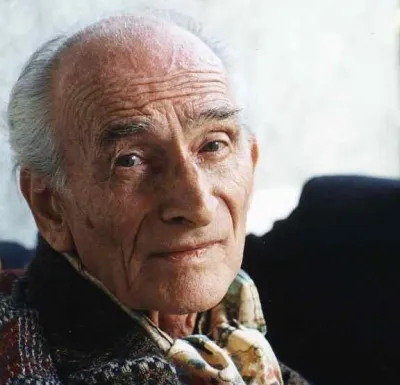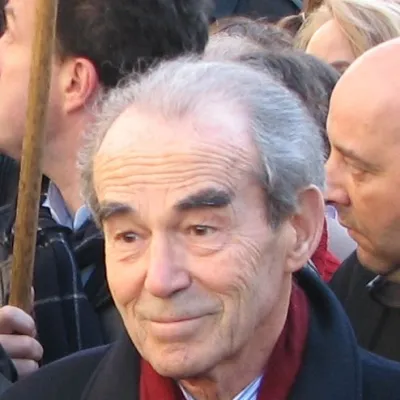
Robert Badinter
Human Design Chart
Biography
He earned his bachelor's and law degree in 1947-1948 and earned his master of arts at Columbia University in 1949. He subsequently earned his doctorate of law at the Paris School of Law. From 1951 until 1981 he practised law at his own firm. In 1966 was appointed Professor of Law. One of his more famous cases was when he defended Patrick Henry who had been charged with the abduction and murder of a seven-year-old boy. Badinter convinced judge and jury to give Henry life imprisonment instead of the death sentence. He has taught at several universities including the Sorbonne. He retired from academia in 1994.
He died in Paris in the night of 8-9 February 2024 at the age of 95. One week before his death, he fell and broke one of his cerebral vertebrae.
What does Manifesting Generator 6/2 mean for Robert Badinter?
Manifesting Generator 6/2 — Design at a Glance
Robert Badinter revealed himself as someone who reacted swiftly to impulses and often skipped steps in the process. His design as an Manifesting Generator combined the constant, sacral energy of a Generator with the direct action of a Manifestor. This allowed him to quickly draw things into his life while working on multiple projects simultaneously.
This configuration created a hybrid state: he had the stamina for long-term tasks but acted at a speed that bypassed traditional processes. The risk lay in frustration when moving too fast and neglecting important intermediate steps, which required catching up later. Pursuing many impulses concurrently could also lead to exhaustion if not every action was accompanied by inner consent.
The strategy involved reacting to life impulses only after the sacral center gave a clear “yes.” Regular checks on projects ensured that his inner authority continued to agree with them. When these conditions were met, Robert Badinter found deep satisfaction in his work. The pressure to complete one thing before moving on to the next was more challenging for him; instead, he thrived in a playful mode with variety and parallel activity. His effectiveness depended on aligning this speed through conscious reactions to inner signals rather than blindly initiating or being overwhelmed by the multitude of impulses.
Emotional Authority
Robert Badinter showed a decision-making structure that required emotional detachment and time; spontaneous reactions were unreliable for him. His design carried Emotional Authority, meaning his defined Solar Plexus Center determined his inner guidance. This configuration subjected him to a constant emotional wave with continuous ups and downs in his feelings. The world appeared colored by his current mood: at one moment full of enthusiasm, the next deeply negative.
This fleeting emotional state was only a snapshot, not a secure claim on truth. Quick decisions made from emotion could therefore have negative consequences. Robert Badinter needed patience to deepen insights. The process of “sleeping over” decisions was essential for him. Only with time did intense feelings subside, allowing him to gain emotional distance. In this calm, the necessary clarity and composure set in. This mechanism applied regardless of other defined centers in his chart; Emotional Authority always took precedence. Especially for long-term, life-defining steps, this waiting period was necessary to ensure that the decision wasn’t based on a passing mood but on clear insight.
The 6/2 Profile — Role Model / Hermit
Robert Badinter’s design featured a clear developmental line: In the first three decades of his life, experimental action dominated. His Profile 6/2, the Role Model/Natural Talent, worked like a three-line phase – marked by trial and error. He gathered numerous personal experiences to learn through direct confrontation with reality.
After turning thirty, this dynamic fundamentally changed. The sixth line activated, placing him in a state of withdrawal. Instead of continuing external experimentation, he metaphorically retreated into a “cave” to reflect on his past from a distance. This phase of intense reflection served for healing and deep self-awareness. From this isolation emerged late wisdom.
His Sun at Gate 17 gave this process the character of complete succession and leadership. Like a Bodhisattva, he expressed opinions only upon request, which granted him calm authority. Simultaneously, Line 2 at Gate 38 added aspects of discreet self-defense. He showed resistance without violating social norms; politely, he navigated beneath the surface to ensure his survival. This intuitive understanding allowed him to act as a wise role model, sharing insights from introspection once the time for emerging from the cave was ripe.
Triple Split Definition — Defined & Open Centers
Robert Badinter's Human Design profile indicated a tendency towards immense internal stability and action power. He was someone with a clear identity who could keep promises and control resources while maintaining constant life energy. This structure was characterized by seven defined centers: Heart (Willpower), G Center (Identity/Direction), Sacral Center (Vitality/Energy), Solar Plexus (emotional depth/timing), Spleen (intuition/health), Root (stress management) and Throat (manifestation/communication).
This configuration described a person with reliable expression. The defined throat transmuted information from the other centers into clear communication and action, independent of momentary mental impulses. His decisions were based on emotional clarity after waiting for the wave (Solar Plexus) as well as intuitive moment-knowledge (Spleen). At the same time, he had the power to determine his own life (Heart) and a firm self-identity (G Center), which allowed him to love others without becoming dependent.
In contrast, the Head and Ajna centers were open. This meant that Robert Badinter did not have a consistent internal dialogue or conceptual truth; his mind served as a mirror for inspiration rather than an authority. He tended to experience mental pressure moments where he could question whether he was inspiring or needed to find answers that belonged to others. These open centers made him vulnerable to identifying with doubts and confusion coming from outside. The mechanics showed that his true strength did not lie in conceptual thinking, but in the ability to accept mental inspiration situationally without elevating it to personal truth. His open mind allowed him to be flexible towards new insights and act as a mirror for others' thoughts while his defined structure guaranteed action-oriented stability.
Channels for resources, logic, leadership and emotional change.
Robert Badinter's design set up a fundamental tension between mutative innovation and critical logic. The channel of Beat 14-2 connected the Sacral Center with the G Center through Gate 14, skillfully handling power and Gate 2 of higher knowledge. This configuration provided access to material resources to initiate new directions. It served as a driving force for mutation and uniqueness by directly linking identity and life energy. Badinter could thereby translate innovative impulses into material reality without losing sight of his own direction.
At the same time, the channel of Judgment 58-18 acted as a logical sentry. It connected the Root Center with the Spleen Center through Gate 58 of vitality and Gate 18 of correcting. This channel questioned patterns relentlessly to perfect them and test their feasibility. While Beat opened new paths, Judgment ensured the structural integrity of these changes. It corrected unhealthy elements and made sure that innovations were not only novel but also healthy for the collective.
This dynamic created a balance: The impulse towards change was tempered by a sharp sense of necessity. Badinter showed himself capable of navigating between the urge for novelty and the discipline of correction. His energy served to break old structures, but through logical scrutiny elevate them to a higher level. The combination of resource release and perfectionist logic shaped his actions as someone who initiated change but always tested it on its viability.
Collective Circuitry — Circuit Signature
Robert Badinter's design showed a separation between pulsating creativity and focused logic, as his Triple Definition formed three separate groups. None of these groups were directly connected to the others; they existed as parallel forces alongside each other.
In the Knowledge Circuit, the channel 'The Beat' connected Identity with the Sacral Center. This generated a wave-like, acoustic energy for one's individuality and creativity, carried by the rhythmic life force of the Sacral. However, this energy was not directly linked to his logical processes.
Parallel to this, the Understanding Circuit worked through the channel 'Judgment', connecting Spleen and Root Centers. Here a focused, visual energy prevailed that aimed at rational judgment and future-oriented strategy – free from emotional filtering as Solar Plexus Center was not involved here.
The third group formed by the Meaning-Finding Circuit with the channel 'Transience' between Throat and Solar Plexus Centers as well as the Ego Circuit with the 'Money Line' between Heart and Throat Centers. These connected emotional wave movements from the past with cooperative resource strategies.
Robert Badinter did not integrate these separate systems into a single flow but utilized the pulsating creativity of the Sacral-Identity complex as an independent source while making logical decisions through the independent Spleen-Root channel. The emotional and social dynamics played out in the third group, separated from pure ratio and creative impulse generation.
Left Angle Cross of Upheaval 1
Robert Badinter's Human Design profile carried the energetic signature of a profound transformation process. His inner nature was marked by the necessity to break old structures and establish new orders. This configuration, the left cross of revolution 1, described more than just change; it represented a fundamental break with the existing order. It was an archetypal force aimed at dissolving outdated systems to make way for something entirely new.
For Robert Badinter, this meant that his essence always operated at the intersection of endings and beginnings. He lived in a dynamic where stability was found only through the active process of transformation. The energy of this cross urged him not just to repair the old but to overcome it as a foundation for an entirely new structure. This was no arbitrary decision but a deeply rooted mechanical aspect of his design.
His presence often acted as a catalyst for revolutions. Where others sought adaptation, his inner architecture promoted transformation. It was about having the courage to let go of the familiar so that a higher order could emerge. This process was strenuous and demanding, as it continuously grappled with the resistance of the existing order. Yet in this struggle lay his true task: establishing new paths where only old patterns had prevailed before. His life was constant proof that genuine renewal often requires a painful break.
Saturn Return · Uranus Opposition · Chiron Return · 2nd Saturn Return — Life Cycles
Robert Badinter's Human Design profile showed a tendency towards radical breaks with established orders, coupled with a drive for individual autonomy and innovation. This configuration described an inner mechanism that not only questioned but actively destroyed outdated structures to make way for new, often unexpected directions. It was an energy of sudden liberation that established freedom as the central principle and broke the status quo in favor of personal sovereignty.
In 1971, at the age of 43, Robert Badinter received a state scholarship. This event marked a typical moment of Uranus opposition for his design: a phase of breaking into new paths enabled by external support. The scholarship was more than just financial aid; it was concrete evidence of how this drive towards independence and change had crystallized in the outer life. It showed as a moment when old bonds were dissolved to make way for an independent, autonomous phase. The mechanics of this opposition promoted precisely such turning points where innovation was not only sought but realized. Robert Badinter used this energy to break from previous structures and chart a course that aligned with his inner demand for freedom and innovations. The scholarship served as a catalyst for this transformation by creating the necessary foundation to leave old systems behind and push forward into a new, self-determined direction.
Manifesting Generator · Emotional Authority — Synthesis
Robert Badinter was an Manifesting Generator whose life was marked by a profound inner dynamism. The connection of his sacral center with the throat center gave him the ability to act quickly and transform things (Channel 14-2), but this speed required constant adaptation and catching up on missed steps. This tendency towards rapid response was countered by his emotional authority: decisions matured over time, necessitating patience and a deep engagement with one's feelings (emotional center). His defined heart center points to a strong will and the ability to pursue personal goals, while his defined G center gave him clear identity and direction.
A central paradox in Robert Badinter's design lies in the interplay of initiating impulse and emotional maturity. As a Manifesting Generator, he had the drive to set things in motion, yet his emotional authority required waiting for the emotional wave to gain clarity. This led to a tension between the desire for quick action and the necessity to let decisions mature calmly – an interplay that shaped him and helped him view things from multiple perspectives (Gate 21-45, Gate 36-35).
4 Defined Channels
Incarnation Cross - Left Angle Cross of Upheaval 1
Solar Return
The Solar Return shows the moment when the sun returns to its exact birth position - your personal solar year.
Life Cycles
Discover the life cycles with a detailed triple view (birth chart, cycle chart, composite).
Human Design Profile
- Strategy
- To respond - wait for something to respond to
- Authority
- Emotional Authority
- Profile
- 6/2 - Role Model / Hermit
- Definition
- Triple Split
- Incarnation Cross
- Left Angle Cross of Upheaval 1
- Date of Birth
- 30.03.1928 06:00
- Place of Birth
- Paris, France
Frequently Asked Questions
What was Robert Badinter's Human Design type?
What profile did Robert Badinter have in Human Design?
What authority did Robert Badinter possess?
What incarnation cross was assigned to Robert Badinter?
When was Robert Badinter born?
Discover your own Human Design
Are you also a Manifesting Generator? Find out in a personal reading how to unfold your multi-talents and direct your energy wisely.
More Personalities
Back to overviewAldair

Alizée

Angeli

Arletty

Artus

Balthus