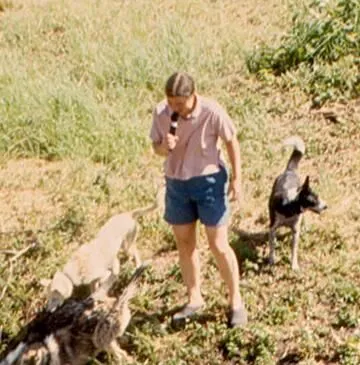
Susan Butcher
Human Design Chart
Biography
Butcher grew up in Cambridge, MA in an upper middle class neighborhood, not far from Harvard. At age 8 she wrote an essay entitled “I Hate the City.” Her father, Charlie, ran a chemical products company, and her mother Agnes was a psychiatric therapist; they divorced when Susan was 11. Dyslexia caused her some problems in her early school years. She learned best by doing rather than from books and was fidgety in school. A withdrawn child, she related best to her dog and was happiest facing athletic challenges, working with her dad on carpentry projects or being outdoors with her dog.
At age 16, she went to Nova Scotia and learned to farm and train horses. Two years later, on a visit to her dad’s in Boulder, CO, she connected with a woman who had 50 huskies. "Ten minutes later I had moved in,” Butcher said. I lived with her a couple years working as a veterinary tech and learning to mush." Realizing that becoming a veterinarian was not a good fit for her, and crazy about dogs, she moved to Alaska in 1975. At age 20, with only $600 in her pocket, Butcher moved into a cabin without electricity or running water. Living 40 miles from her closest neighbor, she worked a summer job on the coast at a fish processing plant, seven days a week, 18 hours a day, in order to earn some money. With few available food supplies, she and her companion lived off moose, caribou and ptarmigan and whatever else they could hunt. They hauled their own water. In 1977, she moved to Eureka, Alaska to start her 100-dog Trail Breaker Kennel on five acres of bush surrounding an 80-year-old log cabin that once belonged to a Gold Rush blacksmith. With a population of six people, Eureka was just a scatter of mining shacks among strands of silver birch at the end of 140 miles of dirt road, not far beneath the Arctic Circle. She lived alone or with handlers when she could afford them.
The Human Design of Susan Butcher: Projector 1/4
Projector 1/4 — Design at a Glance
Susan Butcher was someone who immediately recognized weaknesses in systems. As a Projector, she had a dense, focused aura, comparable to a bright flashlight that would shine directly on dark spots around her counterpart. This configuration gave her the ability to identify errors and inefficiencies instantly. However, this direct 'light into darkness' could quickly trigger resistance from others, similar to a glaring beam in someone's face.
Her design did not allow for a constant intrinsic life energy source through the undefined Sacral Center. Instead, she experienced phases of high activity and fast work pace followed by necessary rest periods for regeneration. Traditional school systems and standard work models often ignored this need for pauses, which could lead to exhaustion.
The optimal strategy for Susan Butcher was to wait for a respectful invitation from others rather than pushing forward independently. By shining with her own harmonious aura, she naturally attracted her surroundings; people came to her automatically to seek advice. If she lived by this principle, she would be rewarded with success. Ignoring this dynamic and forcing her insights led sooner or later to her non-self theme: bitterness over not being understood.
Splenic Authority
Susan Butcher showed decision-making based on a fine, spontaneous impulse. Her design carried authority in the Spleen Center, meaning that her inner guidance came through the defined Spleen Center – her health and alarm system. Since both her Emotional and Sacral Centers were open, this configuration was possible; she had an acute survival intelligence that showed as immediate physical knowledge whether a situation or environment suited her.
This impulse was very subtle and only occurred once at each moment. It could easily be drowned out by other influences, so high vigilance was necessary to hear this first instinct. Decisions had to be made immediately; the spontaneous first thought directly served her health and allowed her to rigorously distance herself from harmful influences.
Since she only knew what was right for her in the moment, her plans often changed at short notice. Long-term commitments were difficult as she needed a lot of freedom and flexibility. She lived best when she did not commit much and acted spontaneously rather than following rigid structures. This mechanism required withdrawal to make decisions so that she would not ignore the fine voice of the Spleen.
The 1/4 Profile — Investigator / Opportunist
Susan Butcher's design leaned towards deep research, always serving a familiar community. As a 1/4 Profile – the Researcher/Networker – she combined an intense drive for thorough knowledge with the need to share this within a closely-knit circle. This configuration created a specific dynamic: She did not only research for herself but also sought out a group that would appreciate and share her insights.
At the same time, the profile was marked by a deep fear of being exposed as inadequate or unknowledgeable in front of these loved ones. The pain of such failure would have been immense internally, making a loving environment with a solid trust base crucial for her development. Only in this protected space could she fully unfold and become an authority on her heart themes through her expertise and networking skills.
Line 1 in Gate 58 promoted a fundamental zest for life and the courage to experiment, while mindfulness was necessary to avoid frustration. Simultaneously, Line 4 in Gate 18 dealt with the fear of incompetence and irreparable mistakes. This aspect brought a spiritual dimension of suffering at her own limits, driving her search for correction and security further. Susan Butcher thus moved between the desire for perfect future security and accepting surrender into her network.
Single Definition — Defined & Open Centers
Susan Butcher's Human Design profile indicated a tendency towards intuitive presence. Her defined Spleen Center gave her a reliable instinct for the 'now', enabling spontaneous judgments about health and wellbeing without rational analysis. This existential sense worked in the moment; she had to trust these sudden warning signals to stay protected. Complementing this was her defined Root Center, which provided a steady adrenalized pressure to advance materially and correct survival situations. This combination created a robust foundation of physical intelligence and endurance.
At the same time, her vulnerability showed in several open centers. Her open Head Center tended to pick up mental stress from outside; she could easily get caught in doubts that were not hers or seek inspiration to find focus. The open Ajna Center amplified this: She absorbed concepts and opinions of her surroundings without needing to identify them as her own truth, giving her a flexible mind but also creating uncertainty about her own thoughts.
Her open G Center meant she lacked a fixed identity or direction. She tended to blend with the energy around her and often sought love and orientation from others rather than generating it herself. The open Heart Center showed an openness to feeling pressure to prove her worth; she could get caught in cycles of promises and disappointment when trying to demonstrate willpower that was not available to her. Finally, her open Solar Plexus absorbed other people's emotions, which could lead to experiencing foreign moods as personal instability. Her open Sacral Center had no constant energy flow; she relied on reacting to external impulses and needed to learn how to conserve her limited resources rather than overexerting herself through borrowed energy.
Channels for logical scrutiny and ambitious transformation.
Susan Butcher's design was characterized by an unyielding inner discipline based on continuous pattern correction and a drive for improvement. This attitude primarily stemmed from the Judgment Channel 58-18, connecting the Root Center with the Spleen Center. This mechanism generated a logical impulse to question existing structures and perfect them; it functioned as an internal sentry assessing whether actions were healthy and executable or required correction. Susan Butcher was not someone who sought out faults but rather waited to be asked for solutions applicable to the collective.
Parallel to this, the Transformation Channel 54-32 also between Root and Spleen Center acted. It fueled an ambition driven by constant effort to improve her status and the tribe's security. This channel linked awareness of talents with a desire for social recognition; success here did not arise in isolation but through mutual dependence and support from allies reflecting their efforts.
Additionally, specific Gates shaped this profile: Gate 52 demanded deep concentration on pattern correction during silent pauses, while Gate 17 emphasized logical teaching for the future and serving before ruling. Gate 38 set boundaries to defend individual integrity under pressure, and Gate 39 provided an adrenaline boost through provocation and analysis for necessary mutations. Gate 44 supported transformation through vigilant engagement in relationships, while Gate 50 served as a conservative protective reflex preserving traditional values and tribal rules. Together these elements formed a system based on continuous optimization, loyal connections, and the preservation of essential structures.
Collective Circuitry — Circuit Signature
Susan Butcher's design indicated a tendency towards precise, logical judgment ability. She was someone who structured situations clearly and acted strategically, driven by an inner urge for improvement and future shaping. This attitude stemmed from the Understanding Circuit, activated in her case through the Judgment Channel (Gates 18-58). This connected the Spleen Center with the Root Center, establishing a direct link between intuitive perception and energetic endurance. It was about 'emotionless ratio' - rational insights free of conditioning that she could use to optimize things.
Parallel to this, the Ego Circuit also operated through the Transformation Channel (Gates 32-54) between Spleen and Root Centers. This circuit belonged to tribal energy and emphasized cooperation as well as the joint creation of resources. Since there was no connection to the Sacral Center, the energy was not constantly flowing; instead, she needed quiet pauses to generate new strength for the 'tribe' - her community or project. Both circuits shared the same energetic basis (Spleen-Root) in Susan Butcher, resulting in her strategic logic and cooperative resource creation as two separate yet parallel forces that both built on intuition and endurance.
Right Angle Cross of Service 4
Susan Butcher's design was marked by the right cross of service. This configuration established a foundational attitude that manifested as dedication to others. Her focus was less on personal glory and more on supporting and benefiting her fellow humans. The right cross of service describes an energy characterized by exerting a positive influence through selfless action and care. Susan Butcher lived this dynamic by engaging in situations where her presence and commitment helped others. She did not seek recognition for herself but found validation in the knowledge that her actions served a greater whole. This orientation created a deep connection with her environment, based on mutual respect and support. Her actions were always aimed at building bridges and fostering harmony. Through this dedication, she became a stabilizing force in her surroundings. The design conveyed no need for dominance but rather for subtle yet effective support. Susan Butcher used her energy to clear paths or offer comfort to others without putting herself first. This kind of service was not self-sacrifice but a natural expression of her inner structure. She acted from abundance, allowing her to contribute selflessly without depleting herself in the process. Her life demonstrated how true strength lies in the ability to serve others while maintaining one's own identity.
Saturn Return · Uranus Opposition · Chiron Return — Life Cycles
Susan Butcher's design inclined towards extreme endurance and confrontational testing. Her first Saturn return around age 30 marked the transition from a youthful, searching phase to an established structure. This cycle often demands harsh trials to solidify one's position in the world. In 1985, at 31 years old, she lost the Iditarod sled dog race to Libby Riddles. This defeat was not a failure in the sense of her design but rather a necessary crisis: it forced an examination of limits and strategies under maximum stress. The pain of this moment served to condense her inner authority; only through enduring such hardship could later unshakeable resolve emerge.
Later, the Chiron return occurred between ages 49 and 51, during which the incarnation cross – or the deepest meaning of the design – unfolds. This is not a phase of psychological healing but rather a bloom period of purpose. Susan Butcher experienced this peak of her life's mission under extreme conditions: in 2005, at 51 years old, she was diagnosed with acute leukemia. The mechanics show that the highest potential often comes with the greatest resistance. Her illness fell precisely during this time of fulfillment; her life and attitude became the ultimate expression of what she was there for – not despite but amidst suffering. The design revealed itself in this final great test as pure presence and dedication to her path until the last limit.
Projector · Splenic Authority — Synthesis
Susan Butcher was a projector whose life was marked by a deep need to recognize patterns and lead others, always with an awareness of the subtle nature of her energy. Her defined Spleen Center (health alarm system) gave her a pronounced instinctiveness and ability to judge what is beneficial in the present moment. This intuitive understanding combined with the Channel of Judgment (Gate 58/18), which nourished an unceasing drive for correction and perfection of systems. She quickly recognized where improvements were needed and possessed the ability to show this to others.
A central paradox in her design lay in the interplay between this sharp perception and the projector type. While she instinctively knew what was right or wrong, her aura required a cautious approach to avoid rejection. The Profile as Researcher/Networker amplified this trait: she sought deep knowledge (Line 1) but also needed a trusting community (Line 4) to effectively share that knowledge – a balancing act between the desire for autonomy and the fear of not being understood. Crisis phases, such as diagnosis with a serious illness, revealed moments when this inner authority was especially crucial.
2 Defined Channels
Incarnation Cross - Right Angle Cross of Service 4
Solar Return
The Solar Return shows the moment when the sun returns to its exact birth position - your personal solar year.
Life Cycles
Discover the life cycles with a detailed triple view (birth chart, cycle chart, composite).
Human Design Profile
- Type
- Projector
- Strategy
- Wait for the respectful invitation
- Authority
- Splenic Authority
- Profile
- 1/4 - Investigator / Opportunist
- Definition
- Single Definition
- Incarnation Cross
- Right Angle Cross of Service 4
- Date of Birth
- 26.12.1954 19:20
- Place of Birth
- Boston, MA, United States
Frequently Asked Questions
What is Susan Butcher's Human Design type?
What Profile did Susan Butcher have in Human Design?
Which authority guided Susan Butcher?
What incarnation cross did Susan Butcher have?
When was Susan Butcher born?
Discover your own Human Design
Are you also a Projector? Find out in a personal reading how to unfold your leadership qualities and recognize the right invitations.
More Personalities
Back to overviewSissy Spacek

Alain-Fournier

Anémone

Ann-Margret

Bourvil
Christian-Jaque