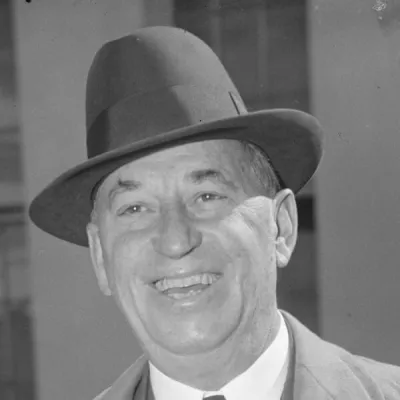
Walter P. Chrysler
Human Design Chart
Biography
Human Design Analysis: Walter P. Chrysler as Projector 4/6
Projector 4/6 — Design at a Glance
Walter P. Chrysler appeared with a dense, focusing aura that immediately revealed system inefficiencies. His design marked him as a Projector whose energy acted like a bright flashlight: it shone directly on areas in the environment still in darkness or not functioning optimally. This ability to recognize flaws in the system instantly was his natural impulse.
However, the mechanics of his type often led to resistance when confronting these shortcomings head-on. Like shining a bright light directly into someone's face, he risked bitterness and rejection with immediate criticism. Instead, his most effective strategy was to shine through harmonious, attractive presence. When he lived efficient paths himself, people sought him out for advice. This happened not by pushing but by waiting for an honest, appreciative invitation.
Since his Sacral Center was undefined, Walter P. Chrysler lacked a constant energy source. His dynamism consisted of phases of high activity and quick workability followed by mandatory rest periods for regeneration. Ignoring this need for pause threatened burnout. Living according to this rhythm and waiting for the invitation rewarded his influence with success rather than frustration.
Emotional Authority
Walter P. Chrysler's decision-making was marked by a necessary distance from immediate impulses. His design determined that he was subject to an emotional wave reflected in constant mood swings. The world appeared colored by his current mood; something could seem inspiring one moment and negative the next. This immediate reaction, however, was only a snapshot, not the final truth.
Since the defined Emotional Center carried his inner authority – independent of other definitions in his chart – every important decision required patience and time distance. Spontaneous actions based on current feelings risked negative consequences as they were grounded in fleeting impressions. Instead, it was necessary to let decisions mature ideally through multiple sleepovers. This process allowed intense initial emotions to subside and emotional distance to be gained. Only when clarity and calmness set in was the inner process complete. This strategy of waiting served to distinguish between transient mood and deeper insight, particularly crucial for long-term life decisions. Walter P. Chrysler thus showed himself as someone who had to muster courage to penetrate to his true inner truth.
The 4/6 Profile — Opportunist / Role Model
Walter P. Chrysler was marked by a deep tension between the heart's desire for belonging and the head's need for wise detachment. In the first three decades of his life, his Line 6 resembled a Line 3: he experimented intensely, especially in relationships and friendships, driven by curiosity and the urge to explore.
With the activation of Line 6, a central conflict emerged: the heart (Line 4) yearned for community while the head (Line 6) wished to stand on a mountain and contemplate life's meaning. This contradiction between emotional bonding needs and intellectual superiority could be confusing.
Later, he was expected to function as a wise role model through cooperation. However, this required protection: his big heart had to be careful not to open up to the 'wrong' people and get hurt. Line 6 went through phases of trial-and-error followed by distancing until reaching the role of role model. This development included unyielding stance and mutation to overcome misunderstandings and exert influence. Walter P. Chrysler had to learn to carefully assess hostile forces and respond appropriately, with support from service to the common good strengthening his leadership abilities. His design challenged him to effectively use instincts while protecting himself from emotional injuries and taking responsibility for others.
Single Definition — Defined & Open Centers
Walter P. Chrysler revealed himself as someone whose inner compass was determined by the ups and downs of emotional waves. His defined Solar Plexus Center created an authority that did not allow for immediate decisions; truth revealed itself to him only over time. He had the ability to cultivate deep emotional awareness by practicing patience and waiting until clarity emerged—often after a night's sleep. This emotional depth affected his surroundings, as he, being a defined Solar Plexus, colored the mood in the room.
At the same time, his defined Root Center propelled him forward. It provided the physical pressure and stress necessary to advance in the material world and master existential challenges. This constant undercurrent ensured that despite emotional fluctuations, he remained capable of action and could move through obstacles.
In contrast, his Head, Ajna, and Throat Centers were open. Walter P. Chrysler tended to relieve mental pressure by seeking answers that did not come from him. He could easily get entangled in the doubts of others or try to force attention through spontaneous speaking instead of waiting for the right invitation. His open G Center also meant he lacked a fixed identity, seeing himself as initiated through relationships and places. He was prone to getting lost in false directions or adopting identities that were not his own.
Similarly, his Heart, Sacral, and Spleen Centers were open. This made him sensitive to the willpower and energy of others. He risked overexerting himself by using "borrowed" Sacral energy or trying to prove his worth through promises instead of trusting in his inner authority. His health depended on not acting impulsively and recognizing the fears of his undefined Spleen Center without identifying with them.
Channel 49-19: Synthesis — Channels & Gates
Walter P. Chrysler revealed a deep emotional pressure to manifest belonging and secure the "we-feeling" through shared ideals. This fundamental attitude was primarily shaped by Channel of Synthesis 19-49, which connects the Root Center with the Solar Plexus. It acted as an emotional glue, determining who belonged to the group and deserved support based on loyalty and the protection of common resources. Walter P. Chrysler was concerned with maintaining the inviolability of his territory and a clear belief system within his "tribe," always seeking a balance between feasibility and fairness.
This dynamic search for cohesion stood in tension with other aspects of his mechanics. Gate 21 pushed for control over material things and recognition in service to the community, while simultaneously wanting to overcome intentional obstacles through power. Parallel to this, Gate 48 worked with its focus on analytical perfection and recognizing deeper patterns, which often led to frustration when these insights were not implemented. Additionally, Gate 38 brought a necessary resistance against harmful forces to preserve individual integrity, while Gate 39 triggered selective processes through provocation and analysis. In the background, Gate 30 acted with its longing for positive feelings and acceptance of limitations as fate. Finally, Gate 58 in the Root Center created pressure towards perfecting the life process to ensure a secure future. Walter P. Chrysler thus navigated between the emotional need for tribal loyalty and the rational drive for control and perfect alignment of his environment.
Tribal Circuitry — Circuit Signature
Walter P. Chrysler's design shows a tendency towards emotional synthesis, which is evident in the interplay between the Solar Plexus and Root Centers. This connection was formed through Channel 49-19 within the Ego Circuit. This circuit belongs to the Family Group and focuses on cooperation and the creation of shared resources. Since Walter P. Chrysler had no connection to the Sacral Center, he lacked the constant life force energy of this center. This required sufficient rest periods to regenerate the necessary energies for his family group. The Ego Circuit operates without Format Energy; it is timeless and oriented towards taste and smell senses as well as conservative, traditional values. Here, the emotional wave acts like a ratchet, meaning that feelings are only fully processed after some time has passed. Walter P. Chrysler thus appeared to be someone capable of integrating various pieces of information emotionally (synthesis) in order to contribute them within the context of mutual support and resource creation. The structure of his definition was simple, suggesting a clear, coherent energy flow between the connected centers. There were no separate or conflicting forces within his system since all defined centers lay within a single group. This promoted consistent expression and action capability in the area of emotional processing and cooperation with others.
Right Angle Cross of Tension 1
Walter P. Chrysler revealed himself as someone whose inner dynamics were marked by a deep, often unconscious tension - torn between the desire for profound connection and the necessity of asserting oneself. This configuration, the right cross of tension 1, describes a life task aimed at not experiencing these internal opposites as weakness but rather as a source of creative energy and personal transformation.
The mechanics of this design suggest that Walter P. Chrysler acted particularly intensively in situations where he stood between the need for closeness and the impulse to distance himself. It was not just about wavering, but an active confrontation with the question: How can I remain authentic without losing connection with others? This tension drove him to find new ways to express both his individuality and belonging.
Without a specific event in the raw content, this description remains on the level of character orientation: Walter P. Chrysler was someone who grew through mastering these internal tensions and learned that true strength lies in harmonizing both poles - connection and independence. His design challenged him to see this balance not as a static state but as an ongoing process of self-discovery.
Saturn Return · Uranus Opposition · Chiron Return · 2nd Saturn Return — Life Cycles
Walter P. Chrysler's life phases were marked by rhythmic cycles denoting structure and change. His design was evident in how he dealt with these temporal turning points: not as random events, but as fixed points where inner development manifested outwardly. The first Saturn return often served as a moment of crystallization; years of groundwork and experiences solidified here into a stable foundation for the following years. It was a phase in which he learned to take responsibility for his life and create structures that stood the test of time.
The Uranus opposition then brought the necessary counterpoint: stability had to prove itself, rigid patterns were challenged. This cycle demanded flexibility and the ability to adapt to unexpected changes without losing the foundation. It was about integrating new elements without sacrificing one's identity.
With the Chiron return, Walter P. Chrysler reached a phase of bloom. Here his own incarnation cross increasingly unfolded in life; meaning and purpose became experiential if he had lived according to strategy and authority before. This was not healing old wounds but the realization of his potential. The second Saturn return finally confirmed this development, solidified the achieved maturity, and concluded the first major phase of life. These cycles shaped his path as a structuring of experience into tangible results.
Projector · Emotional Authority — Synthesis
Walter P. Chrysler was a projector whose life was marked by a deep ability to recognize the potential and weaknesses in systems (Gate 19). This gift manifested not as direct criticism but through a subtle alignment with what could be improved - casting light into darkness. However, his defined Emotional Center required time for decisions to mature and for him to wait out emotional waves before acting; a process that put him in an internal conflict with the need for quick action.
A central paradox shaped his path: the interplay of belonging and individuality. The Channel of Synthesis connected his desire for community (Gate 19) with a strong idealism (Gate 49), leading him to seek connections that aligned with his principles. Simultaneously, the Profile as Networker/Role Model demanded cooperation and adaptation to group needs while his Line 6 strengthened the desire for independent thinking and reflection - an ongoing balance between the heart (Line 4) and head (Line 6).
1 Defined Channel
Incarnation Cross - Right Angle Cross of Tension 1
Solar Return
The Solar Return shows the moment when the sun returns to its exact birth position - your personal solar year.
Life Cycles
Discover the life cycles with a detailed triple view (birth chart, cycle chart, composite).
Human Design Profile
- Type
- Projector
- Strategy
- Wait for the respectful invitation
- Authority
- Emotional Authority
- Profile
- 4/6 - Opportunist / Role Model
- Definition
- Single Definition
- Incarnation Cross
- Right Angle Cross of Tension 1
- Date of Birth
- 02.04.1875 12:02
- Place of Birth
- Wamego, Kansas, United States
Frequently Asked Questions
What Human Design type is Walter P. Chrysler?
What Human Design profile does Walter P. Chrysler have?
How does Walter P. Chrysler best make decisions?
When and where was Walter P. Chrysler born?
What is Walter P. Chrysler's incarnation cross?
Discover your own Human Design
Are you also a Projector? Find out in a personal reading how to unfold your leadership qualities and recognize the right invitations.
More Personalities
Back to overviewSissy Spacek

Alain-Fournier

Anémone

Ann-Margret

Bourvil

Christian-Jaque