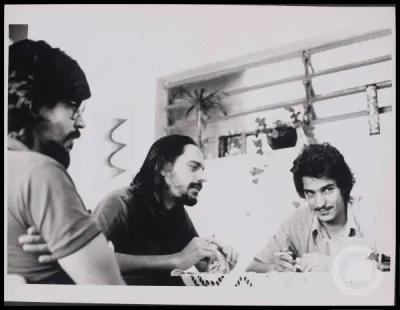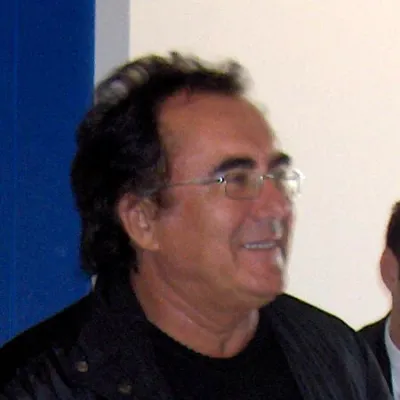
Al Bano
Human Design Chart
Biography
Al Bano — Manifesting Generator with Profile 5/1
Manifesting Generator 5/1 — Design at a Glance
Al Bano revealed himself through a hybrid nature: The speed of a Manifestor met the constant energy of a Generator. This allowed him to skip steps and achieve results quickly. However, this dynamism carried risks. Rushing ahead too fast led to overlooking necessary intermediate steps. Al Bano then had to backtrack and make up for gaps, which quickly turned into frustration – the specific non-self theme of this type. Additionally, he tended to pursue multiple impulses in parallel. Without inner confirmation, his creative drive tipped into negativity.
The solution lay in the strategy “Responding instead of Initiating”. Al Bano had to answer life and act only when his sacral center gave a clear “Yes!”. Only this constant approval of his inner authority ensured deep satisfaction. When aligned correctly, he enjoyed working on various projects simultaneously. The pressure to finish one thing first was counterproductive for him. Instead, he fell into a “Play Mode” that best fostered his creative power. In this state, variety was not a disturbance but the source of his energy and fulfillment.
Emotional Authority
Al Bano showed an internal decision-making structure that required time and distance rather than immediate reaction. His design suggested that spontaneous impulses were often deceptive; what felt like clear truth in the first moment often turned out later to be just a passing mood. This tendency arose from his emotional authority, carried by the defined Solar Plexus Center. In Human Design mechanics, this authority always takes precedence over all other defined centers – regardless of which additional strategies or energies are present in the chart.
This means for Al Bano: His feelings were subject to natural waves of highs and lows. The current emotion was always just a snapshot colored by the situation but not yet the final truth. Quick decisions driven by this immediate feeling could have negative consequences, as they were based on incomplete information. The mechanism required patience: A decision had to “overnight”, thought through multiple times and questioned. Only when initial emotional heat subsided and distance was established did clarity emerge. This calm marked the point where the internal process was complete and a well-founded choice possible – especially important for steps with long-term implications for his life path.
The 5/1 Profile — Heretic / Investigator
Al Bano revealed himself through a design that created a charged dynamic between private depth and public impact. As Profile 5/1 (Hero/Researcher), he had almost magnetic charisma: Others actively sought out his expertise or wisdom for problem-solving. This energy was attractive, pushing him into the role of a natural advisor or authority figure.
The mechanics behind this lie in Line 5, projecting a contribution that others only recognize and claim when offered. Simultaneously, Line 1 anchored him in deep, private research processes. Here lay his true knowledge base. The challenge was to integrate these two poles: After “giving” for others, he had to retreat to recharge through his own research and recovery.
Without clear boundaries, exhaustion threatened, similar to a scientist drained after hours of conferences while new requests pour in. His design thus required learning to say no. Only this way could he maintain the beneficial balance between service to others and self-care. Line 1 also emphasized the necessity of collaboration with stronger forces for intellectual progress; isolated action here led more to sinking into the wave than to solutions. His contribution should be time-limited, performed according to his inner authority, followed by a necessary retreat.
Split Definition — Defined & Open Centers
Al Bano was characterized by a massive, constant energy system: defined G-, Throat-, Sacral-, Solar Plexus-, and Root Centers created a firm identity that actively manifested in the world. His voice served as a pivot point to transform inner direction and emotional depth. The defined throat did not speak from mental concepts but reliably from his personal identity (G) and sacral vitality, giving him a present way of expressing himself, driven by constant root pressure and the need to await emotional clarity.
The defined Sacral Zone provided daily energy sources that were only correctly available through reacting to external impulses – not through initiated action. The Solar Plexus acted as inner authority; decisions required time to clarify within the emotional wave before being made.
In contrast, open Head-, Ajna-, Heart-, and Spleen Centers reflected their environment. Al Bano tended to perceive mental pressure or doubts of others as his own questions rather than drawing consistent inspiration from himself. The open heart center made him vulnerable to the temptation to prove his worth through willpower or promises – a trap since he did not possess constant energy for this. Similarly, the open Spleen Center could lead him to cling to situations to gain a sense of security and well-being instead of trusting spontaneous intuition. This openness allowed him to act as a mirror for the thoughts and emotions of his environment without internalizing them as truth. His mechanics required waiting for emotional waves and reacting to sacral signals, while mental concepts and will acts were consciously not used as driving forces.
Channels for persistence, emotional waves and inner clarity.
Al Bano was characterized by a cycle of longing, emotional clarification, and persistent discovery. His design inclined him towards restless searching for new experiences that only led to true satisfaction through patience and letting go of expectations.
This process began with the Recognition Channel 30-41. Here, the root drive (Gate 41) connected the fantasy of countless scenarios with the emotions of the Solar Plexus (Gate 30), creating an intense desire for newness that could only lead to clarity and not impulsive misjudgments through waiting for emotional waves. Emotional processing of these experiences occurred in the Transience Channel 35-36, connecting the Solar Plexus Center with the Throat Center, driving Al Bano to remain in motion through crises (Gate 36) and a desire for change (Gate 35). He learned that feelings are transient and used this experience as a source of wisdom he shared with others.
Parallel to this, the Emotional Release Channel 39-55 between Root and Solar Plexus was active. Through provocation (Gate 39) and spirit (Gate 55), it set off a pulsating wave of moods – a continuum of joy and melancholy. Authenticity rather than control was key here; he used his mood to find the right people and express his inner truth, not succumbing emotionally to tensions.
The peak of this cycle lay in the Discovery Channel 29-46, connecting the Sacral Center with the G Center. Through saying yes (Gate 29) and the determination of self (Gate 46), Al Bano had to let go of all expectations for the process. Only by fully immersing himself in experience and persistently remaining without seeking control could he be at the right place at the right time. His discoveries only revealed themselves later, allowing him to communicate new perspectives to the collective.
Collective Circuitry — Circuit Signature
Al Bano's design inclined towards emotional transformation through expression. His energy moved in waves, marked by tension between innovative knowledge and reflective meaning-making. This shared definition connected two parallel power fields: The first included Solar Plexus, Root, and Throat Centers; the second Identity and Sacral Centers. They worked side-by-side, not as a continuous flow.
In the Knowledge Circuit, Channel 55-39 (Gates 55/39) linked the Solar Plexus with the Root Center, enabling emotional release. The pulsating energy of this field drove the urge to go new ways and initiate change.
Parallel to this, the Meaning-Making Circuit worked in two separate segments. One part connected Throat-, Solar Plexus-, and Root Centers through Channels 35-36 (Transience), 46-29 (Discovery), and 30-41 (Recognition). This was about emotionally reflecting on the past to find meaning. The second segment linked Identity and Sacral Centers.
The feeling-consciousness flow in Solar Plexus underscored the wave-like character of these processes. Al Bano filtered new insights through emotional processing. Expression in Throat Center served to carry transformed emotions and confrontation with transience outward, while the parallel rhythmical impulses from the Sacral-Identity field were provided.
Left Angle Cross of Uncertainty 1
Al Bano's Design established a foundational stance of open uncertainty. His chart is marked by the left cross of uncertainty 1, indicating that clear sight on his own path or end result wasn't given from the start. Instead, a structure emerged where focus was less on a fixed goal and more on the process of enduring and experiencing it.
This configuration doesn't describe a planable strategy in the traditional sense but rather a life task defined by navigating unclear situations. With no specific Gates or Channels listed in the raw content, interpretation is limited to this central theme: Uncertainty isn't an error state but the determining factor of his design. It's about dealing with the lack of predictable security and finding one's own form of orientation without external guarantees. Al Bano moved within a field characterized by this fundamental openness, where the mechanics aim to use the experience of indeterminacy as space for development rather than viewing it as an obstacle.
Saturn Return · Uranus Opposition · Chiron Return · 2nd Saturn Return — Life Cycles
Al Bano's Design showed a tendency towards clear, binding identity formation that structured itself in his early twenties. He was someone who not only sought but actively strengthened his life path, marking the transition from youth to adult responsibility. This development aligned with the first Saturn Return, a cycle where years of groundwork often condenses into a solid result and anchors one's orientation in life.
In 1971, he released the album 'Al Bano'. At age 28, this was a typical moment for his design: The release served as concrete evidence of how internal maturation processes manifested outwardly – here through a professional milestone that underscored the new status. The first Saturn Return doesn't act as a passive phase but an active process of solidification. Al Bano used this time to define his artistic identity and lay the groundwork for his further life path. This cycle's mechanics favor moments where one clarifies to oneself who they are and which path they want to take. Through the album, he signaled this new stage of self-determination and anchored his role in public space.
Manifesting Generator · Emotional Authority — Synthesis
Al Bano's Design reveals a central red thread of dynamic adaptation. As a Manifesting Generator with defined G Center and Sacral Center, he possesses the energy to set things in motion, yet always connected with a deep need for authenticity and self-validation. The connection between manifesting and generative traits points to someone who can both initiate and react – an interplay between the desire to go their own way (G Center) and the necessity to respond to life (Sacral Center). This combination is reinforced by open definitions in several centers, making him receptive to external influences and requiring constant adaptation to his environment.
A central paradox lies in the tension between his inner authority – the emotional wave of the Solar Plexus Center – and the manifesting component of his type. He's destined to react to internal impulses and let decisions mature while simultaneously having the energy to act quickly and initiate things. This discrepancy leads to an internal conflict between the need for emotional clarity and the urge for quick implementation, which can make him move in different directions before he truly knows what is right for him.
4 Defined Channels
Incarnation Cross - Left Angle Cross of Uncertainty 1
Solar Return
The Solar Return shows the moment when the sun returns to its exact birth position - your personal solar year.
Life Cycles
Discover the life cycles with a detailed triple view (birth chart, cycle chart, composite).
Human Design Profile
- Strategy
- To respond - wait for something to respond to
- Authority
- Emotional Authority
- Profile
- 5/1 - Heretic / Investigator
- Definition
- Split Definition
- Incarnation Cross
- Left Angle Cross of Uncertainty 1
- Date of Birth
- 20.05.1943 18:00
- Place of Birth
- Cellino San Marco, Italy
Frequently Asked Questions
What is Al Bano's Human Design type?
What Profile does Al Bano have in Human Design?
What Authority does Al Bano have?
What is Al Bano's incarnation cross?
When was Al Bano born?
Discover your own Human Design
Are you also a Manifesting Generator? Find out in a personal reading how to unfold your multi-talents and direct your energy wisely.
More Personalities
Back to overviewAaliyah

Aldair

Alexia

Alizée

Angèle

Angeli