
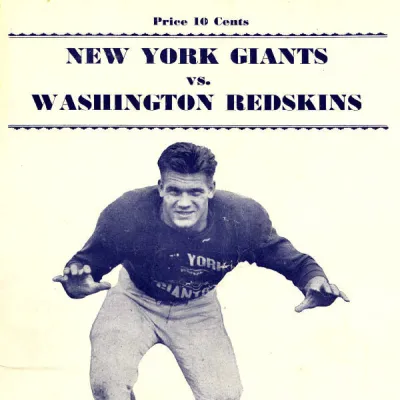
Al Blozis
Human Design Chart
Biography
What does Generator 6/2 mean for Al Blozis?
Generator 6/2 — Design at a Glance
Al Blozis had enormous endurance, but it did not stem from self-initiative; instead, he waited for impulses from his environment to act. His design as a Generator established that his strength only became effective when he reacted—not initiated. This sacral energy functioned like an engine that only started up once an external signal arrived and he responded with a clear “Yes! Let’s get going!” Only through this reaction to life’s offers could Al Blozis successfully advance his projects and experience deep satisfaction.
His path was marked by two specific risks resulting from this mechanism. On one hand, there was the danger of energy waste and burnout if he engaged in tasks for which he felt no inner enthusiasm. Such actions without the signal-generating “Yes” of the sacral center quickly drained him. On the other hand, there was the risk that his environment would keep him from his heart project even though he still had plenty of power left to continue working on it. If Al Blozis acted against this design and initiated himself or ignored inner signals, frustration arose and his energy declined. His success therefore depended directly on whether he used this sacral response as a compass to do only what was alive from within.
Emotional Authority
Al Blozis revealed an internal structure that prompted him never to make decisions immediately. His design carried emotional authority, meaning his defined Solar Plexus Center set the compass for his life. Regardless of which other centers were defined in his chart, this emotional authority always took precedence over all other inner voices.
This center was subject to constant ups and downs of feelings. Al Blozis saw the world always colored by his current mood: In one moment he could be excited about something, in the next that same thing would seem negative. His immediate feeling was merely a snapshot, a first impression that did not necessarily reflect his truth yet. Quick, spontaneous reactions from this emotional heat carried risks and could have negative consequences.
The mechanics of his design required patience. Al Blozis had to let decisions ripen, often through the conscious "sleeping on" of difficult questions. Only when the intense feelings subsided and he gained emotional distance did clarity and calm set in. This process of strategic seasoning was essential for him to distinguish between temporary mood swings and deeper insight. Only through these time cycles could he recognize the truth of his inner authority, especially regarding long-term decisions that significantly influenced his life path.
The 6/2 Profile — Role Model / Hermit
Al Blozis revealed himself as someone whose development was marked by a clear turning point: the transition from an experimenting natural talent to a wise role model. Before his 30th year of life, his configuration worked like that of a three-line design. During this phase, trial and error served as the driving principle; he gathered intense personal experiences but withdrew after failures to learn. This early period was defined by constant experimentation without yet possessing the detached wisdom of later years.
Around age 30, the sixth line fully activated. Al Blozis metaphorically retreated into a cave on a mountain – a state of deep distance and reflection. Here he evaluated his past experiments with new clarity. This phase of intense introspection served for healing and self-discovery. The sixth line requires an unbending attitude to transform misunderstandings into wisdom. Only after completing this inner work did he re-emerge. As a wise person, he became a role model; others sought him out to partake in his life wisdoms and learn the ability of deep self-reflection from him. His intuition helped him recognize appropriate values that served survival rather than morality. Through this resolute determination, he transformed earlier conflicts into a stable influence that guided others.
Single Definition — Defined & Open Centers
Al Blozis had a mechanical foundation consisting of three defined centers: Sacral, Solar Plexus, and Root. His design tended towards constant vital energy that only became effective through reactions to external requests. The strategy of waiting allowed him to use his sacral power purposefully; spontaneous yes or no responses determined availability and prevented exhaustion. This energy served an emotionally authoritative role. His defined Solar Plexus required waiting for the wave of feelings until clarity before making decisions. Impulsive actions on the waves led to chaos; only at the calm end of the cycle did the truth reveal itself. Additionally, a defined Root Center propelled him forward through constant pressure and stress, giving him the endurance to master challenges and rise materially.
In contrast, Head, Ajna, Throat, G, Heart, and Spleen were open. These centers mirrored their environment without creating an internal state. Al Blozis tended to be distracted by mental pressure or seek inspiration rather than listen to his inner voice. Without a fixed identity (open G), he often sought direction from others instead of determining it himself. He was vulnerable to trying to prove his worth through promises (open Heart) despite lacking consistent willpower. The open Spleen Center also made him sensitive to the health and well-being of his environment, leading to the risk of spontaneous, fear-based decisions. His strength lay in using the reflective function of these open centers without being bound by their conditioning monologues but always relying on his sacral energy and emotional clarity.
Channels for focused details and mystical principles.
Al Blozis exhibited a pronounced duality: on one hand, the ability for logical perfection through concentrated silence; on the other, a deep need for emotional connection and tribal loyalty. His design was marked by the Channel of Concentration 52-9, a formative energy between Root and Sacral centers. This channel connected the passive pressure of non-action (Gate 52) with the focused attention to details (Gate 9). Al Blozis had to remain still to keep distractions at bay and correct or perfect patterns step by step. This energy worked like a yoga pose: a calm inner pressure holding the body in place so that sacral reactions could be precisely directed towards the essential. Without this focus, he lost his powerful concentration; with it, he could logically penetrate complex connections.
Parallel to this, the Channel of Synthesis 19-49, connecting Root and Solar Plexus centers, was active. This channel dealt with tribal principles: Gate 19 urged towards approach and building belonging, while Gate 49 rejected anything not meeting the highest ideals of the community. For Al Blozis, this was the emotional glue determining who belonged and who did not. It balanced feasibility and fairness within his “family,” however defined. Loyalty and mutual protection were its foundation.
Additionally, Cross Gates worked: Gate 38 brought resistance for preserving individual integrity, Gate 57 promoted intuitive clarity in the here and now, Gate 51 showed strong willpower with adaptation pressure to shocks, and Gate 39 provided adrenaline of provocation for reevaluation. This combination underscored his ability to set boundaries (Gate 38), see clearly (Gate 57) and forge new paths through provocative analysis (Gate 39), always embedded in the logical structure of Channel 52-9 and emotional connection of Channel 19-49.
Collective Circuitry — Circuit Signature
Al Blozis was marked by two parallel, energetically separate streams. The Mind Circuit connected his Sacral with Root Center (Group 1). This created a focused, logical structure for societal improvement free from emotional conditioning. The energy was goal-oriented and future-focused. Parallel to this, the Ego Circuit linked Solar Plexus with Root Center (Group 2). Here it was about tribal resources, cooperation, and the rhythm of giving and taking. Although both circuits used the Root, they served different purposes: focus versus survival. As Al Blozis had a simple definition, these energies flowed in the same system but remained thematically distinct. The connection between Sacral and Root allowed constant energy for rational strategies, while linking Solar Plexus and Root brought emotional waves into the exchange process. This required pauses for resource regeneration. Al Blozis’ design knew no direct bridge between rational future planning and emotional tribal cooperation; they existed as parallel, independent forces. The Root functioned as a common drive, yet the goals – structural improvement versus resource-based support – remained clearly separate. This configuration shaped a lifestyle where logical clarity and emotional exchange dynamics worked in parallel but did not merge.
Left Angle Cross of Individualism 2
Al Blozis' design was marked by the 'Left Cross of Individualism 2', a configuration that determined his inner orientation and life structure. This specific cross in Human Design does not describe external actions but rather the deep internal compass guiding decisions and attitudes. It points to an individual path driven strongly by personal autonomy and the search for a unique identity. The mechanics of this type emphasize the need to not orient oneself towards collective expectations, but instead to follow one's own authentic line. For Al Blozis, this meant that his life was characterized by a constant process of self-discovery and differentiation to realize his specific way of being. The structure of this cross suggested that he developed best when respecting his own rhythm and not trying to fit into predefined roles. It was an energy of differentiation encouraging him to understand his individuality as the central theme of his existence. This orientation created a constant internal pressure to always seek what is unique about himself and live it consistently, independent of external validation. Al Blozis' chart thus showed a clear tendency towards an existential confrontation with the question 'Who am I really?', which permeated his entire being and significantly influenced his reactions to the world.
Generator · Emotional Authority — Synthesis
Al Blozis' life was shaped by a profound inner dynamics arising from the interplay of his Generator energy, emotional authority, and open centers. The ability to react to impulses (Sakra) was modulated by the need to emotionally clarify these impulses – a process requiring time and patience. This combination led to a life where authenticity and following one's internal compass were central values, while simultaneously engaging in a constant struggle with external influences and seeking guiding answers. The Channel of Concentration (52/9) indicates an ability to focus intensively on tasks when the energy of the Sacral Center is present, while open centers made him sensitive to other people's energies and forced continuous adaptation.
A central tension field in Al Blozis' design lay between the need for inner clarity and openness to external influences. Emotional authority demanded a waiting strategy to reach an authentic decision, while open centers allowed a constant flood of information and impressions. This may have led to an internal struggle between the desire for autonomy and the challenge of orienting oneself in a complex world – a paradox driving him to always seek his own truth and direction.
2 Defined Channels
Incarnation Cross - Left Angle Cross of Individualism 2
Solar Return
The Solar Return shows the moment when the sun returns to its exact birth position - your personal solar year.
Life Cycles
Discover the life cycles with a detailed triple view (birth chart, cycle chart, composite).
Human Design Profile
- Type
- Generator
- Strategy
- To respond - wait for something to respond to
- Authority
- Emotional Authority
- Profile
- 6/2 - Role Model / Hermit
- Definition
- Single Definition
- Incarnation Cross
- Left Angle Cross of Individualism 2
- Date of Birth
- 05.01.1919 19:00
- Place of Birth
- Garfield, New Jersey, United States
Frequently Asked Questions
Which Human Design Type was Al Blozis?
What incarnation cross did Al Blozis have?
When was Al Blozis born?
Discover your own Human Design
Are you also a Generator? Find out in a personal reading how to use your sacral energy correctly and discover deep satisfaction.
More Personalities
Back to overviewAaliyah

Aldair

Alexia

Angèle

Anne-Marie

Arcángel
