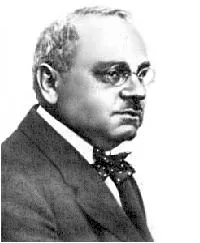
Alfred Adler
Human Design Chart
Biography
The Human Design of Alfred Adler: Projector 6/2
Projector 6/2 — Design at a Glance
Alfred Adler's design inclined towards precise system analysis: He acted like a focusing flashlight that immediately identified places in the environment that were not functioning. This ability to bring 'light into the dark' and quickly recognize errors in other people's structures shaped his way of perception. However, direct confrontation with these insights would often have been perceived as unpleasant, comparable to bright light directly in one's face. Instead, a more elegant strategy emerged: by setting an example through harmonious actions, he attracted others rather than instructing them.
As a projector, Alfred Adler did not have a defined Sacral Center, meaning that he lacked a constant internal source of life energy. His rhythm consisted of phases of high activity followed by necessary rest periods to avoid burnout. The central mechanism for him was waiting for a genuine and sincere invitation from others rather than self-promotion or taking initiative without being asked.
If he lived according to this design, he was rewarded with success. Ignoring this structure and trying to work against his nature led to the non-self theme of bitterness. His dense aura only appeared non-threatening when legitimized by an environment's invitation. This cycle of targeted shining, waiting for resonance, and recovery formed the foundation of his energetic integrity.
No Inner Authority
Alfred Adler's design lacked internal authority, which meant that his decision-making did not rely on physical impulses but rather on external exchange and cyclical observation. As a mental projector, he had no center activation below the Throat Center. This configuration determined that he found orientation by exchanging with various people. Through energetic interactions in his open centers, dormant potentials were activated and provided information allowing him to view issues from many perspectives and express them differently. His high resonance capability helped him find the right environment and suitable individuals for this dialogue.
However, evaluating these collected data was a complex process that required time. Alfred Adler needed solitude to recognize the red thread and distinguish what made sense and belonged to him. This process enabled him to develop specific intelligence: filtering out essential information from a mass of data, organizing it meaningfully, and structuring it. This formed his capital for success as a projector. A key element in his life was being present in an environment where he felt comfortable and could trustfully exchange with the right people about decision-making processes. Over time, this approach deepened his sense of what was right for him by collecting information through dialogue and structuring it in silence.
The 6/2 Profile — Role Model / Hermit
Alfred Adler's design set a clear developmental line: In the first three decades of life, experiments, trial and error dominated. His 6/2 role acted like a pure 3-line during this phase, driven by the necessity to gather personal experiences. Here, Gate 13 on Line 6 appeared as unwavering hope for openness and better relationships; every interaction was accepted as a necessary step towards greater unity. This was a time of optimistic experimentation.
After turning thirty, with the activation of Saturn return, this dynamic fundamentally changed. The energy of Line 6 came into play, marked by a deep withdrawal – metaphorically into a 'cave' on a mountain. During this phase of distance, Alfred Adler intensely reflected upon his earlier experiments. This retreat served not for isolation but for healing and deeper self-knowledge.
Simultaneously, the 2-line (Gate 43) brought readiness and engagement. His unique mental habits and thought processes, often perceived as 'crazy' due to their insights, were essential for his breakthroughs. These specific behaviors required education to go beyond theoretical understanding.
The result of this long phase of introspection was emerging as a wise person. Others recognized this wisdom and sought him out to partake in his life lessons and learn the ability for deep self-reflection from him. Thus, his design described the path from experimental optimism in young years to mature authority gained through reflection later in life.
Single Definition — Defined & Open Centers
Alfred Adler's Design establishes a clear distinction between a constant inner structure and situational environmental adaptation. His defined Ajna Center grants him an independent, consistent conceptual thinking; he processes data in the same reliable way regardless of external influences. This mental stability directly flows into his defined Throat Center, enabling dependable manifestation and communication. He spoke what his mind conceptualized – his voice was a mirror of his thoughts, not impulsive drives.
In contrast, seven centers were open: Head, G, Heart, Sacral, Solar Plexus, Spleen, and Root. This openness made him a situational mirror for inspiration, identity, will, energy, emotions, intuition, and stress from the environment. Without a constant source in these areas, he tended to adopt "borrowed" states. So he could wonder if he had found the right direction or love (open G), or try to prove his worth through promises (open Heart). He was vulnerable to absorbing other people's emotions (open Solar Plexus) and stress (open Root), which could easily overwhelm him.
The mechanics show: While mind and expression were his stable pillars, all other life areas required a strategy based on inner authority. Only this way did he avoid being overwhelmed by external pressures – such as the need to find inspiration (open Head) or set energy boundaries (open Sacral). His strength lay in expressing his conceptual clarity while learning not to confuse the reflection of the environment with his own essence.
Channels for inquisitive curiosity and structured insight.
Alfred Adler's expression was characterized by a unique synthesis of narrative magic and structural innovation. He combined the ability to weave complex ideas into memorable stories with the drive to convey efficient new ways of thinking. This did not happen as dry fact repetition but through a transformative voice that filled gaps with imagination, thus influencing people.
This dynamic resulted from two defined connections between Ajna and Throat Center. The Channel of Curiosity 11-56 propelled him as a seeker who never stopped searching for inspiration. His creativity was evident in his ability to transform philosophical reflections on human life into parabolic narratives. These stories served less as self-guidance than as instruction and entertainment for others; they stimulated the listener's imagination by bringing information to life rather than relying solely on raw data.
At the same time, the Channel of Structuring 43-23 shaped his mode of expression through spontaneous insights and innovative perspectives. This channel fostered a mutative thinking that increased efficiency but required patience in assimilation. Alfred Adler had to learn to explain his innovative knowledge clearly so it would not be dismissed as bizarre "freak" knowledge. Proper timing was crucial: Only when his unique insights were expressed at the right moment, naturally and with inner authority, could they be accepted by the collective and bring about an evolutionary change.
Additionally, individual Gates influenced his design. Gate 13 promoted reflection on experiences in the context of time and collective memory, while Gate 7 supported a need for leadership and projecting future patterns. On a personality level, Gate 24 introduced the process of mental mutation and renewal, emphasizing the search for personal meaning in knowledge. In the design itself, Gate 62 provided logical detail work, pattern recognition, and the patient establishment of a framework to structure facts and convince others.
Individual Circuitry — Circuit Signature
Alfred Adlers design points to a tendency towards pulsating, acoustic expression of individual identity. His energy was rhythmic and grounded in the present, fostering direct and clear articulation of his essence. This resulted from the Knowledge Circuit, which in him was specifically structured (Channel 43-23), connecting the Ajna Center with the Throat Center to enable transformation of new knowledge and initiation of change. The energy here did not flow as diffuse inspiration but as structured assertiveness.
Parallel to this, the Meaning Circuit also played a role, focusing on cyclical, visual reflection on past experiences. In Alfred Adler, this circuit was activated by Curiosity (Channel 11-56), which similarly connected Ajna and Throat Centers. This configuration drove him to explore the meaning behind past events and share these emotional insights with the collective. Since both circuits involved the same centers, there existed two parallel forces: on one hand, an impulsive-structured expression of self, and on the other, a wave-like, reflective learning from the past. Both streams converged into the same expressive capacity but shaped different qualities – once through affirmation of individuality in the present, and another through shared understanding of historical contexts. Alfred Adler utilized this interconnected energy to both formulate innovative structures and make emotional resonance from past experiences accessible to others.
Left Angle Cross of Masks 1
Alfred Adler's Human Design was shaped by the left cross of Mask 1. This configuration set an archetypal framework that structured his public appearance and how he interacted with society. The left cross of Mask 1 describes a specific dynamic in Human Design: it concerns the role one plays and how this role is perceived. For Alfred Adler, this manifested as a clear distinction between his private self and his public persona. He wore a "mask," not in the sense of deception, but as a conscious or unconscious adaptation to societal expectations and role models.
This structure determined how Alfred Adler acted within social contexts. The mechanics of the left cross of Mask 1 imply a tension field between authenticity and presentation. For him, this meant that his public work was often characterized by a specific role he adopted to interact with his environment. This created a distance between his inner experience and the persona he presented outwardly. The energy of this cross influenced Alfred Adler to partially define his identity through others' expectations or at least be strongly influenced by them. It was a framework that helped him navigate the world by taking on clear roles. This structure significantly determined how others perceived him and how he understood his position within the social fabric. The "mask" served as an interaction tool, guiding his actions and reactions in certain situations.
Saturn Return · Uranus Opposition · Chiron Return · 2nd Saturn Return — Life Cycles
Alfred Adler's professional development followed a clear cyclical structure, with recurring astrological cycles serving as frameworks for milestones in his public and institutional career. These rhythms marked phases of condensation and public impact of his work.
In 1912, at the age of 42, he published "On the Neurotic Character." This fell during a Uranus opposition cycle, often associated with sudden breakthroughs or breaking old structures, which here initiated a new professional level.
Ten years later, in 1920, at the age of 50, he reached his Chiron return. In this fulfillment cycle, where one's life purpose increasingly unfolds, Alfred Adler became director of the first clinic for child psychology in Vienna and professor at the Pedagogical Institute. This positioning reflected the flowering of his specific vocation, not as healing injuries but as realizing his incarnation cross through institutional responsibility and teaching.
The second Saturn return in 1927 (age 57) brought another phase of consolidation. With the publication of "Understanding Human Nature," he condensed his knowledge once more into a robust, widely effective result. This cycle confirmed the previously chosen direction and solidified his reputation through systematic processing of his insights. The sequence of these cycles shows how external time structures translated his inner developmental phases into concrete professional realities.
Projector · No Inner Authority — Synthesis
Alfred Adler was a Projector whose life was marked by a deep ability to recognize patterns and understand dynamics in relationships (Gate 13, Channel 19). This talent manifested as an intuitive ability to read other people and identify their hidden needs or weaknesses (Design View: Projector – "finds the flaw in the system immediately"). His open authority required exchange with others to gain clarity (Authority: No inner authority), which led him to gather information from various perspectives and derive new insights from it (Circuit: Knowledge Circuit – "gain new knowledge"). This ability to synthesize information and the resulting insights shaped his approach to understanding human behavior.
A central paradox in Alfred Adler's design lay in the tension between his open, resonant nature (multiple undefined centers) and his need for recognition and validation (Gate 43 Line 2). He was receptive to other people’s energies but tended to lose himself in their conditioning (Centers: open Root and Solar Plexus Centers), making him vulnerable to a desire for external validation. At the same time, he possessed the ability to offer innovative solutions through his unique perspective (Channel 2, Gate 62) – a gift that only came into full play when invited by others and allowed to share his knowledge (Design View: Projector – "wait for an appreciative invitation").
2 Defined Channels
Incarnation Cross - Left Angle Cross of Masks 1
Solar Return
The Solar Return shows the moment when the sun returns to its exact birth position - your personal solar year.
Life Cycles
Discover the life cycles with a detailed triple view (birth chart, cycle chart, composite).
Human Design Profile
- Type
- Projector
- Strategy
- Wait for the respectful invitation
- Profile
- 6/2 - Role Model / Hermit
- Definition
- Single Definition
- Incarnation Cross
- Left Angle Cross of Masks 1
- Date of Birth
- 07.02.1870 14:00
- Place of Birth
- Wien, Austria
Frequently Asked Questions
What Human Design type was Alfred Adler?
What Profile did Alfred Adler have in Human Design?
What Authority did Alfred Adler possess?
What incarnation cross did Alfred Adler have?
When was Alfred Adler born?
Discover your own Human Design
Are you also a Projector? Find out in a personal reading how to unfold your leadership qualities and recognize the right invitations.
More Personalities
Back to overviewSissy Spacek

Alain-Fournier

Anémone

Ann-Margret

Arletty

Arno