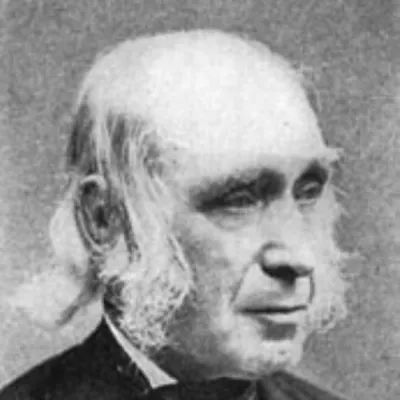
Amos Bronson Alcott
Human Design Chart
Biography
Died 4 March 1888, Boston.
Amos Bronson Alcott as a Projector 2/4 in Human Design
Projector 2/4 — Design at a Glance
Amos Bronson Alcott's Human Design suggests a tendency towards dense, focused perception. His aura appeared like a bright flashlight that immediately revealed system errors in his surroundings. However, the ability to quickly recognize the 'dark' in others could be perceived as unpleasant when he addressed these flaws directly. Instead of provoking resistance by shining light on faults, his design was most effective through pleasant, harmonious illumination. By living out what worked himself, he attracted others who then sought his insights.
His strategy involved waiting for respectful and honest invitations. This invitation served as a protective mechanism against the potential inappropriateness of directly illuminating other people's problems. With an undefined Sacral Center, Amos Bronson Alcott lacked a constant intrinsic energy source. His rhythm required phases of intense activity followed by necessary rest periods to avoid burnout. Living according to this design led to success and recognition. Deviations from it, such as continuous initiative without invitation or ignoring the need for recovery, resulted in his non-self theme of bitterness. His path involved using his focused perspective only when explicitly desired and appreciated.
Emotional Authority
Amos Bronson Alcott's Human Design suggests a tendency towards emotional depth and necessary delays in decision-making. His inner authority came from the defined Emotional Center, meaning he was subject to a constant wave of feelings up and down. The world appeared colored by his current mood; enthusiasm could quickly turn into negative perspectives. This emotional fluctuation was not a sign of instability but a mechanical process: the feeling in the immediate moment merely represented a snapshot, not the final truth.
Immediate reactions or spontaneous decisions based on strong emotions often had negative consequences for him, as they were based on transient states. Instead, his authority required patience and time. Clarity emerged only after intense feelings subsided and emotional distance was gained. This process of 'sleeping over' decisions was essential to reach inner calmness.
Especially in long-term projects that significantly influenced the course of his life, this mechanism became evident. Amos Bronson Alcott had to be patient and ask questions multiple times before acting. Only by going through these emotional waves and waiting for tranquility could he gain deeper insights and make well-founded judgments. His strength did not lie in the speed of reaction but in the ability to navigate the emotional landscape to find true clarity.
The 2/4 Profile — Hermit / Opportunist
Amos Bronson Alcott's Human Design suggests a fundamental tension between the need for deep solitude and the urge to connect within a network. He was someone who constantly oscillated between two poles: the desire to be alone to gain inner clarity, and the longing to spend time with chosen people. This dynamic of Profile 2/4 required him to clearly communicate his boundaries. Only through explicit signaling – 'Now I need solitude' or 'I seek company' – could he create a safe environment where both needs were respected.
During his withdrawal phases, Alcott immersed himself in internal processes. This time served for processing and reflecting on the knowledge he had gathered through social interactions. Once this need for isolation was satisfied, he emerged from his 'cave' to reconnect with his network. This rhythm was crucial for his well-being. Ignoring the necessity of withdrawal threatened him with depression due to softening and loss of focus. Neglecting necessary rest periods after social interaction risked burnout due to overloading and focusing on quantity rather than quality. His design thus described not a static personality but a cyclical process: withdrawal to inner order, followed by renewed emergence for social interaction and collaboration.
Split Definition — Defined & Open Centers
Amos Bronson Alcott's design established a foundational structure of constant internal pressure and situational sensitivity. His defined Head and Ajna centers generated a continuous mental flow: inspiration, questions, and the need to understand connections were always present. However, since these centers did not have their own energy for implementation, attempts to immediately translate this thinking into action often led to frustration or hasty decisions. The challenge was to use the mental process as a source for others without having to exhaust himself.
Stable willpower and ego strength came from his defined Heart center. It allowed him to keep promises, control resources, and represent his value. This inner firmness contrasted with his emotional authority: His defined Solar Plexus center required patience. Emotional clarity only emerged through waiting for the waves; impulsive reactions to emotional highs or lows would often be regretted later.
At the same time, Throat, G-, Sacral, Spleen, and Root centers were open. This meant that communication, identity, vital energy, health, and stress reactions were not consistently available but conditioned by the environment. Amos Bronson Alcott tended to question whether he received enough attention or who he actually was when external impulses were lacking. He absorbed the stress and energies of others, which could lead to exhaustion if handled incorrectly. The mechanics of his design required him not to fight this open state but to wait for the right timing and initiatives from the environment rather than independently generating pressure or imposing identities.
Channels for community feeling and abstract comprehension.
Amos Bronson Alcott's design inclined towards a specific kind of community building based on careful, emotional agreements. He did not seek spontaneous connections but lasting contracts in the sense of 'I do this for you if you do that for me.' This attitude stemmed from Channel 37-40 of Community, which linked his Solar Plexus center with his Heart center. Through Gate 37 (Friendship) and Gate 40 (Solitude), there was a need for recognition and a place within the whole, coupled with the necessity to take breaks and receive reward for work benefiting others. Such an arrangement could not be impulsively closed; it required time to become emotionally clear and beneficial for both sides.
Parallel to this, Amos Bronson Alcott exhibited an insatiable mental drive to deconstruct experiences. His mind constantly worked with possibilities, driven by Channel 64-47 between Head center and Ajna center. Gate 64 (Confusion) brought a flood of images and thoughts while Gate 47 (Understanding) sought to find a foundational story or perspective. This configuration made him unsuitable for immediately understanding his own life through logical thinking. Instead, he had to wait patiently until mental confusion gave way to clarity and an inspiring image emerged that he could then share. His mind was not an inner authority for facts but an instrument in the search for the mysterious behind things.
Collective Circuitry — Circuit Signature
Amos Bronson Alcott exhibited a divided energy structure forming two independent focal points: emotional processing of the past and social securing of resources. Since his design did not connect to the Sacral center, he lacked constant life force; instead, his energy appeared in waves or jerky patterns, necessitating rest phases for regeneration.
The Meaning-Finding Circuit linked Amos Bronson Alcott's Head with Ajna centers. This connection directed attention towards emotions and experiences from the past. Unlike cool logic, this was a cyclical, wave-like dynamic: Each emotional process had a clear beginning, middle, and end. The goal was to reflect on past events, give them meaning, and share these felt insights with the collective to learn together.
Parallel to this, the Ego Circuit worked, linking his Heart center with his Solar Plexus center. This area concerned not individual self but clan dynamics of cooperation and mutual support. Through the 'Community' channel (37-40), a balanced relationship between giving and taking emerged – a form of social security where help given today was returned tomorrow. Since this circuit also did not connect to Sacral energy, Amos Bronson Alcott had to take breaks to rebuild the necessary resources for these cooperative exchange processes. Both systems existed side by side without energetically merging.
Right Angle Cross of Planning 4
Amos Bronson Alcott's Human Design profile indicated a tendency towards strategic preparation before taking action. He was someone who did not choose his path arbitrarily but ensured that his steps were firmly grounded through careful planning and consideration of circumstances. This approach stemmed from the influence of the right cross of Planning 4 in his chart, an archetypal aspect describing inner discipline that requires understanding the context and gathering necessary resources before acting. For Amos Bronson Alcott, it was not about impulsive action but creating a stable foundation for future developments.
The mechanics of this cross emphasized the importance of patience and structure. Rather than relying on external circumstances that could change at any moment, he sought internal patterns and logical connections to guide him. This allowed him to make decisions that were sustainable in the long term rather than responding to short-term impulses. Planning was not a rigid constraint but a tool for clarifying his own will and available means. Through this approach, he could anticipate obstacles and clear paths that remained hidden from others. His method was characterized by a calm persistence aimed at transforming chaos into order through careful steps and conscious design of each phase of the process. This structural clarity defined how he approached challenges and ensured some predictability in an often unpredictable environment.
Saturn Return · Uranus Opposition · Chiron Return · 2nd Saturn Return — Life Cycles
Amos Bronson Alcott's life journey was marked by two significant cyclical turning points that structured his development. The first Saturn Return, typically occurring around age 30 and symbolizing the transition from youth to serious adult responsibility, fell for him in 1830. At the age of 31, he married Abigail May Alcott. This event marked a moment of consolidation: years of searching for stability and identity culminated in a binding life decision that served as a foundation for subsequent years.
Later, the Uranus Opposition cycle around his 40th year came into effect, often associated with a need for radical change and breaking away from established structures. For Amos Bronson Alcott, this phase was active in 1842 when he founded Fruitlands, a social utopian settlement, at age 43 alongside other Transcendentalists. This was not merely a career move but an expression of his inner drive to question existing societal norms and shape new, idealistic ways of living. The Uranus Opposition cycle here fostered the courage to deviate from convention. Both cycles – stabilization through Saturn and liberal openness through Uranus – shaped his biography as a sequence of anchoring and experimental breakout, driven by the specific dynamics of his astrological transits.
Projector · Emotional Authority — Synthesis
Amos Bronson Alcott navigated his life through a constant tension between inner clarity and the need to communicate this in an often unprepared world. The combination of a defined mental center and emotional authority points to a deep thinker whose inspiration ripened over time through reflection (Channel 64-47). This internal processing fueled his ability to recognize connections (Gate 37) and promote community – a need he both sought out and actively shaped. His open Root Center amplified this dynamic by making him receptive to the energies of others, which could be inspiring but also risked overstimulation (open Root Center).
A central paradox in his design lies in the discrepancy between his ability for abstraction and the need for concrete realization. While he developed complex ideas mentally (Gate 9), he was simultaneously dependent on confirmation and exchange with others to manifest them (Channel 37-40). This tension between inner world and outer expression shaped his search for an authentic path that fulfilled both his intellectual needs and deep desire for connection.
2 Defined Channels
Incarnation Cross - Right Angle Cross of Planning 4
Solar Return
The Solar Return shows the moment when the sun returns to its exact birth position - your personal solar year.
Life Cycles
Discover the life cycles with a detailed triple view (birth chart, cycle chart, composite).
Human Design Profile
- Type
- Projector
- Strategy
- Wait for the respectful invitation
- Authority
- Emotional Authority
- Profile
- 2/4 - Hermit / Opportunist
- Definition
- Split Definition
- Incarnation Cross
- Right Angle Cross of Planning 4
- Date of Birth
- 29.11.1799 04:00
- Place of Birth
- Wolcott, CT, United States
Frequently Asked Questions
What was Amos Bronson Alcott's Human Design type?
What Profile did Amos Bronson Alcott have in Human Design?
What Authority guided Amos Bronson Alcott?
What incarnation cross did Amos Bronson Alcott have?
When was Amos Bronson Alcott born?
Discover your own Human Design
Are you also a Projector? Find out in a personal reading how to unfold your leadership qualities and recognize the right invitations.
More Personalities
Back to overviewSissy Spacek

Alain-Fournier

Anémone

Ann-Margret

Bourvil
Hergé