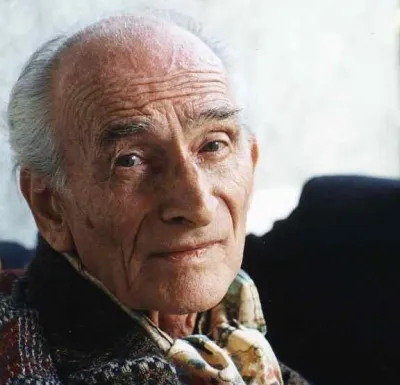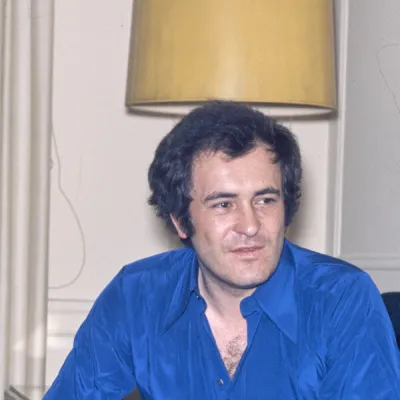
Bernardo Bertolucci
Human Design Chart
Biography
On 11 April 1988, he won the Best Director Oscar for "The Last Emperor," a film that swept up awards in nine categories. The $23.8 million epic was shot in China from 1984 to 1987 with a crew of 100 from Italy, 20 from England and 150 Chinese. There were 60 actors from six countries and 19,000 extras. There were 30 or more interpreters working at all times as they shot inside Beijing's Forbidden City. The film was released in November 1987.
Bertolucci was the first of two sons born to Attilio, a poet, anthologist, film critic and art history teacher. His mother, a teacher, Italian-Irish, had come from Australia. His brother Giuseppe later followed in Bernardo's footsteps as a film maker. The family lived in the rural outskirts of Parma until the early '50s, when his father's work took him to Rome. He speaks of a "golden childhood with a big, comfortable house, servants, understanding parents, and a pursuit of intellectualism." By the time he was 12 he had several poems published, at 15, he made two short films about children in the country. A collection of his poems was published in 1962, winning the Premio Viareggio, one of Italy's top literary awards.
Bertolucci studied at the University of Rome where he met the filmmaker Pier Paolo Pasolini and joined him in the film business. His first works were decidedly left-wing cinema.
He underwent psychoanalysis at the age of 28, emerging more meditative and insightful, a romantic among directors. Handsome in a rugged way, he was 6' 1" (1.
What does Manifesting Generator 4/6 mean for Bernardo Bertolucci?
Manifesting Generator 4/6 — Design at a Glance
Bernardo Bertolucci revealed himself as a hybrid configuration: an Manifesting Generator. His design combined the constant, sacral energy of a Generator with the lightning-fast implementation power of a Manifestor. This meant that while he had steady access to life force energy and needed to respond to impulses to use it correctly, he also possessed the ability to skip steps and quickly draw things into his life.
This speed was a double-edged sword. Often, he would overlook important stages or start several projects simultaneously, driven by different impulses. When his inner authority did not clearly affirm these actions, his creative enthusiasm quickly turned into frustration – the specific non-self theme of this type. Success and deep satisfaction came to him only when he responded to life and continuously affirmed each undertaking with a clear "yes" from his sacral center.
Under this condition, his speed could become beneficial. He worked effectively on various things at once without becoming blocked, as variety served him well. In this state, he entered into a productive play mode where the risk of overcommitment was avoided and his hybrid nature could fully and satisfyingly unfold its power.
Emotional Authority
Bernardo Bertolucci showed an inner decision-making structure that required time and distance. His inner authority lay in the defined Emotional Center, meaning he was subject to a constant wave of feelings. This emotional dynamic created a permanent up-and-down of his moods: At one moment something could deeply inspire him, while at another the same thing appeared in negative light.
This configuration made immediate impulses deceptive signs. His feeling in the moment was merely a snapshot, not a final judgment. Quick decisions that emerged directly from this emotional heat often risked negative consequences, as they were based on a transient coloring of perception and not deeper clarity.
The mechanics of his design required patience. To recognize his true truth, Bernardo Bertolucci had to let the emotional waves subside. The more time he took, the more intense feelings subsided. This process of waiting and sleeping on decisions allowed him to gain emotional distance. Only when the initial intensity faded did calmness set in and a clear, grounded perspective become effective. This necessity to go through the cycle of emotions shaped his way of making important life decisions – not in the first impulse but in the calm that followed.
The 4/6 Profile — Opportunist / Role Model
Bernardo Bertolucci revealed himself through a fundamental tension between the deep desire for emotional belonging and the intellectual drive to observe from a distance. His design as Profile 4/6 established that his life was marked by a conflict between Heart and Head: Line 4 with its focus on intimacy and networking versus Line 6 with its search for wisdom and overview.
In his first half of life, before Saturn's return, Line 6 still worked similarly to a Line 3. Bernardo Bertolucci experimented intensely during this phase, particularly in relationships and friendships. The mechanics of the fourth line pushed him to build a network through kindness and gather secret information. He acted partly as a "double agent," using confidential knowledge and making connections to effectively approach experiences.
With the activation of the sixth line later in life, Bernardo Bertolucci experienced internal confusion due to the conflict between wanting to open up to the community versus the necessity of maintaining critical distance. It was expected that he would meet the high standards of a wise role model. The sixth line provided him with the ability to adapt and understand transitions as part of a cyclical process. He served as an example for recognizing the collective flow, while his big heart always had to remain cautious not to open up to the wrong people and get hurt.
Split Definition — Defined & Open Centers
Bernardo Bertolucci revealed himself as someone whose inner architecture was marked by a rare stability: five defined centers created a firm basis for identity and expression. His mental consciousness (Ajna) worked steadily and independently, conceptually clear and unaffected by external influence. These thoughts flowed directly into his communication ability (Throat), allowing him to reliably translate what he thought into language or action. His identity (G Center) was firmly anchored; he knew who he was and which direction he was going without needing external definition.
However, this mental and identity-based structure was modulated by two additional forces. His Sacral Center provided enormous vital energy but was only available in response to stimuli – initiatives from the mind alone often led to exhaustion here. Even more crucial was his defined Solar Plexus as an emotional authority. Here lay the central dilemma: while Ajna and Throat enabled quick implementation, the Solar Plexus demanded patience. Truth revealed itself for him only at the end of the emotional wave. Acting impulsively on mental ideas without waiting for emotional clarity led to internal contradictions between the desire for immediate manifestation and the necessity of emotional maturity.
At the same time, he was situational influenced by four open centers. His open Head Center made him vulnerable to external mental pressure and the temptation to answer questions that were not his own. The open Heart Center drew him into dynamics where he wanted to prove his worth rather than simply being himself. His open Spleen and Root Centers absorbed environmental stress and uncertainties about well-being, which could lead to conditioning if his strategy (waiting for reaction) was ignored. Therefore, the mechanics of his design required a balance: using stable mental and identity resources, tempered by the necessary emotional patience of the Solar Plexus and protected from absorbing foreign pressures.
Channels for rhythm, emotional depth, clarity and perseverance.
Bernardo Bertolucci's mechanism combined mutative direction changes with persistent experience-seeking. The Channel Beat 14-2 drove innovative shifts by linking material resources with higher knowledge. This allowed him to initiate new perspectives when he trusted his sacral reaction. Simultaneously, the Discovery Channel 29-46 required a deep commitment to the process; only through unwavering persistence in experience could the full meaning be revealed.
In emotional articulation, the Openness Channel 22-12 played a role. This demanded strict emotional timing for social interactions. Forced isolation tendencies led while authentic mood and passion made his voice a catalyst. Parallel to this, the Structuring Channel 43-23 influenced delayed insight communication. His innovative thought impulses needed time to be understood; patience was essential so these unique perspectives were not dismissed as foreign.
Additionally, influences like the cyclical crisis experience (Gate 36) and visual memory (Gate 11) shaped his perception of development and idea analysis. Genetic care (Gate 27) and basic rhythm (Gate 5) underscored his need for structure and species maintenance. Bernardo Bertolucci's design suggested that true impact only arose when he respected the natural flow of his energy – without haste in communication and with full dedication to the discovery process.
Individual Circuitry — Circuit Signature
Bernardo Bertolucci's design tended towards experiencing the search for a unique identity through the filter of emotional past cycles. With his split definition, two parallel, not directly connected energetic streams existed side by side: The Knowledge Circuit linked Ajna, Throat, and Solar Plexus Centers (creative intuition and emotional expression) on one hand, and Identity and Sacral Center (individual radiance and life force) on the other. Here pulsating creative flashes of insight worked together with the energy to walk one's own path. Parallel to this, the Meaning Circuit also connected Identity with the Sacral Center but focused on cyclical processing of past experiences and their emotional reflection. This configuration created a tension field: The urgent need to go new individual paths and initiate transformation was filtered through wave-like often inexplicable emotional processing of the past. Bernardo Bertolucci showed himself as someone whose creative impulses from the present collided with repelling or reflective waves of history. The energy was pulsing and creative but had to run the rhythm of emotional cycles before it could be shared. This shaped a lifestyle where innovation did not stand isolated but was always negotiated in dialogue with collective learning from the past.
Right Angle Cross of Eden 1
Bernardo Bertolucci's design carried the signature of the Right Cross of Eden 1. This configuration was present in the provided data without specific energetic assignment or detailed mechanical description. The absence of an explicit interpretation does not mean that this structure remained inactive; rather, it marks a domain within the Human Design system whose individual impact had to be derived from the overall constellation of the chart, rather than being defined by isolated definitions.
Without predefined interpretive patterns such as 'search for truth' or specific behaviors, the mechanical meaning of this Cross configuration in Bernardo Bertolucci's design remained open-ended in the context of this reading. The structure existed as part of his energetic makeup, yet its concrete manifestation could not be derived from the raw data at hand. This underscores an important nuance of Human Design analysis: Not every aspect of a design comes with a clear, standardized explanation. Sometimes the mechanics remain in the background and work subtly, intertwined with other elements of the chart without being described as an independent, isolatable feature. Bernardo Bertolucci lived with this unspoken dynamic whose specific quality was not further specified here.
Saturn Return · Uranus Opposition · Chiron Return · 2nd Saturn Return — Life Cycles
Bernardo Bertolucci emerged as someone who did not ignore internal conflicts but actively used them for self-awareness. His design indicated a tendency to experience crises as catalysts for profound psychological work. This became concrete in 1969: At the age of 28, during his first Saturn Return, he began psychoanalysis. This cycle often marked the point where years-long internal tensions condensed and required structural answers. For him, this was not just a life crisis but a necessary step towards stabilizing his identity through professional guidance.
Later, in 1988 at the age of 47, he won an Oscar for best direction with 'The Last Emperor'. This fell within his Chiron Return period (around ages 49-51), a fulfillment cycle. During this phase, one's incarnation cross increasingly unfolds in life; meaning and purpose become experiential if one has lived according to their strategy. The Oscar was no coincidence but an expression of this blooming time when internal clarity after earlier analytical work now found external recognition. Thus, the dynamics of Bertolucci's design linked his early painful confrontation with himself (Saturn) to later visible realization of his creative purpose (Chiron). It was a path from inner structuring towards outer affirmation.
Manifesting Generator · Emotional Authority — Synthesis
Bernardo Bertolucci navigated his life influenced by an internal dynamic between initiating and reacting, conceiving and feeling. His design as a Manifesting Generator with emotional authority points to someone who both possessed the ability to quickly set things in motion (Gate 14/2) and felt a deep necessity to anchor decisions within a process of emotional clarification (Solar Plexus Center). This combination created a creative impulse generator that was always dependent on confirmation and flow from his Sacral Center to achieve sustainable results. The connection between Head and Throat Centers (Channel 43/23) indicates an aptitude for structuring and communicating complex ideas, while the open Root Center made him sensitive to the energies of his environment.
A central paradox in Bertolucci's chart lies in the tension field between a desire for individuality and the ability for deep emotional connection. The defined G-Center identity sought authenticity, while the open Heart Center made him vulnerable to others' needs (Cross). This constellation led to a life where he pursued his own vision as well as was shaped by relationships and experiences with other people. Reoccurring crises (Saturn Return 1969) and successes (Chiron Return 1988) reflect this inner struggle – breaking old patterns to make room for new ones, and the recognition of one's unique expression.
4 Defined Channels
Incarnation Cross - Right Angle Cross of Eden 1
Solar Return
The Solar Return shows the moment when the sun returns to its exact birth position - your personal solar year.
Life Cycles
Discover the life cycles with a detailed triple view (birth chart, cycle chart, composite).
Human Design Profile
- Strategy
- To respond - wait for something to respond to
- Authority
- Emotional Authority
- Profile
- 4/6 - Opportunist / Role Model
- Definition
- Split Definition
- Incarnation Cross
- Right Angle Cross of Eden 1
- Date of Birth
- 16.03.1941 19:25
- Place of Birth
- Parma, Italy
Frequently Asked Questions
What was Bernardo Bertolucci's Human Design type?
What profile did Bernardo Bertolucci have in Human Design?
What authority guided Bernardo Bertolucci?
What incarnation cross was active for Bernardo Bertolucci?
When was Bernardo Bertolucci born?
Discover your own Human Design
Are you also a Manifesting Generator? Find out in a personal reading how to unfold your multi-talents and direct your energy wisely.
More Personalities
Back to overviewAldair

Alizée

Angeli
Arletty
Artus

Balthus